What Is the Best Deep Conditioner for Natural or Relaxed Hair?
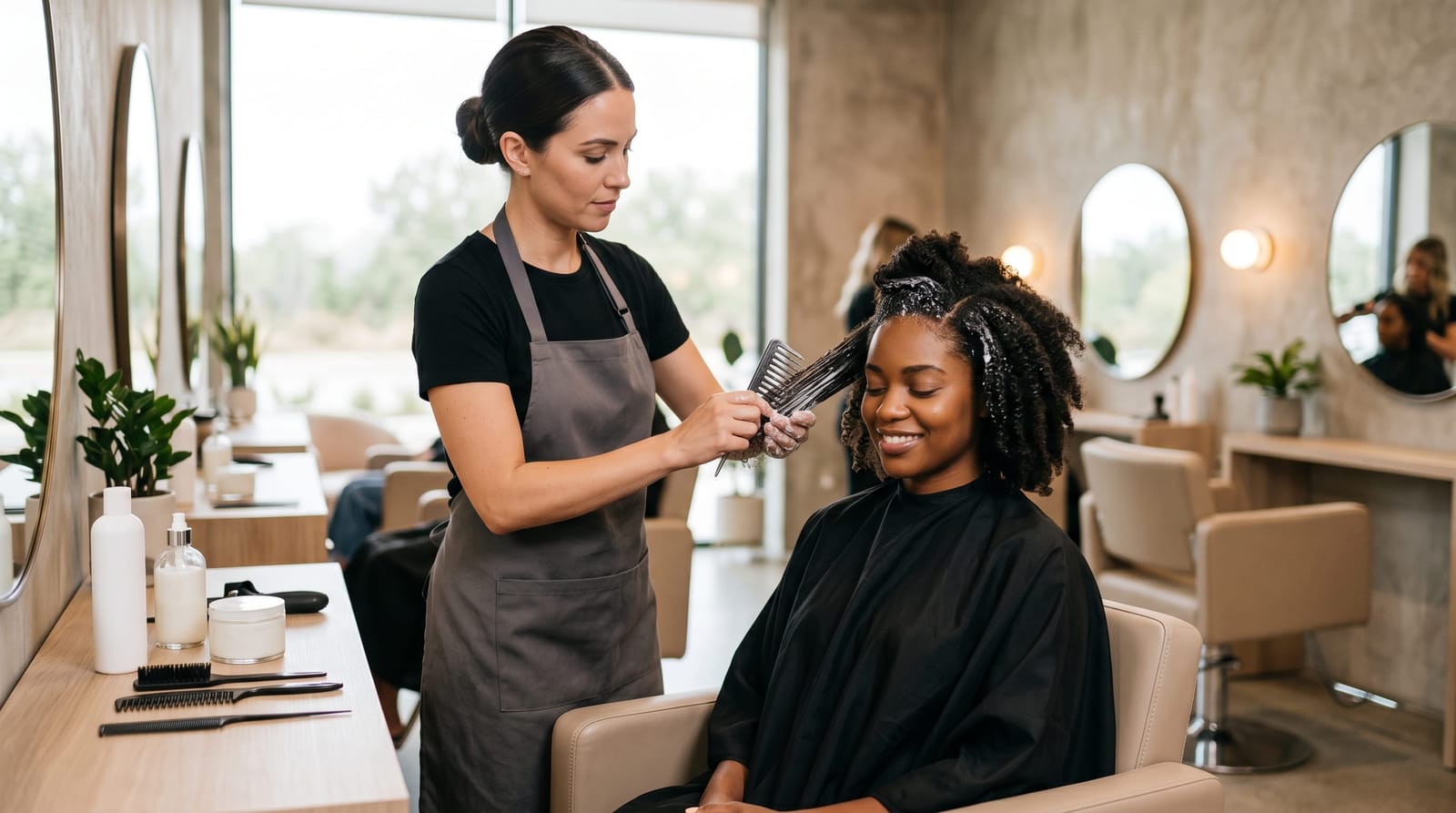
If you've been searching for the best deep conditioner products and finding yourself overwhelmed by options, you're not alone. The deep conditioner aisle, whether online or in-store, is packed with promises, and knowing which formula actually delivers for your hair type makes all the difference. Whether your hair is naturally textured, chemically relaxed, or somewhere in between, finding the right deep conditioner is one of the most important steps in maintaining healthy, resilient strands. Here's what you actually need to know to make a smart choice.
Why Deep Conditioning Matters More Than You Think
Regular conditioner is designed to smooth the cuticle after shampooing. Deep conditioners do something entirely different: they penetrate beyond the surface to replenish moisture and structural support from within the hair shaft. For textured, natural, and chemically relaxed hair especially, this distinction matters enormously.
Curly and coily hair patterns have a naturally elliptical shaft shape, which means moisture escapes more easily compared to straight hair. Studies in hair science have shown that curly hair can lose up to 50% more moisture than straight hair under the same environmental conditions. Relaxed hair, meanwhile, has had its internal protein bonds permanently altered, which makes it more porous and more vulnerable to breakage without regular protein and moisture replenishment.
Deep conditioning at least once a week, or once every two weeks at minimum, is widely recommended by licensed stylists for clients with textured or chemically processed hair. When done consistently and with the right formula, it's one of the single most impactful habits for improving hair strength, softness, and overall health over time.
Protein vs. Moisture: Understanding What Your Hair Needs
One of the most important things to understand when comparing the best deep conditioner products is the difference between protein-based and moisture-based formulas. These two types work differently, and using the wrong one at the wrong time can work against you.
Moisture-Based Deep Conditioners
Moisture-based formulas are designed to hydrate and soften. They typically contain humectants like glycerin and honey, emollients like shea butter and avocado oil, and conditioning agents that coat and smooth the cuticle. These are ideal for hair that feels dry, rough, or brittle, or for anyone who deep conditions regularly as a maintenance habit. SheaMoisture's Manuka Honey and Mafura Oil Intensive Hydration Masque is a widely recommended option in this category, as is Pantene's Miracle Rescue Deep Conditioning Treatment, which consistently earns top marks for its ability to deliver moisture without a heavy, weighed-down finish.
Protein-Based Deep Conditioners
Protein-based formulas focus on strengthening the hair by temporarily filling in gaps along the hair shaft. They typically contain hydrolyzed proteins, keratin, silk, wheat, or rice protein are common, that bond to the hair and restore structure. Briogeo's Don't Despair, Repair! Deep Conditioning Mask is a well-regarded example, earning recognition from Vogue as a top pick specifically for strengthening. These formulas are especially beneficial for hair that has become overly elastic, limp, or mushy when wet: signs that the internal structure needs rebuilding.
Understanding the difference between these two types matters because overusing protein can leave hair feeling stiff and brittle, while never using protein on chemically processed hair can leave it structurally weak. If you're ever uncertain which direction to go, our post on how to know if your hair has too much protein can help you read your hair's signals more clearly.
Key Ingredients to Look For: and What They Do
Rather than chasing the most popular brand name, the smartest approach to finding the best deep conditioner products is to learn how to read an ingredient list. Here are the ingredients that consistently show up in high-performing formulas for textured and relaxed hair:
- Shea Butter: A rich emollient that seals moisture in and softens the cuticle without clogging the scalp when rinsed properly.
- Glycerin: A humectant that draws moisture from the air into the hair shaft: highly effective in humid climates but should be balanced in very dry environments.
- Hydrolyzed Keratin or Silk Protein: Lightweight proteins that reinforce the hair's structure and reduce breakage, especially in chemically processed strands.
- Avocado or Argan Oil: Penetrating oils that add nourishment at a deeper level than surface-coating ingredients.
- Aloe Vera: Balances the scalp's pH while providing gentle hydration: soothing without heaviness.
- Cetearyl Alcohol: Despite the word "alcohol," this is a fatty alcohol that conditions and softens rather than drying out hair.
A product like Davines Nounou Conditioner, often recommended for dry and damaged hair, earns its reputation through a thoughtful blend of nourishing ingredients rather than any single miracle compound. The formulation quality, how ingredients are balanced together, matters as much as any individual component.
How Long Should You Leave a Deep Conditioner In?
Leave-in time is one of the most overlooked variables in deep conditioning, and getting it right can meaningfully improve your results. Most deep conditioners are designed to work within a 15-to-30 minute window. Leaving a product on longer than directed doesn't necessarily mean better results, and with protein-based formulas especially, over-processing time can lead to stiffness.
Applying gentle heat while the product processes, with a hooded dryer, a heated conditioning cap, or even a warm towel wrapped around the head, opens the cuticle and allows the conditioning agents to penetrate more deeply. Research in cosmetic science has consistently shown that heat-assisted conditioning improves ingredient absorption and results in measurably softer, smoother hair compared to no-heat application.
For clients with high-porosity hair (common after chemical services or heat styling), cool water as a final rinse helps close the cuticle and seal the treatment in: a small step that noticeably extends how long the softness and smoothness lasts.
Why Professional-Grade Deep Conditioning Outperforms Retail Products
There's a real difference between what's available on a drugstore shelf and what professional stylists use in the salon, and it's not just about price. Professional-grade deep conditioners are formulated at higher concentrations of active ingredients and are designed to work within controlled, professional contexts where application technique, timing, and heat application are managed carefully.
At Kabelly, our deep conditioning treatments are selected specifically for the needs of textured, natural, and chemically relaxed hair. We use professional formulas that deliver concentrated moisture and protein support in a single treatment session, combined with hooded dryer processing to ensure full penetration. The difference is often immediately noticeable, not because we're using a secret ingredient, but because professional application ensures the right formula, the right technique, and the right timing working together.
For clients who are deep conditioning at home between appointments, we're always happy to recommend a retail option that complements what we use in the salon, because consistent home care between professional visits is what produces long-term results.
Frequently Asked Questions
How often should I deep condition my hair?
For most people with textured, natural, or relaxed hair, once a week is ideal. If your hair is particularly dry, recently processed, or prone to breakage, weekly deep conditioning is especially important. Those with more resilient hair that retains moisture well may find every two weeks sufficient. Your stylist can help you establish a realistic routine based on your specific hair needs.
Can I use a deep conditioner as a leave-in conditioner?
In most cases, no. Deep conditioners are formulated to be rinsed out after processing time. Leaving them in can create buildup on the scalp and weigh hair down. If your hair craves extra moisture between washes, a dedicated leave-in conditioner is a lighter, rinse-free formula designed for that purpose.
Is there a difference between a deep conditioner and a hair mask?
The terms are often used interchangeably, and in practice they usually refer to the same type of product: a concentrated, longer-processing treatment applied after shampooing. Some brands use "mask" to suggest a more intensive formula, but the category and function are generally the same. What matters most is the ingredient profile and how the product is formulated, not what it's called on the label.
Can deep conditioning help with hair breakage?
Yes, when the right formula is chosen for the right concern. Moisture-based conditioning helps prevent breakage caused by dryness and brittleness. Protein-based conditioning helps prevent breakage caused by structural weakness in chemically processed strands. Regular, consistent deep conditioning is one of the most effective habits for reducing everyday breakage over time. It's worth noting, however, that deep conditioning is a hair care practice, not a medical treatment, and significant or sudden hair loss should always be discussed with a healthcare provider.
Finding the Right Deep Conditioner Starts with Knowing Your Hair
The best deep conditioner products aren't defined by a single brand or formula: they're defined by how well they match your hair's specific needs at any given time. Understanding whether your hair needs moisture, protein, or a balance of both is the foundation of any effective hair care routine. If you're navigating the world of damage recovery, this is one of the most important pieces of the puzzle, and it connects directly to the broader journey of assessing and restoring hair health over time. When you're ready for a professional assessment and a deep conditioning treatment tailored to your hair, Kabelly is here to help.