Signs Your Hair Needs Deep Conditioning: How to Know When It's Time for Treatment
Understanding your hair's needs is the foundation of a healthy hair care routine, and it's a big part of what we explore in our complete guide to hair health assessment and damage recovery for textured hair. One of the most common questions clients bring to the salon is surprisingly simple: How do I know when my hair actually needs deep conditioning? The answer lies in learning to read the signals your hair is already sending you. Whether you're recovering from a chemical service, transitioning to natural hair, or just dealing with everyday dryness, knowing the signs your hair needs deep conditioning gives you the power to act before minor dryness becomes serious breakage. This beginner's guide walks you through exactly what to look for, and what to do next.
What Deep Conditioning Actually Does for Your Hair
Before diving into the signs, it helps to understand what deep conditioning actually accomplishes. Regular conditioner rinses the surface of your strands. Deep conditioning goes further. It penetrates the hair shaft to restore moisture, strengthen the internal structure, and smooth the cuticle layer that protects each strand.
There are two main types of deep conditioning treatments:
- Moisture-based treatments: These restore hydration and softness. They work best for dry, brittle, or frizzy hair that lacks flexibility.
- Protein-based treatments: These reinforce the hair's structural integrity. They're ideal for hair that has been weakened by chemical processing, heat damage, or over-manipulation.
According to hair care research, roughly 90% of visible hair issues, including excessive breakage, dullness, and unmanageability, are linked to either moisture loss or protein imbalance. Knowing which type your hair needs changes everything about how you treat it.
At Kabelly, a professional consultation helps identify which treatment is the right fit for your specific hair type, porosity level, and history of chemical services. That personalized approach is what separates a targeted treatment from a generic one.
Sign #1: Your Hair Feels Dry or Brittle No Matter What You Apply
This is the most recognizable sign your hair needs deep conditioning. If your strands feel rough, straw-like, or snap easily when you stretch them, your hair is telling you it's moisture-starved, and surface products alone aren't fixing it.
Why It Happens
Heat styling, chemical services, hard water, and even dry weather all strip moisture from the hair shaft over time. Once the outer cuticle layer is compromised, moisture escapes faster than it can be absorbed. Studies suggest that hair loses up to 30% of its natural moisture content after just one chemical relaxer or color service.
What to Do
A moisture-rich deep conditioning treatment, applied with heat for 20 to 30 minutes, helps rehydrate the shaft and temporarily reseal the cuticle. For hair that's been through repeated chemical services, a professional treatment applied in-salon delivers deeper penetration than at-home options. At Kabelly, our deep conditioning services are customized based on your hair's current state, not a one-size-fits-all formula.
Sign #2: You're Seeing More Shedding and Breakage Than Usual
It's normal to lose between 50 and 100 strands of hair per day. When you start noticing significantly more than that, especially short, snapped pieces rather than full strands with a root, that's breakage, not shedding. And breakage is a clear sign your hair needs strengthening support.
Moisture vs. Protein Breakage
The type of breakage matters. Hair that snaps immediately with very little stretch is usually protein-deficient. Hair that stretches too far before breaking often has too much moisture and not enough structural support. This distinction is important because using the wrong treatment can actually make things worse.
What to Do
A strand elasticity test: something we walk through during a hair health assessment at the salon: can help identify which category your breakage falls into. From there, a targeted protein treatment or a balancing moisture-protein combination can be applied to stabilize the hair before further services are scheduled.
Sign #3: Your Hair Looks Dull and Feels Rough to the Touch
Healthy hair reflects light. When your strands look flat, lackluster, or almost gray-toned rather than their true color, that's a strong visual indicator that the cuticle layer is lifted or damaged. Lifted cuticles scatter light rather than reflecting it, which is why conditioned, smooth hair looks visibly shinier.
Common Causes of Dullness
- Color or bleach services that alter the cuticle structure
- Buildup from heavy products that coat the strand
- Hard water mineral deposits blocking the cuticle
- Chronic dryness from low-moisture environments
What to Do
A clarifying shampoo followed by a deep conditioning treatment is often the first step. Removing buildup allows the conditioning ingredients to actually reach the hair shaft. After treatment, sealed cuticles reflect light more evenly: restoring that healthy-looking shine without any added product. At Kabelly, we pair our deep conditioning treatments with professional finishing techniques to maximize visible results.
Sign #4: Your Hair Has Poor Elasticity
Elasticity refers to your hair's ability to stretch and return to its original shape without snapping. It's one of the most accurate indicators of internal hair health, and it's easy to test at home.
The Simple Elasticity Test
Take a single strand of wet hair. Hold each end between your fingers and gently stretch it. Healthy hair should stretch about 30% of its length before returning to normal. If it snaps immediately, elasticity is low. If it stretches but doesn't bounce back, moisture may be oversaturated without enough protein to provide structure.
What to Do
Poor elasticity in dry hair typically responds well to moisture-based deep conditioning. Poor elasticity in chemically treated hair usually requires a protein treatment first, followed by moisture to soften and balance. Knowing which to use, and in what order, is exactly the kind of guidance you'll get during a professional consultation. Understanding how often you should schedule deep conditioning treatments based on your hair's elasticity level is also part of a smart maintenance plan.
Sign #5: Your Hair Is High Porosity and Absorbs Everything: But Holds Nothing
Porosity describes how easily your hair absorbs and retains moisture. High porosity hair, which is extremely common in textured hair types and hair that's been chemically processed, soaks up water quickly but loses it just as fast. This creates a cycle where hair feels dry almost immediately after washing, no matter how much product you apply.
How to Check Your Hair's Porosity
Drop a clean strand of hair into a glass of water. Low porosity hair floats. High porosity hair sinks quickly. Medium porosity hair floats for a while before slowly sinking. High porosity hair has gaps and openings along the cuticle that allow moisture to escape freely, which is why standard conditioners often aren't enough.
What to Do
High porosity hair benefits from thicker, heavier deep conditioning formulas that can temporarily fill in cuticle gaps. Protein treatments are especially helpful here because they reinforce the weakened structure of the strand. It's also worth considering whether deep conditioning too aggressively, with too much frequency or the wrong formula, could actually affect your results. The balance between enough and too much is something many clients wonder about, and it's a question worth discussing with your stylist. You can also explore whether it's possible to deep condition too often and what signs to watch for.
Sign #6: Frizz and Tangles Are Constant: Not Just Occasional
Some frizz is completely normal, especially in textured hair types or humid climates. But when your hair is consistently tangled the moment it dries, or when frizz is present even after you've applied styling products, that's a sign of chronic moisture imbalance rather than a styling issue.
Why Frizz Signals a Deeper Problem
Frizz happens when the hair cuticle is open and seeking moisture from the surrounding air. If your hair is already dry inside, it will pull humidity from the environment: creating that unpredictable, puffy texture that won't smooth no matter what you use on top of it. Chronic tangling is often linked to the same issue: dry, rough cuticles catch on each other instead of lying flat.
What to Do
Consistent deep conditioning, ideally every one to two weeks depending on your hair's condition, helps normalize the moisture level inside the strand. Once the hair is properly hydrated, the cuticle is less reactive to environmental humidity. Anti-humidity serums and finishing products work significantly better on hair that has been properly conditioned at the structural level first.
Related Topics Worth Exploring
Understanding the signs your hair needs deep conditioning is just the beginning. Once you know what your hair is communicating, the next step is building a plan. Here are a few connected topics that go deeper into the specifics:
- If you're unsure about the overall health of your hair, including porosity, texture, and damage history, a hair health assessment at the salon gives you a full picture and a clear starting point for any treatment plan.
- Once you've started deep conditioning, knowing how often to schedule your treatments based on your hair type and lifestyle helps you maintain results between salon visits.
- And if you're someone who loves a thorough routine, it's worth understanding whether deep conditioning too frequently can have drawbacks, because more isn't always better when it comes to protein treatments.
What a Professional Hair Health Consultation Looks Like at Kabelly
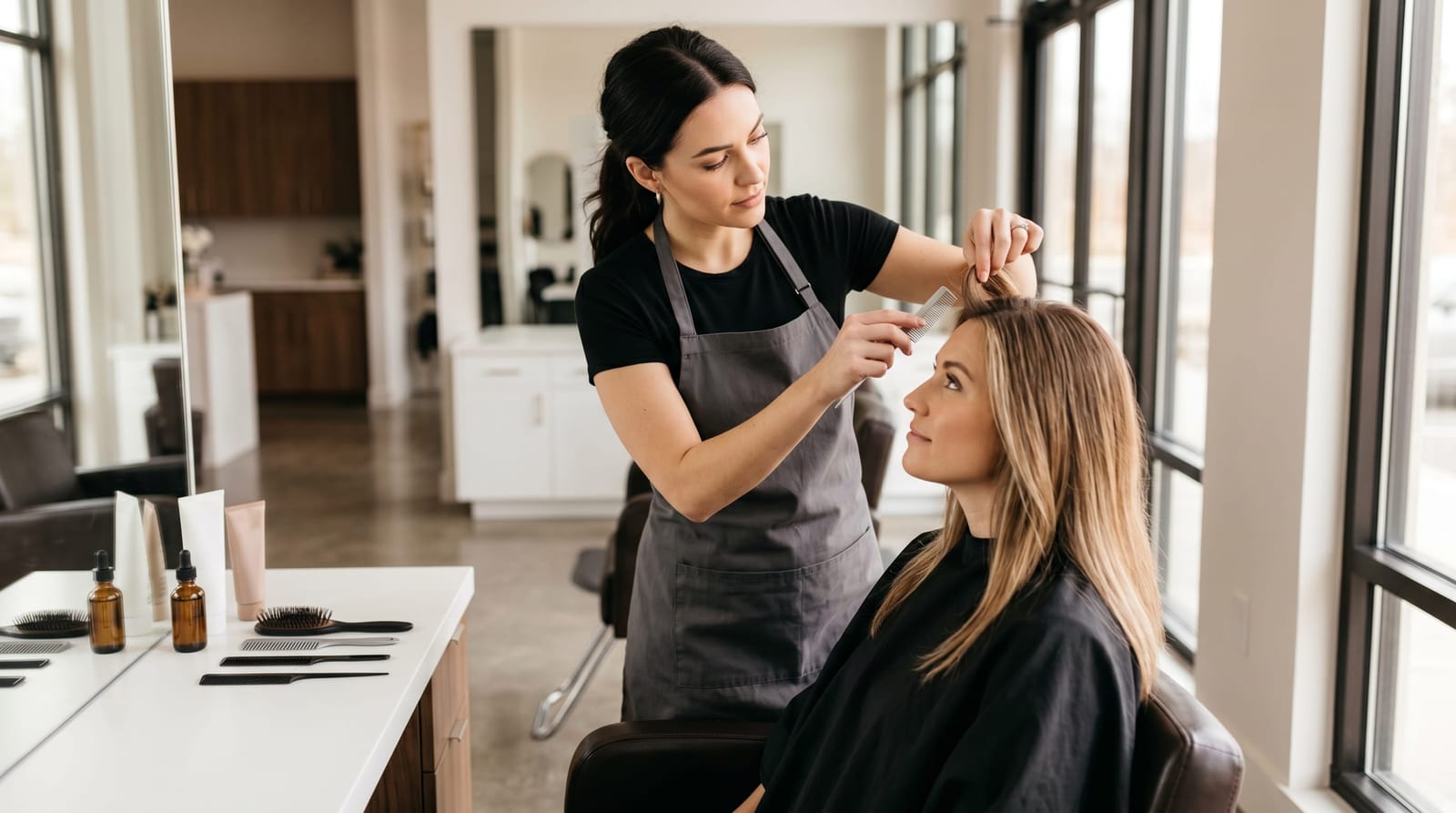
A consultation at Kabelly isn't a quick glance at your ends and a product recommendation. It's a thoughtful conversation and hands-on assessment that covers your hair history, current concerns, styling routine, and goals. Your stylist will evaluate porosity, elasticity, density, and overall condition, then recommend a treatment plan that fits your hair specifically.
This matters especially for clients who cycle through protective styles, relaxers, color services, or heat styling. Each of these processes affects the hair differently. A consultation helps identify what your hair needs right now, whether that's a moisture treatment, a protein reinforcement, or a combination of both, so that your next service builds your hair up rather than wearing it down.
Your Hair Is Talking: It's Time to Listen
Dryness, breakage, dullness, poor elasticity, high porosity, and persistent frizz are all ways your hair is asking for attention. None of these signs mean your hair is beyond help. They simply mean it's time for a thoughtful, targeted treatment, not more product layering on top of an underlying problem.
The good news? Hair responds beautifully when it gets exactly what it needs. If you're noticing any of the signs your hair needs deep conditioning, the best next step is a professional assessment so you're treating the right issue with the right solution. Book a hair health consultation at Kabelly today and let's build a plan that works for your hair, not someone else's.