How Often Should You Get a Relaxer Touch-Up?
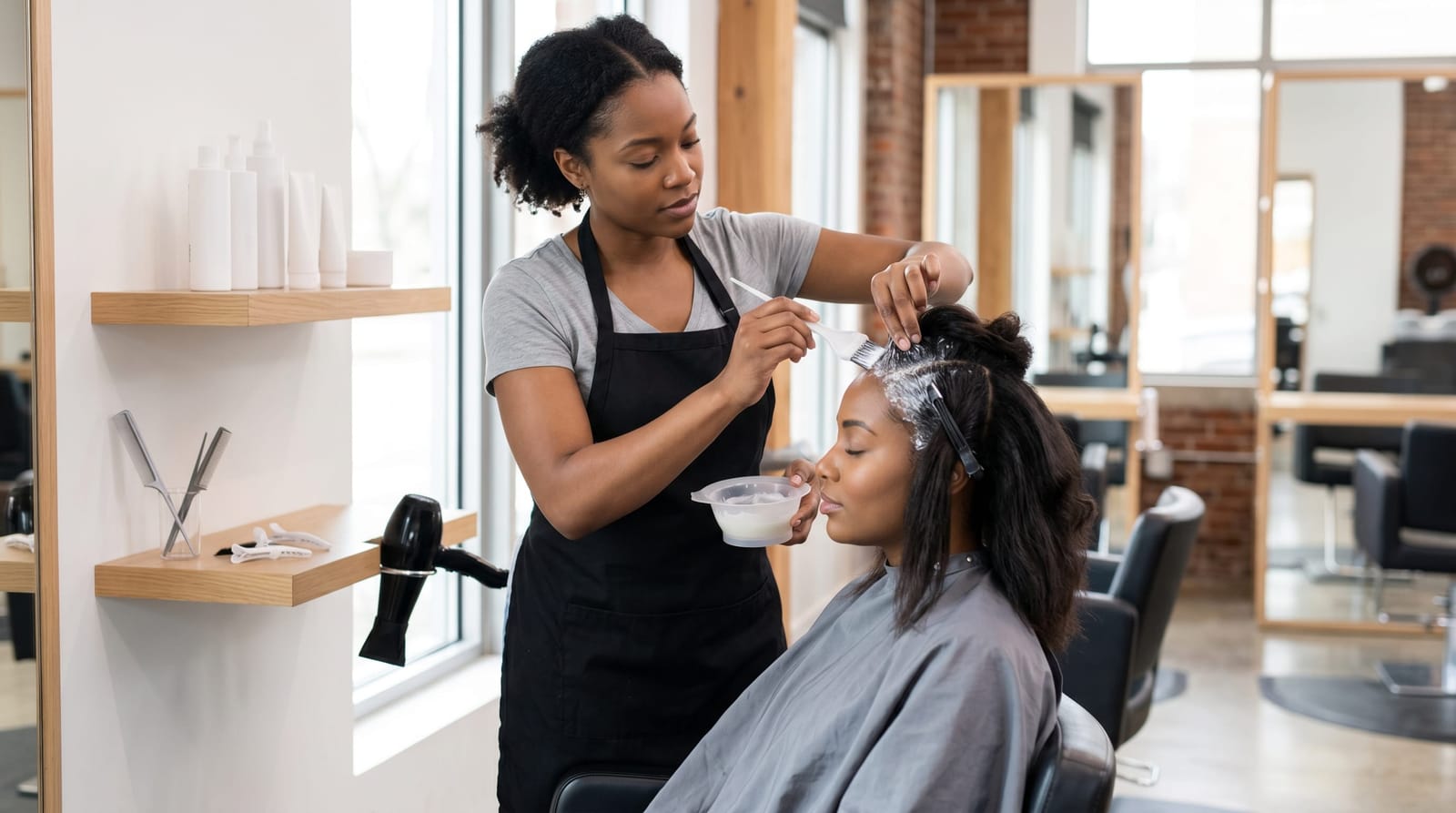
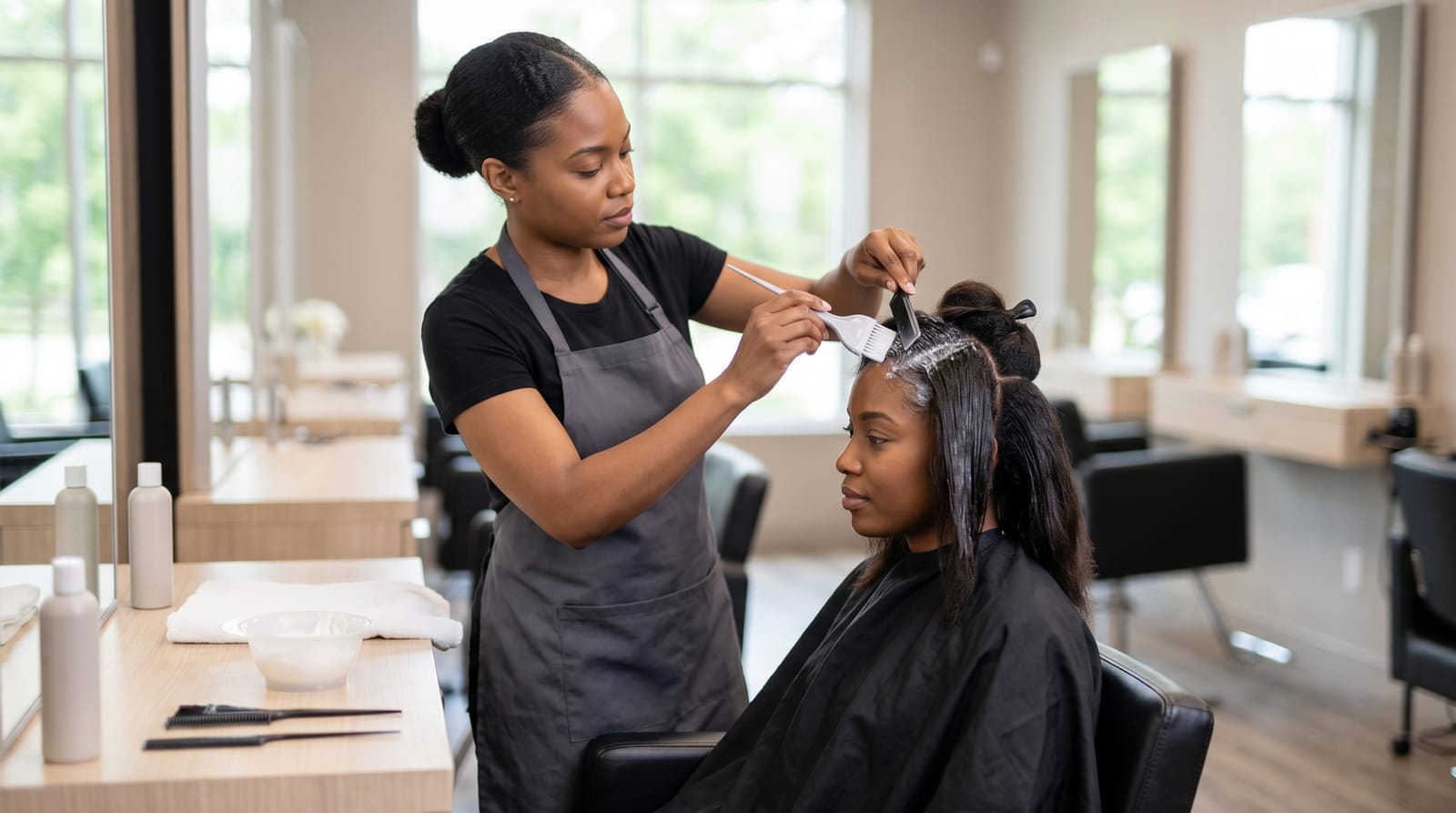
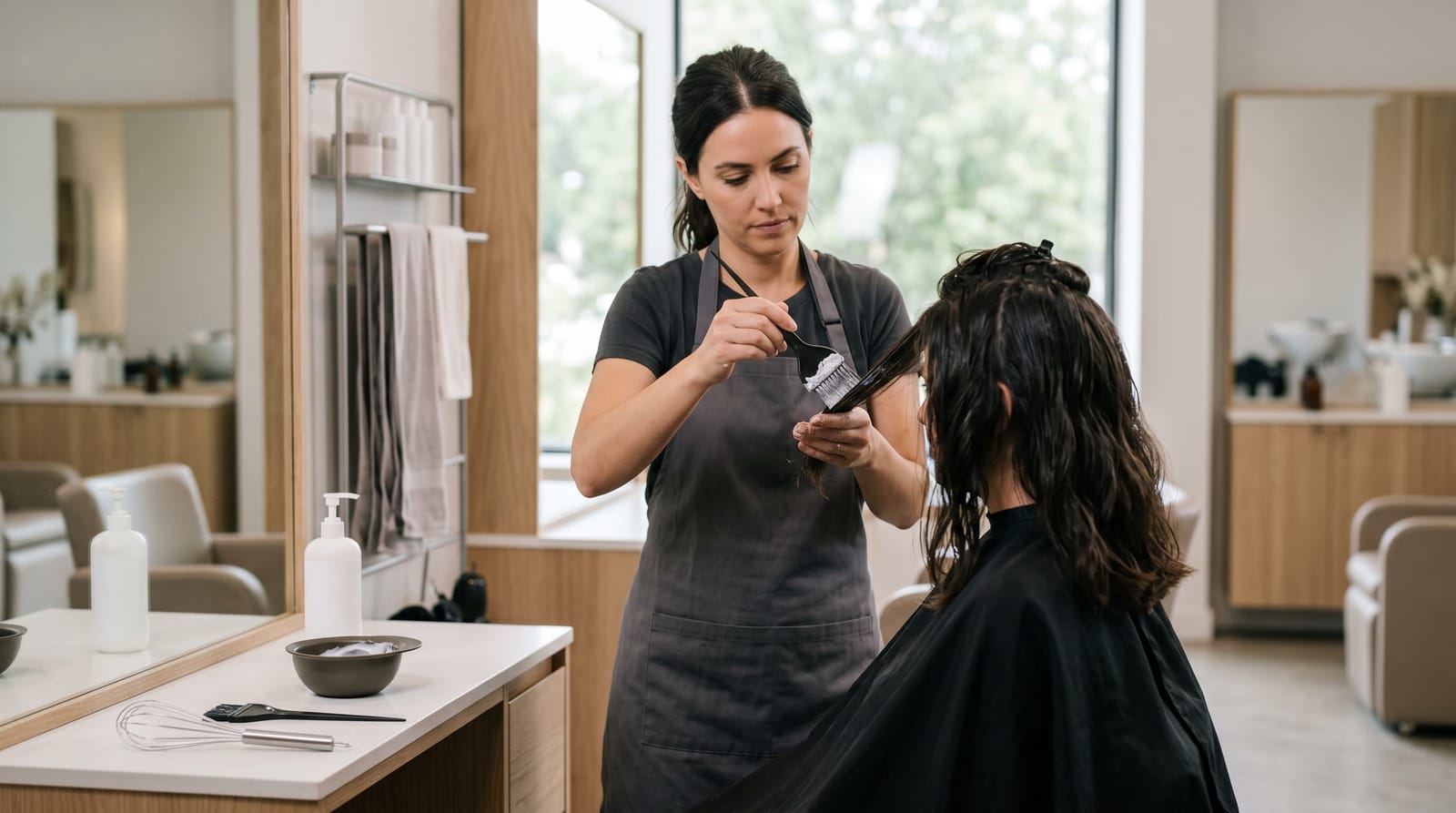
One of the most common questions clients ask when maintaining chemically processed hair is how often they should come in for a relaxer touch-up. Get it too soon and you risk overprocessing fragile strands. Wait too long and managing new growth becomes a frustrating battle. As part of a broader approach to professional chemical hair processing, timing your touch-ups correctly is one of the most impactful decisions you can make for the long-term health of your hair. This guide breaks down exactly what you need to know to build a relaxer touch up schedule that works for your hair.
The General Rule: Every 6 to 12 Weeks
The widely accepted window for a relaxer touch-up is every 6 to 12 weeks, but that range exists because no two heads of hair are alike. Most stylists and hair care professionals recommend waiting until you have at least 1 to 2 inches of new growth before returning to the salon. This ensures your stylist has enough fresh hair to work with: applying relaxer to previously processed hair is one of the fastest ways to cause breakage and irreversible damage.
For clients with fast-growing hair, 6 to 8 weeks may feel like the right interval. For others whose hair grows more slowly or who prefer a more stretched approach, waiting the full 10 to 12 weeks is entirely reasonable. The key is measuring by growth, not by calendar dates alone. Your hair tells you when it's ready: your schedule confirms it.
A consistent relaxer touch up schedule also helps your stylist track how your hair is responding to the chemical process over time. Patterns become visible, like whether your edges process faster than your nape, or whether certain sections need a milder formulation. That level of awareness is only possible when you're working within a structured maintenance plan.
Signs You're Ready for a Touch-Up
Beyond the calendar, your hair will show you specific signals that a touch-up is due. Learning to read these signs helps you avoid both under-processing (holding out too long) and overprocessing (going too soon).
- Visible line of demarcation: You'll notice a distinct border between your new, natural growth and your relaxed ends. This line of demarcation is actually a vulnerable point where breakage is most likely to occur if left unmanaged.
- Increased tangling and shrinkage: When new growth curls back significantly, detangling becomes difficult and styling takes noticeably longer.
- Reduced manageability: If you find your hair is harder to straighten, blow out, or style smoothly compared to a few weeks prior, new growth is likely the culprit.
- 1 to 2 inches of new growth at the root: Measure from your scalp to where the hair texture shifts. Once you reach that marker, you're in the ideal touch-up window.
If you're unsure, a quick consultation at a hair relaxer salon in the DMV area can give you a professional assessment before committing to a treatment date.
The Dangers of Going Too Soon
Overprocessing is one of the most common, and most preventable, forms of relaxer-related damage. When relaxer is applied to hair that was chemically treated less than 6 weeks ago, the solution begins breaking down hair bonds that are already weakened. The result is thinning, excessive shedding, snapping at the line of demarcation, and in severe cases, bald patches that take months or years to recover.
Scalp health is equally at risk. Relaxers contain strong active ingredients that require a healthy scalp barrier to tolerate safely. Reapplying before the scalp has fully recovered from the previous application can cause chemical burns, persistent irritation, and sensitivity that makes future treatments increasingly uncomfortable.
A professional stylist will always perform a strand test and scalp assessment before proceeding. If there are signs of lingering sensitivity or insufficient new growth, they should, and will, recommend postponing. Choosing a licensed professional for your relaxer service is not just about results; it's about protecting your scalp and the structural integrity of your hair long-term.
Factors That Influence Your Personal Touch-Up Timeline
Your ideal relaxer touch up schedule won't match your friend's or your sister's, and it shouldn't. Several individual factors influence how often you should realistically be in the salon chair.
Hair Type and Texture
Coarser, tightly coiled hair textures typically require a super-strength relaxer and may also show new growth more prominently, prompting more frequent touch-ups. Fine or medium textures often do well with mild or regular formulas on a slightly stretched schedule.
Hair Growth Rate
The average person's hair grows roughly half an inch per month, but genetics, diet, hormones, and overall health can push that number higher or lower. Track your growth between appointments so you can build a schedule based on your actual biology rather than a general estimate.
Hair Goals
Are you focused on length retention? Stretching touch-ups to 10 to 12 weeks and incorporating protective styling in between can reduce manipulation and support growth. If manageability and a consistent straight texture are your priorities, a tighter 6 to 8 week schedule might suit you better.
Scalp Sensitivity
If your scalp tends to become irritated after relaxer applications, giving it more recovery time, and using a scalp protector during treatment, is essential. Your stylist can advise on pre-treatment care to build your scalp's tolerance safely over time.
How to Maintain Your Hair Between Touch-Ups
The weeks between relaxer appointments are just as important as the treatment itself. Proper at-home care keeps your hair strong and manageable so you're not tempted to rush back to the salon before your hair is truly ready.
- Deep condition weekly: Relaxed hair loses moisture faster than natural hair. Weekly deep conditioning treatments restore protein and hydration to prevent brittleness at the line of demarcation.
- Protective style to reduce manipulation: Braids, twists, and low-manipulation styles reduce daily stress on your hair, especially at that vulnerable growth line.
- Sleep on a satin or silk pillowcase: Cotton absorbs moisture and causes friction that leads to breakage overnight. A satin pillowcase or bonnet is a simple but effective protective measure.
- Schedule regular trims every 8 to 12 weeks: Trimming split ends prevents damage from traveling up the hair shaft and keeps your ends looking healthy between chemical services.
- Avoid excessive heat: High-heat styling on already-processed hair accelerates damage. If you use heat tools, always apply a thermal protectant first.
Frequently Asked Questions
Can I relax my hair every 4 weeks?
No. Applying a relaxer every 4 weeks is a leading cause of severe hair breakage and scalp damage. At that interval, new growth is typically less than half an inch: nowhere near enough to justify a chemical application. Most stylists will not perform a touch-up unless there is at least 1 full inch of new growth. Waiting a minimum of 6 to 8 weeks protects the integrity of your hair and scalp.
What happens if I wait too long between relaxer touch-ups?
Waiting 12 to 16 weeks or longer creates a significant amount of new growth that can be harder to manage, but it isn't harmful on its own. The real risk comes at the line of demarcation, where natural, coily new growth meets relaxed ends. Heavy manipulation of hair with a large growth differential can cause tension and breakage at that boundary. A skilled stylist can navigate this carefully, but regular trims and protective styles during an extended stretch will help manage the transition.
Should I relax my hair more often in the summer because of humidity?
Humidity can cause relaxed hair to revert or frizz, but the solution is not more frequent chemical applications. Instead, focus on anti-humidity serums, leave-in conditioners, and protective styles to manage the seasonal effects. Increasing your relaxer frequency risks serious damage. If frizz and reversion are persistent concerns, discuss smoothing treatments like a keratin treatment with your stylist: these can complement your relaxer routine without adding chemical stress.
How do I know which relaxer strength is right for my hair?
Relaxer strength should match your hair's natural texture. Mild formulas work best for fine or color-treated hair, regular strength suits medium-textured hair, and super-strength relaxers are appropriate for coarse, resistant textures. Using a formula that's too strong for your hair type is a common cause of overprocessing. Your stylist will assess your texture at each visit to confirm you're using the right formulation: this is one of many reasons professional application is strongly recommended over at-home kits.
Final Thoughts on Your Relaxer Touch-Up Schedule
Building a sustainable relaxer touch up schedule comes down to one core principle: let your hair's growth guide your timing, not convenience or habit. The 6 to 12 week window exists for a reason: it gives your hair and scalp the recovery time they need to handle a chemical process safely. Combined with consistent at-home care and regular trims, a well-timed touch-up schedule is the foundation of long, healthy, relaxed hair. If you're ready to establish a personalized plan, our team at a trusted hair relaxer salon serving the DMV is here to help you get it right from the start.