Protein vs. Moisture Treatment: What Does Your Hair Actually Need?
If you've spent any time researching hair care for textured, chemically treated, or heat-styled hair, you've likely come across the concept of protein-moisture balance. It sounds simple enough, but for many people it's one of the most confusing, and most important, aspects of a healthy hair routine. Whether you're working through relaxer damage, recovering from a color service, or simply trying to keep your natural curls thriving, understanding the difference between a protein treatment and a moisture treatment is essential. This post is part of our broader guide to hair health assessment and damage recovery, and it zeroes in on this critical question: what does your hair actually need right now? Let's break it down clearly, side by side, so you can make smarter decisions for your strands.
The Foundation: What Protein and Moisture Actually Do for Your Hair
Before you can choose between a protein vs. moisture hair treatment, it helps to understand what each one is doing inside your hair strand.
Your hair is made up of approximately 95% keratin: a structural protein that forms the inner cortex and outer cuticle layer of each strand. When hair goes through chemical services like relaxers or color, experiences excessive heat, or is subjected to tension from tight styles, that protein structure can break down. The result is weakened, fragile hair that stretches too easily and breaks.
Moisture, on the other hand, refers to water and water-binding ingredients that keep hair flexible, soft, and elastic. Hair that is properly hydrated has a normal elasticity: it can stretch slightly and return to its shape without snapping.
Research consistently shows that both protein and moisture are essential for healthy hair. Neither can fully replace the other, and overusing one while neglecting the other creates its own set of problems. Think of it like a structure and a spring: the protein gives your hair its strength and shape, while moisture gives it the flexibility to move without breaking.
The Role of the Protein-Moisture Balance
Healthy hair exists in a balanced state: neither too stiff nor too limp, neither dry and brittle nor mushy and weak. Studies on hair fiber composition have found that even modest disruptions to keratin integrity can reduce tensile strength by up to 30%, which is why treatment timing matters so much. The goal of any good hair care routine, professional or at-home, is to keep these two elements working together harmoniously.
Protein Treatment: What It Is, What It Does, and When You Need It
A protein treatment introduces hydrolyzed proteins, such as keratin, silk, collagen, or wheat protein, into the hair shaft. These molecules temporarily fill in gaps and breaks along the cuticle, reinforcing the strand and restoring some of its structural integrity.
Signs Your Hair Is Protein-Deficient
Your hair may be signaling a need for protein if you notice any of the following:
- Excessive elasticity: strands stretch far without snapping back
- Limp, flat, or mushy texture even after drying
- Hair that feels gummy or sticky when wet
- Color or chemical services that are fading faster than expected
- Difficulty holding a style, curl, or blowout
These are classic signs that the hair's internal structure has been compromised. Clients who have recently had relaxers, keratin smoothing services, bleaching, or heavy color work are especially prone to protein loss. According to hair fiber research, a single bleaching session can reduce hair's protein content by up to 45%, which is a significant amount of structural damage that no amount of deep conditioner alone can fully address.
How Protein Treatments Work at the Salon
At Kabelly Salon, a professional protein treatment is not a one-size-fits-all product. Our stylists assess the porosity, elasticity, and chemical history of your hair before recommending a treatment concentration, because protein treatments range from light (bond builders, leave-in protein sprays) to medium (reconstructors) to heavy (hard protein packs). Using a heavy protein treatment on hair that doesn't need it is just as damaging as skipping protein altogether.
Moisture Treatment: What It Is, What It Does, and When You Need It
A moisture treatment focuses on replenishing and locking in water content within the hair strand. This includes deep conditioners, hydrating masks, and leave-in treatments formulated with humectants like glycerin and aloe, emollients like shea butter and avocado oil, and occlusives that seal hydration in.
Signs Your Hair Is Moisture-Deficient
Your hair may be calling out for moisture if you notice:
- Dryness, roughness, or a straw-like texture
- Shrinkage that is more extreme than usual
- Tangles and knots that are difficult to detangle
- Dull, lackluster appearance even after styling
- Minimal elasticity: strands snap immediately with no stretch
- Frizz that doesn't respond to product
Moisture depletion is extremely common in textured hair. Because of the natural coil and curl pattern, the scalp's natural oils have a harder time traveling down the hair shaft: meaning the ends of curly, coily, or relaxed hair are almost always drier than the roots. Clients who wear protective styles for extended periods, use heat regularly without proper prep, or live in dry climates often present with significant moisture deficiency.
Moisture Treatments and Hair Porosity
It's worth noting that how well your hair absorbs and retains moisture depends heavily on its porosity: how open or closed the cuticle layer is. High-porosity hair absorbs moisture quickly but also loses it fast. Low-porosity hair resists moisture absorption but holds it well once it's in. A professional stylist can assess your hair's porosity in just a few minutes and choose a moisture treatment that actually penetrates and stays.
If you're noticing that your hair constantly feels dry no matter how much conditioner you use, it may be worth reading about the hair needs deep conditioning signs to understand whether you're approaching the problem correctly.
Protein vs. Moisture: A Side-by-Side Comparison
To make this even clearer, here's how the two treatments compare across the most important factors:
- Primary Purpose: Protein rebuilds structural integrity; moisture restores hydration and flexibility
- Best For: Protein targets chemically treated, over-processed, or structurally weak hair; moisture targets dry, brittle, or dehydrated hair
- Key Ingredient Types: Protein treatments use hydrolyzed keratin, silk, or wheat proteins; moisture treatments use humectants, emollients, and occlusives
- Frequency: Protein treatments are typically used every 4 to 8 weeks; moisture treatments can be used weekly or even more frequently depending on hair type
- Overuse Risk: Too much protein causes brittleness and breakage; too much moisture causes limpness and structural weakness
- Feel After Application: Protein treatments leave hair feeling firmer and more structured; moisture treatments leave hair feeling soft, smooth, and supple
The Danger Zones: What Happens When You Get It Wrong
Understanding the risks of imbalance is just as important as knowing the benefits of the right treatment. Both protein overload and moisture overload are real conditions that can worsen hair health rather than improve it.
Too Much Protein: Protein Overload
When the hair receives more protein than it can use, the strands become overly rigid and stiff. Hair that is protein overloaded feels rough and dry even when wet, breaks easily with minimal tension, and may appear dull or feel almost like straw. Many clients are surprised to learn that too much of a "strengthening" treatment can actually cause the very breakage they were trying to prevent.
Protein overload is more common than most people realize, especially among clients who use multiple protein-rich products in their routine without realizing it. Bond builders, keratin shampoos, reconstructing conditioners, and styling products can all contribute to an accumulation of protein on the strand. For a deeper look at how to identify this issue, our post on protein vs moisture hair treatment signs covers exactly what to look for.
Too Much Moisture: Hygral Fatigue
On the flip side, hair that is consistently over-moisturized without enough protein support can develop a condition sometimes called hygral fatigue, where the strand swells and contracts with water so frequently that it loses its elasticity and structure over time. This hair feels mushy, limp, and weak. It may look healthy but breaks very easily, especially during styling or detangling. This is particularly common in high-porosity hair types that absorb water rapidly.
The key takeaway: neither protein nor moisture is inherently better than the other. The right choice depends entirely on your hair's current state, and that requires an honest, informed assessment.
How Kabelly Salon Identifies What Your Hair Actually Needs
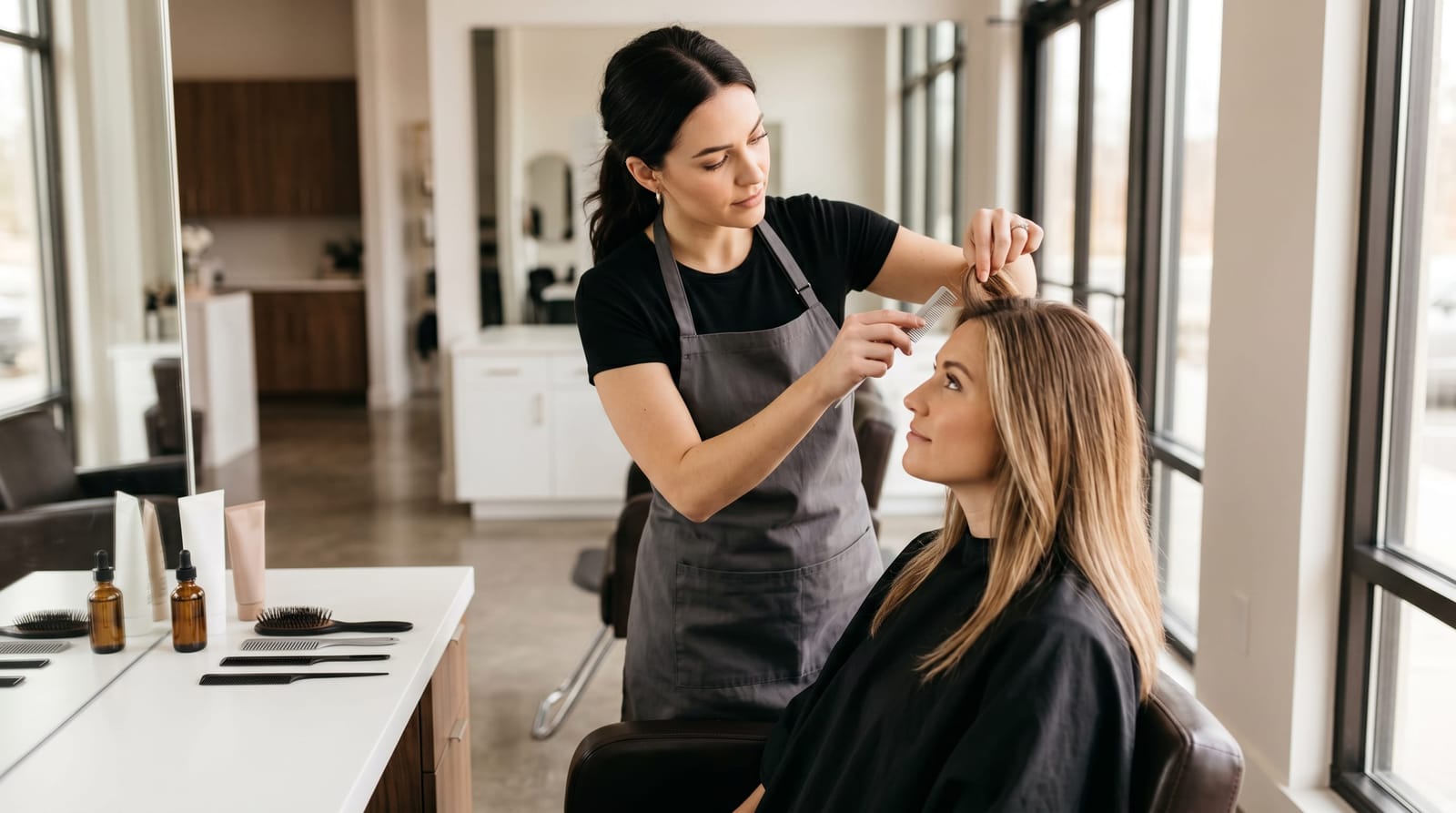
One of the most valuable things you can do for your hair is let a professional assess it before choosing a treatment. At Kabelly Salon, we take a personalized approach to every client's hair health, because two people with the same curl pattern or chemical history can have completely different protein-moisture needs.
Our stylists evaluate several factors during a hair health consultation:
- Elasticity test: We gently stretch a strand when wet to assess how much it stretches and whether it returns to shape: this tells us a great deal about the protein-moisture balance
- Porosity assessment: Understanding how your hair absorbs and holds moisture guides treatment selection and layering
- Service history: Recent relaxers, color, keratin treatments, or protective styles all affect what your hair needs right now
- Texture and density evaluation: Fine hair responds differently to protein than coarse hair; dense hair has different moisture needs than thin hair
- Breakage patterns: Where and how hair is breaking tells us whether protein, moisture, or both are needed
This assessment takes just a few minutes but changes everything about the treatment recommendation. Rather than guessing based on a product label, our clients leave knowing exactly what their hair responded to and why, and with a plan for maintaining that balance at home between visits.
For clients wondering whether their routine is missing something, it's also worth exploring the best deep conditioner products for natural or relaxed hair, since product selection plays a major role in maintaining moisture balance between salon visits.
Related Topics Worth Exploring
The protein-moisture conversation is one piece of a larger picture. If you're working through a hair health journey, these connected topics can help you go deeper:
- How to tell whether your deep conditioning routine is actually working for your specific hair type
- Choosing the right deep conditioner for natural versus relaxed hair textures
- Recognizing the early warning signs that your protein levels are off, before breakage begins
Finding Your Balance: Key Takeaways
The protein vs. moisture treatment question doesn't have a universal answer, and that's actually good news, because it means your hair care can be as specific and intentional as you are. Protein builds the structure your hair needs to stay strong through styling and chemical services. Moisture gives your strands the flexibility to move, stretch, and thrive without snapping. Too much of either creates the very problems you're trying to solve.
The most reliable way to know which treatment your hair needs right now is a professional assessment, and that's exactly what we offer at Kabelly Salon. Whether you're recovering from over-processing, starting fresh after protective styles, or simply ready to upgrade your routine, our team is here to take the guesswork out of healthy hair. Book a hair health consultation today and let's build a treatment plan that's designed for your hair, your history, and your goals.