How to Recover From Over-Processed or Chemically Damaged Hair: A Staged Salon Plan
If you've been asking yourself whether your hair needs more than a regular wash and style, you're not alone. Over-processed hair, from relaxers, color services, or repeated heat styling, is one of the most common concerns we hear at Kabelly Salon. The good news is that recovery is absolutely possible with the right approach. Understanding how to prioritize conditioning for damaged hair as part of a structured, staged plan can make the difference between spinning your wheels and actually seeing real progress. In this guide, we'll walk through what over-processing really does to textured hair, how a realistic recovery plan is built, what to expect at each stage, and how our stylists at Kabelly create personalized roadmaps so your hair can thrive again.
What Over-Processing Actually Does to Textured Hair
Before building any recovery plan, it helps to understand what's actually happening inside your strands. Textured hair, whether naturally coily, curly, or chemically relaxed, has a unique structure that makes it both beautifully versatile and more vulnerable to cumulative stress from chemical services and heat.
When hair is over-processed, the outer cuticle layer (the protective shield around each strand) becomes compromised. Repeated relaxer applications, overlapping color, or high-heat styling without proper protection can lift and eventually erode this cuticle layer. Once that happens, moisture escapes more easily, the inner protein structure weakens, and strands begin to feel brittle, look dull, or break off before reaching their natural length.
For African American and Hispanic clients who regularly cycle through protective styles, chemical services, and blowouts, these stressors can compound quietly over time. You might not notice the shift immediately: it often shows up as increased shedding, textures that feel uneven, or styles that just won't hold the way they used to.
The key insight here is that over-processing is rarely one dramatic event. It's usually a buildup, and that means recovery is also a gradual process, not a one-appointment fix. Knowing this upfront sets realistic expectations and helps you stay committed to the plan.
The Foundation of Recovery: Why Conditioning for Damaged Hair Comes First
No recovery plan goes anywhere without a strong conditioning foundation. Conditioning for damaged hair isn't just about softness: it's about rebuilding the hair's ability to hold and retain moisture, which is the baseline requirement for everything else to work.
Deep Conditioning Treatments
Deep conditioning masks are the core of any damage recovery protocol. Unlike rinse-out conditioners, deep treatments are formulated to penetrate more deeply into the hair shaft, delivering concentrated moisture and reparative ingredients that work while the product sits on the hair under heat or steam. Professional-grade masks used in a salon setting are often significantly more potent than over-the-counter versions, which is why in-salon deep conditioning for damaged hair delivers noticeably faster results.
Bond-Building Treatments
For clients dealing with severe over-processing, conditioning alone sometimes isn't enough. Bond-building treatments, like Olaplex or similar professional systems, work at the structural level, helping to reconnect broken disulfide bonds within the hair. These are often recommended as a pre-service add-on during color or chemical appointments, or as a standalone treatment during the early stages of recovery.
Leave-In Conditioners and Daily Moisture Support
Between salon visits, daily conditioning for damaged hair at home matters just as much. A quality leave-in conditioner applied after every wash helps lock in moisture, reduce friction during detangling, and create a buffer against environmental stressors. Your stylist at Kabelly will recommend specific formulas based on your hair's porosity and texture, so you're not guessing at the drugstore.
Not sure whether your hair is craving moisture, protein, or both? protein vs moisture hair treatment is a great resource that breaks down how to tell the difference and what your hair actually needs at each stage.
Building the Staged Recovery Plan: How Kabelly Stylists Approach It
Recovery isn't one-size-fits-all, and it definitely isn't a single appointment. At Kabelly, our stylists take a staged approach that maps out your recovery across multiple visits, each building on the last. Here's how that typically unfolds:
Stage 1: Assessment and Reset (Weeks 1-4)
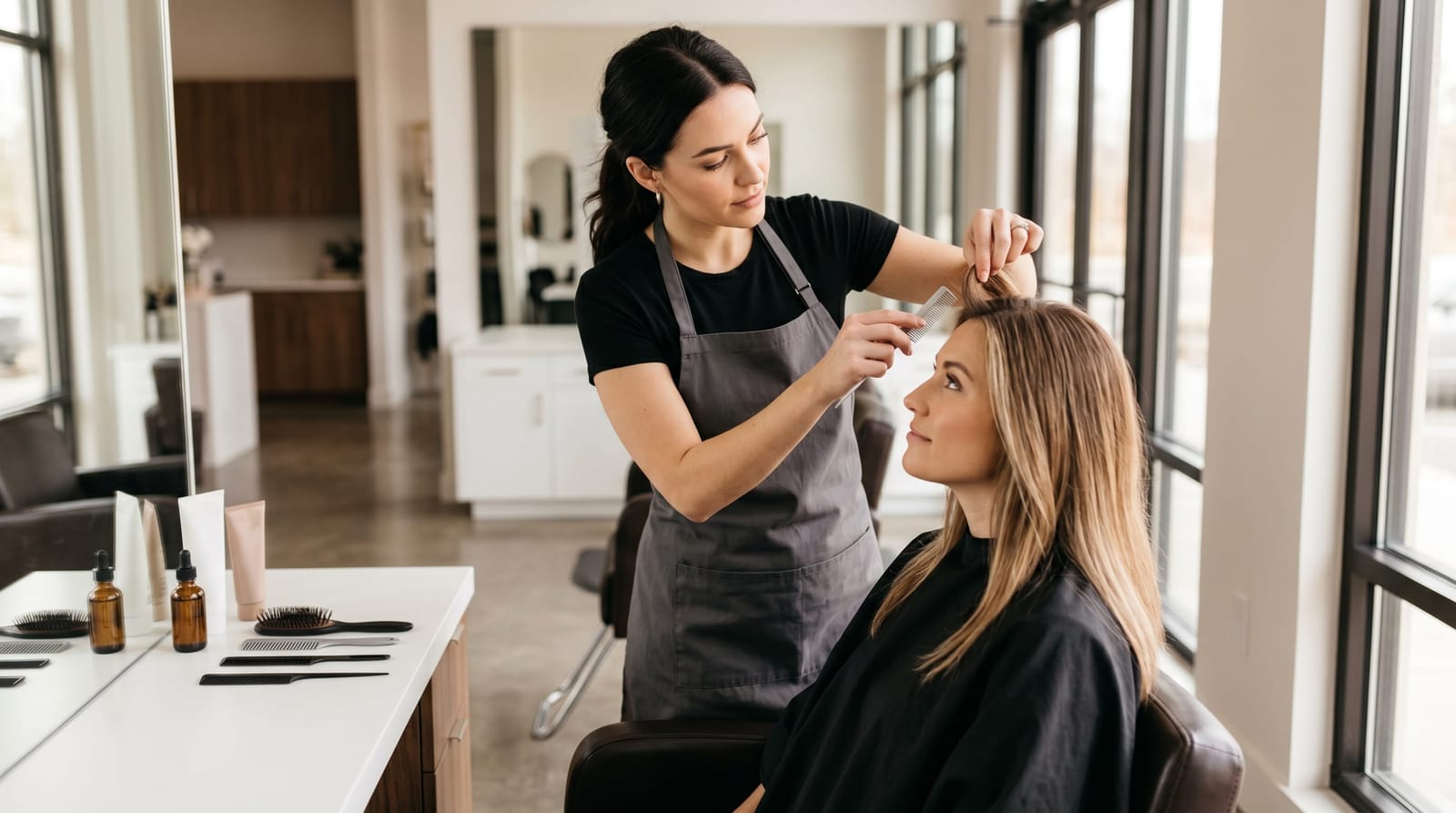
The first stage is all about understanding where your hair currently stands. During your initial consultation, your stylist will assess the degree of damage, evaluate your hair's porosity and elasticity, and ask about your recent service history. From there, an intensive conditioning for damaged hair treatment is usually the first order of business, often a bond-building service paired with a deep conditioning mask under a hooded dryer.
At this stage, chemical services are typically paused unless absolutely necessary. The goal is to stop adding stress and start rebuilding your hair's baseline moisture levels.
Stage 2: Strengthening and Stabilizing (Weeks 4-12)
Once moisture levels begin to stabilize, the recovery plan shifts toward protein-moisture balance. Some clients need regular protein treatments to firm up weakened strands; others need to lean more heavily into hydration. Your stylist tracks how your hair is responding and adjusts the treatment type and frequency accordingly: typically scheduling deep conditioning sessions every two to four weeks.
This is also the stage where protective styling may be introduced or continued in a more intentional way: styles that minimize manipulation while the hair regains strength.
Stage 3: Rebuilding and Gradual Reintroduction (Months 3-6+)
As your hair regains resilience, certain services can gradually be reintroduced, whether that's a new color service, a controlled heat blowout, or a relaxer touch-up at extended intervals. This stage is about rebuilding your routine in a sustainable way so you can enjoy the services you love without repeating the cycle of damage.
Curious about realistic timelines? conditioning for damaged hair goes deeper into how long recovery actually takes depending on the level of damage, and what you can realistically expect month by month.
What to Avoid During the Recovery Period
Knowing what to stop doing is just as important as knowing what to add. During active recovery, certain habits can undo the progress you're making, even when your intentions are good.
- Overlapping chemical services: Applying relaxer or color to previously processed hair that hasn't had time to recover adds compounding stress. Your stylist will help you determine safe timing between services.
- High daily heat styling: Flat irons and curling wands are best used sparingly during recovery, and always with a professional-grade heat protectant when you do reach for them.
- Skipping deep conditioning: It can feel tedious, but consistent conditioning for damaged hair is what moves the needle. Skipping sessions extends your recovery timeline significantly.
- Tight styles with tension: Braids or extensions installed too tightly along the hairline and edges can add physical stress to already fragile strands. Protective styles should truly protect, not pull.
- DIY chemical applications at home: During recovery, it's best to keep all chemical services in professional hands so your stylist can monitor how your hair is responding at every step.
If you've been noticing signs like rough texture, unusual dullness, or strands that feel mushy when wet, those are signals worth paying attention to. hair needs deep conditioning signs covers the most telling indicators that your hair is asking for more intensive care.
How Kabelly Personalizes Your Damage Recovery Plan
No two clients arrive with the same hair history, and Kabelly's approach reflects that. Our stylists don't apply a generic treatment menu: they build a plan around your specific combination of factors: the types of services you've had, how long the damage has been building, your natural texture, your scalp health, and your lifestyle between appointments.
Professional Products That Work
In-salon treatments use professional-grade conditioning products that aren't available in retail stores, including high-performance bond-building systems, steam-activated masks, and protein reconstruction treatments. These products are formulated for concentrated use in controlled settings, which is why they often produce noticeable results much faster than at-home conditioning alone.
Consistent Stylist Communication
A big part of Kabelly's recovery approach is the ongoing dialogue between you and your stylist. At each appointment, your stylist will check in on how your hair has responded since your last visit, whether your at-home routine is working, and whether the plan needs to be adjusted. Recovery isn't a set-it-and-forget-it process: it evolves as your hair does.
Honest Service Sequencing
Part of personalization means being transparent about what services are appropriate at each stage. If your hair isn't ready for a particular chemical service yet, your stylist will explain why and offer a timeline that protects the progress you've already made. This isn't about saying no to what you want: it's about getting you there safely and sustainably.
Related Topics Worth Exploring
Your recovery journey connects to several specific areas that deserve their own deeper look. If you're navigating damage recovery, these topics can help you make more informed decisions along the way:
- Understanding the difference between protein and moisture treatments, and when each one is appropriate, is foundational to managing textured hair long-term.
- Knowing how to recognize when your hair is ready to move to the next stage of recovery helps you communicate more confidently with your stylist.
- Learning how to build a sustainable at-home conditioning routine between salon visits extends the results of your in-salon treatments significantly.
Moving Forward With Confidence
Recovering from over-processed or chemically damaged hair takes patience, but it's one of the most rewarding investments you can make in your hair health. The combination of professional conditioning for damaged hair, smart service sequencing, and consistent at-home care creates the conditions your hair needs to genuinely rebuild, not just look temporarily better after a single appointment.
At Kabelly Salon, we meet you exactly where you are and build a realistic path forward together. Whether you're dealing with relaxer damage, color stress, or years of heat styling buildup, our stylists are here to help you create a plan that makes sense for your hair, your schedule, and your goals.
Ready to start your recovery? Book a hair health consultation at Kabelly Salon and let's build your personalized damage recovery plan: one step at a time.