Professional Extension Removal: Why It Matters and What to Expect
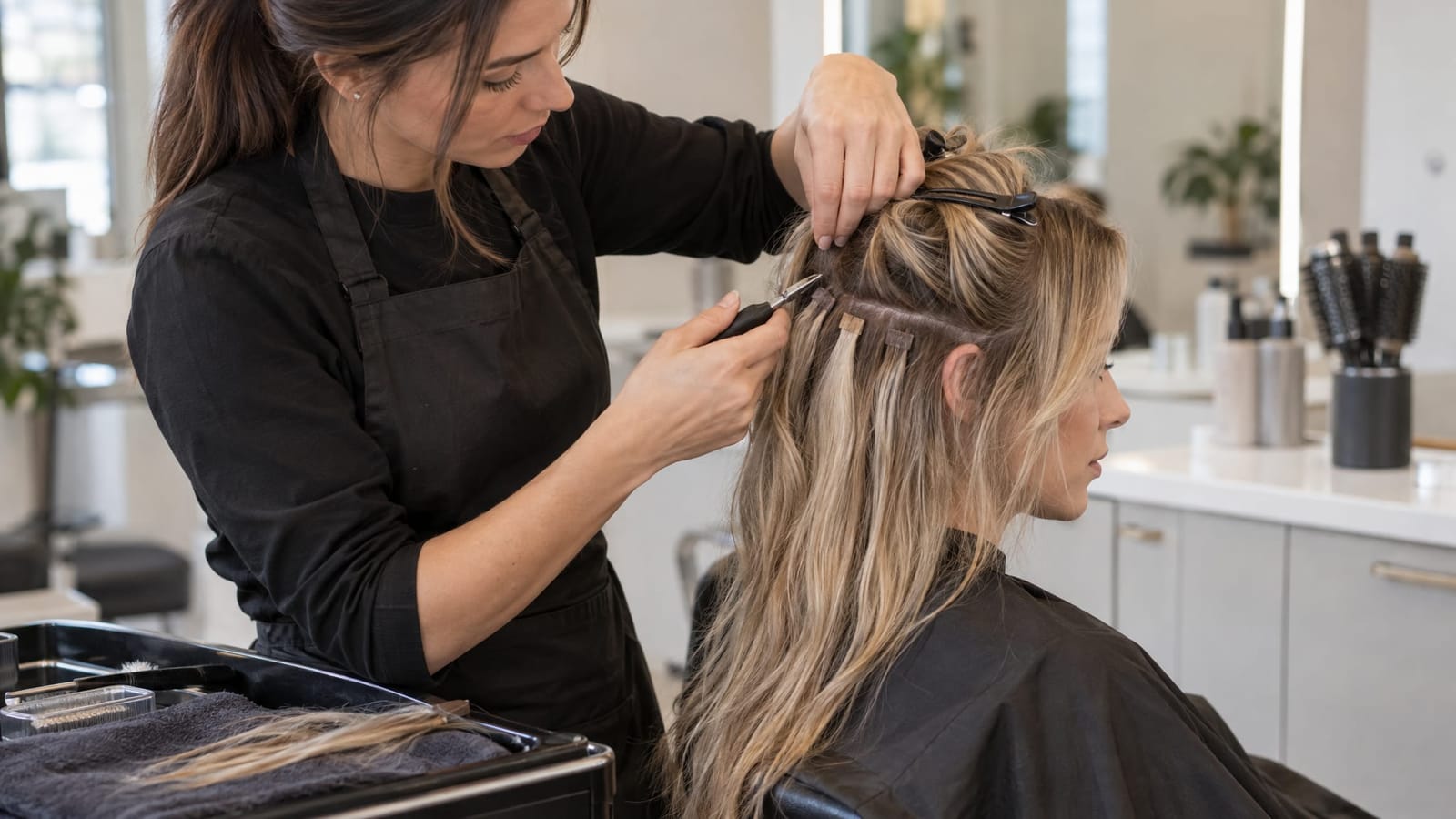
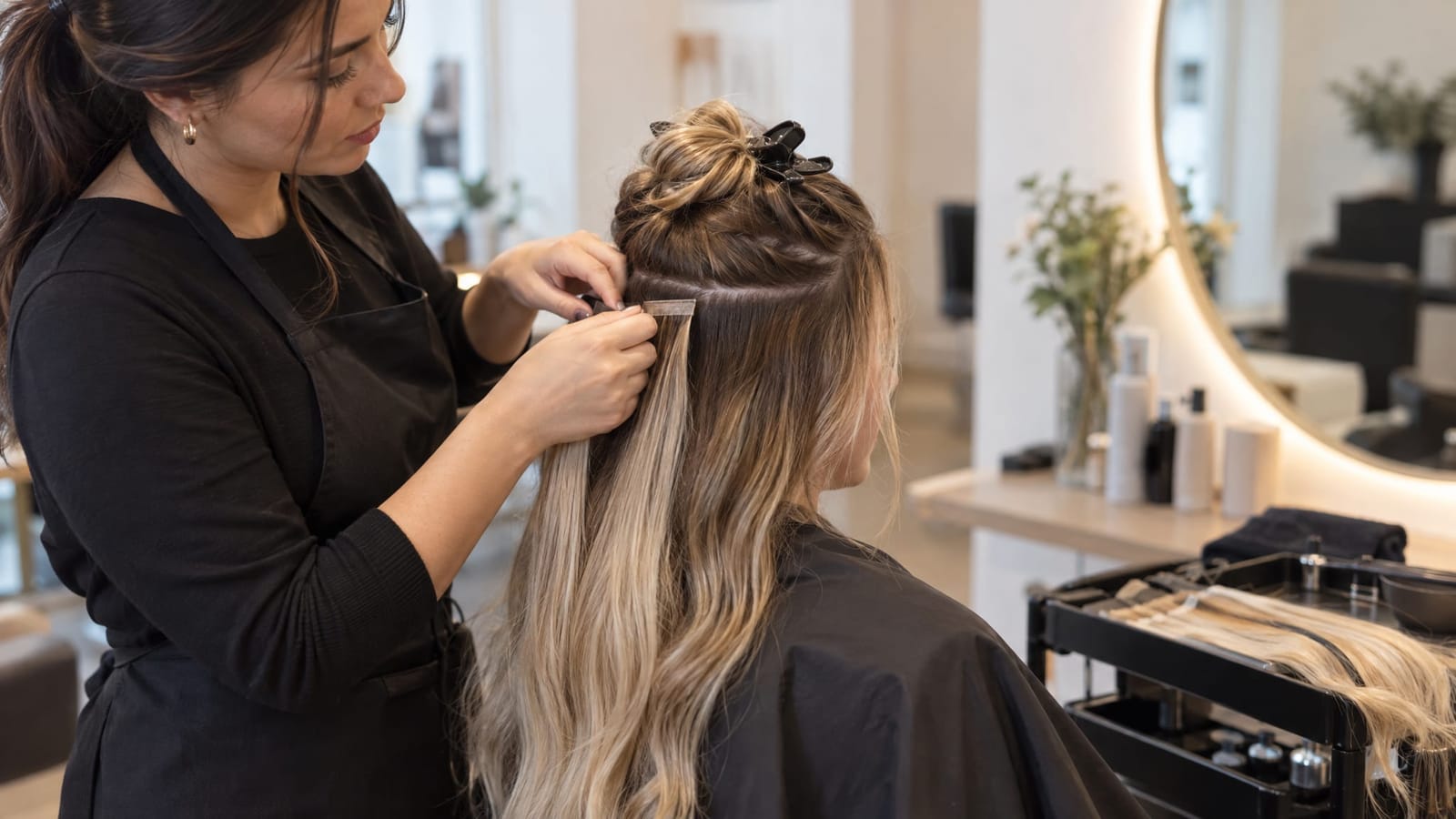
The professional extension removal process starts with identifying how the extensions are attached, releasing those attachments with the appropriate products or tools, and gently working through trapped shed hair and residue. The goal is to take out the added hair without unnecessary pulling on your natural strands.
Removal deserves as much attention as installation. Glue extensions, quick weaves, sewn wefts, and clip-ins do not all come out the same way. Understanding those differences helps you prepare for a careful takedown and choose what comes next, whether that is detangling, conditioning, a trim, or a different style.
Why pulling extensions out can cause problems
An extension that feels loose is not necessarily ready to slide free. Part of an adhesive attachment may have released while another section still grips your hair. Pulling at that point puts the force on the natural strands rather than the attachment.
Other removal mistakes create similar problems:
- Combing through adhesive: A comb can catch on sticky residue and pull the hair caught inside it.
- Cutting without a clear view: Natural hair can be difficult to distinguish from thread or extension fibers near an attachment.
- Rushing through tangled roots: Pulling through several joined sections at once concentrates tension instead of separating the strands.
- Scraping at residue: Aggressive rubbing or picking can irritate the scalp without properly releasing the adhesive.
That does not mean every extension needs professional removal. Clip-ins are designed to be taken out between wears by opening their clips. Attached systems involving adhesive, thread, or beads require a different approach, especially when tangles obscure the connection points.
Persistent scalp pain or broken skin needs assessment by a licensed healthcare professional rather than a styling or conditioning service.
What happens during professional extension removal
The details vary by installation, but a careful removal follows a clear sequence: assess the attachments, release them, separate the natural hair, and clean away remaining product.
First, identify the installation and check access
The stylist looks at how the extensions connect to your hair, where the attachments sit, and whether shed hair or product buildup has collected around them. A service name alone does not always explain the construction.
For example, a quick weave can involve wefts attached to a protective base rather than directly to loose natural hair. That changes how the style is taken apart. Our comparison of glue extensions, quick weaves, and braidless extensions explains why the attachment method matters when choosing a style.
This first assessment also helps separate two different tasks: releasing the extensions and detangling the hair underneath. Completing one does not automatically complete the other.
Next, release each attachment using the appropriate method
Professional removal is controlled work around individual attachment points, not a single pull through the whole style.
- Glue extensions and adhesive-based weaves: The adhesive is loosened with a compatible remover before the weft or base is separated. Resistant areas need further attention rather than more force.
- Tape-ins: A remover intended for the tape system helps release the adhesive tabs. Remaining stickiness is addressed separately.
- Keratin-bond extensions: These use an attachment-specific bond remover and tools designed to break down the extension bond. This is different from removing ordinary styling product.
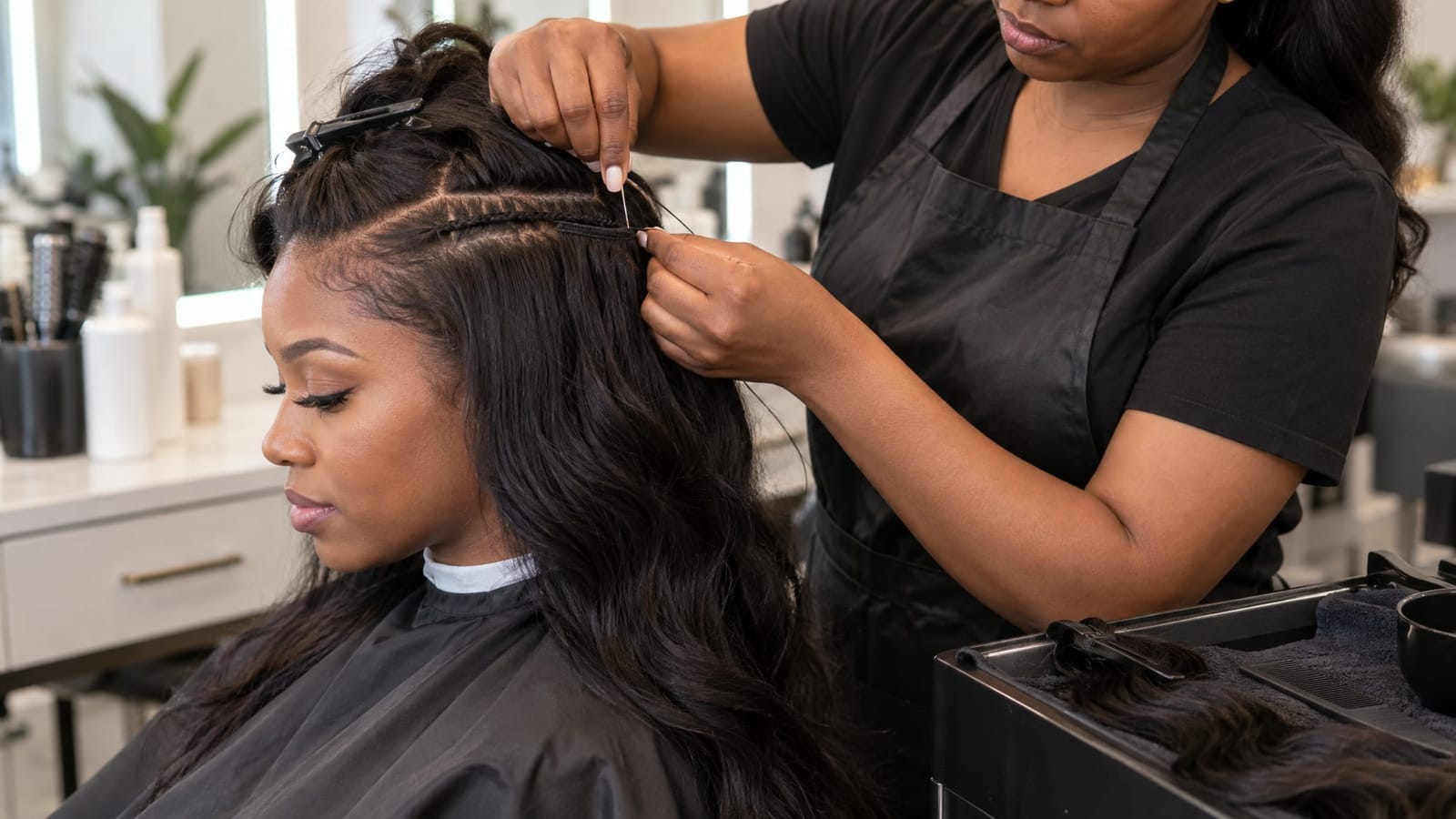
- Sewn or beaded installations: Removal targets the connecting thread or beads. Adhesive remover is not the main tool for a mechanical attachment.
Some installations combine methods, so more than one removal technique may be involved. For a closer look at adhesive-based takedowns, our explanation of how to remove glue extensions safely focuses on releasing the attachment rather than pulling against your hair.
Then, separate shed hair and work through tangles
Hair naturally sheds during everyday wear. With attached extensions, some of those loose strands stay caught in the installation instead of coming away during brushing or washing. They become more noticeable when the extensions come out.
That collected hair needs to be separated gently from the strands still growing. Small sections make it easier to see tangles and control tension. Detangling generally progresses from the ends upward, with the hair supported above the section being worked on.
For tightly curled or coily hair, shed strands can become intertwined with neighboring curls. This makes patient sectioning especially useful. The amount of collected hair alone is not enough to judge how the removal went.
Finally, cleanse and assess the natural hair
Once the attachments and major tangles are addressed, cleansing removes remaining product and buildup. Conditioning follows according to the hair’s needs.
This is also the point to assess the ends and decide on the next style. Immediately covering the hair with another installation can skip an opportunity to address lingering tangles, rough-feeling ends, or a routine that has become difficult to maintain.
Which products are used, and why?
There is no single remover that suits every extension system. The useful distinction is between products that release attachments and products that care for the hair afterward.
- Attachment-specific remover: Chosen for the adhesive, tape, or bond involved. Product directions determine its intended use and handling.
- Detangling product: Adds slip so strands move past each other more easily during section-by-section combing.
- Shampoo: Cleans the hair and scalp after the attachment and residue work. The choice depends on remaining buildup and the hair’s care needs.
- Conditioner: Helps improve softness and manageability after cleansing.
Oil and conditioner are not interchangeable with every adhesive remover. Likewise, a bond-care hair treatment is not the same product as a remover for extension bonds. Similar wording does not mean the products perform the same job.
A stronger cleanser is not automatically a better choice, either. Removing residue thoroughly and keeping the hair manageable are both part of the decision.
How to prepare for a removal appointment
Useful preparation gives the stylist a clear picture of the installation without disturbing it first.
- Bring installation details: The extension type, adhesive or attachment name, installation date, and any maintenance history help explain what is being removed.
- Keep relevant packaging or photos: These are particularly helpful when the style name does not identify the attachment system.
- Describe anything already applied: Oil, remover, dry shampoo, and other products can affect the work around an attachment.
- Point out difficult sections: Note areas that feel tangled, sticky, tight, or uncomfortable rather than trying to loosen them by force beforehand.
- Clarify the full appointment scope: Removal, detangling, cleansing, conditioning, and finishing are distinct tasks. An estimate is more useful when it accounts for each task you want included.
A simple clip-in takedown and a dense adhesive installation with tangled roots involve very different amounts of work. Attachment count, accessibility, residue, and tangling matter more than extension length alone.
Choosing the next step for your natural hair
After removal, choose care based on what your hair needs now, not simply on which service usually follows an extension appointment.
Detangling when separation is the priority
If shed strands and knots remain, detangling comes before an elaborate finish. Styling over unresolved tangles makes the next wash and comb-through more difficult.
At Kabelly Dominican Salon in Clinton, we offer Hair Detangle as part of our service menu. It is a relevant next step when the focus is carefully separating the natural hair rather than immediately adding length again.
Conditioning when manageability is the priority
Conditioner helps hair feel smoother and easier to comb after cleansing. It does not substitute for removing adhesive, and it does not permanently join split ends back together.
We offer treatment services including Cocktail Treatment and Color Care Treatment. Treatment selection is a separate decision from removal, taking into account your existing color, styling routine, and desired finish.
A trim or finish when you want to wear your own hair
A trim makes sense when the ends need reshaping or split ends need to be cut away. It is not an automatic requirement after every installation.
Our Hair Trim, Wash & Set, and Wash & Blowout services provide options for wearing your natural length after extensions. The useful choice is a finish that fits how you want to care for your hair between salon visits, not one that recreates the removed style at any cost.
Make removal part of your next extension decision
Before choosing another installation, consider the entire cycle: daily maintenance, access to your natural hair, eventual removal, and your preferred style afterward. A look that works beautifully for an occasion may involve more upkeep than you want for everyday wear.
Length is part of that decision. Longer extensions add styling possibilities, but also more hair to separate and manage. Our guide to choosing extension length and style for your face shape helps connect your preferred silhouette with a practical length.
If the extensions are mainly for a celebration, planning extension styles for special events includes deciding whether you want a temporary look or an attached style you will maintain afterward.
A thoughtful removal leaves room for that decision. Taking out extensions, caring for your natural hair, and choosing the next look are connected steps, but they do not have to happen as one automatic service.