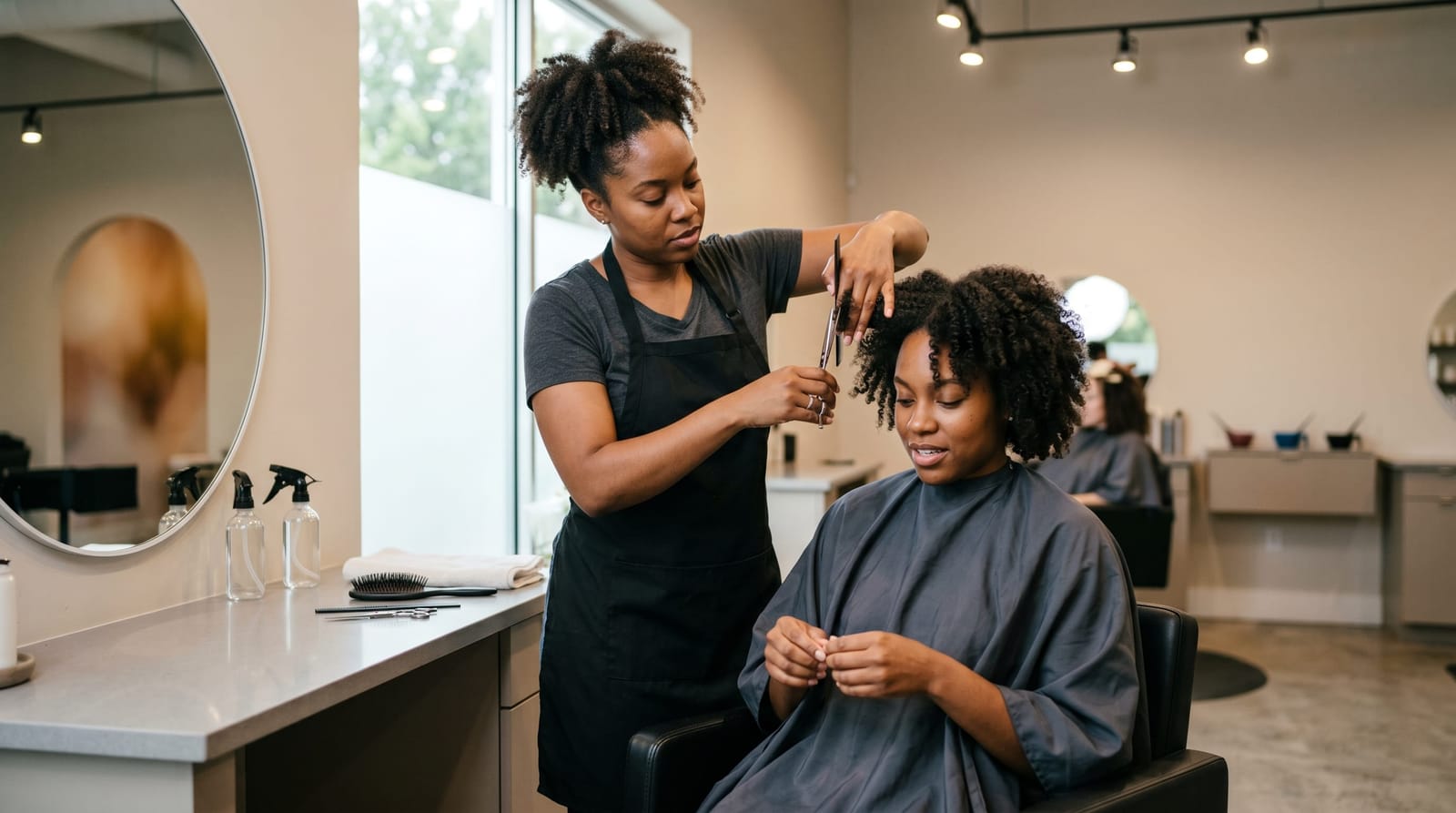
How Often Should You Get a Professional Haircut?

One of the most common questions clients ask at the salon is simple but important: how often should I actually be getting my hair cut? Whether you're maintaining a precision bob, growing out your natural curls, or just trying to keep your ends healthy, your haircut frequency schedule matters more than most people realize. There is no single answer that works for everyone: the right timeline depends on your hair type, texture, current style, and growth goals. This guide breaks it all down so you can stop guessing and start scheduling with intention.
Why Your Haircut Frequency Schedule Actually Matters
Skipping trims might feel like a way to save time or money, but it often costs you more in the long run. Hair grows an average of about half an inch per month, which means roughly 6 inches per year. Without regular cuts, split ends travel up the hair shaft, and once that damage sets in, no deep conditioner in the world can fully reverse it. The only fix is cutting it off.
Regular haircuts do more than just shape your style. They remove the weakened, porous ends that cause tangling, breakage, and dullness. Clients who stick to a consistent haircut frequency schedule typically see noticeably healthier hair over time: better shine, less frizz, and stronger strands overall. In fact, stylists report that clients who come in on a regular schedule spend significantly less time detangling and dealing with breakage than those who wait until their hair looks visibly damaged.
Think of a trim the same way you think about a car tune-up. You do not wait until the engine fails. You maintain it so it keeps running well. Your hair is no different.
Haircut Frequency by Hair Length and Style
The most reliable way to build your personal haircut frequency schedule is to start with your current length and style. Here is a breakdown of standard recommendations used by professional stylists:
- Short styles (pixie cuts, bobs, blunt cuts): Every 4 to 6 weeks. Short styles lose their shape quickly as hair grows. Even a quarter inch of new growth can make a precision cut look unfinished. Clients with short styles who stretch appointments past 6 weeks often find themselves needing more work to restore the original shape.
- Medium-length hair (shoulder to collarbone): Every 6 to 8 weeks. Medium lengths offer more flexibility, but this range is where split ends start becoming visible. Sticking to a 6-8 week schedule keeps the style looking intentional rather than grown-out.
- Long hair (below the shoulders): Every 8 to 12 weeks. Long hair tolerates growth more gracefully, but the ends are the oldest, most vulnerable part of the strand. A trim every 10 weeks on average keeps long hair looking healthy without sacrificing length gains.
- Curly and textured hair: Every 8 to 12 weeks. Curly hair naturally disguises length loss after a trim, making it easier to go longer between appointments, but textured hair is also more prone to dryness and breakage at the ends. Regular trims are especially important for maintaining curl definition and preventing tangles from turning into knots.
These ranges are starting points. Your stylist may adjust the recommendation based on how fast your hair grows, how well you maintain it at home, and how much damage is present at each visit.
Adjusting Your Schedule Based on Hair Goals
Your haircut frequency schedule should also reflect what you are trying to achieve, not just where your hair is now.
Growing Your Hair Out
Many clients skip trims entirely when trying to grow their hair, thinking every cut is a setback. In reality, going too long without a trim, more than 12 weeks for most hair types, allows split ends to travel higher up the strand, eventually forcing a larger cut than a regular trim would have required. Trimming just ¼ inch every 10 to 12 weeks while growing is enough to remove damage without sacrificing meaningful length.
Maintaining a Specific Style
If you have invested in a specific cut, a layered blowout, a shaped natural style, or a blunt one-length cut, you will want to stay on the tighter end of the recommended schedule. A layered style that looked perfect at week 4 can lose up to 60% of its visual impact by week 10 as the layers grow out unevenly. Staying consistent protects your investment in the style.
Repairing Damaged Hair
If your hair has significant heat damage, color damage, or breakage, your stylist may recommend more frequent trims: sometimes every 4 to 6 weeks, even for longer hair lengths, until the damaged portions are fully removed. This approach, combined with a solid at-home care routine, is the fastest path to genuinely healthy hair.
Signs It's Time for a Trim: Even If You're Not "Due" Yet
Calendars are helpful, but your hair gives you its own signals. Watch for these signs that your haircut frequency schedule needs to be moved up:
- Visible split ends: If you can see splits or fraying when you hold a strand up to light, damage is already progressing.
- Tangles that won't release: Hair that knots more than usual, especially at the ends, is typically due for a trim.
- Loss of style shape: If your cut no longer looks like the style you asked for, layers blending into bulk, a bob looking stringy, growth has changed the structure.
- Dullness that does not respond to products: Damaged ends absorb light rather than reflect it. If your hair looks flat and dull despite conditioning, a trim may do more than any product.
- Single-strand knots (fairy knots): Especially common in natural and curly hair, these small knots form at the end of individual strands and indicate it is time to remove those ends.
When you notice two or more of these signs at once, do not wait until your next scheduled appointment. Call ahead and come in early: a small trim now prevents a larger correction later.
How Dominican Salon Techniques Affect Trim Timing
At a Dominican salon, the approach to cuts is grounded in working with your hair's natural texture while delivering styles that look polished and last. Services like a wash and set or a blowout can extend the visual life of a cut by keeping the style smooth and defined between appointments, but they do not replace the need for regular trims.
In fact, clients who receive regular Dominican blowout services may want to stick to the lower end of their frequency range, every 6 weeks rather than 8, for example, because heat styling, even when done correctly with proper products and technique, adds cumulative stress to the ends over time. Keeping your trim schedule consistent ensures those ends stay strong enough to handle styling.
If you are unsure which cut works best with your face structure and features, understanding your face shape can help you choose a style worth maintaining on a regular schedule. A face shape guide for choosing haircuts can help you identify the cuts that will look best on you and are worth the commitment of a consistent trim schedule.
Frequently Asked Questions
Can I follow the same haircut frequency schedule for color-treated hair?
Color-treated hair typically needs trims on the more frequent end of the recommended range for your length. Chemical services, including highlights, relaxers, and keratin treatments, can weaken the hair shaft and accelerate split end formation. For medium to long color-treated hair, aim for every 6 to 8 weeks rather than stretching to 10 or 12. This keeps the ends strong and helps your color look vibrant rather than faded and ragged.
Does getting more frequent trims actually make hair grow faster?
No: haircuts do not speed up growth, which happens at the scalp level. Hair grows approximately half an inch per month regardless of how often you trim. What regular trims do is prevent breakage at the ends, which means you retain more of the length you grow. Clients who trim regularly often appear to grow hair faster because their ends are not breaking off as quickly as new growth comes in.
How do I know if I need a trim or a full cut?
A trim typically removes less than an inch, usually ¼ to ½ inch, and focuses on cleaning up the ends without changing the overall style. A full cut reshapes the style, adjusts layers, or makes a more significant length change. If your style still looks intentional but your ends feel dry or show splits, a trim is likely enough. If the shape of your cut has grown out significantly or you want a change, a full cut is the better choice. Your stylist can help you decide at your consultation.
What is the best haircut frequency schedule for natural hair?
For natural and curly hair, most stylists recommend trimming every 8 to 12 weeks. Because curls shrink when dry, small length changes are less visible, but that also means damage can hide until it becomes more serious. Natural hair worn in protective styles can sometimes go up to 12 weeks between trims, while natural hair that is frequently washed and styled may benefit from a trim closer to every 8 weeks to manage single-strand knots and maintain curl definition.
Building a Haircut Frequency Schedule That Works for You
Your ideal haircut frequency schedule comes down to three things: your hair's length, its texture and health, and what you are trying to achieve with your style. Short cuts need attention every 4 to 6 weeks; medium lengths do well at 6 to 8 weeks; long and textured hair can stretch to 8 to 12 weeks with the right home care. When in doubt, trust the signals your hair gives you: dullness, tangles, and split ends are clear invitations to book an appointment. At a Dominican salon, maintaining your cut on a consistent schedule is the foundation of great hair, no matter what style you are wearing.