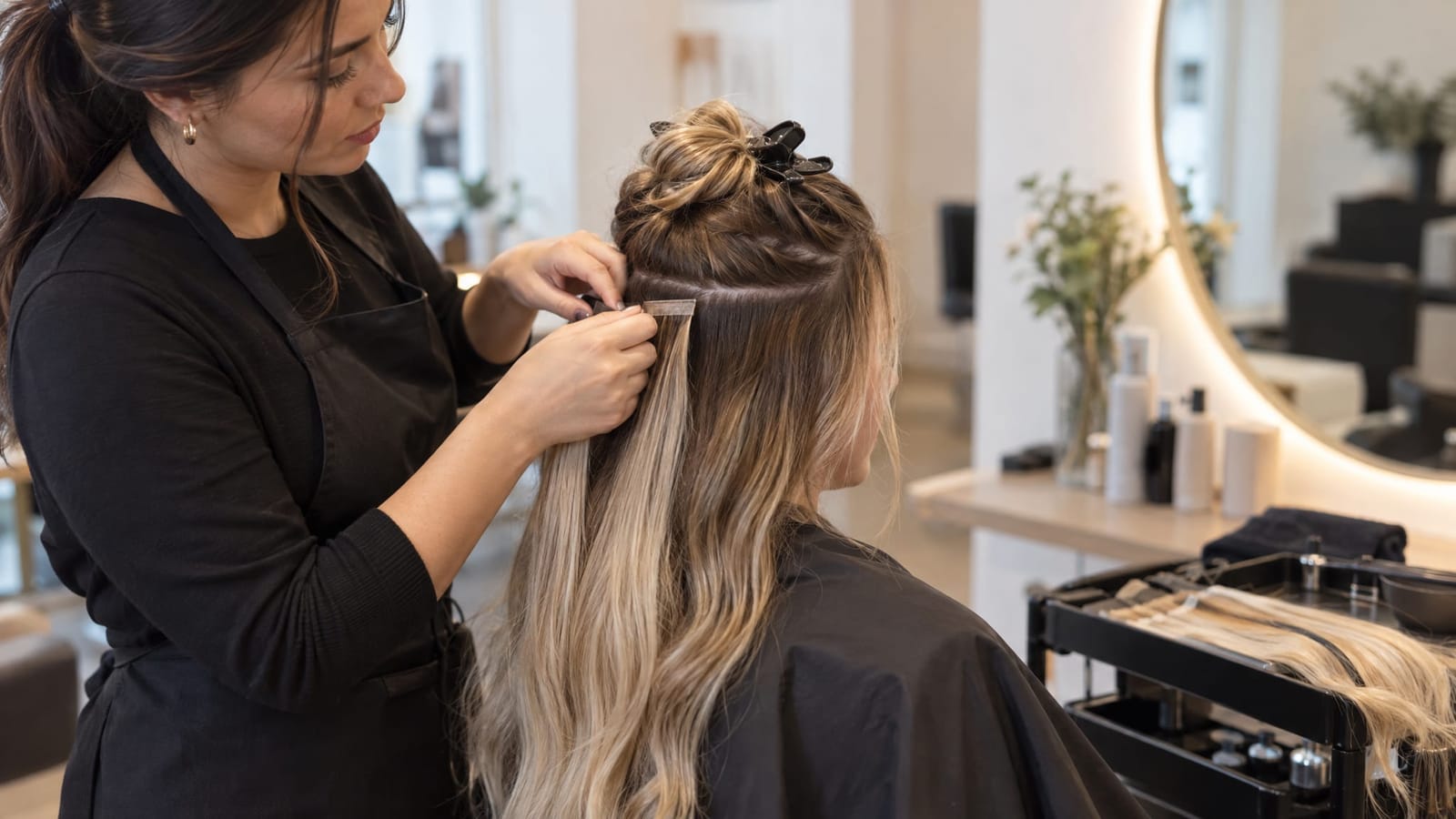
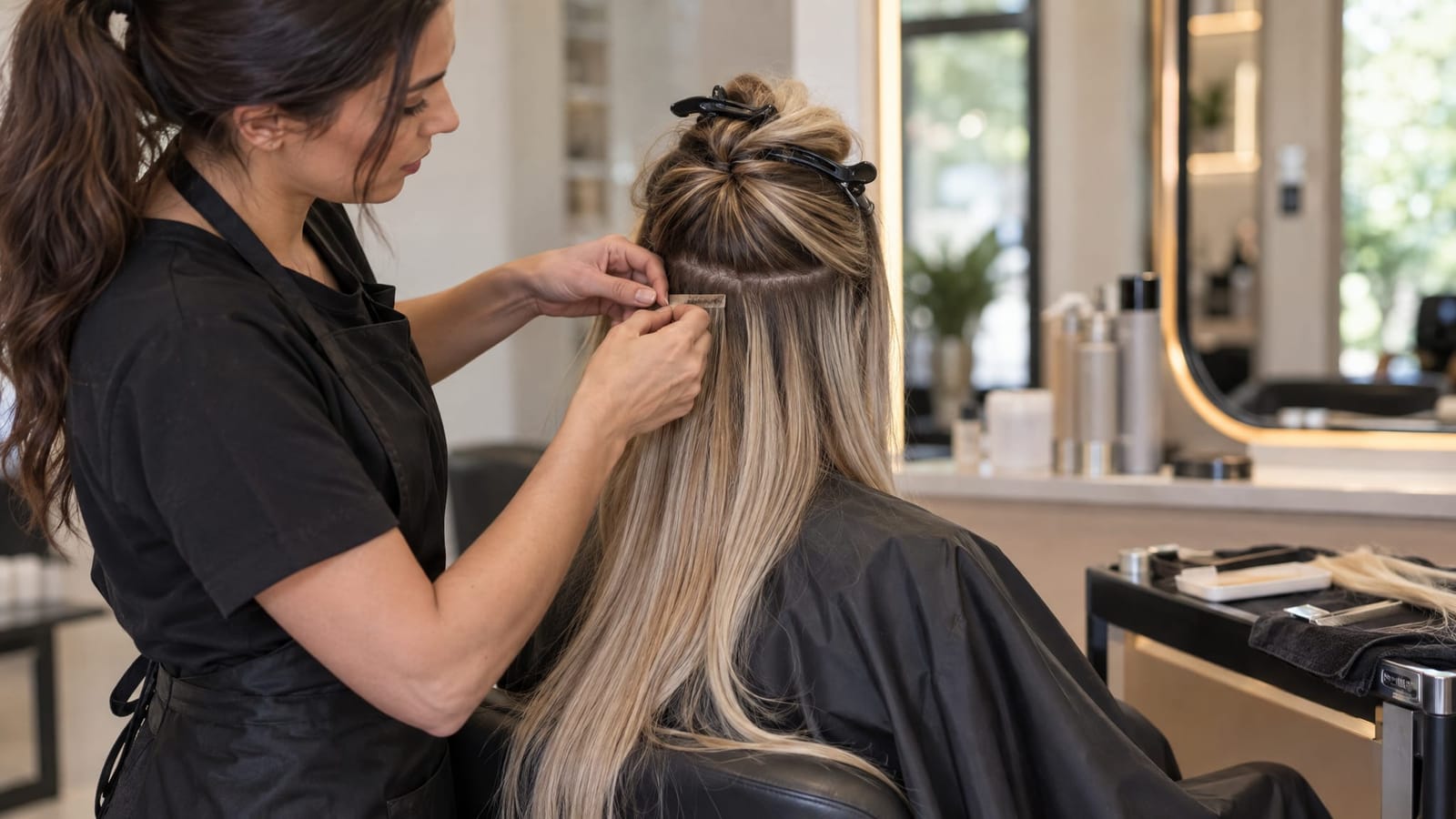
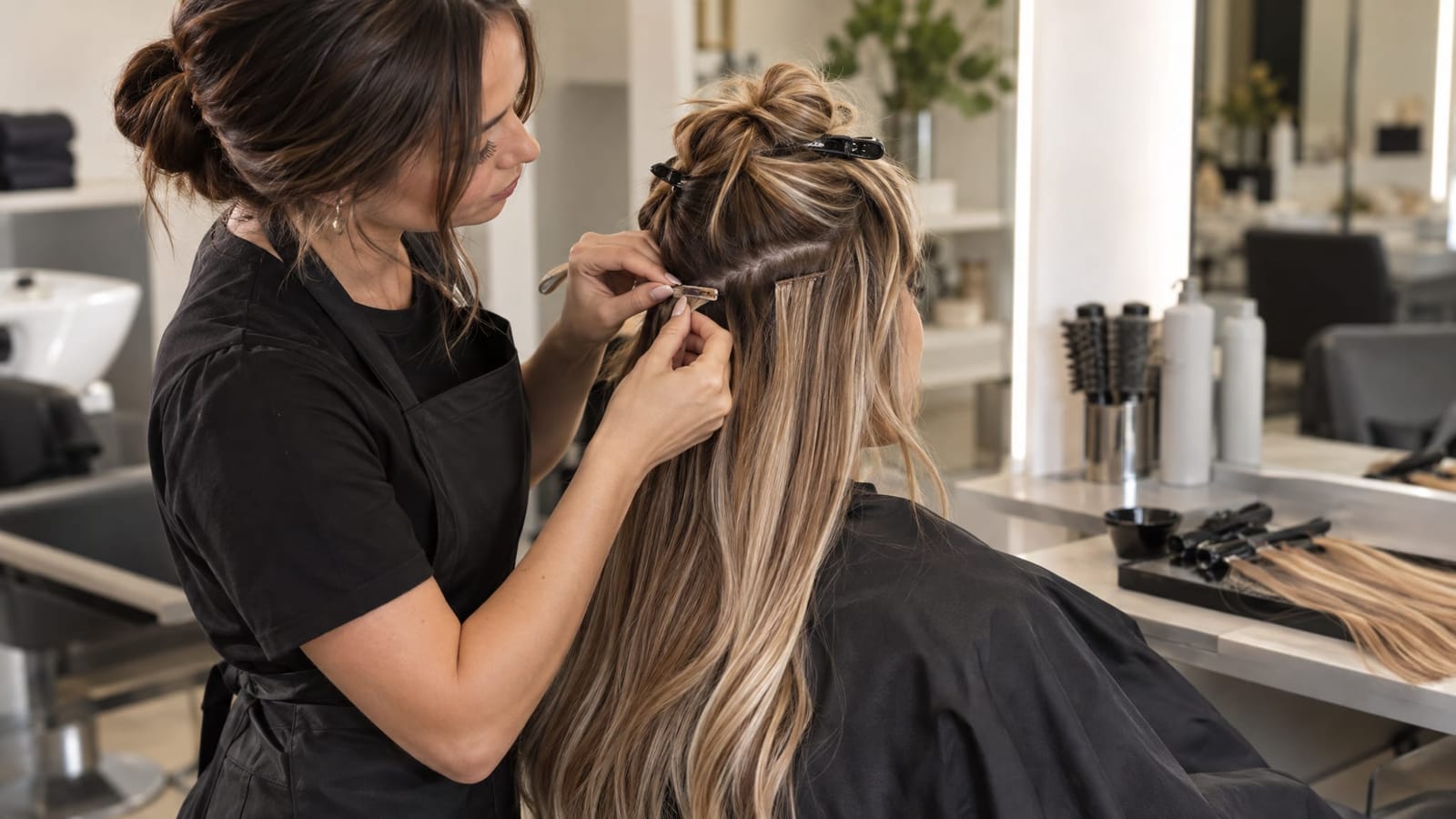
Quick Weave vs. Sew-In: Understanding the Difference Before You Book
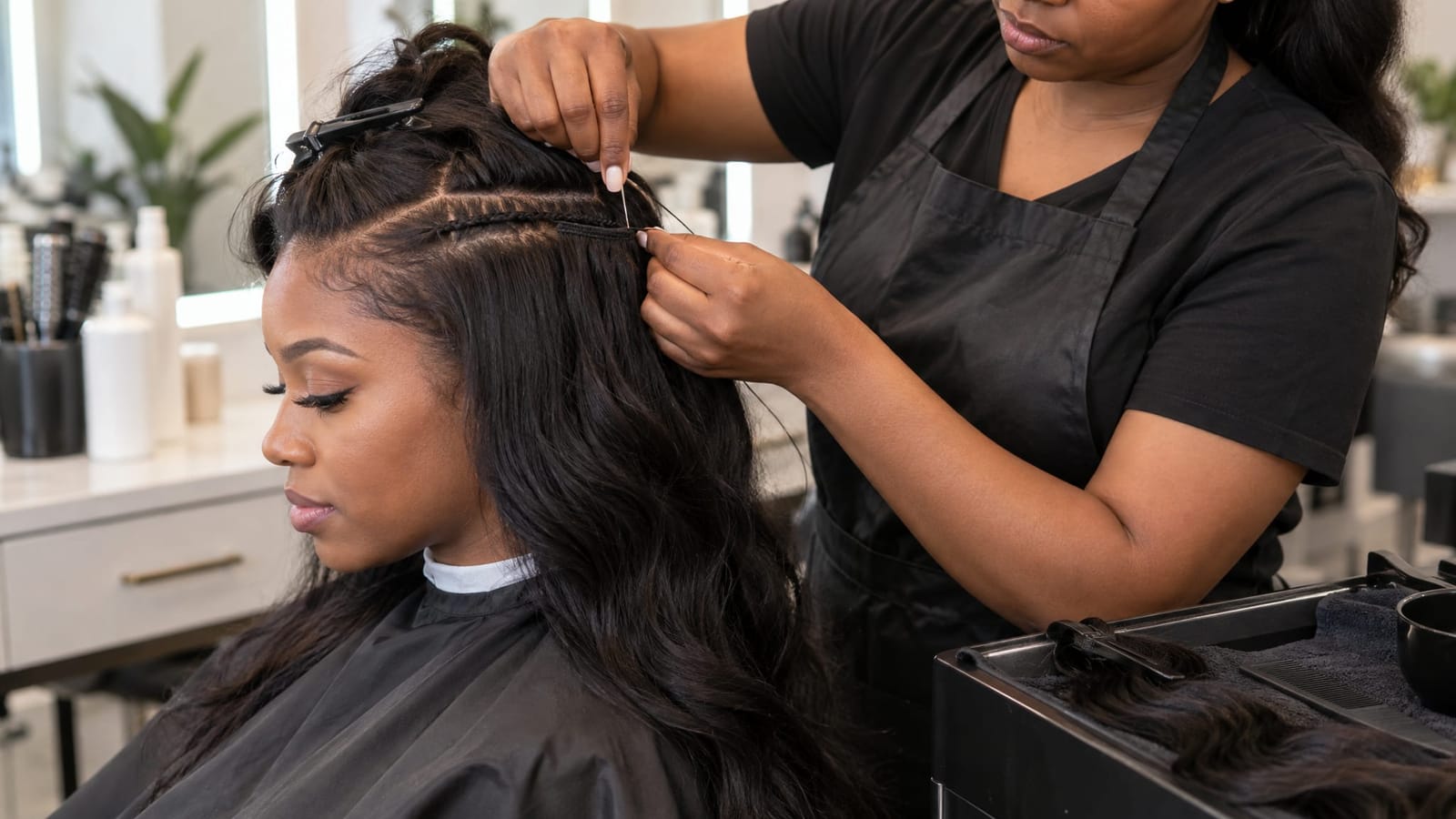
The main difference between a quick weave and a traditional sew-in is how the extension hair attaches. A cap-based quick weave uses adhesive to bond hair wefts, or strips of extension hair, onto a cap covering your natural hair. A traditional sew-in uses thread to attach those wefts to cornrow braids.
That difference affects installation, upkeep and removal. A quick weave generally suits a shorter-term style change, while a sew-in is often chosen for longer wear. Neither is automatically the better choice for every head of hair.
Quick Weave vs. Sew-In at a Glance
| Feature | Cap-Based Quick Weave | Traditional Sew-In |
|---|---|---|
| Foundation | Natural hair prepared beneath a cap | Natural hair braided into cornrows |
| Attachment | Wefts bonded to the cap with adhesive | Wefts stitched onto the braided foundation |
| Installation work | Cap preparation, bonding, cutting and styling | Braiding, stitching, cutting and styling |
| Removal | Releasing the bonded installation with an appropriate adhesive-removal method | Carefully removing thread, lifting away wefts and undoing braids |
How the Two Foundations Work
Quick weave: wefts bonded onto a cap
For a cap-based quick weave, the natural hair is arranged into a compact foundation, commonly through braiding or molding it flat. A cap covers that foundation, and the extension wefts are bonded onto the cap in a pattern that supports the finished style.
The cap separates the bonded wefts from the natural hair beneath it. That barrier is an important part of the method, but it does not replace careful application and removal. A quick weave is not simply loose tracks glued wherever extra fullness is wanted.
Sew-in: wefts stitched onto braids
A traditional sew-in starts with a braided foundation. The stylist stitches extension wefts onto those braids rather than bonding them to a cap.
The braid pattern influences where the wefts sit, how flat the finished style looks and which areas remain accessible for care. Foundation tension matters, too. A secure installation does not need to rely on excessive tightness.
Compare the Full Appointment, Not Just Attachment Time
Bonding wefts can take less time than stitching them individually, but “quick” describes the method, not a guaranteed appointment length. Detangling, cleansing, drying, foundation preparation and the final haircut all contribute to the visit.
A shaped bob, for example, still needs detailed cutting after the extension hair is attached. A sew-in with a more involved braid pattern adds preparation before stitching begins.
For scheduling, separate three questions: how long installation takes, how long you want to wear the style and how removal fits into your calendar. The fastest installation is not necessarily the simplest complete routine.
Choose the Finish Before Choosing the Method
Both methods can create straight, wavy or curly looks. The attachment method alone does not determine whether the finished hair looks natural or gives you styling flexibility.
- Texture: If natural hair will remain visible, choose extension hair that blends with how you plan to wear it between appointments, not only immediately after styling.
- Part placement: A fixed side part and a changeable part require different planning. Neither method automatically allows unrestricted parting.
- Updos: High ponytails expose the perimeter. Placement needs to account for that goal before installation.
- Fullness: More extension hair adds volume, but can also add bulk. The desired silhouette matters more than maximum fullness.
For example, someone who wants a sleek bob with the same part each day has different placement needs from someone who alternates between loose hair and pulled-back styles. Bring the everyday look into the decision, not just the inspiration photo.
Maintenance and Removal Are Part of the Choice
Natural hair still needs care underneath either installation. For frequent workouts or a busy weekly routine, the practical question is how cleansing and thorough drying will work with the foundation. A sewn attachment does not eliminate that upkeep.
With a quick weave, care products and cleansing methods need to be compatible with the adhesive. With a sew-in, attention goes to the braided foundation, thread and wefts. Any leave-out, meaning natural hair kept outside the installation to cover tracks, also needs its own styling routine.
Removal is where the methods differ sharply. Bonded wefts need an adhesive-appropriate release process rather than pulling. Sew-in removal involves distinguishing thread from natural hair before cutting stitches. Allowing time for careful removal, detangling and cleansing is more useful than stretching wear solely to reach a calendar date.
Which Option Fits Your Plans?
A quick weave may fit when:
- You want a shorter-term change in length, fullness or shape.
- You have a defined finished look rather than plans for frequent part changes.
- You are comfortable including adhesive care and removal in the routine.
A traditional sew-in may fit when:
- You prefer stitched attachment rather than a glue-cap method.
- You want longer wear and can maintain the braided foundation.
- You can allow time for both braiding and stitching during installation.
At Kabelly Dominican Salon in Clinton, MD, we offer quick weaves, glue extensions and clip-in extensions. Clip-ins provide a different option when removing the added hair between wears matters more than maintaining an installed style.
Frequently Asked Questions
Is a quick weave the same as a wig?
No. A cap-based quick weave is typically built during the installation, while a wig is a separately constructed hairpiece. The presence of a cap does not mean a quick weave is designed for daily removal.
Can the extension hair be reused?
Reuse depends on the hair’s condition and whether the wefts remain intact during removal. Adhesive residue can make cleanup more involved. For a sew-in, keeping the wefts intact while removing the thread helps preserve them for possible reuse.
Are quick weaves and glue extensions interchangeable terms?
Not always. Glue extensions can describe adhesive-based installations beyond the cap method. When comparing how long glue extensions last before a touch-up, distinguish the attachment method first. Different foundations call for different maintenance and removal plans.
The Bottom Line
A quick weave bonds wefts to a cap; a traditional sew-in stitches them onto braids. Choose around the finish you want, your intended wear period and the care you can comfortably maintain. A well-planned foundation matters as much as the finished style.