What Are Braidless Extensions and Are They Better for Your Hair?
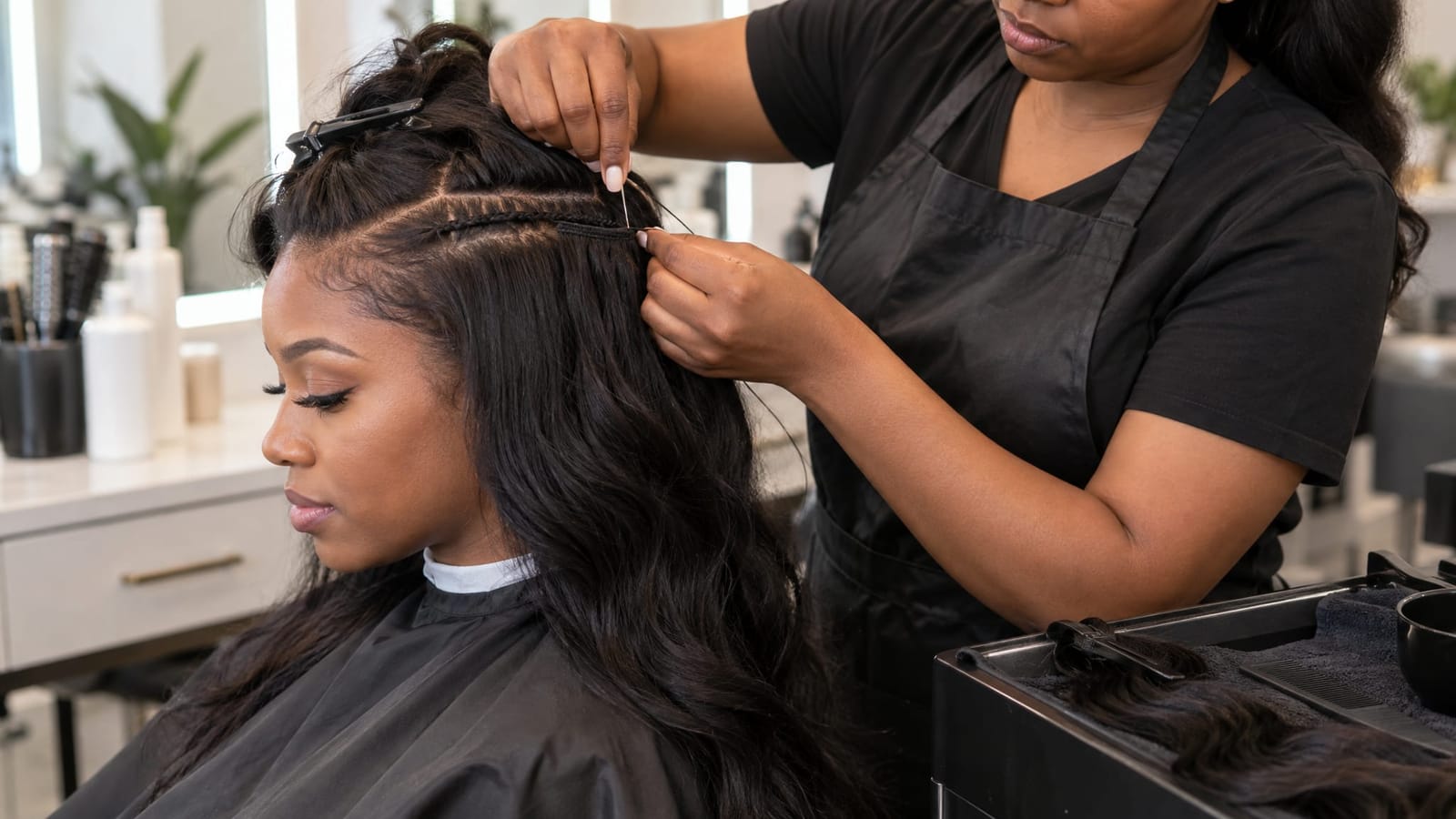
Braidless extensions add length or fullness without using cornrows as the foundation. The term usually refers to a beaded sew-in: small beads anchor sections of natural hair, and rows of extension hair attach to that foundation.
Are they better for your hair? Not automatically. Removing the braided base can reduce bulk, but beads still place weight and tension on natural hair. The better choice depends on your hair’s density, the amount of hair added, attachment placement and ongoing care, not simply whether the installation includes braids.
How braidless extensions work
In a traditional sew-in, extension wefts attach to a foundation of cornrows. A weft is a strip of extension hair joined together along its upper edge. In a braidless beaded sew-in, beads replace that braided foundation.
The process generally involves:
- Sectioning the natural hair: The stylist plans rows while leaving enough hair around them to cover the attachments.
- Creating the anchors: Small sections of natural hair pass through beads, which are secured to form a foundation.
- Attaching the wefts: The extension rows are sewn onto that foundation.
- Blending the finish: Cutting and styling help the natural hair and extensions look cohesive.
Names vary between techniques. “Braidless” describes the absence of a braided base, not one universal installation. When comparing options, identify whether the system uses beaded wefts, individual strands or another attachment method.
Why braidless does not automatically mean less damaging
A braidless installation may feel less bulky than one built over cornrows. Depending on row placement, it may also leave more access between attachments for cleansing. Those are useful differences, but neither proves that the method is gentler for every head of hair.
The important distinction is how much weight each section of natural hair supports. A large amount of extension hair attached to small or fragile sections can create pulling, even without braids. Likewise, a tightly braided foundation can create unnecessary tension.
Both methods need an appropriate balance of extension weight, placement and upkeep. A carefully planned braided sew-in can be a better fit than an overly heavy braidless installation.
Comfort matters, too. Persistent pulling is not evidence of a secure application or something to dismiss as part of getting extensions. If discomfort continues or you notice changes in hair density, a licensed dermatologist can assess your individual hair and scalp concerns.
Who may be a good candidate?
Hair texture alone does not determine suitability. Curly, coily, wavy and straight hair can have very different densities and strand strengths. Density, meaning how much hair grows within an area, affects both support and coverage.
- Enough coverage around the rows: The natural hair needs to conceal the attachments in the styles you regularly wear.
- A manageable amount of added hair: Modest fullness creates different demands from a much longer, heavier style.
- A compatible styling routine: Extensions that blend with your usual texture can reduce the need to repeatedly restyle your leave-out, the natural hair left visible.
- Room for maintenance: Beaded extensions require upkeep as the natural hair grows.
For example, someone who usually wears curls may find a close curl-pattern match more practical than straight extensions that require frequent smoothing of the leave-out. The goal is a blend that works beyond installation day.
What matters most in the application
Choosing an installation involves more than selecting a length. These details affect how the extensions look and feel:
- Weight relative to supporting hair: More wefts are not automatically better. Added fullness needs adequate support beneath it.
- Placement around delicate areas: Rows need enough supporting hair and coverage, rather than relying on sparse edges to hide an attachment.
- Your everyday hairstyles: A placement suited to wearing hair down may not conceal the rows in a high ponytail.
- Texture and blending: A close match can make daily styling simpler without relying entirely on heat.
- The maintenance plan: Adjustment and removal are part of the method, not optional finishing details.
Useful consultation questions include: How much hair will each row carry? Where will my natural hair remain visible? What changes as the attachments grow out? These questions reveal more about suitability than a promise of a flat or invisible finish.
Daily care affects the experience
Without cornrows, it can be tempting to treat braidless extensions exactly like loose natural hair. The attachment rows still need deliberate care.
Cleanse between rows without aggressively rubbing or bunching the hair. Rinse thoroughly and dry the attachment areas fully. When detangling, support the hair near the row and work gently from the ends upward so brushing does not tug directly on the anchors.
As natural hair grows, the beads move farther from the scalp. Maintenance timing depends on the installation and how it grows out. Professional adjustment and removal help address that movement without pulling or forcing the attachments.
A manageable length also makes a difference: extra length means more hair to wash, dry and detangle.
How braidless compares with other extension options
If you want occasional fullness rather than an attached style, removable clip-ins may better suit your routine. They offer flexibility, although repeated pulling or placing clips on the same delicate sections can still stress the hair.
At Kabelly Dominican Salon in Clinton, we offer clip-in extensions, glue extensions, quick weaves and extension styling. These options use different foundations and care routines. For an adhesive-based option, understanding how long glue extensions last before a touch-up helps clarify the maintenance commitment. Glue extensions and beaded braidless sew-ins are not interchangeable methods.
Frequently asked questions
Are braidless extensions the same as microlinks?
Not always. “Microlinks” can describe small bead attachments used for individual extension strands or for supporting wefts. Ask which construction the name refers to when comparing methods.
Can you wear braidless extensions in a ponytail?
That depends on row placement, coverage and ponytail height. A low ponytail may conceal attachments that become visible when the hair is lifted higher. Your preferred styles belong in the placement discussion.
Can the extension hair be reused?
Some wefts can be reused if their construction and condition allow it. Tangling, shedding and wear along the weft affect that decision. Reusable hair still requires proper removal and a fresh assessment before reinstallation.
The better method is the one your hair can support
Braidless extensions offer an alternative to a cornrow foundation, not a guarantee of healthier hair. Appropriate weight, comfortable placement, thoughtful blending and consistent maintenance matter more than the method’s name.