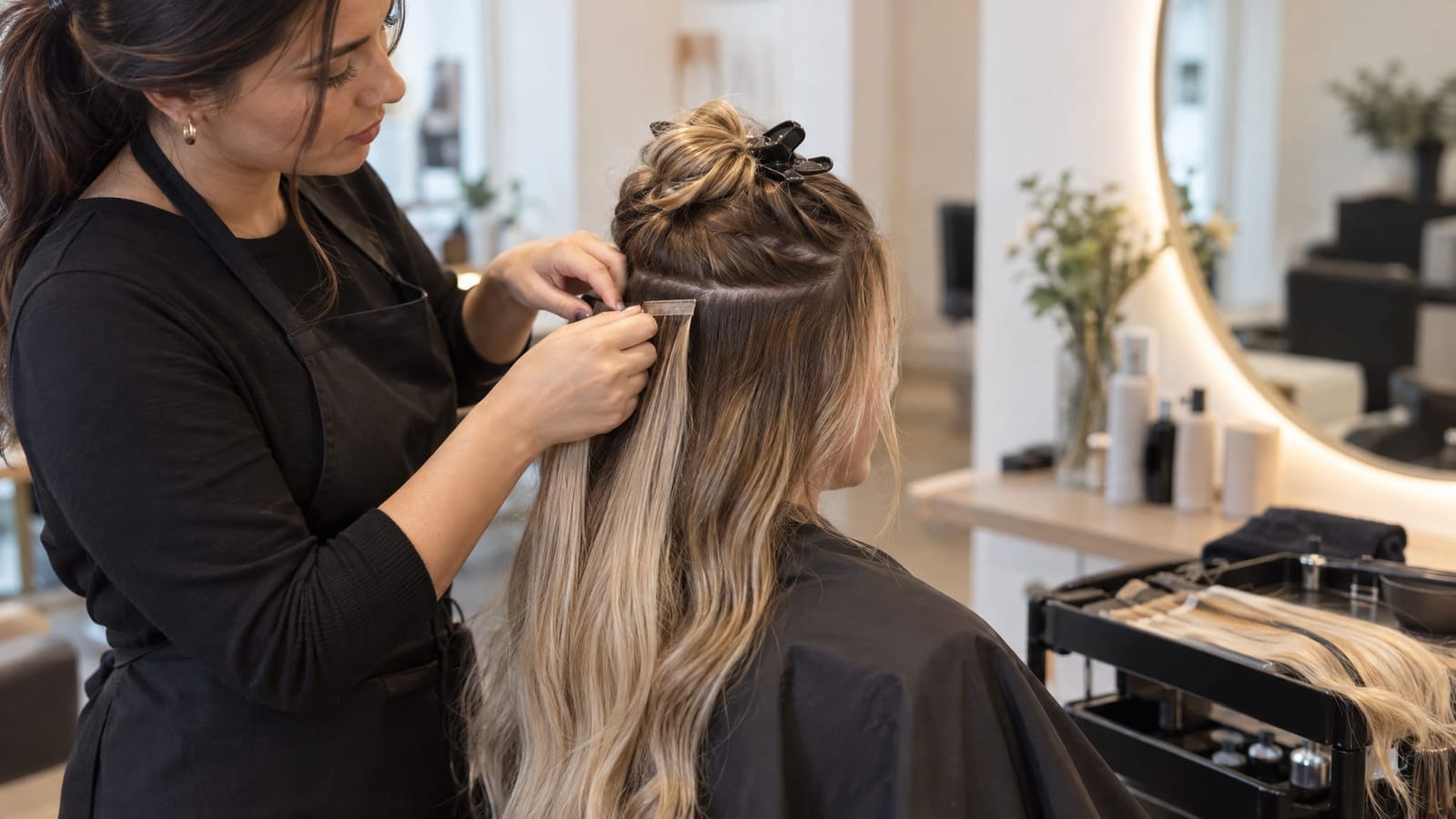
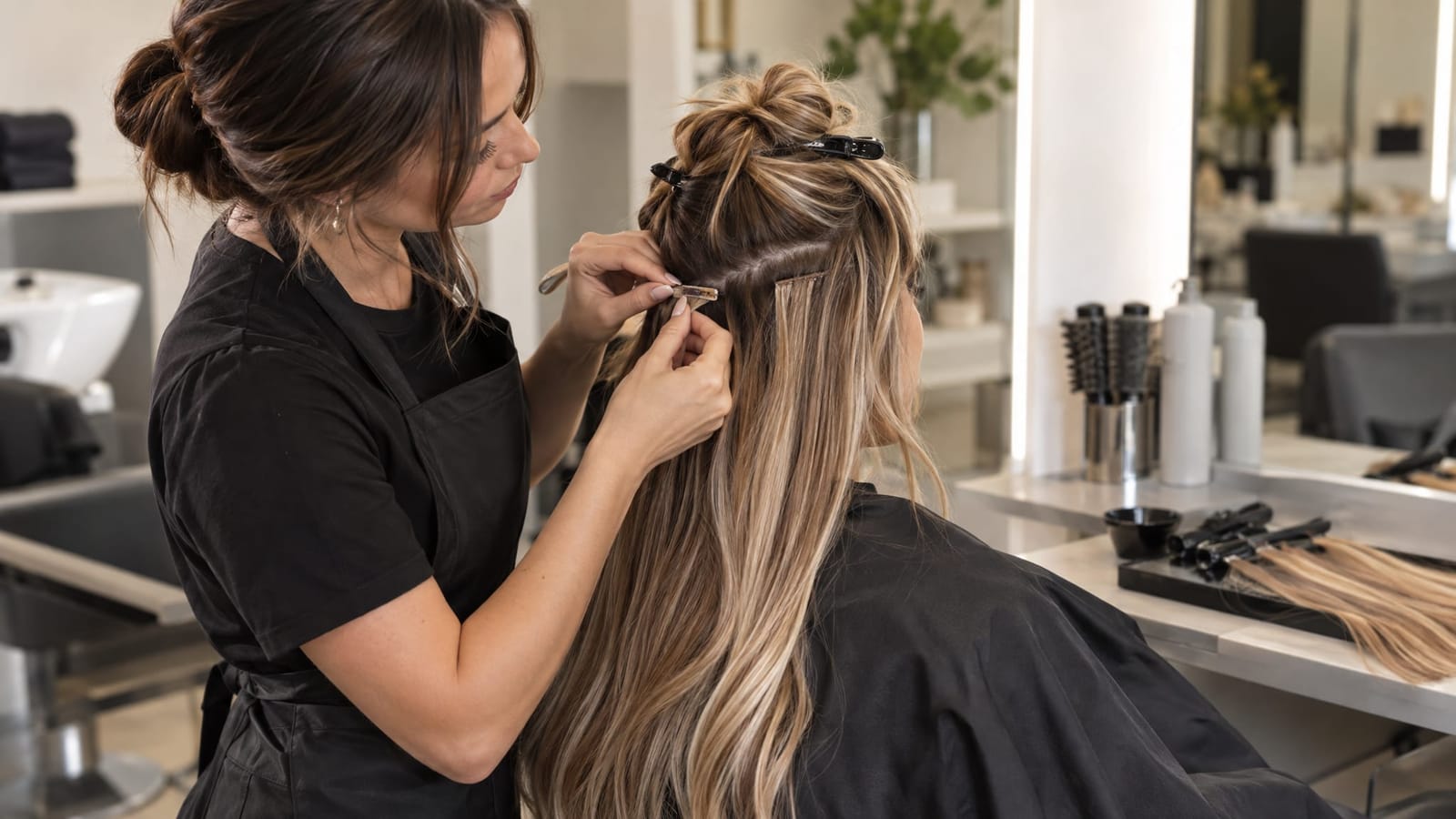
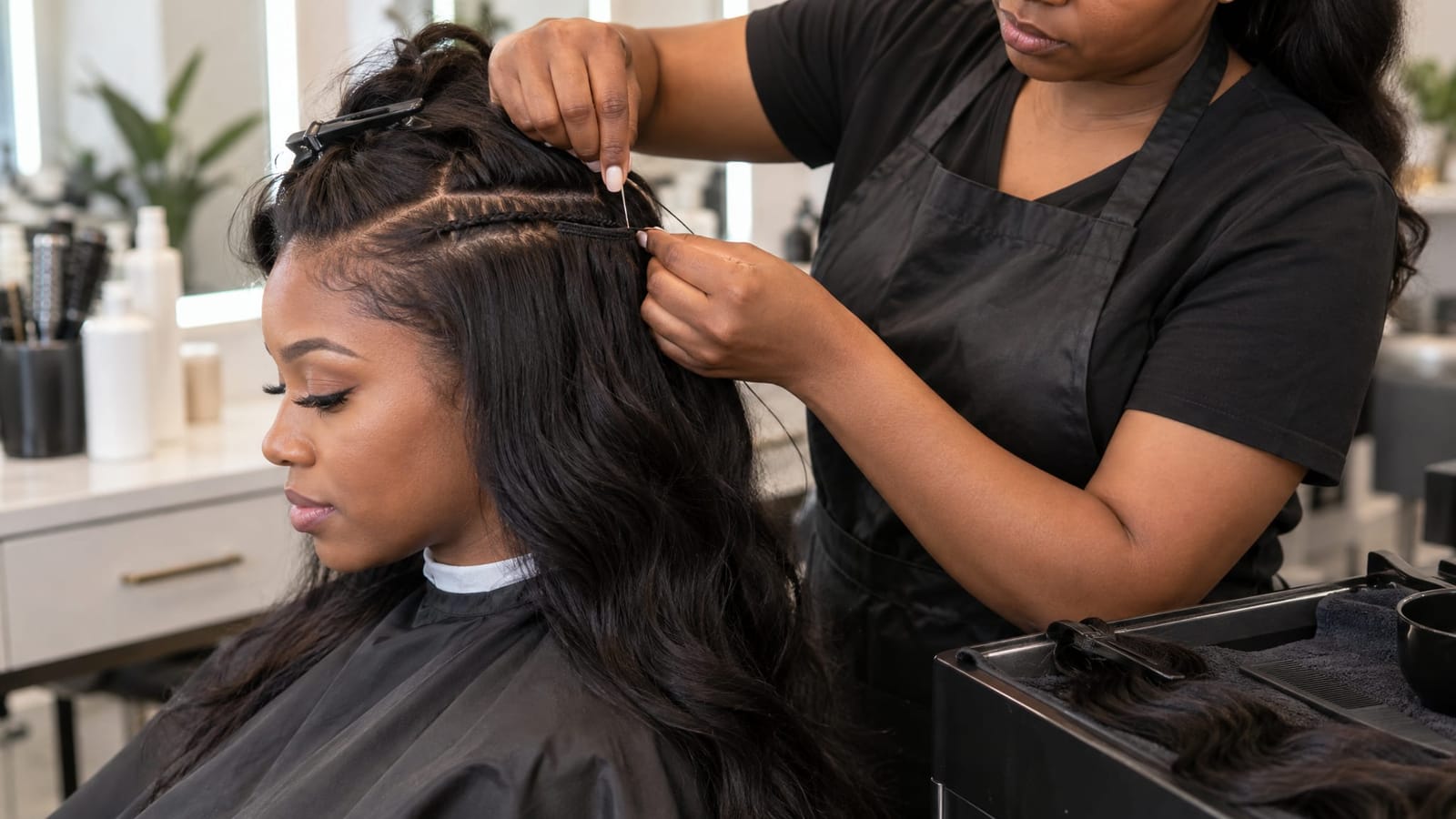
Can You Swim or Work Out with Hair Extensions Installed?
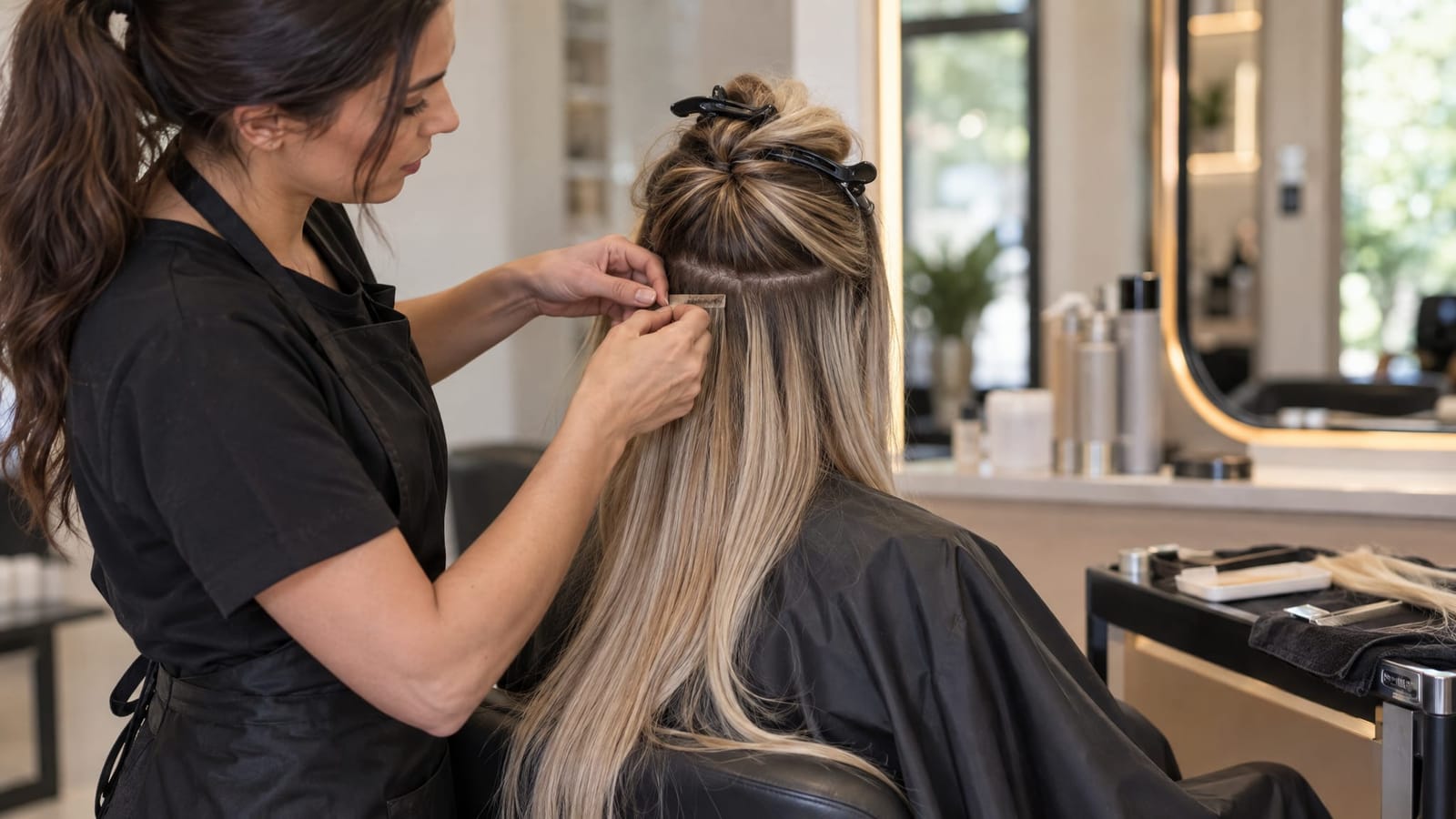
Yes, you can usually work out with installed hair extensions. Swimming takes more planning because the attachment method determines how well an installation handles soaking. Removable clip-ins are best taken out before swimming, while installed extensions need a routine that protects both the hair and its attachments.
The goal is not to build your life around your hairstyle. It is to choose extensions that fit your activities, keep them comfortably supported, and care for them afterward.
1. Start with the attachment method, not just the hair texture
Curly, straight, and textured extensions all need care around sweat and water. How they are attached makes the bigger difference when deciding whether to swim.
- Clip-in extensions: Remove them before swimming. Taking them out before a sweaty workout also avoids unnecessary washing, tangling, and movement at the clips.
- Glue extensions and adhesive-based quick weaves: Water tolerance depends on the adhesive and how the installation is secured. Do not assume a glued style is suitable for repeated submersion.
- Tape-ins and bonded extensions: Follow the attachment system’s instructions for swimming, products, and washing. Conditioner or oil near adhesive attachments can interfere with their hold.
- Sewn-in wefts: The wefts may not rely on adhesive, but the braided foundation still needs thorough cleansing and drying after getting wet.
At Kabelly Dominican Salon in Clinton, MD, we offer clip-in extensions, glue extensions, quick weaves, and extension styling. For frequent swimmers, removable extensions offer a practical advantage: they can stay out of the water entirely.
2. Prepare swim-compatible extensions before entering the water
Chlorinated water and saltwater can leave extension hair feeling dry and rough, making detangling more difficult. Preparation helps reduce exposure, but it does not make a water-sensitive installation swim-proof.
- Gently detangle the lengths before swimming.
- Wet the hair with fresh water before entering the pool or ocean.
- If permitted by the extension care instructions, use a light leave-in conditioner through the lengths, away from adhesive attachments.
- Gather the hair into a loose braid or another contained style that does not pull at the roots.
A swim cap helps contain the hair and reduce exposure. It is not a guarantee that the attachments or foundation will stay dry.
3. Keep your workout style secure without making it tight
Sweat leaves moisture and salt around the roots, while movement creates friction, especially at the nape. The aim is to keep the lengths from swinging or rubbing without adding tension at the attachment points.
A loose braid, two braids, or a low ponytail with a soft hair tie can work well, depending on the installation. Avoid forcing extensions into a high ponytail if that changes the direction of the attachments or creates pulling.
For example, a long ponytail may swing against your back during a run. Braiding the ponytail contains the lengths without requiring a tighter elastic. After exercise, remove damp headbands and release the style so the roots are not left enclosed.
4. Clean according to the activity, not a fixed washing rule
Swimming and exercising leave different things behind, so the aftercare does not need to be identical.
- After swimming: Rinse thoroughly with fresh water promptly, then cleanse according to the extension care instructions. A quick splash over the surface does not reach a dense foundation.
- After a lightly sweaty workout: Release the style and dry any damp roots. A full shampoo may not be necessary every time.
- After heavy sweating: Cleanse when the scalp and attachments feel coated, salty, or uncomfortable, rather than repeatedly covering the buildup with styling products.
Use products compatible with the extension hair and attachment system. A strong clarifying shampoo is not automatically the right choice after every swim, particularly for color-treated extensions.
5. Detangle gently and dry the hidden areas
Dry-looking lengths do not necessarily mean the installation is dry underneath. Braids, weft tracks, and covered foundations can hold moisture after the outer hair feels ready to style.
Press out excess water with a towel rather than rubbing the hair together. Detangle in sections, starting at the ends and working upward while supporting the hair above the section. Keep brushes and combs from catching directly on attachments.
Dry the roots and foundation as well as the lengths, using settings appropriate for the hair and attachment system. Keep concentrated heat away from adhesive bonds. Leave enough time for thorough drying before putting the hair into a bun, wrapping it for bed, or covering it with a scarf.
6. Recognize when home care is no longer enough
A salon refresh makes sense when the issue involves the attachment or foundation, rather than simply a hairstyle that has lost its shape.
- A weft or attachment lifts, shifts, or feels noticeably looser.
- The installation pulls during normal movement.
- Tangles gather close to the attachment points and resist gentle detangling.
- Buildup remains around the foundation after normal cleansing.
- The installation is difficult to clean or dry thoroughly at home.
We offer hair detangling and extension styling, but a refresh is not always just a wash and restyle. A lifting attachment may need removal or replacement. Adding more glue at home or pulling through a tight knot can make the underlying problem harder to address.
Frequently Asked Questions
Can I swim immediately after getting extensions installed?
For adhesive-based installations, follow the specified waiting period before washing, swimming, or heavy sweating. There is no single waiting time that applies to every adhesive. Scheduling an installation away from a planned pool day makes that aftercare easier.
Can dry shampoo replace washing after workouts?
No. Dry shampoo can absorb some oil, but it does not rinse away sweat, salt, or product buildup. Use it sparingly between washes if it is compatible with your extensions, rather than layering it repeatedly around attachment points.
Are synthetic extensions easier to maintain for swimming?
Not automatically. Synthetic fibers have their own washing, product, and heat limits, and the attachment still determines whether the installation suits swimming. Follow the fiber’s care instructions rather than treating synthetic extensions like human hair.
Choose a routine you can comfortably maintain
An active lifestyle and extensions can work together. The most manageable choice is one that fits both your activities and the time you have for cleansing, detangling, and thoroughly drying the installation afterward.