Is a Texturizer Good for Thick, Coily Hair Types?
If you have thick, coily hair and you've been wondering whether a texturizer could work for you, you're asking exactly the right question, and you deserve a thoughtful, honest answer. Texturizers are often discussed in broad strokes, but thick and type 4 hair textures have very specific needs that require a more careful look. This post breaks down what a texturizer can realistically do for thick, coily hair, what results you can expect, and how the stylists at Kabelly approach each client individually before recommending any chemical service.
What a Texturizer Actually Does to Coily Hair
A texturizer is a mild chemical service, typically a relaxer left on the hair for a shorter processing time, designed to loosen the natural curl pattern rather than straighten it completely. For type 4 hair, which includes tightly coiled 4A, 4B, and 4C curl patterns, a texturizer works by partially breaking the disulfide bonds in the hair strand. The result is a softer, more elongated version of your natural curl, not pin-straight hair, but a loosened pattern that's often easier to detangle and style.
It's worth understanding what this looks like in practice. Someone with a tightly coiled 4C pattern may see their curl loosen to something closer to a 3C or 4A after a texturizer. The actual outcome depends on the hair's natural curl diameter, density, and porosity: three factors that vary widely even within the same curl type. A texturizer does not permanently eliminate curl, and it does not behave identically on every head of hair. Managing those expectations from the start is something the team at Kabelly takes seriously during every consultation.
Is Thick, Coily Hair a Good Candidate for a Texturizer?
Thick, coily hair can absolutely be a good candidate for a texturizer, but "thick" and "coily" alone don't tell the whole story. According to professional hair care guidelines, stylists typically assess at least four characteristics before moving forward with any chemical service on coily hair:
- Hair density: Thick hair with high strand density requires thorough, even product application to avoid uneven processing.
- Porosity level: High-porosity hair absorbs chemicals faster, which means processing time needs to be carefully monitored, often shorter than standard recommendations.
- Scalp health: Any active sensitivity, flaking, or irritation on the scalp is a reason to wait before applying any chemical service.
- Previous chemical history: Hair that has been color-treated, previously relaxed, or heat-damaged needs additional evaluation before a texturizer is introduced.
When thick, coily hair is in a healthy baseline state, well-moisturized, free of breakage, and with a stable scalp, texturizers can be a genuinely effective option for clients who want more manageability without committing to a full straightening service. Research in professional cosmetology consistently shows that proper pre-service assessment reduces adverse outcomes by a significant margin, which is why skipping a consultation and going straight to chemical application is never recommended.
Realistic Results: What Thick, Coily Hair Looks Like After a Texturizer
One of the most important things a stylist can do is set realistic expectations, and that's not just about managing disappointment. It's about helping clients make informed choices that actually serve their lifestyle and hair goals.
For someone with thick 4B or 4C hair, a texturizer typically produces these kinds of results:
- A curl pattern that is visibly softer and more defined, but still distinctly curly
- Reduced shrinkage: many clients with 4C hair experience up to 70-80% shrinkage before a texturizer, and that number can decrease noticeably after treatment
- Improved detangling time, which is particularly meaningful for clients managing thick hair that takes significant time and effort to work through
- Better moisture retention in the curl, when applied correctly, a texturizer can make the hair shaft more receptive to conditioning treatments
What a texturizer will not do is make thick, coily hair behave like fine, loosely curled hair. Thickness is a structural characteristic of the hair strand itself: it doesn't go away with a chemical service. Clients who come in hoping for dramatically different texture are guided toward a more complete conversation about whether a relaxer or another approach might align better with their goals. For clients who want to understand the full difference between these options, our overview of texturizer vs relaxer difference covers those distinctions in detail.
How Kabelly's Stylists Assess and Formulate for Thick, Coily Hair
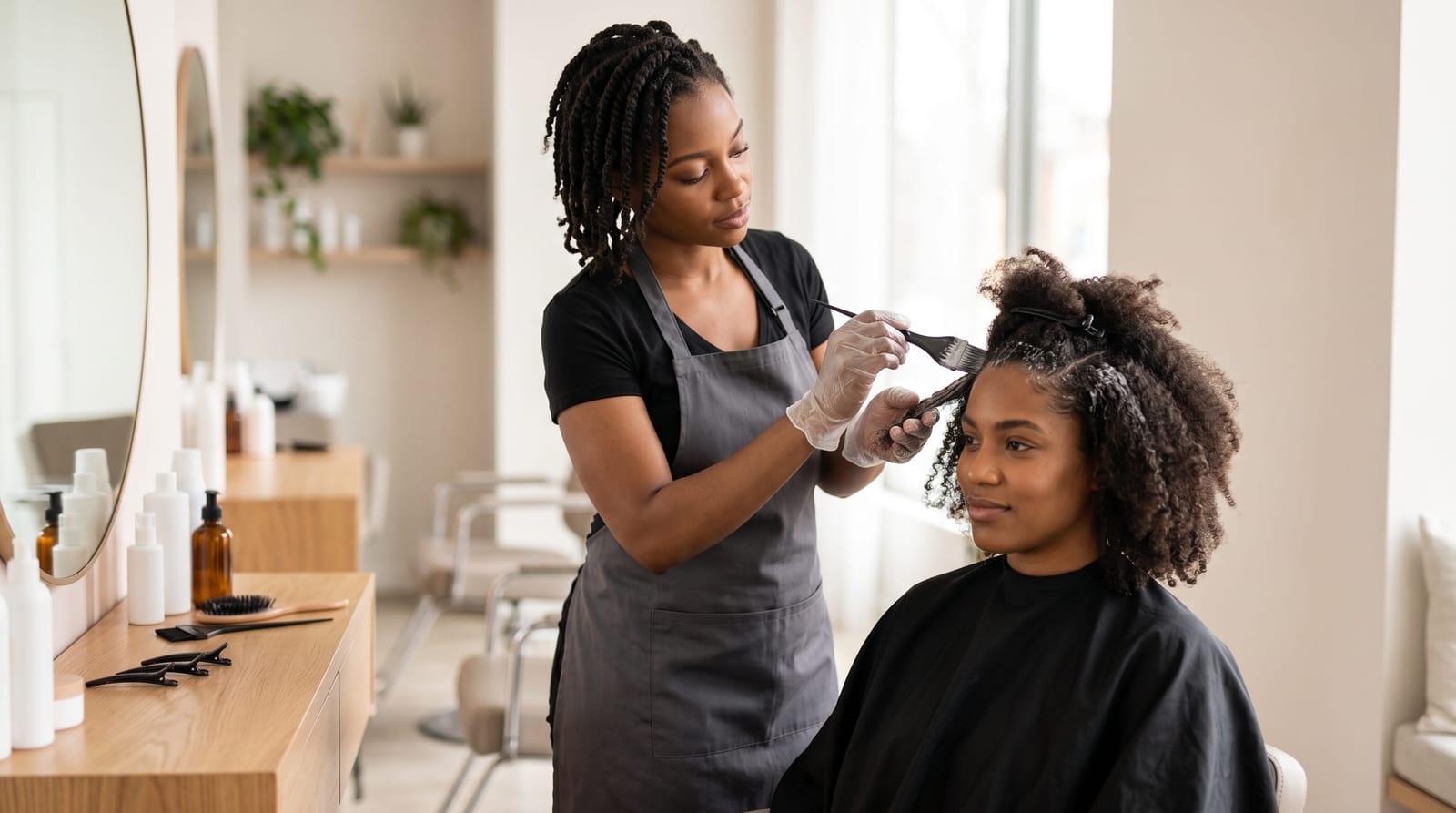
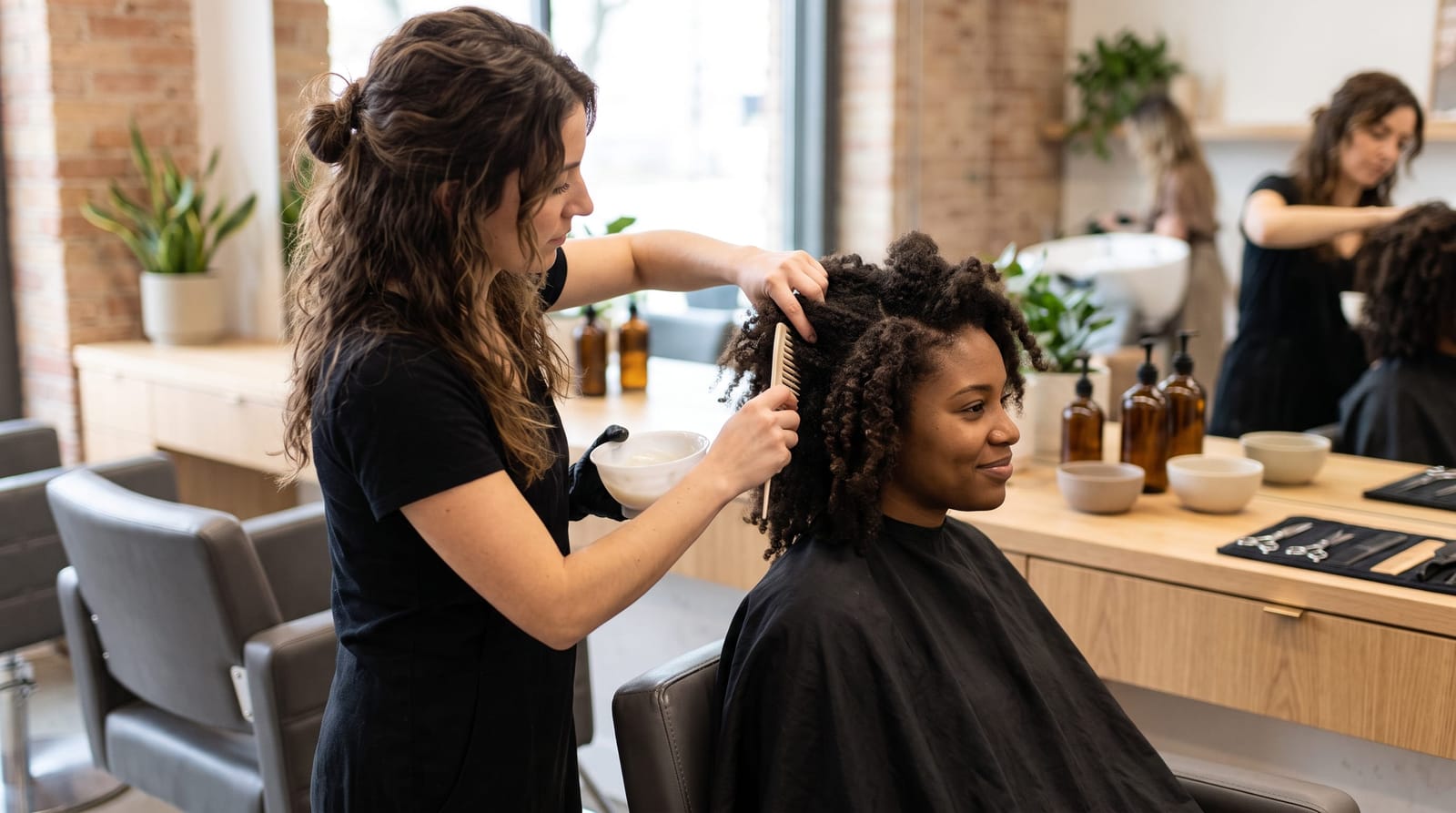
At Kabelly, no texturizer service begins without a thorough consultation. For thick, coily hair specifically, this process involves more than just a quick look: it's a hands-on assessment that informs every decision made at the bowl.
Here's how the team approaches it:
- Strand analysis: The stylist examines the hair's current moisture levels, elasticity, and porosity before recommending any chemical service. Hair with low elasticity, meaning it doesn't spring back when gently stretched, is often not ready for a texturizer and needs a strengthening regimen first.
- Formulation selection: Not all texturizer formulas are identical. The stylist selects a strength and base formula appropriate for the client's hair density and porosity level. Thicker, lower-porosity hair may actually require a slightly stronger formula applied with precise sectioning to achieve even results.
- Processing time management: Because thick hair has more volume and mass, heat retention during processing can vary. Kabelly's stylists monitor processing closely, typically checking the hair's response every 5 minutes, rather than relying on a fixed timer.
- Post-service conditioning: A neutralizing and deep conditioning protocol is applied immediately after processing to stabilize the hair's pH and restore moisture. This step is non-negotiable for thick, coily hair, which tends to need additional hydration after any chemical service.
This level of personalization is what separates a thoughtful chemical service from a one-size-fits-all approach. Thick, coily hair is not a liability: it's a starting point that simply requires careful, informed handling.
Maintaining Texturized Thick Hair Between Salon Visits
After a texturizer service, maintaining the health of thick, coily hair is an ongoing commitment: one that makes a measurable difference in how long your results look and feel their best. Professional hair care experts generally recommend a touch-up interval of no less than 8 to 12 weeks for texturized hair, and many clients with very thick hair find that 12 to 16 weeks is a more appropriate window.
Between visits, the most effective home care practices for texturized thick hair include:
- Deep conditioning at least once per week with a moisturizing, protein-balanced formula
- Sleeping with a satin or silk pillowcase or bonnet to minimize friction and frizz
- Avoiding heat styling tools more than once or twice per week, and always using a heat protectant when styling
- Keeping the hair moisturized daily with a leave-in conditioner or curl cream, paying particular attention to the ends
- Scheduling a trim every 8 to 10 weeks to keep the ends healthy and prevent breakage from working upward
Regular trims are especially important for thick hair because buildup at the ends can create tangles that stress the entire strand, and texturized hair, while more manageable, still benefits from consistent trimming as part of a healthy maintenance plan.
Frequently Asked Questions
Can a texturizer damage thick, coily hair?
Any chemical service carries some level of risk when not applied properly. Thick, coily hair that is already stressed, dry, or over-processed is not a good candidate for a texturizer until its condition improves. When applied to healthy hair by an experienced stylist with proper assessment and aftercare, a texturizer is generally well-tolerated. The key is honest evaluation before the service, not after.
How is a texturizer different from a relaxer for thick hair?
A relaxer is designed to straighten the hair fully, while a texturizer loosens the curl pattern without eliminating it. For thick, coily hair, a relaxer produces a straighter result with a longer processing time, whereas a texturizer leaves the hair in a curlier, more natural-looking state. The right choice depends on your styling goals and how much change you actually want.
How many texturizer sessions will I need to see results?
Most clients see clear results after a single texturizer session. However, very thick or dense hair may require follow-up treatments spaced 8 to 16 weeks apart to achieve and maintain the desired level of curl loosening. Your stylist will guide you based on how your hair responds to the first service.
Can I color my hair if I've had a texturizer on thick, coily hair?
It's possible, but layering chemical services on thick, coily hair requires careful spacing and professional evaluation. Most stylists recommend waiting at least four to six weeks between a texturizer and a color service to give the hair adequate time to stabilize. This is something your stylist at Kabelly will assess during your consultation.
The Bottom Line
A texturizer can be an excellent choice for thick, coily hair, when the hair is healthy, the stylist is experienced, and expectations are grounded in reality. It won't turn type 4 hair into a loose wave, but it can meaningfully reduce shrinkage, improve manageability, and bring out a softer version of your natural curl. At Kabelly, every texturizer service begins with an honest, personalized consultation so that whatever chemical service you choose, it's one that genuinely fits your hair and your life. If you're still weighing your options, exploring the broader world of chemical hair services is a great next step in finding what's right for you.