How to Know When Your Hair Is Ready for a Relaxer Touch-Up
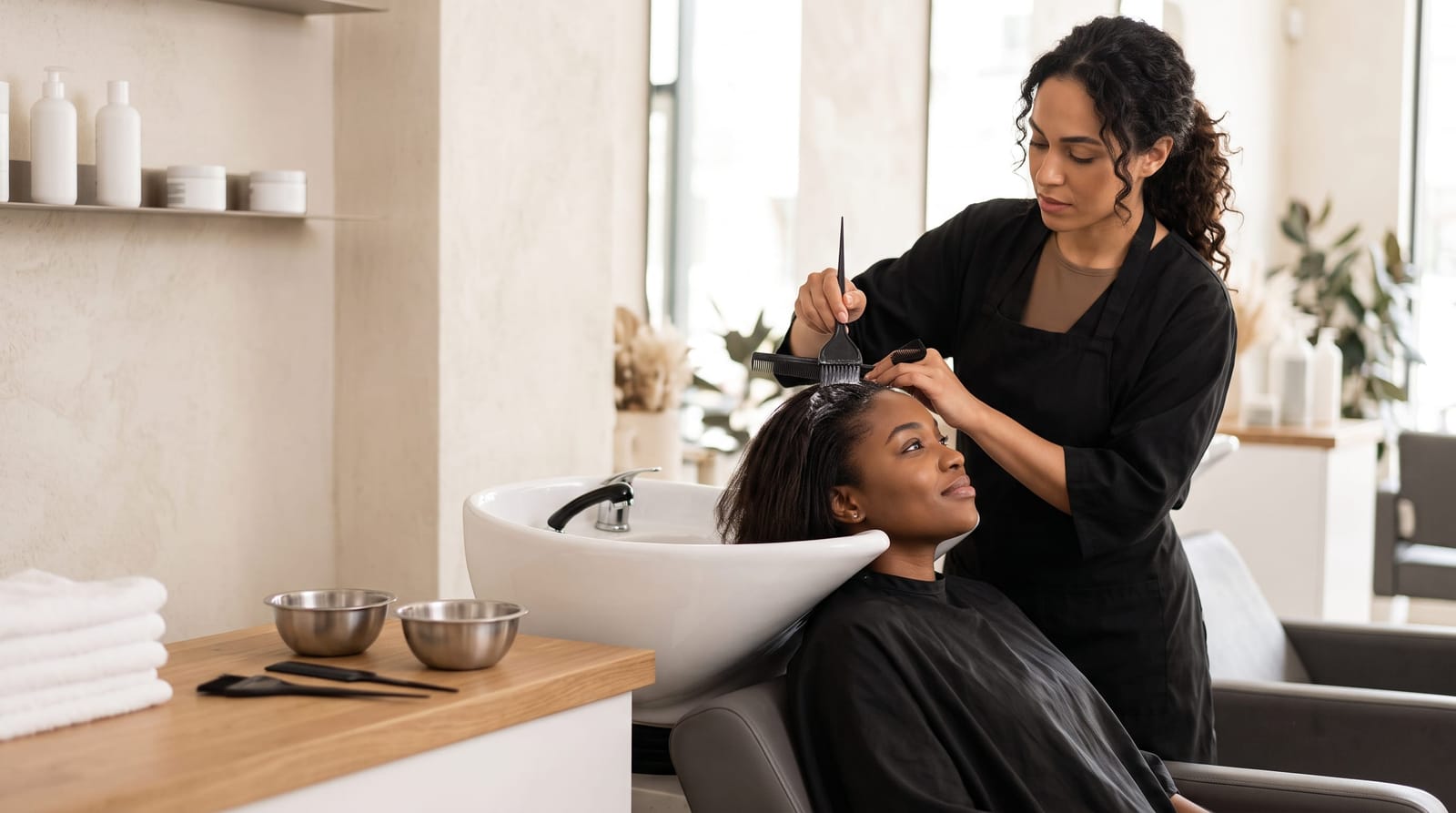
If you've been navigating the world of chemically straightened hair, you already know that timing matters. Touch too soon, and you risk damaging fragile strands. Wait too long, and managing the line between new growth and processed hair becomes a daily challenge. Finding the right relaxer touch up schedule is one of the most important decisions you'll make as someone with chemically treated hair.
This guide covers the clear signs that your new growth is ready, how to build a realistic schedule based on your hair's unique needs, and what Kabelly's stylists look for before recommending a touch-up. Whether you're new to relaxers or have been stretching your touch-ups for years, these insights will help you stay on track, without guessing.
Why Touch-Up Timing Is More Important Than Most Clients Realize
A relaxer permanently alters the structure of your hair strand. That chemistry doesn't stop working once you leave the salon chair: it continues to define how your processed hair behaves for months afterward. When new, unprocessed growth begins to emerge at the root, you're now managing two distinct textures on the same strand. That's where timing becomes everything.
Going in too early, before 6 weeks, is one of the most common mistakes in relaxer care. When a stylist applies relaxer to hair that already has chemical processing close to the scalp, the overlap can cause serious breakage. The general professional guideline is a minimum of 6 weeks between touch-ups, with most clients doing best in the 8 to 12 week range.
On the flip side, waiting too long creates its own challenges. The more new growth you accumulate, the more stress is placed on that transitional point: the spot where processed hair meets natural texture. This zone, called the line of demarcation, becomes vulnerable to snapping during brushing, detangling, or styling when it's under repeated tension.
Understanding where your own hair falls in this 6-to-12-week window is the foundation of a smart relaxer touch up schedule.
Reading the Signs: What Your Hair Is Telling You
Your hair gives clear signals when new growth is ready to be addressed. Learning to read those signals is a skill that makes a real difference in the health of your strands over time.
The Line of Demarcation
The line of demarcation is the visible, sometimes tactile boundary between your natural texture and your relaxed hair. You may notice it as a slight kink, a curve, or a change in resistance when you run your fingers through your roots. For most women, this line becomes noticeable around the 6-to-8-week mark as new growth reaches roughly 1 inch in length. At 1.5 to 2 inches of new growth, the line is usually very visible and the hair begins to feel more resistant during styling.
This line is the most reliable indicator that a touch-up is coming. It's also the area most prone to breakage, so it deserves gentle handling in the weeks leading up to your appointment.
Curl Reversion and Texture Change at the Root
Another clear sign is curl reversion: the return of your natural curl or coil pattern at the root. If your roots are curling, coiling, or simply behaving differently than the rest of your hair, new growth is present. For most women, about 1 inch of new growth is enough to trigger noticeable texture contrast during styling.
If you're pressing or flat-ironing your roots daily to manage this contrast, that's a strong signal that your relaxer touch up schedule is approaching its next milestone.
Manageability and Styling Difficulty
When new growth is ready to be addressed, you'll often feel it before you see it. Combing from root to tip becomes more resistant. Styles don't lay as smoothly. Blowouts take longer. This shift in manageability, especially concentrated at the root, is one of the most practical signs that your hair is approaching touch-up time.
Building Your Relaxer Touch-Up Schedule: A Realistic Guide
There is no single schedule that works for every client. Hair growth rates vary significantly: the average person's hair grows about half an inch per month, which means most women are working with roughly 1.5 to 2.5 inches of new growth by the 12-week mark. But lifestyle, stress, diet, and genetics all play a role in how quickly your hair grows and how it behaves between appointments.
The 8-Week Client
Some women have faster hair growth, closer to three-quarters of an inch per month, and a finer or more fragile hair strand. For this profile, the line of demarcation becomes uncomfortable and difficult to manage around the 8-week mark. These clients typically do best with a consistent 8-week touch-up schedule, which gives them about 1 to 1.5 inches of new growth to work with: enough to prevent overlap, but not so much that styling becomes a struggle.
The 10-to-12-Week Client
Many stylists, including those at Kabelly, encourage clients to stretch toward 10 to 12 weeks when the hair and scalp are healthy enough to do so. Stretching your touch-up is widely considered one of the healthier approaches to maintaining relaxed hair long-term. With about 2 inches of new growth, there's a clear buffer zone between previously relaxed hair and the scalp, which reduces the risk of overlap during application.
This schedule works best for women with medium to thick strands, average growth rates, and a solid relaxer aftercare routine that keeps both the new growth and processed hair moisturized and protected between visits.
The Client Who Stretches Beyond 12 Weeks
Some clients prefer to go longer, 14 to 16 weeks or more, especially those transitioning or experimenting with how much natural texture they want to retain. This can work, but it requires intentional care. The line of demarcation under sustained tension becomes a real concern past the 12-week mark. Deep conditioning every 1 to 2 weeks, protective styling, and reduced heat use become non-negotiable at this stage.
If you're curious about the specifics of how many weeks to wait between appointments, the post on relaxer touch up schedule breaks down the timing details for different growth patterns and lifestyles.
Lifestyle Factors That Influence Your Ideal Schedule
Your relaxer touch up schedule doesn't live in isolation. Several lifestyle factors shape how your hair grows, how it behaves between appointments, and how much new growth it can comfortably carry.
Activity Level and Sweat Exposure
Women who work out frequently or live in humid climates often experience faster curl reversion at the root. If you're sweating at the scalp 4 to 5 times a week, your new growth may curl more quickly, and managing the line of demarcation becomes more urgent. For active clients, keeping a consistent schedule, rather than pushing to 12 weeks, often makes daily life more manageable.
Protective Styling Between Appointments
Clients who wear braids, twists, or low-manipulation styles between appointments can often stretch their touch-up schedule more comfortably. These styles reduce tension at the line of demarcation and minimize daily manipulation: two factors that directly affect how much stress the hair experiences while new growth accumulates.
Scalp Sensitivity
If you have a sensitive scalp, your timeline may be guided by scalp comfort rather than hair length alone. Some clients experience scalp sensitivity as their new growth grows taller and the two textures pull against each other. Others find that waiting longer gives their scalp more time to recover between chemical services. A Kabelly stylist can assess your scalp's condition and help you calibrate a schedule that feels right for your specific situation.
What Kabelly's Stylists Assess Before a Touch-Up
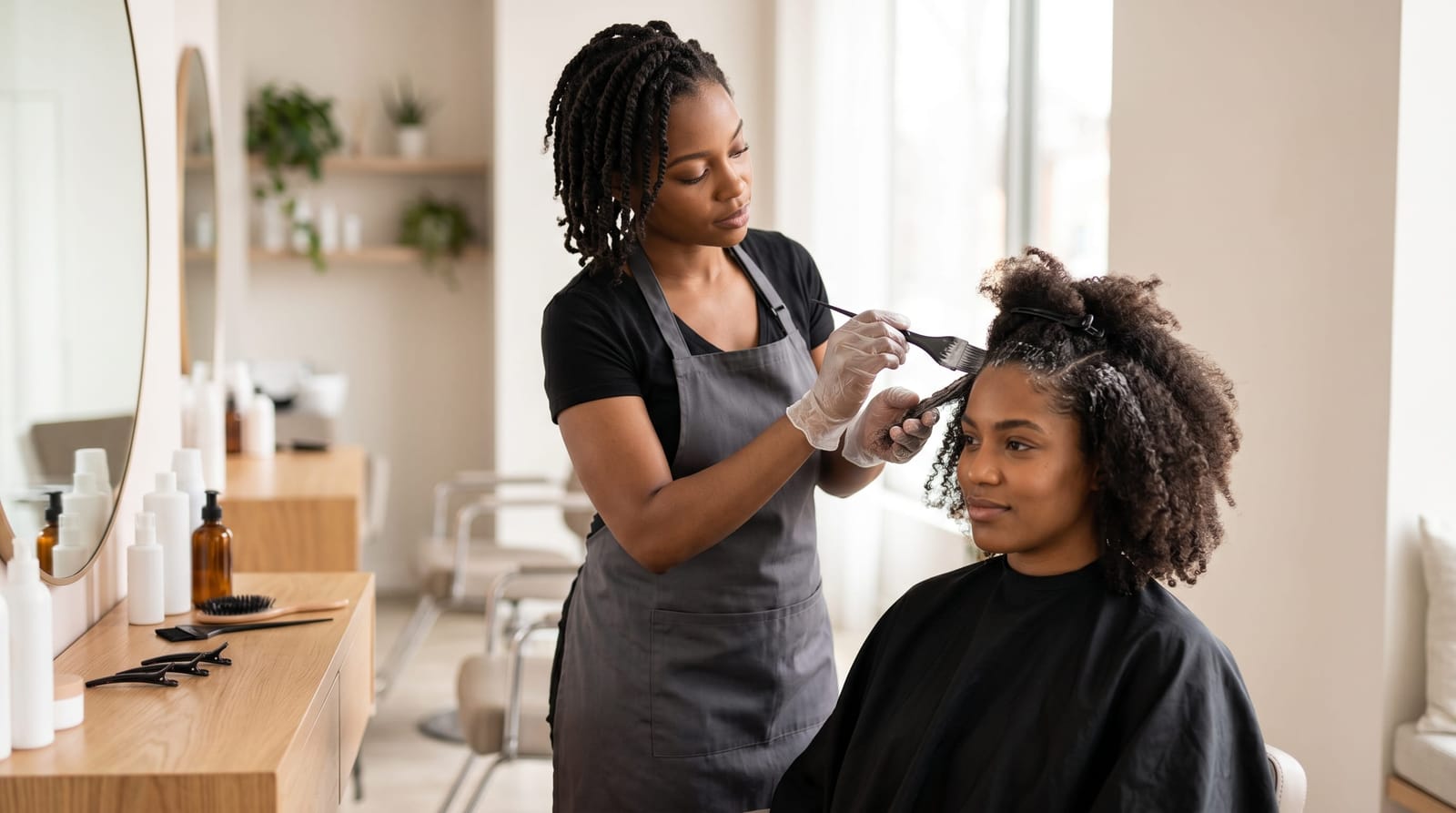
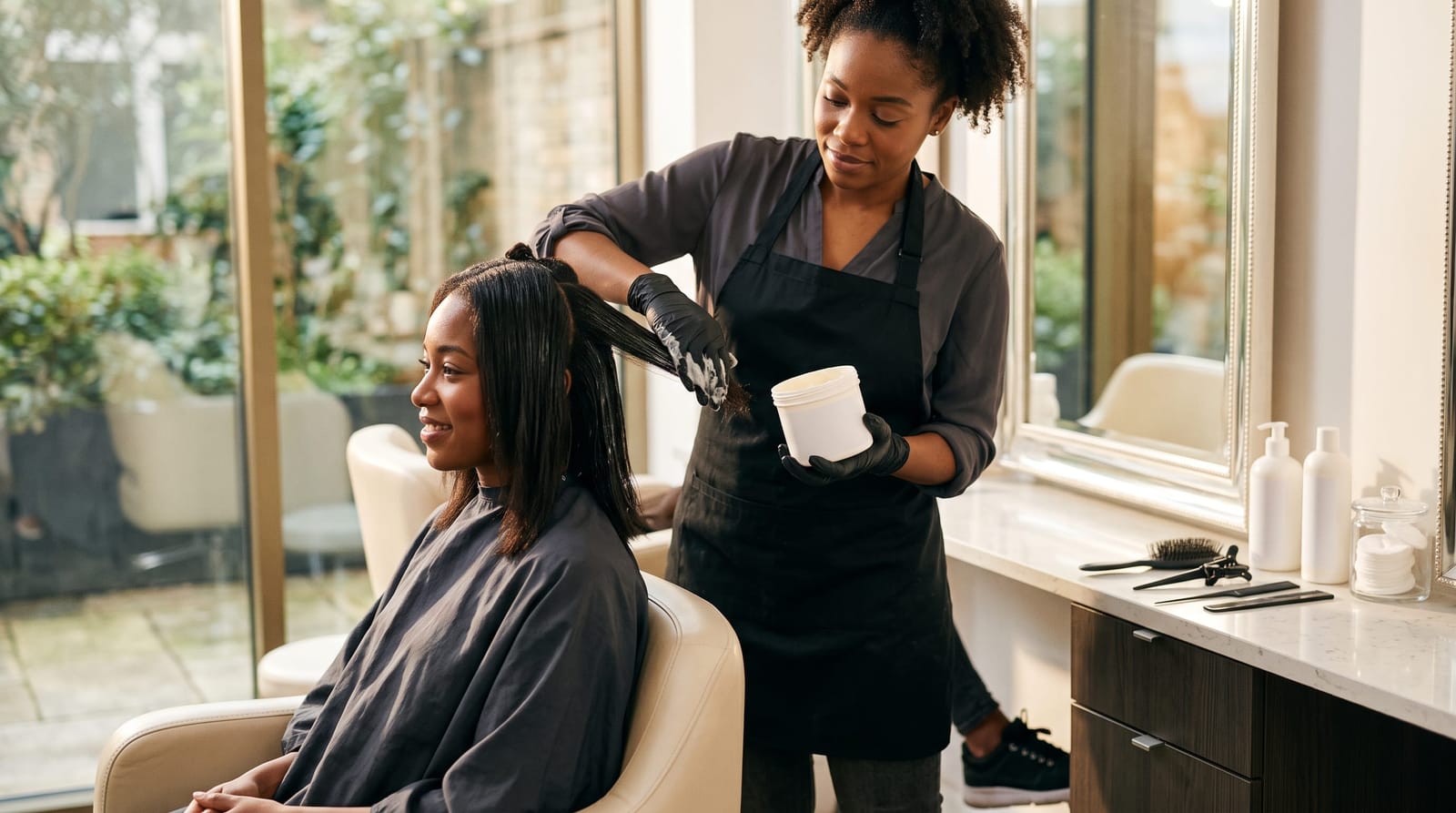
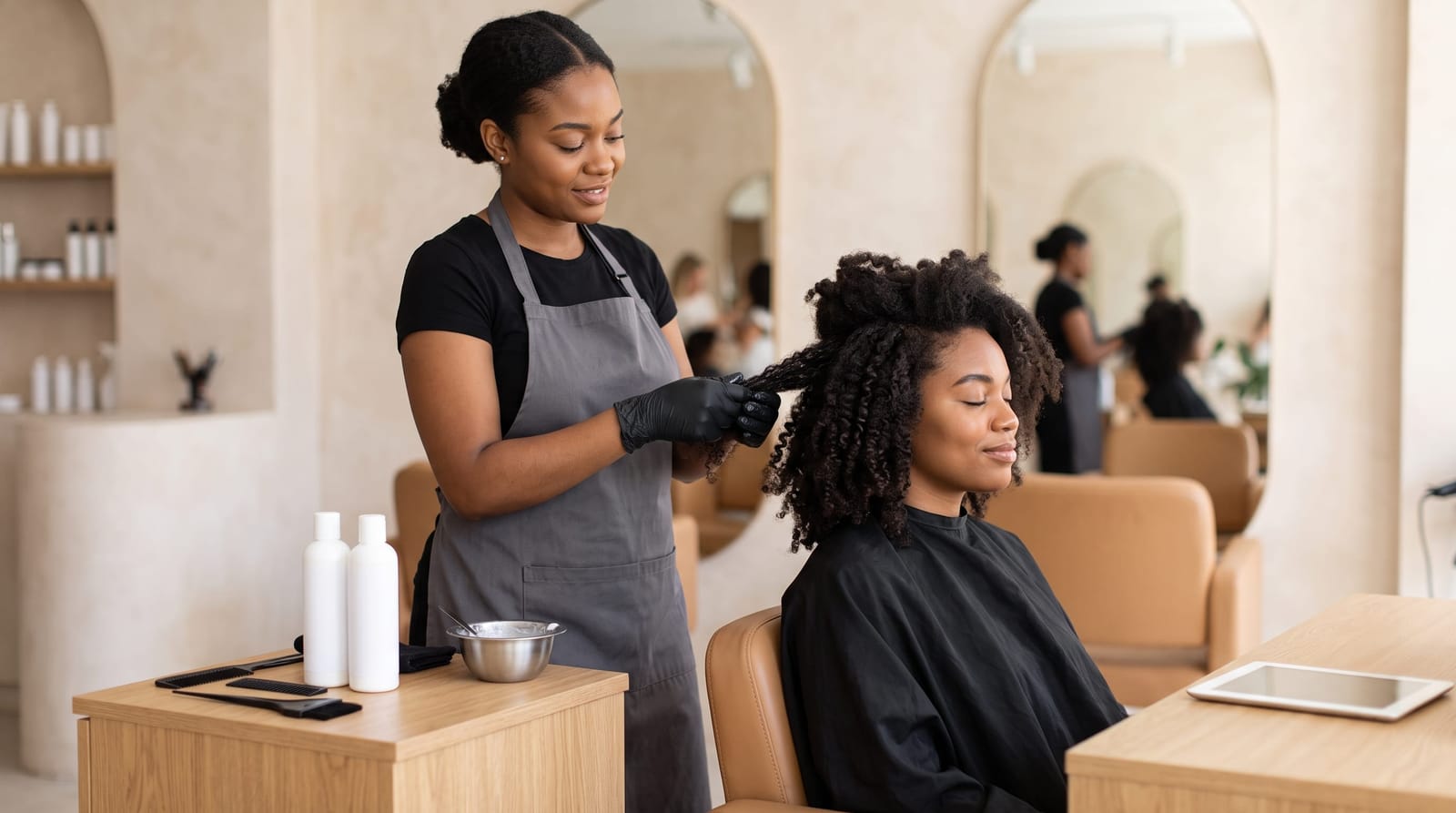
When you come in for a touch-up at Kabelly, the appointment doesn't start with the relaxer: it starts with a thorough assessment. The goal is to make sure your hair is genuinely ready, not just that enough calendar time has passed.
Here's what a professional evaluation typically includes:
- New growth measurement: Most stylists look for at least 1 to 2 inches of new growth before proceeding. Less than that increases the risk of overlapping onto previously processed hair.
- Strand strength check: Your stylist will assess how the hair feels, especially near the line of demarcation, to ensure it's strong enough to tolerate another chemical service.
- Scalp condition review: Any active irritation, tenderness, or recent scalp trauma will typically delay the touch-up. A healthy scalp is a prerequisite, not an afterthought.
- Porosity and moisture levels: Hair that is very dry or porous may need a conditioning treatment before a relaxer is applied. Your stylist can identify this during the assessment.
This is part of what separates a professional relaxer touch-up from a DIY application. The evaluation protects your hair at every stage of the process.
Common Timing Mistakes: And How to Avoid Them
Even well-informed clients occasionally fall into timing patterns that work against their hair's health. Here are the most common pitfalls:
Going in Too Early Out of Convenience
Scheduling around a vacation, event, or busy season sometimes means booking a touch-up before the hair is truly ready. If you're at 4 or 5 weeks with only half an inch of new growth, it's worth waiting. Overlapping relaxer onto processed hair, even slightly, is one of the leading causes of breakage along the mid-shaft over time.
Waiting Until the Hair Feels Damaged
On the other end, some clients wait so long that the line of demarcation is visibly stressed: showing signs of thinning or roughness. At that point, the touch-up is overdue, and the stylist may need to address the condition of that zone before proceeding with the chemical service. The sweet spot is acting before the hair reaches that level of tension.
Using Too Much Heat While Stretching
Many women reach for flat irons more frequently as new growth grows in, trying to blend the two textures visually. But adding daily heat to an already-stressed line of demarcation speeds up the wear on that fragile zone. Protective styles and moisturizing products are more sustainable tools for managing that in-between phase.
Related Topics Worth Exploring
Understanding your relaxer touch up schedule is one piece of a larger care picture. Once you've timed your touch-up correctly, knowing how to maintain your hair in the weeks that follow is equally important. A strong relaxer aftercare routine can significantly extend the results of your service and keep your strands healthy until your next appointment.
If you're also exploring the broader question of which chemical service is right for your texture and goals, Kabelly's full guide on relaxer versus texturizer for natural hair in the DMV area provides a side-by-side look at both options: helping you make an informed decision with your stylist's input.
Final Thoughts: Timing Is a Form of Hair Care
A smart relaxer touch up schedule isn't about rigid rules: it's about reading your hair, understanding your lifestyle, and partnering with a stylist who can guide you through the nuances. Most clients do best somewhere in the 8-to-12-week window, with at least 1 to 2 inches of new growth before their appointment. But the right timing for you depends on your growth rate, strand strength, scalp health, and daily routine.
At Kabelly, every touch-up begins with a real conversation and a thorough assessment, because your hair deserves more than a one-size-fits-all approach. Ready to find your ideal schedule? Book a consultation with our team and let's build a plan that works for your hair, your life, and your goals.