How Long Do Glue Extensions Last Before You Need a Touch-Up?
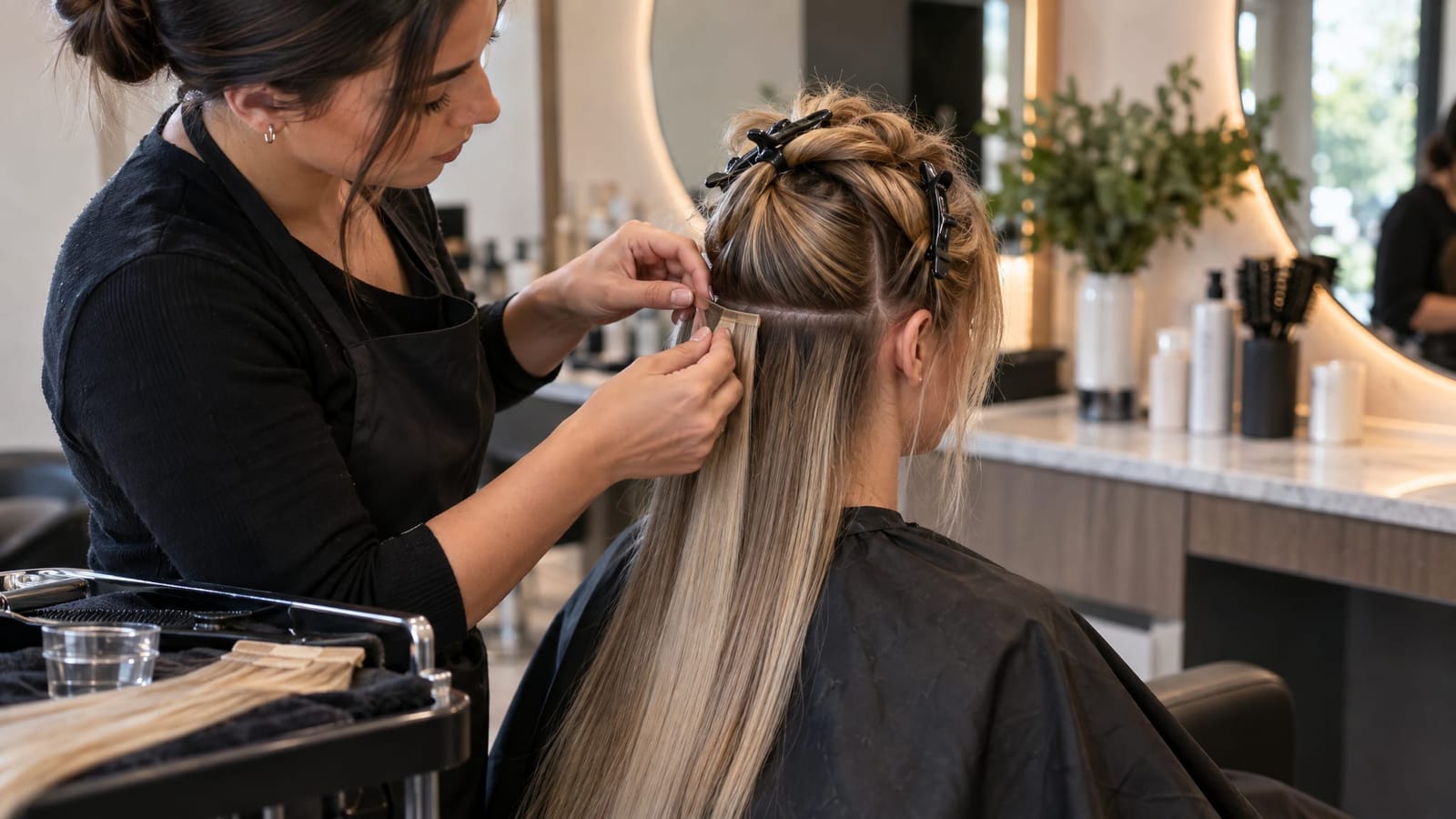
Glue-in weft extensions are a short-term style, with wear measured in weeks rather than months. The bonding adhesive’s wear and removal instructions set the schedule, while lifting, buildup, or tangling can make maintenance necessary sooner. A small area of loosening may suit a touch-up; several loose tracks usually call for removal and a fresh installation.
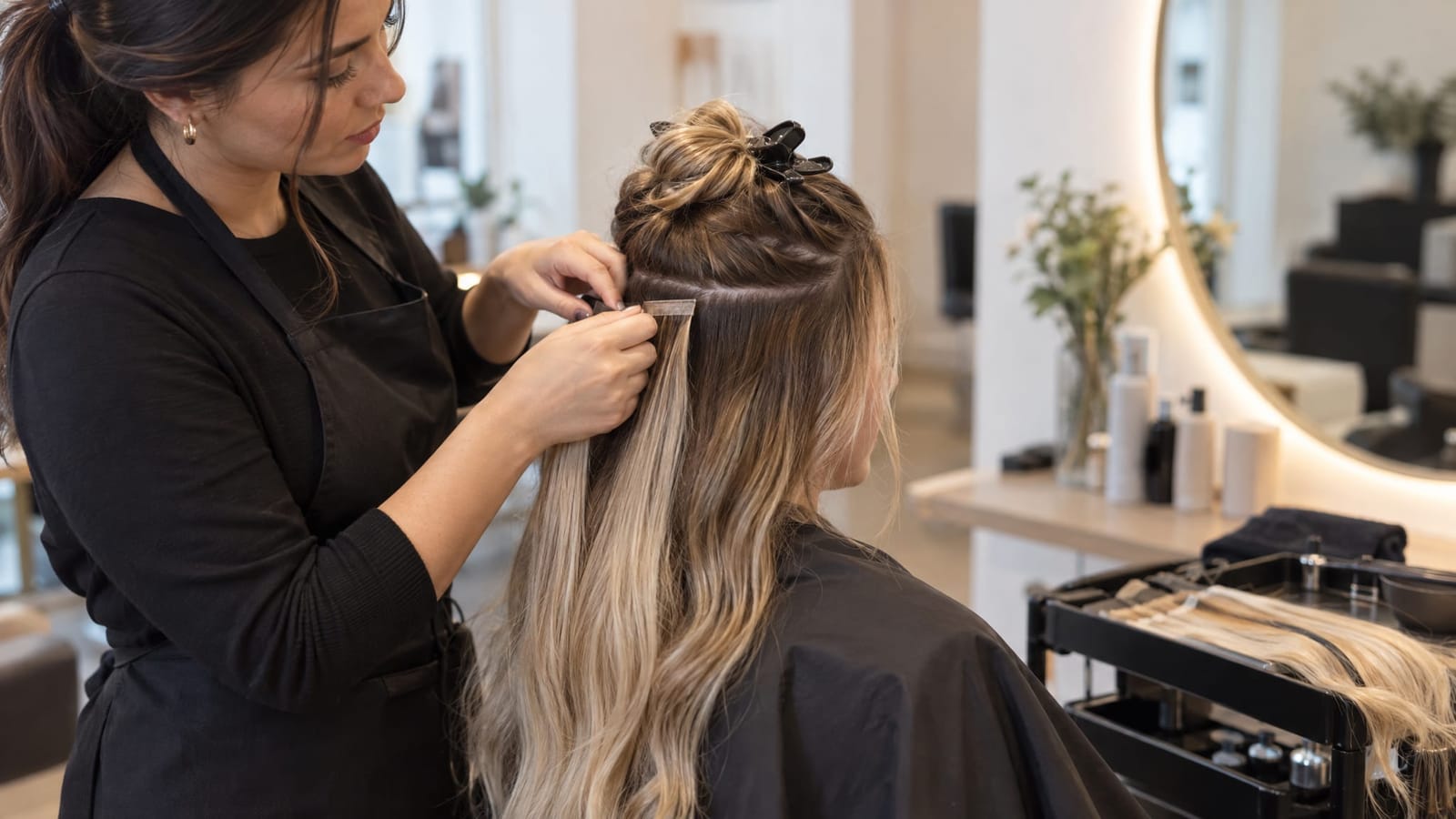
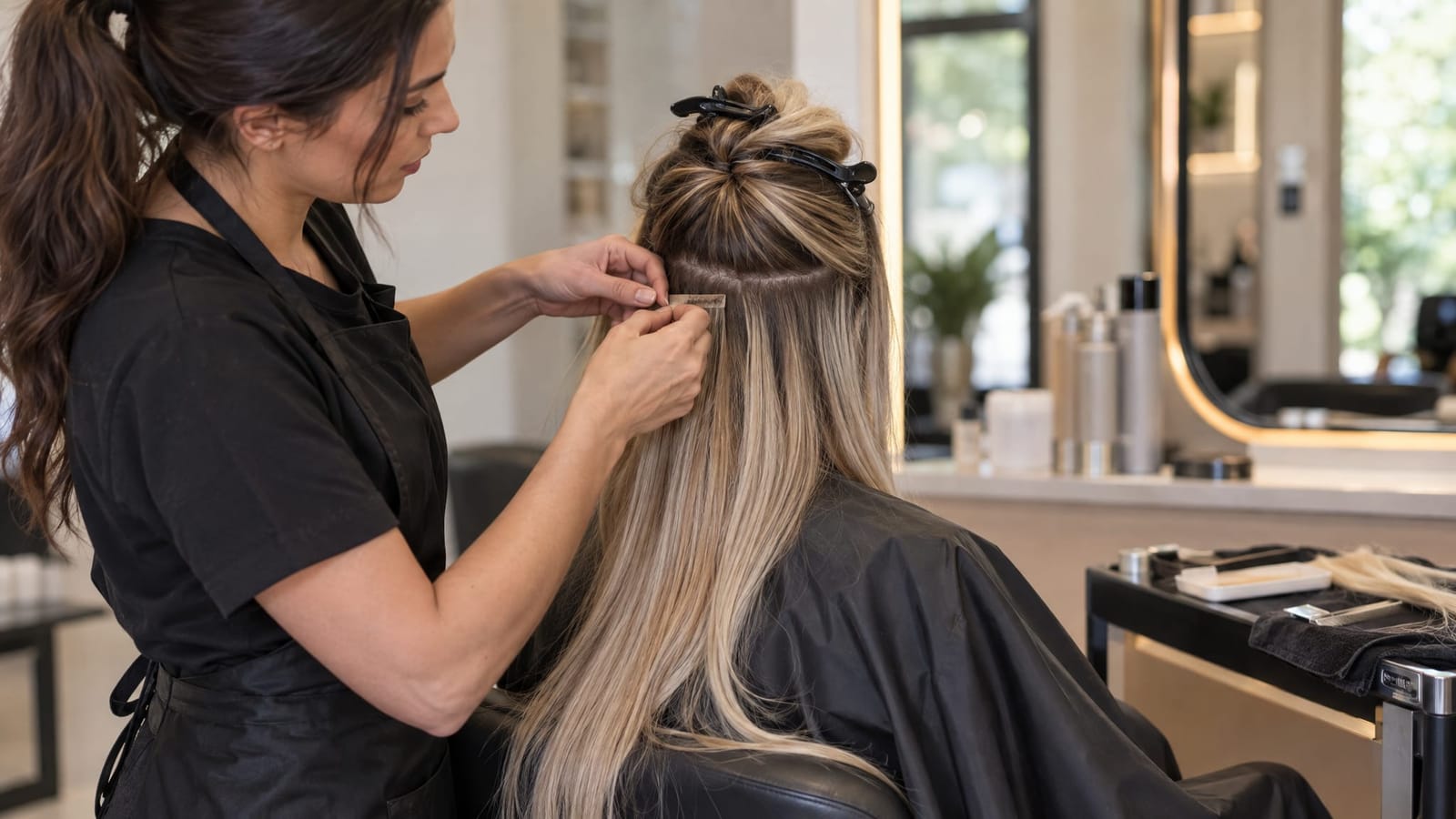
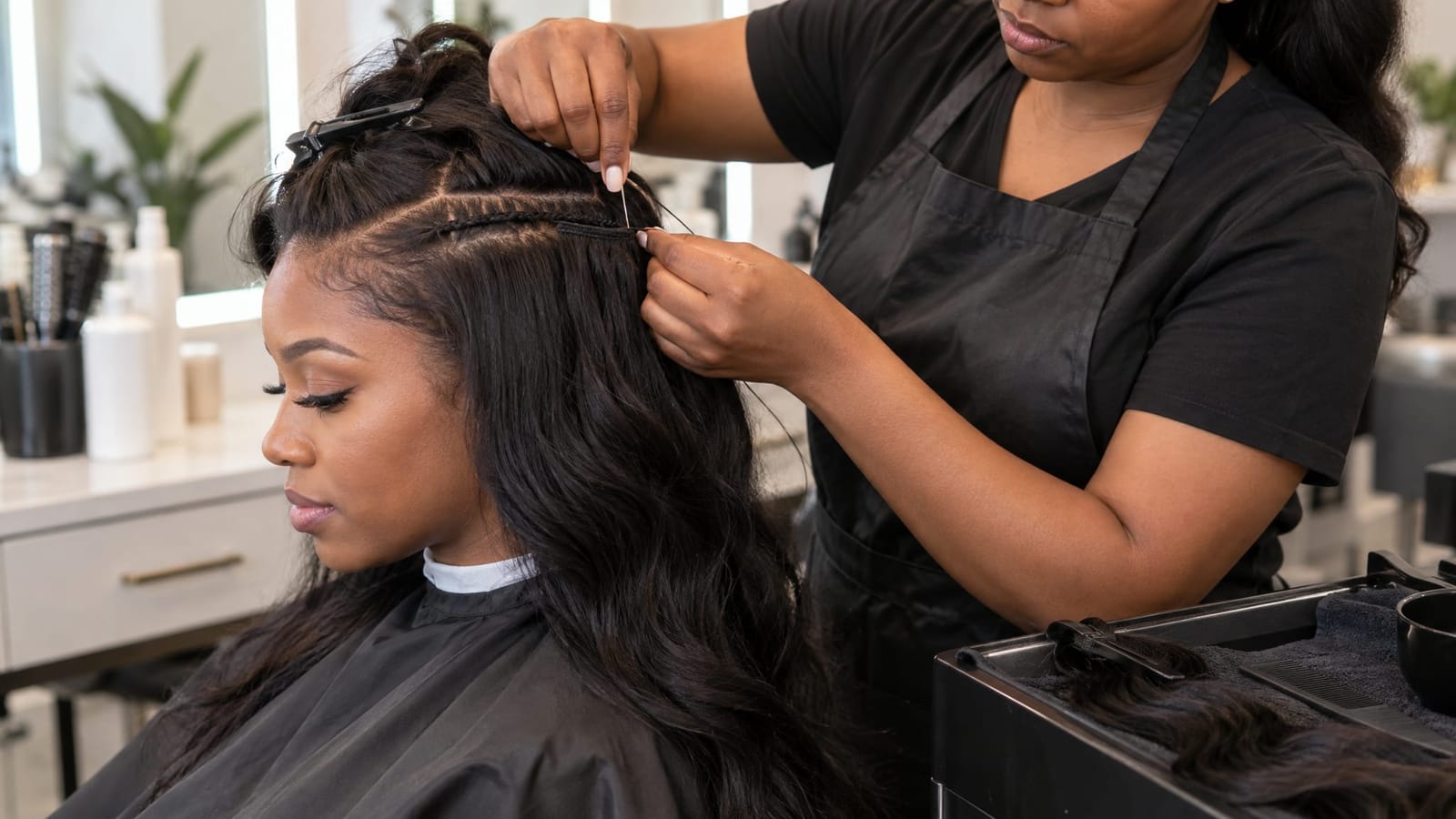
At Kabelly Dominican Salon in Clinton, we offer glue extensions for added length and fullness. Understanding what affects their hold helps you enjoy the style without stretching an installation beyond its intended wear period.
What Determines Glue Extensions Duration?
Here, glue extensions means wefts, or strips of extension hair, attached with bonding adhesive. They are different from individual keratin-bond extensions. Wear schedules for one method do not transfer to the other, even though both are sometimes described as “bonded extensions.”
Three things shape the maintenance timeline:
- The adhesive: Its application, washing, and removal instructions provide the starting point for care.
- The installation: Attachment placement, the amount of extension hair, and how the wefts sit affect everyday comfort and manageability.
- Your routine: Product use, cleansing, sweating, and repeated pulling influence how well the attachment holds.
Keep the planned removal date separate from the first sign of loosening. A secure-looking track is not a reason to exceed the adhesive’s recommended wear period. Likewise, touching up one section does not restart the wear schedule for the whole installation.
How Everyday Care Affects Their Hold
Keep oils and rich products away from attachment points
Oil-rich products can soften some bonding adhesives. Scalp oils, oily edge products, and heavy conditioners deserve particular attention when they sit close to a glued track.
Use products compatible with the adhesive, and keep conditioning products on the extension lengths rather than working them into the attachment. Placement matters: smoothing a little serum over the ends is different from saturating the base of a weft.
If your usual routine includes frequent scalp oiling, factor that into your extension choice rather than abandoning the routine simply to preserve the glue.
Wash gently without avoiding cleansing
Frequent washing means more handling of the attachment points, but skipping cleansing allows sweat and product residue to accumulate. The goal is a workable washing routine, not the fewest possible washes.
- Follow the adhesive’s instructions about when washing can begin after application.
- Cleanse gently without scrubbing back and forth across the tracks.
- Keep the lengths moving in one direction rather than piling them into a tangled bundle.
- Rinse thoroughly and dry the attachment areas using methods compatible with the adhesive and extension hair.
When a track starts lifting during washing, leave it for assessment rather than pressing it down with more glue over damp hair or residue.
Reduce tangling and pulling overnight
Loose extension hair can tangle as you move in your sleep. Gently detangle before bed, working from the ends upward while supporting the hair near the attachment.
A loose braid or wrap keeps the lengths contained. A satin bonnet or pillowcase helps reduce friction, but it cannot restore an adhesive bond that has already loosened. Avoid tight bedtime ponytails and going to bed with wet attachment areas.
When a Touch-Up Makes Sense, and When It Does Not
A touch-up is a targeted adjustment, not a way to keep every installation indefinitely. The condition of the surrounding hair and remaining attachments matters as much as the lifted section itself.
A small, isolated lift may suit a touch-up
A touch-up may be appropriate when one limited section has lifted, the surrounding hair is clean and untangled, and the rest of the installation remains within its intended wear period.
For example, one visible edge that has come loose needs a different assessment from several tracks shifting during brushing. Our licensed stylists can assess the attachment and whether a targeted adjustment is appropriate.
Widespread loosening favors removal and a fresh installation
Signs that the whole installation needs attention include:
- Several tracks lifting, slipping, or turning away from their original position.
- Residue collecting around multiple attachment points.
- Tangling close to the roots that makes gentle cleansing or detangling difficult.
- A need for repeated small fixes to keep the style sitting correctly.
Adding adhesive over these problems does not address what is underneath. Removal creates an opportunity to clear residue, detangle, cleanse, and assess the natural hair before deciding on another installation.
What to Keep Track of Between Visits
Save the application date, planned removal date, and adhesive-specific care instructions in your phone. If a section loosens, note where it happened and whether it followed washing, a new product, or a hairstyle that pulled on the track. Those details make a maintenance discussion more useful.
Leave attached wefts in place for proper removal rather than pulling them free. Removal requires a product suited to the adhesive, not simply more force.
Frequently Asked Questions
Can the extension hair be reused after removal?
Reuse depends on the condition and construction of the extension hair. Clean, intact wefts may be suitable for another installation if the adhesive can be removed appropriately. Hair reuse and installation duration are separate issues: reusable hair does not mean the original glue attachment can stay in longer.
Do workouts make glue extensions impractical?
Not necessarily, but frequent sweating adds cleansing and drying needs around the attachments. A routine involving regular workouts needs a maintenance plan that accommodates that care. Repeatedly avoiding washing to protect the glue is not a practical long-term solution.
Are clip-ins an alternative for occasional styling?
Yes. We also offer clip-in extensions, which provide removable length and fullness without a glued attachment. They are worth considering when you mainly want extensions for selected occasions rather than continuous wear.
The Best Time for Maintenance
Use the adhesive’s intended wear schedule as your starting point, not the latest date the style still looks presentable. An isolated lift may need a touch-up, while widespread loosening, residue, or root tangling points toward removal. Good maintenance protects both the finished look and the ease of caring for your natural hair underneath.