What Products Should You Use During and After a Post-Braid Blow Out?
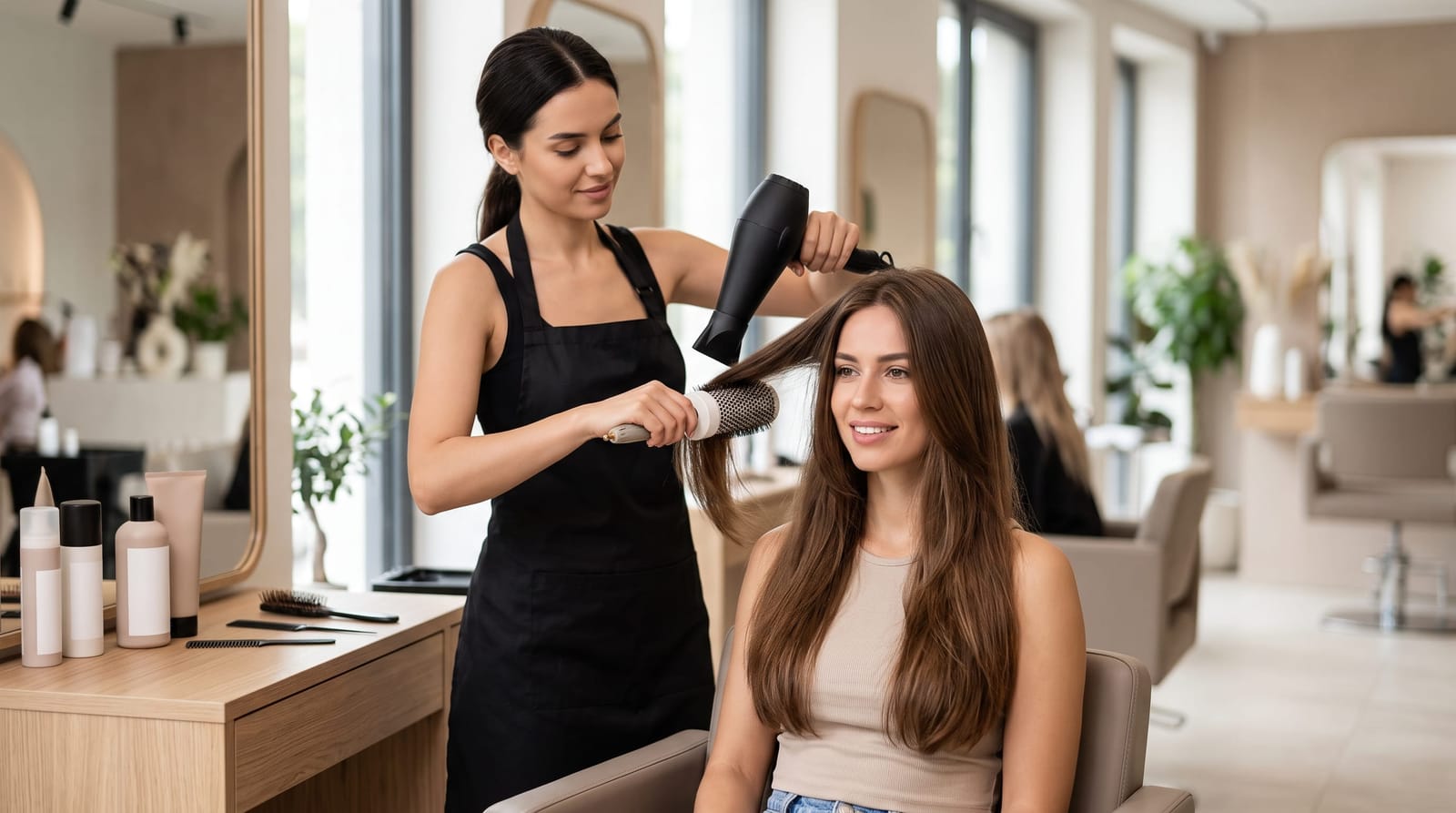
Taking down a braided style feels like a fresh start. But the hair underneath needs more than just air and hope. The right blow out maintenance products make the difference between hair that feels soft and renewed versus hair that feels rough and difficult to manage. This post walks you through exactly what to use, and why, during and after your post-braid blow out, from the first detangling step to the finishing touches that keep your style looking polished.
Why Product Selection Matters More After Braids
Hair that has been in braids for six to twelve weeks behaves differently than freshly styled hair. The strands have been compressed, shed hairs have collected inside the braid, and the scalp has built up natural oils that did not fully distribute through the lengths. This combination creates a unique situation where the wrong product, or too much of it, can make detangling harder rather than easier.
Studies on textured hair care suggest that using a quality moisturizing product during detangling can reduce breakage by up to 60 percent compared to dry detangling. That number matters. Post-braid hair is in a vulnerable phase, and the products applied during your blow out session directly affect how much hair you retain through that transition.
Professional salons like Kabelly use higher-grade formulas than most drugstore options. These products are often more concentrated, meaning a smaller amount goes further and delivers better results without weighing hair down. Understanding what each product does helps you make sense of the process, and helps you care for your hair properly once you leave the salon.
Detangling Sprays: The First Line of Defense
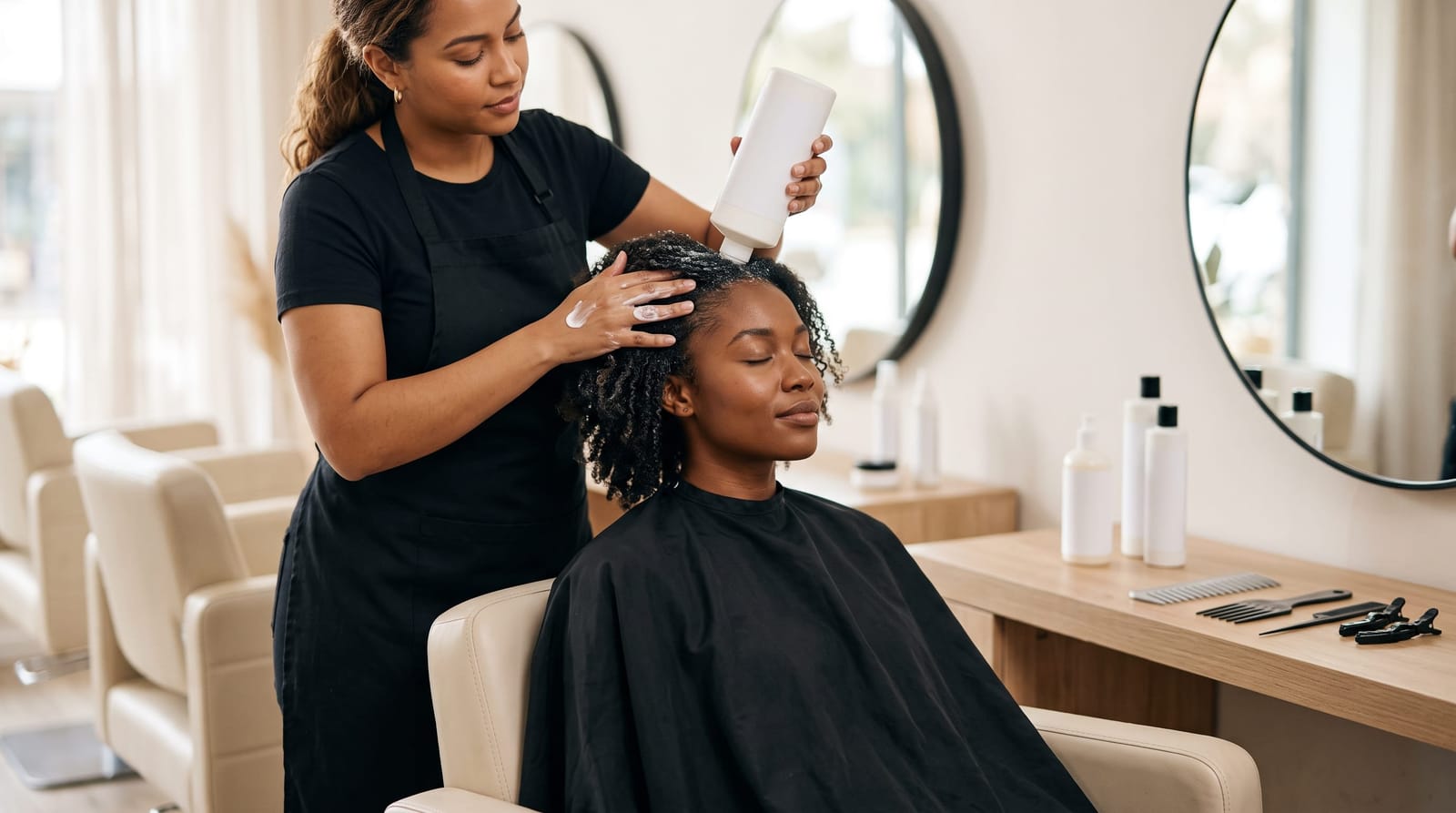
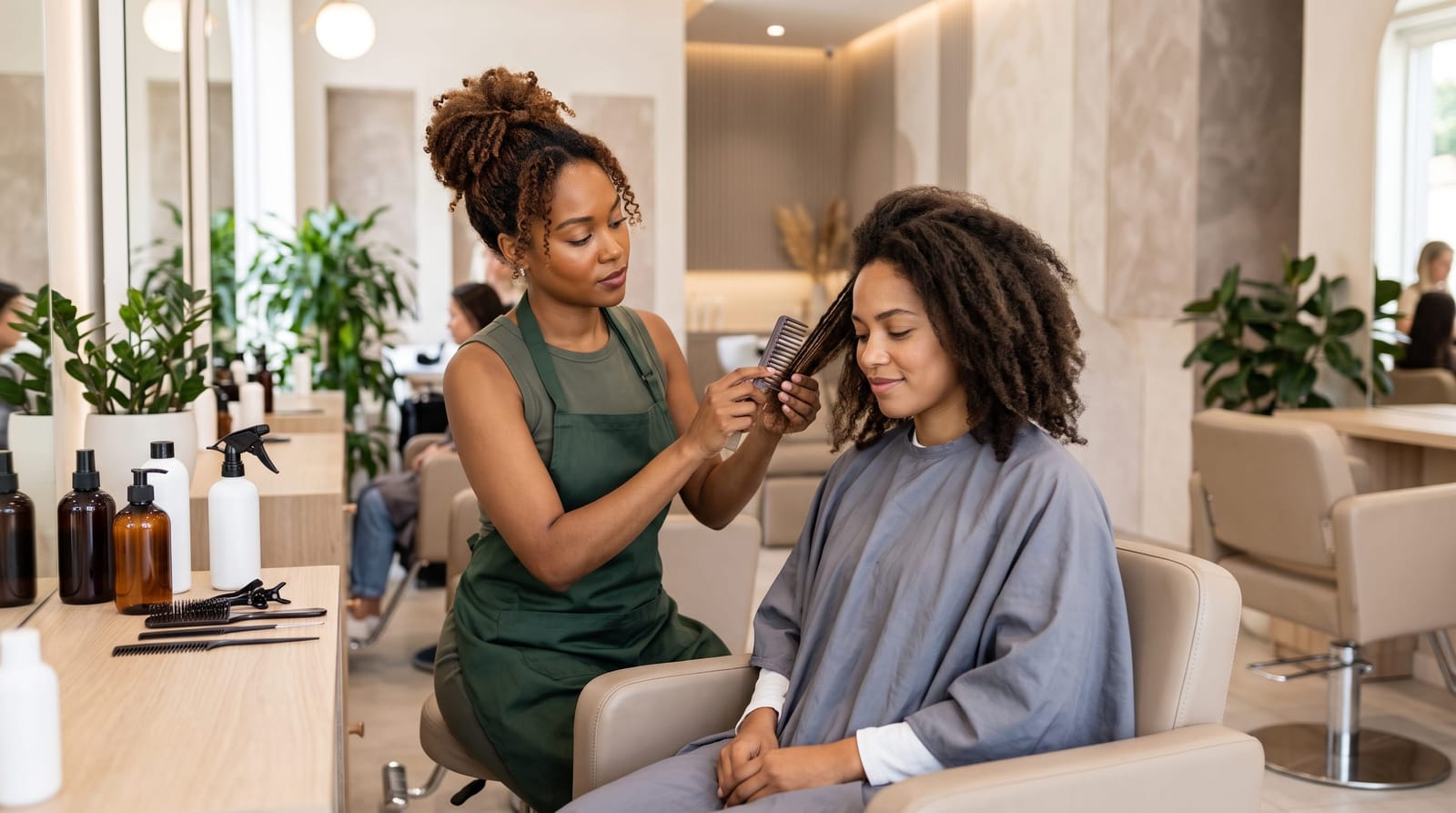
Detangling spray is the very first product applied during a post-braid blow out. It does two things well. It softens the shed hairs that collected inside the braid during wear, and it adds enough slip to allow a wide-tooth comb or detangling brush to move through the hair without pulling.
Look for detangling sprays that contain these key ingredients:
- Hydrolyzed proteins: These temporarily strengthen the hair strand, reducing snapping during combing.
- Panthenol (Pro-Vitamin B5): Adds moisture and flexibility to each strand.
- Aloe vera or marshmallow root extract: Naturally slippery ingredients that ease the comb through tangles.
At Kabelly, detangling is done in small, manageable sections. Product is applied generously to each section before any tool touches the hair. This section-by-section approach is what protects the most fragile areas near the braid root, where tension has been highest over the weeks of wear.
Avoid detangling sprays that contain high amounts of alcohol. They dry quickly and remove the very moisture the hair needs most at this stage.
Deep Conditioners: The Most Important Step in the Process
After detangling, a deep conditioning treatment is not optional: it is the core of the post-braid restoration process. Hair that has been in protective styles for two months or longer is almost always dehydrated at the ends. A quality deep conditioner replenishes that moisture before heat is ever applied.
Professional-grade deep conditioners used in salons typically contain a higher concentration of active moisturizing agents than retail versions. Where a store-bought conditioner might sit at a 3 to 5 percent concentration of key ingredients, professional formulas often reach 8 to 12 percent, which means the treatment penetrates more effectively in less time.
The best deep conditioners for post-braid hair include:
- Ceramide-rich formulas - Ceramides seal the hair's outer layer, locking moisture in and protecting against heat.
- Shea butter or mango butter blends: Natural butters add softness and manageability without a greasy finish.
- Amino acid-based treatments: These support the hair's natural structure after weeks of being in a fixed style.
At Kabelly, the deep conditioner is applied after the initial detangle and often processed under a hooded dryer for 15 to 20 minutes. This heat-activated approach allows the formula to penetrate more deeply than a cold rinse-out treatment would. Clients consistently notice softer, smoother results compared to skipping this step at home.
Heat Protectants: Non-Negotiable Before the Blow Dryer Touches Your Hair
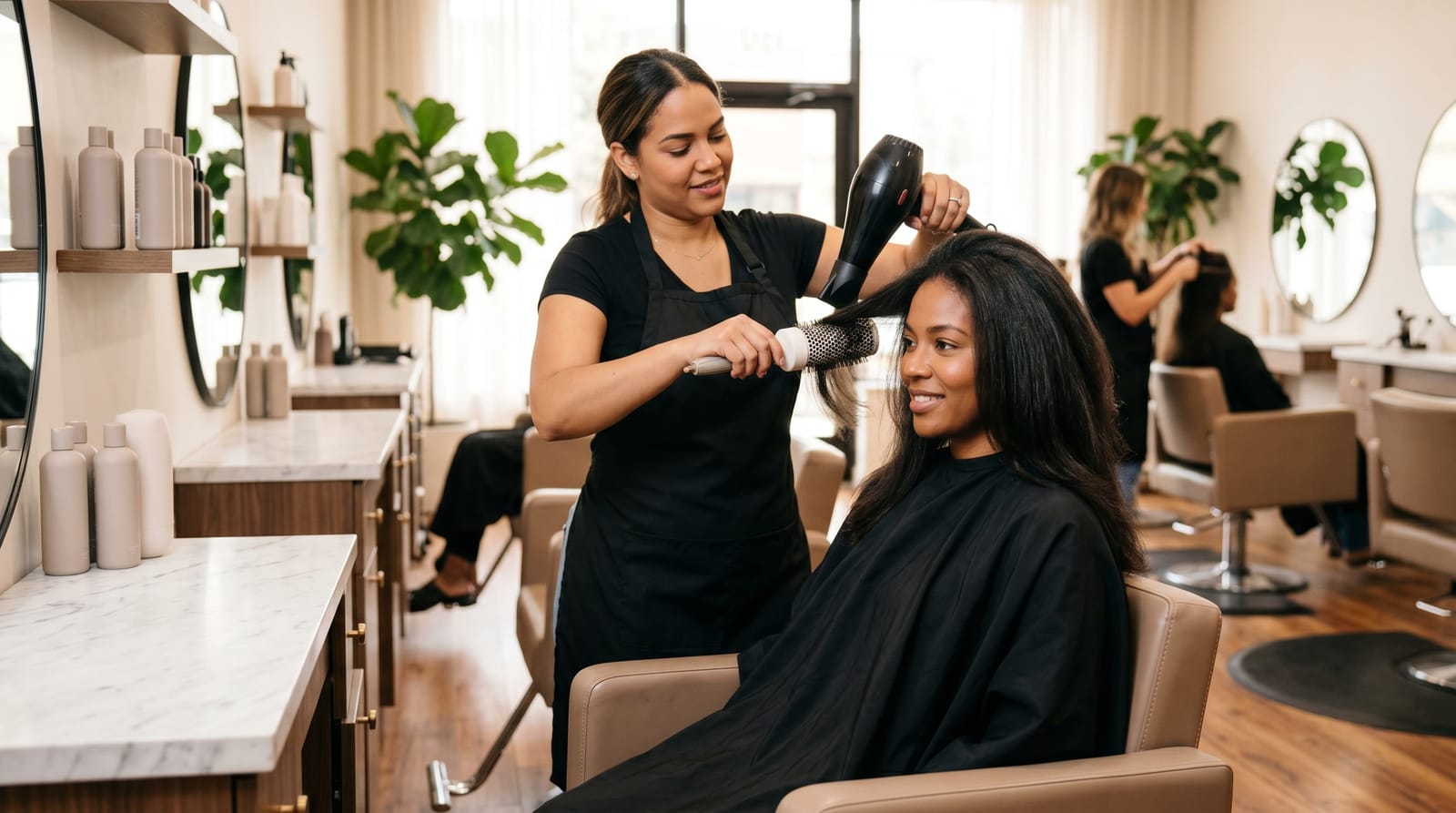
A blow out involves heat, and heat on freshly detangled post-braid hair requires a reliable barrier. Heat protectant is applied immediately before the blow out begins and should coat every section of hair that will come into contact with the dryer and brush.
Quality heat protectants do three things:
- They form a thin coating around the hair shaft that slows moisture evaporation during styling.
- They reduce direct heat transfer to the inner structure of the strand, where lasting damage can occur.
- They add a base layer of smoothness that helps the blow out finish look polished rather than frizzy.
Professional heat protectants used in salons are often silicone-based, containing ingredients like dimethicone or cyclomethicone, which provide excellent heat distribution without leaving heavy buildup. These formulas protect effectively up to 450 degrees Fahrenheit, which covers the range used during a standard professional blow out.
One common mistake when styling at home is applying heat protectant to soaking wet hair. This dilutes the formula and reduces its effectiveness. At Kabelly, heat protectant goes on hair that has been gently towel-dried or partially air-dried so the product can coat the strand properly before the dryer begins.
Finishing Products: Sealing in the Results
Once the blow out is complete, finishing products seal everything in and keep the style looking fresh for longer. This is also the category where less is truly more. Over-applying finishing products is one of the top reasons a blow out loses volume or becomes limp within a day or two.
The most effective finishing products for post-braid blow out results include:
- Lightweight hair serum: Applied in a small amount to the lengths and ends, a serum adds shine and controls any remaining frizz without flattening the style.
- Holding spray (medium hold): A light mist locks the shape of the blow out without stiffness, giving the hair a natural, touchable finish.
- Scalp oil or lightweight scalp spray, After weeks in braids, the scalp benefits from a gentle, nourishing oil applied directly to the roots. This also helps with any dryness or flaking that sometimes appears after protective styles are removed.
A small amount of serum, roughly the size of a dime, is enough for shoulder-length hair. For longer hair, use two dime-sized amounts and apply from mid-length to ends only. Keeping product away from the roots preserves volume and extends the life of the blow out by two to three additional days.
If you are wondering how the timeline of your appointment connects to which products are used and when, the breakdown in this guide on Dominican blow out time offers a helpful look at how a professional post-braid session is structured from start to finish.
Frequently Asked Questions
Can I use regular conditioner instead of a deep conditioner after braids?
A regular rinse-out conditioner is not formulated to penetrate as deeply as a deep conditioner. After weeks in a braided style, hair needs more than surface-level hydration. A deep conditioning treatment, especially one processed with heat, delivers moisture to the inner structure of the strand, which is where post-braid hair needs support most. Using a regular conditioner at this stage typically produces noticeably less softness and manageability.
How much heat protectant is enough?
You want enough product to lightly coat each section of hair without making it feel wet or slippery again. A good guideline is to apply the protectant section by section, working it through from root to tip, and then proceeding to blow out that section before moving to the next. This keeps the protectant active and properly distributed while your stylist works.
Should I apply any products to my hair after leaving the salon?
For the first 24 hours, the goal is to touch your hair as little as possible. If you need something, a very small amount of lightweight serum on the ends is fine. Avoid heavy oils, butters, or creamy products during this window: they can soften the blow out too quickly and reduce how long the style holds. After 48 hours, your normal moisturizing routine can resume.
Do I need to trim my hair before or after product application during a post-braid appointment?
Trimming is best done after the blow out is complete and hair is fully detangled and stretched. This allows your stylist to see the true condition of the ends and make an accurate assessment. If you are considering whether a trim is necessary after removing long-term braids, that is a topic worth exploring in more detail, especially if your ends feel rough even after deep conditioning.
The Right Products Make Every Step Work Better
Choosing the right blow out maintenance products is not about using more: it is about using the right things at the right time. A detangling spray makes the first step gentler. A deep conditioner restores what weeks of protective styling can deplete. Heat protectant creates a shield before any heat touches your strands. And finishing products preserve the result without weighing it down. At Kabelly, every product choice is intentional and matched to what your hair actually needs in the moment, which is exactly why the results feel so noticeably different from a basic at-home routine.