What Is the Difference Between a No-Lye and Lye Relaxer?
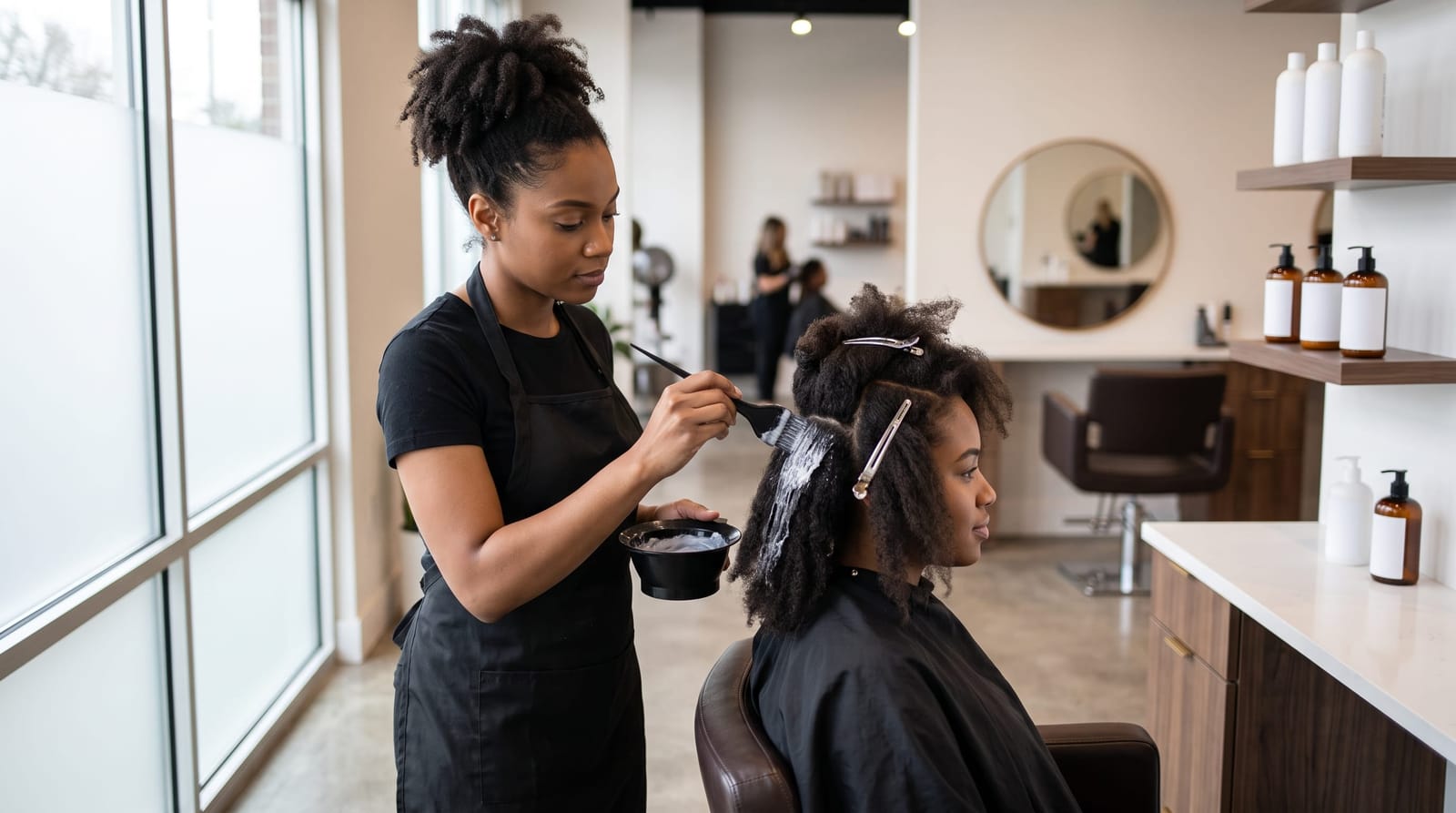
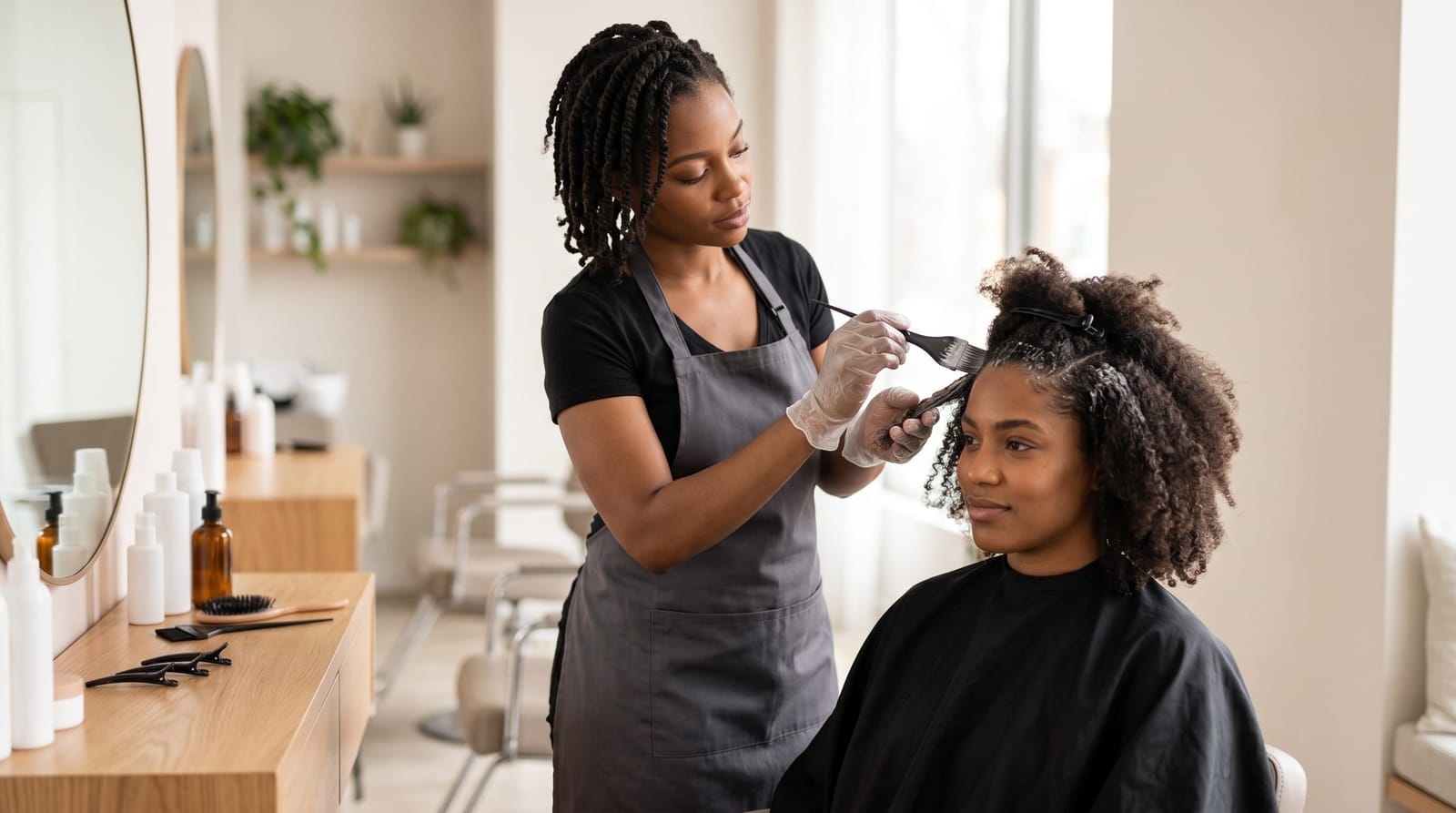
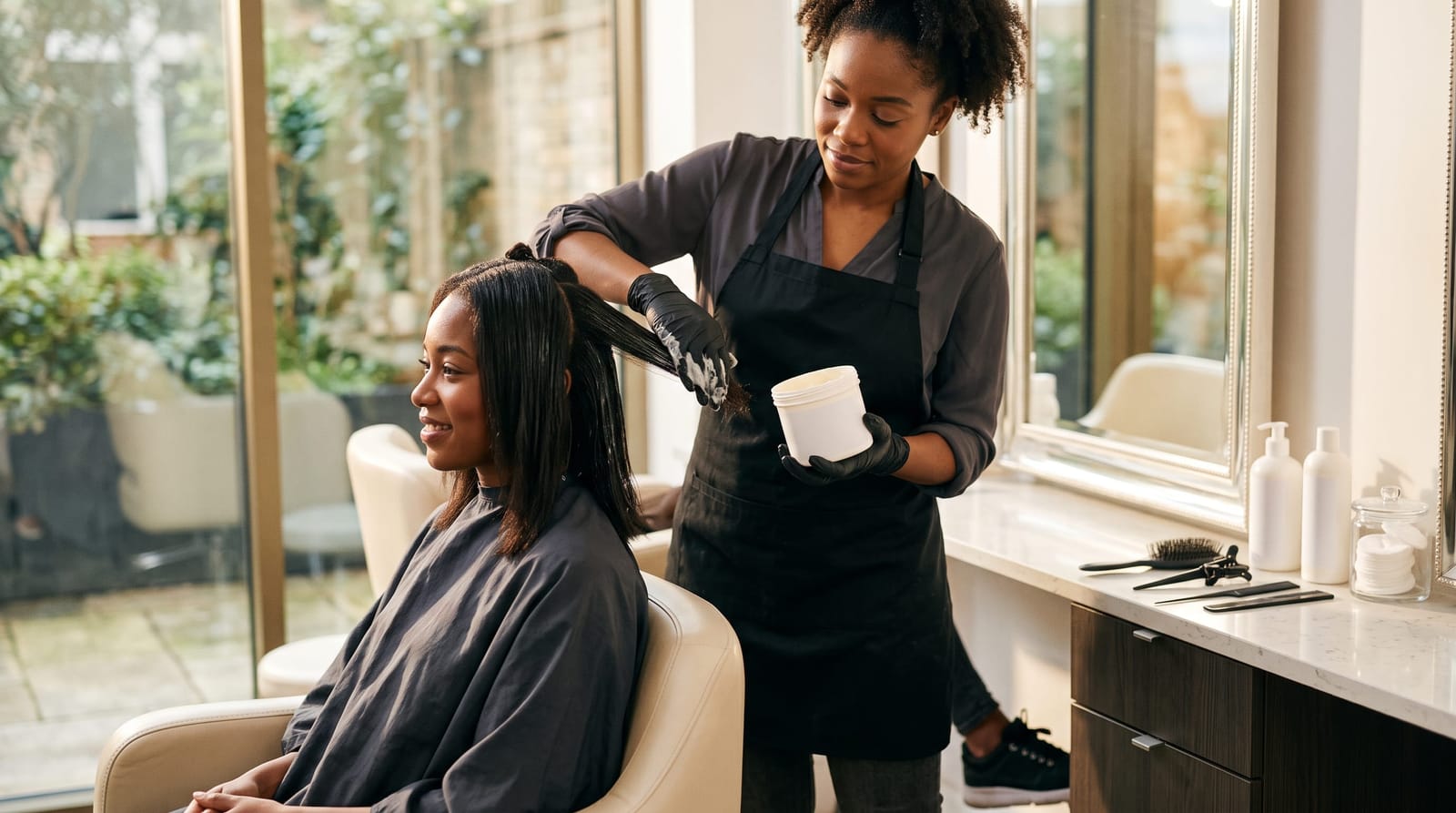
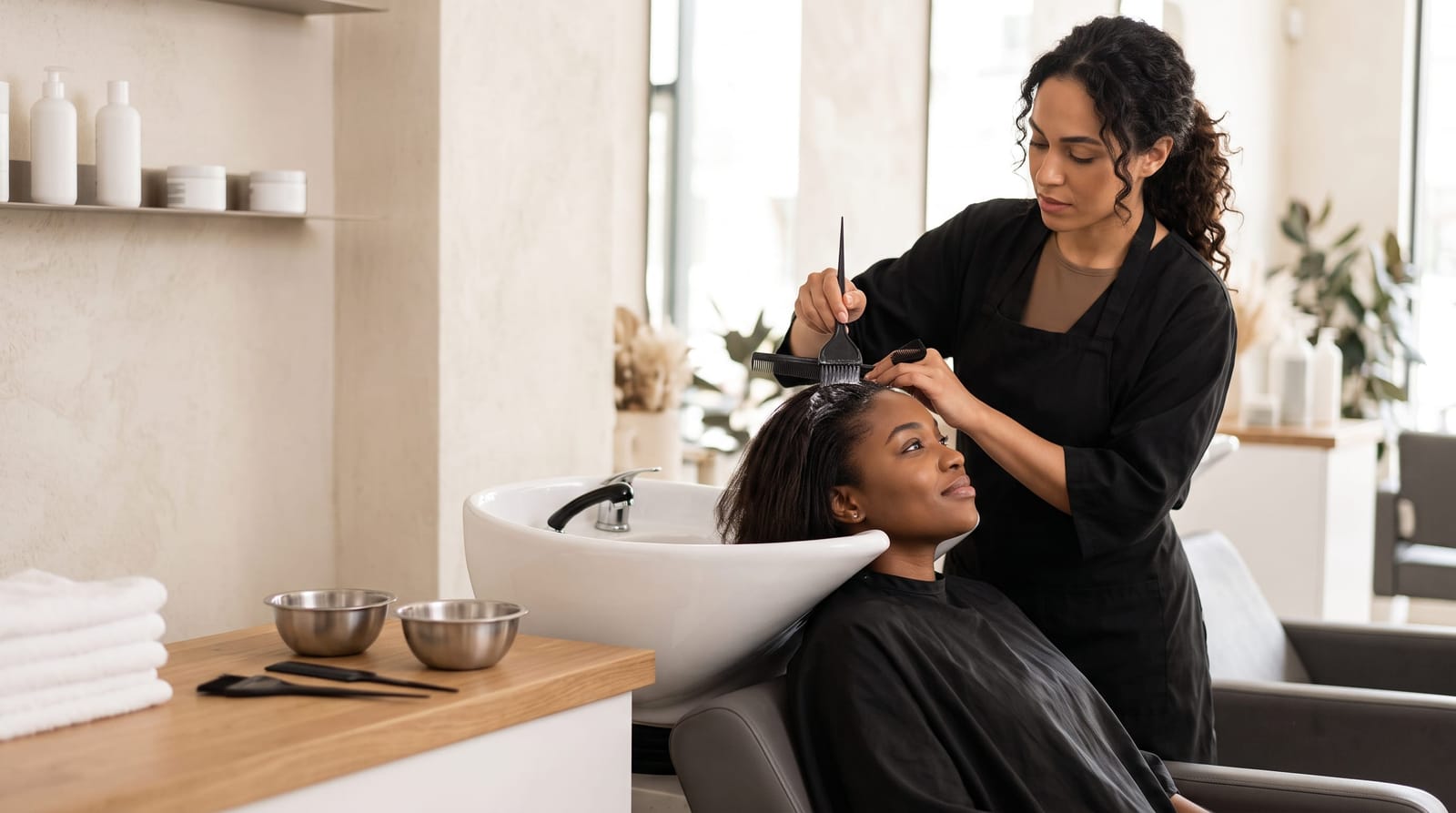
If you've ever sat in a salon chair and heard your stylist mention "lye" or "no-lye" before beginning a relaxer service, you may have wondered what that actually means for your hair, and your scalp. When it comes to a professional hair relaxer service, choosing the right formula is one of the most important decisions a stylist makes. This guide breaks down the key differences between lye and no-lye relaxers so you can walk into your next appointment feeling informed, confident, and ready for a conversation with your stylist.
The Chemistry Behind Lye and No-Lye Relaxers
Both lye and no-lye relaxers work by breaking down the protein bonds inside each hair strand: specifically the disulfide bonds that give curly and coily hair its natural texture. Once those bonds are altered, the hair can be reshaped into a straighter pattern. The key difference lies in the active ingredient used to accomplish this.
Lye relaxers use sodium hydroxide as their active ingredient. Sodium hydroxide has a pH level that typically ranges between 12 and 14, making it a highly alkaline formula. Because of this strength, lye relaxers tend to work quickly and penetrate the hair shaft efficiently, which is part of why many professional stylists prefer them for clients with coarser or more resistant textures.
No-lye relaxers replace sodium hydroxide with alternative bases: most commonly calcium hydroxide combined with guanidine carbonate, or lithium hydroxide. These formulas generally fall in the pH range of 9 to 11, making them slightly milder. While the lower pH sounds gentler across the board, no-lye relaxers come with their own set of considerations that a skilled stylist will factor into the formula selection process.
Understanding these chemical foundations helps explain why no two relaxer services look exactly the same, and why a professional assessment matters more than any at-home kit ever could.
Scalp Sensitivity: Which Formula Is Kinder to the Skin?
This is often the first question clients ask, and it's a fair one. Because lye relaxers have a higher pH, they can feel more intense on the scalp, particularly for clients who have a naturally sensitive scalp or who are returning for a touch-up after a long stretch between appointments.
No-lye relaxers are frequently marketed as the "sensitive scalp" option, and in some ways, that reputation holds up. The lower pH tends to produce less immediate scalp sensation during the service. Studies on chemical relaxer formulations have noted that no-lye products can reduce scalp irritation during application, which is one reason they became the go-to format for many at-home relaxer kits.
However, there's an important trade-off: no-lye relaxers leave calcium deposits on the hair strand over time. According to hair care research, repeated no-lye relaxer applications, without proper clarifying and conditioning steps, can lead to dryness and buildup along the hair shaft that may eventually affect elasticity and moisture retention. For clients receiving regular professional hair relaxer services, this makes post-treatment care just as important as the formula itself.
At Kabelly, stylists evaluate each client's scalp condition before recommending a formula, because what feels gentler in the moment doesn't always mean it's the best long-term match for every hair type.
Effectiveness and Processing Time: Side-by-Side Comparison
When comparing lye vs. no-lye relaxers strictly on performance, there are a few clear distinctions:
- Processing speed: Lye relaxers generally work faster, with many professional formulas reaching optimal results in 15 to 25 minutes depending on hair texture and density. No-lye relaxers may require slightly longer processing windows to achieve the same level of straightening.
- Straightening effectiveness: Lye relaxers tend to deliver a smoother, sleeker finish on coarser, more resistant hair textures, particularly Type 4 curl patterns, because the higher pH allows for deeper penetration of the hair shaft.
- Deposit and buildup: No-lye relaxers can leave mineral deposits that gradually accumulate with each service. Using a chelating or clarifying shampoo as part of a consistent hair health routine maintenance plan is especially important for clients using no-lye formulas regularly.
- Formulation flexibility: Lye relaxers are typically available in mild, regular, and super strengths, giving professional stylists more precise control over the level of straightening achieved.
For most clients receiving a professional hair relaxer service in a salon environment, lye relaxers, applied with proper scalp protection and timing precision, tend to produce more consistent results across a wider range of hair types.
Conditioning Requirements After Each Formula
Regardless of which formula is used, chemically processed hair requires dedicated moisture and protein support afterward. That said, the two formulas create slightly different post-service needs.
After a lye relaxer service, the hair's natural moisture balance may be temporarily disrupted due to the high alkalinity of the formula. Deep conditioning treatments applied immediately after neutralizing are standard practice in a professional setting, helping to restore softness and close the cuticle layer.
After a no-lye relaxer service, the priority shifts slightly toward addressing the calcium deposits left behind. Clarifying treatments and chelating conditioners become more critical to prevent the dryness and stiffness that can develop with repeated applications over time. Clients who've experienced a "rough" or "straw-like" texture after multiple no-lye services are often experiencing the effects of mineral buildup that wasn't fully addressed between appointments.
At Kabelly, every professional hair relaxer service includes a neutralizing and conditioning protocol designed for the specific formula used, because the aftercare is built into the service, not an afterthought.
How Kabelly Stylists Choose the Right Formula for You
A professional hair relaxer service is never one-size-fits-all. Before any chemical is applied, Kabelly stylists conduct a thorough consultation that considers:
- Current scalp health and sensitivity
- Hair texture, density, and curl pattern
- Previous chemical service history (including color or prior relaxer use)
- Hair's current moisture and protein balance
- Client's lifestyle and at-home maintenance routine
For a first-time relaxer client with a sensitive scalp and fine hair, a mild no-lye formula may be the right starting point. For a client with a dense, coily texture who has previously had relaxers and maintains a strong conditioning routine, a lye relaxer in a regular or super strength may deliver cleaner results. The goal is always to achieve the desired outcome, smooth, healthy, manageable hair, while protecting the integrity of your strands and scalp throughout the process.
Approximately 65% of women who experience unsatisfactory relaxer results at home report that formula selection was the primary contributing factor, underscoring why professional assessment matters before any chemical service begins.
Frequently Asked Questions
Is a no-lye relaxer safer than a lye relaxer?
Neither formula is inherently "safer" than the other: both require professional application and proper aftercare to minimize risk. No-lye relaxers have a lower pH, which may feel less irritating on the scalp during application, but they also leave calcium deposits that require specific conditioning steps to manage over time. A professional stylist can help determine which formula is appropriate based on your individual hair and scalp health.
Can I switch between lye and no-lye relaxers between appointments?
Switching formulas mid-way through a chemical service history is something best discussed with your stylist before making any changes. Applying a different type of relaxer over previously processed hair without proper assessment can affect results and hair condition. Always consult a professional before changing your relaxer formula.
How often should I schedule a professional hair relaxer service?
Most professional stylists recommend touch-up appointments every 8 to 12 weeks, focusing the product application on new growth rather than previously processed hair. The exact timing depends on your hair's growth rate, texture, and how well you maintain your hair between visits. Your stylist can help you build a schedule that works for your hair's needs.
What happens if a relaxer is left on too long?
Timing is one of the most critical factors in a professional hair relaxer service. Over-processing can compromise the structural integrity of the hair strand. This is one of the primary reasons a professional application, where a trained stylist monitors the process from start to finish, delivers significantly better outcomes than at-home kits, which rely entirely on the client to manage timing accurately.
Choosing the Right Formula Starts with the Right Stylist
The difference between lye and no-lye relaxers comes down to chemistry, scalp compatibility, hair texture, and aftercare, not a simple better-or-worse comparison. Both formulas have their place in a professional hair relaxer service, and the right choice depends entirely on the individual sitting in the chair. At Kabelly, that decision is made through consultation, expertise, and genuine care for your hair's long-term health. Understanding what goes into that decision is the first step toward a relaxer experience that leaves you feeling smooth, confident, and completely at home in your hair.