What Deep Conditioning Treatment Is Best for Relaxed Hair?
If you've recently had a relaxer service, or you've been maintaining one for years, you already know that chemically processed hair has its own set of needs. Relaxed hair benefits enormously from regular deep conditioning, but not every deep conditioner is created equal. The best deep conditioner products for relaxed hair are the ones that target your hair's specific needs: moisture, protein support, and elasticity. This post breaks down exactly what relaxed hair needs from a deep conditioning treatment and how the professionals at Kabelly customize this service for every client.
Why Relaxed Hair Has Unique Conditioning Needs
To understand what the best deep conditioner products for relaxed hair actually do, it helps to understand what a relaxer does to the hair strand. During a relaxer service, the chemical process breaks down the bonds that give your hair its natural curl or coil pattern. This is what straightens the hair, but it also means the hair cuticle is more open, the strand is more porous, and your hair requires consistent, intentional care to stay strong and hydrated.
Relaxed hair tends to lose moisture more quickly than unprocessed hair. It's also more vulnerable to breakage if the protein-moisture balance tips in either direction. Too much protein without enough moisture leaves the hair feeling stiff and brittle. Too much moisture without protein support can lead to limp, overly soft strands that don't hold a style well. Deep conditioning is the treatment that helps you find and maintain that balance.
The key areas that the best deep conditioner products for relaxed hair address are:
- Moisture replenishment: restoring softness, shine, and hydration to the hair strand
- Protein support: reinforcing the hair's internal structure to reduce breakage
- Elasticity restoration: helping the hair stretch without snapping, which is critical for relaxed styles
Moisture-Based Deep Conditioners for Relaxed Hair
Moisture-focused deep conditioners are often the go-to for relaxed hair clients, especially those whose hair feels dry, dull, or rough between salon visits. These formulas are typically rich in humectants (ingredients that attract water to the hair) and emollients (ingredients that seal moisture into the strand).
When shopping for the best deep conditioner products in this category, look for formulas that list ingredients like shea butter, aloe vera, glycerin, or plant-based oils in the top half of the ingredient list. Products like the TGIN Miracle RepaiRx Deep Hydrating Hair Mask and Camille Rose Curl Love Moisture Milk are well-regarded in the relaxed hair community for their ability to deliver real hydration without leaving buildup behind.
Moisture treatments are typically used more frequently, often every one to two weeks: depending on how quickly your hair loses hydration between wash days. If your hair feels parched after a few days of wearing a style, a moisture-rich deep conditioner applied with heat for 20 to 30 minutes can make a significant difference in softness and manageability.
Protein Treatments: When Your Relaxed Hair Needs Structure
While moisture is important, protein is what gives relaxed hair its strength. A good protein-based deep conditioner deposits hydrolyzed proteins: small enough to penetrate the hair shaft, into areas where the hair's structure has been weakened. This temporarily reinforces those weak spots and helps reduce breakage, especially at the line of demarcation (the area where relaxed and natural hair meet).
Some of the best deep conditioner products for protein support include treatments that feature hydrolyzed keratin, hydrolyzed silk, hydrolyzed wheat protein, or collagen as key ingredients. The Elizavecca CER-100 Collagen Treatment is a popular pick for this reason: it's lightweight but delivers visible strengthening results. Pantene's Miracle Rescue Deep Conditioner is another accessible option that balances protein with moisture, making it a useful middle-ground product for clients who don't want to alternate between two separate treatments.
Protein treatments are generally used less frequently than moisture treatments: typically once a month or every few weeks, depending on your hair's behavior. Signs that your hair may need more protein include excessive shedding, increased breakage, or strands that stretch too much before snapping.
How to Choose Between Products: and Why a Professional Assessment Helps
One of the most common challenges relaxed hair clients face is knowing which type of deep conditioner to use and when. It's not always obvious whether your hair needs more moisture, more protein, or both, and using the wrong treatment at the wrong time can actually make things worse.
This is where a professional eye makes a real difference. At Kabelly, deep conditioning isn't a one-size-fits-all service. Before recommending or applying a treatment, stylists assess your hair's current condition, your chemical service history, how long ago your last relaxer was applied, and how your hair has been behaving between appointments. That assessment is what determines whether your hair needs a moisture-focused treatment, a strengthening protein treatment, or a balanced formula that addresses both.
The best deep conditioner products for your hair are always the ones chosen based on your hair's actual needs, not what's trending or what worked for someone else. Factors like your hair's porosity, thickness, and how frequently you use heat all play a role in what will work best for you specifically.
If you're still exploring whether a relaxer is the right chemical service for your hair type, our complete guide to relaxers vs. texturizers can help you understand the differences before committing to a chemical process.
Professional Deep Conditioning at Kabelly: What to Expect
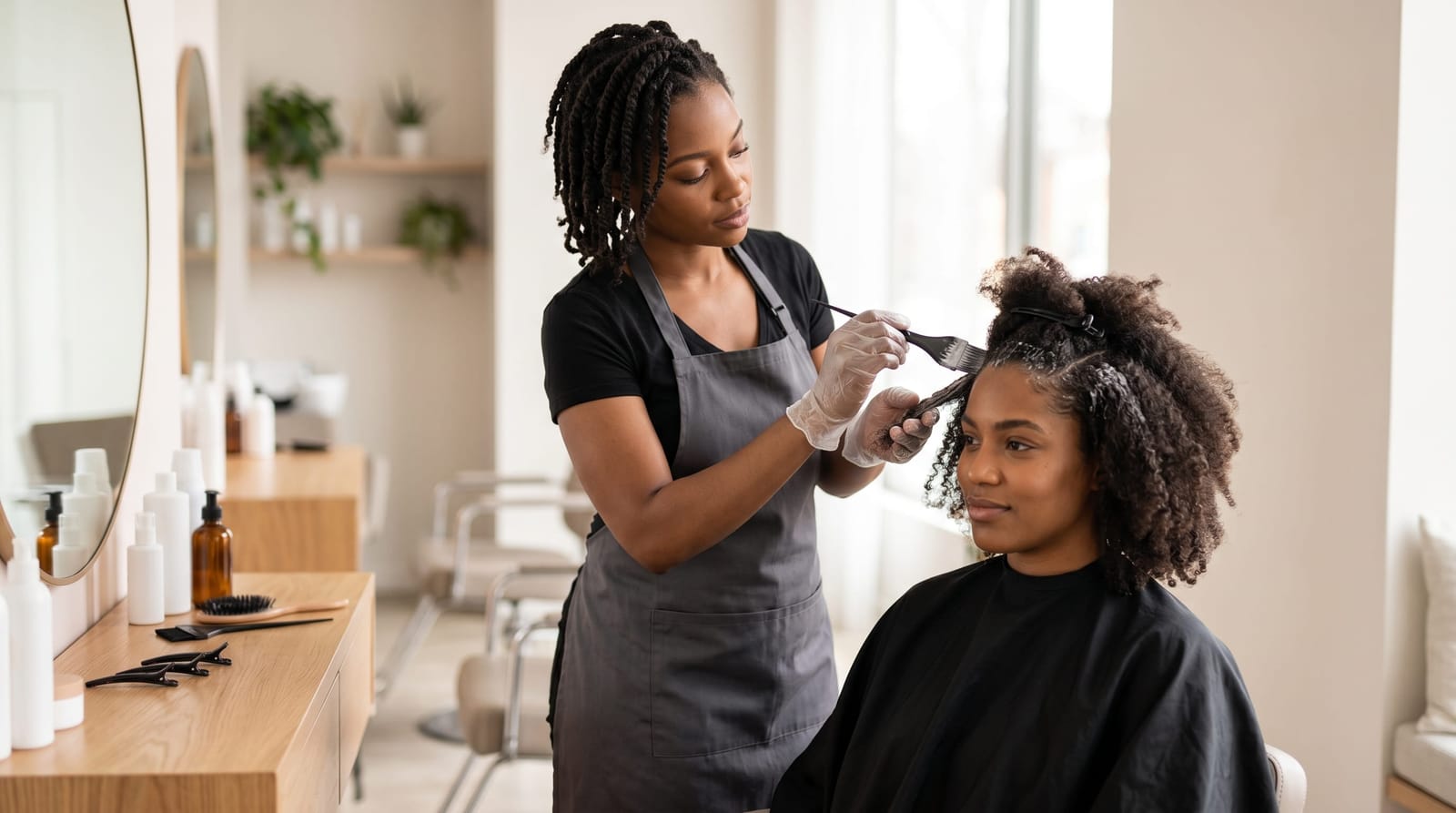
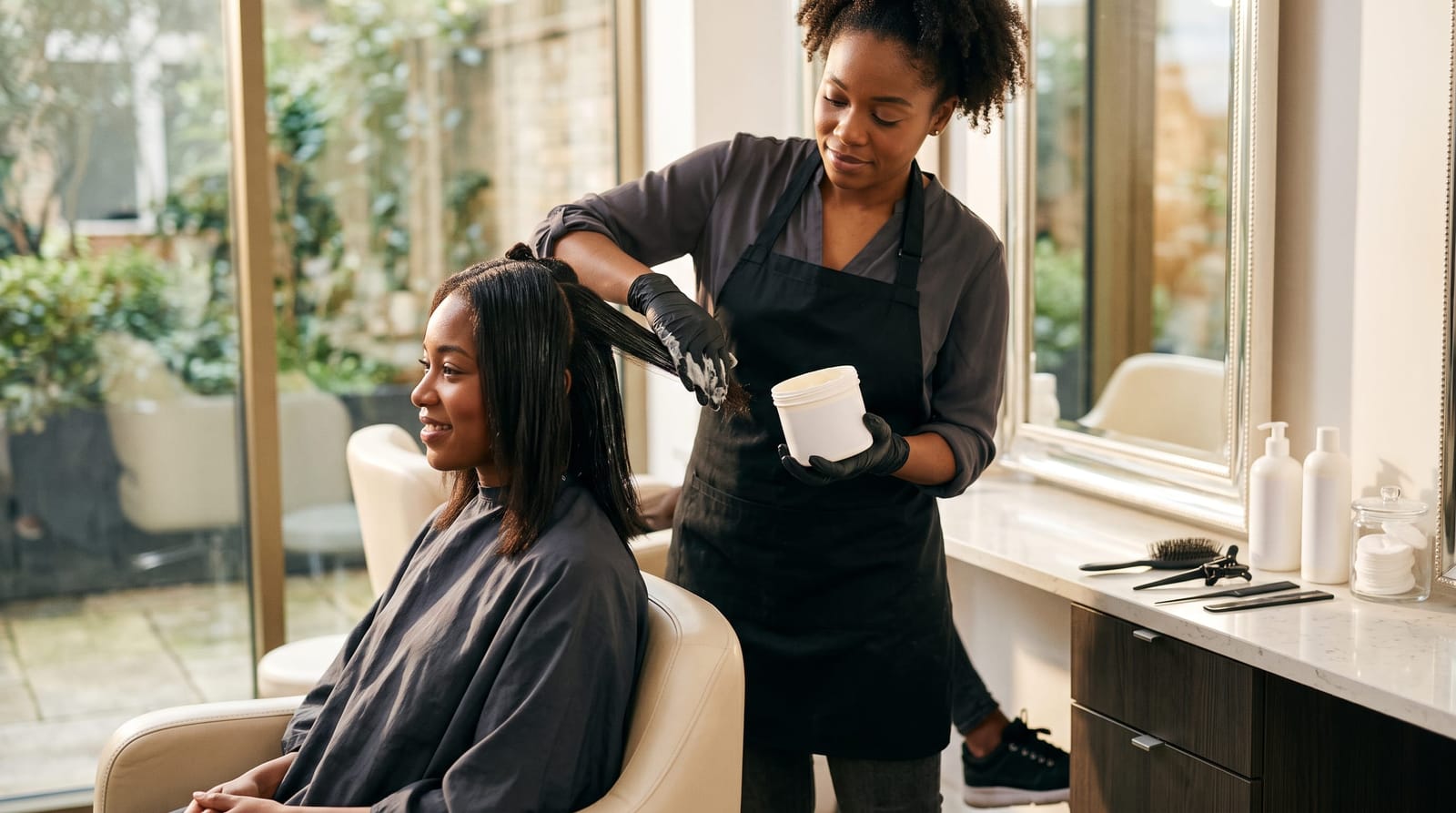
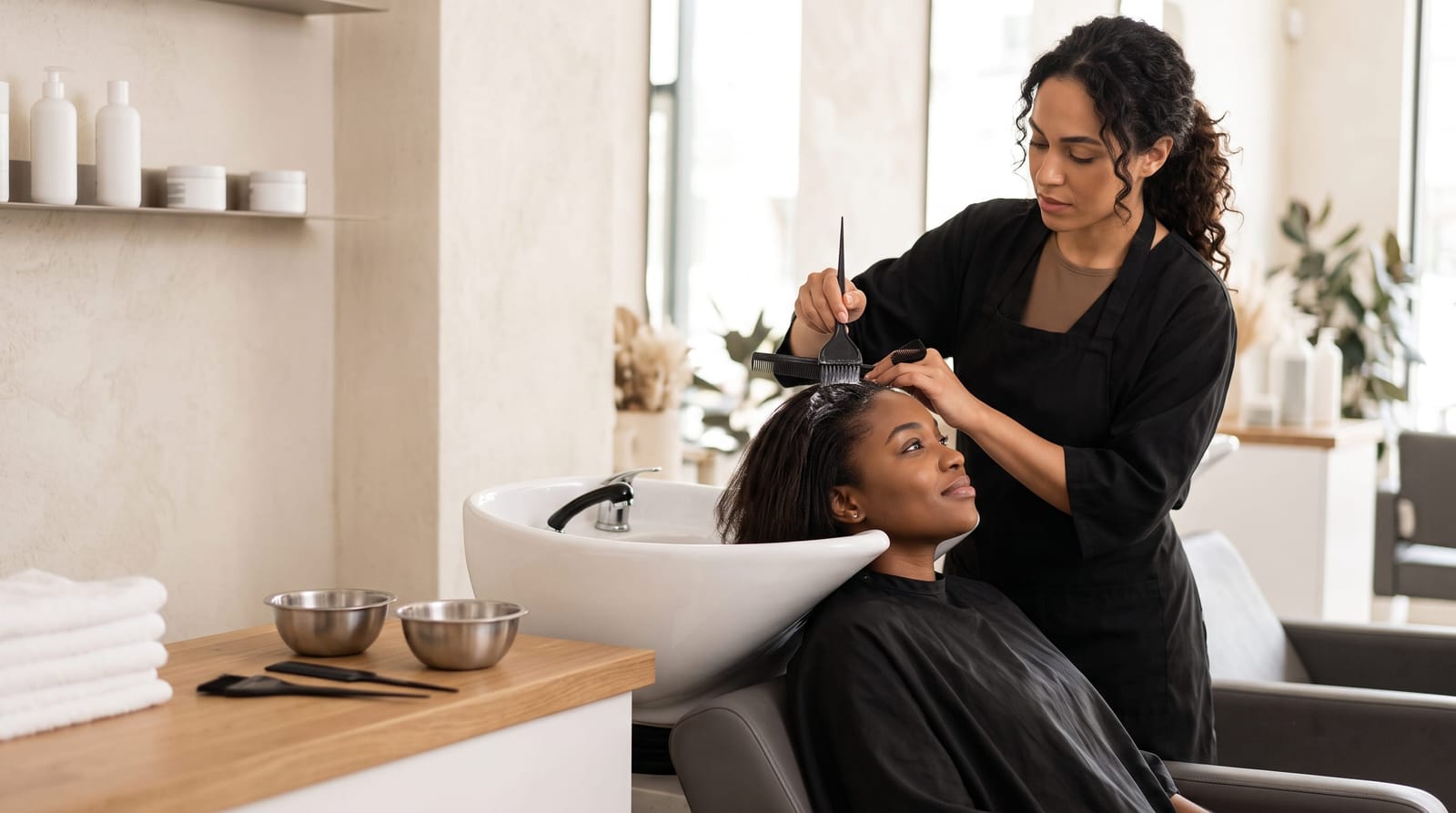
At Kabelly, the deep conditioning service is built into a larger conversation about your hair's overall health. Whether you're coming in for a fresh relaxer touch-up or simply for a maintenance appointment, your stylist will incorporate a treatment that reflects where your hair is right now.
The treatment process typically includes:
- A brief hair consultation: your stylist will assess your hair's current moisture and protein levels and ask about any changes you've noticed since your last visit
- Product selection: based on your hair's condition and your chemical history, your stylist will choose a deep conditioner that addresses your specific needs
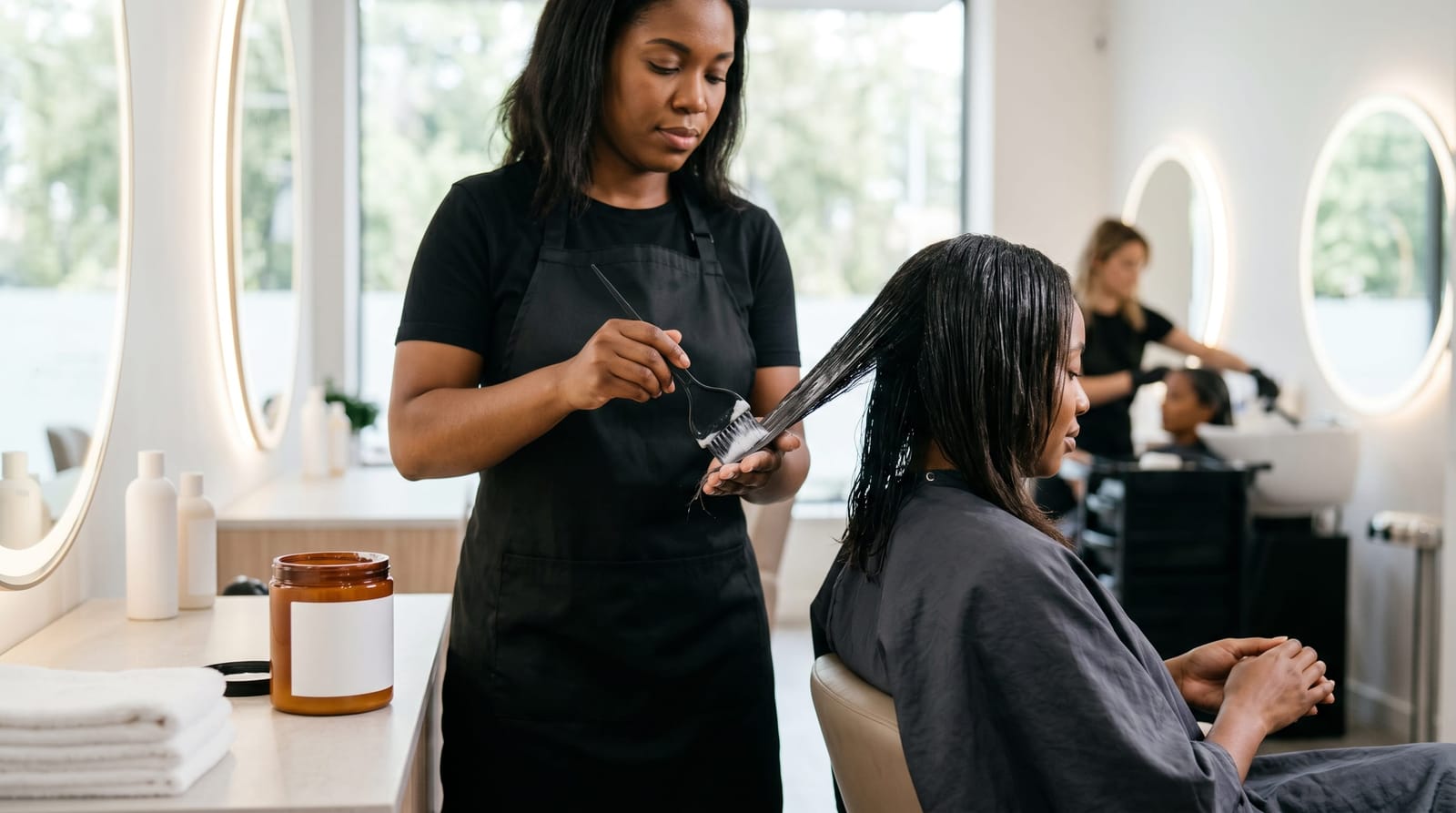
- Application and processing time: the treatment is applied evenly through the hair, then processed under a hooded dryer or with a heat cap to encourage deeper penetration
- A home care recommendation, before you leave, your stylist will suggest what to use at home between visits to maintain the results of the in-salon treatment
Clients who maintain consistent deep conditioning appointments, both professionally and at home, tend to see stronger, shinier, and more manageable relaxed hair over time. It's one of the most impactful things you can do between chemical services to keep your hair feeling its best.
For more guidance on how to care for your hair between relaxer appointments, take a look at our post on how to maintain relaxed hair between salon visits.
Frequently Asked Questions
How often should I use a deep conditioner on relaxed hair?
Most relaxed hair clients benefit from deep conditioning every one to two weeks, depending on how dry or fragile their hair feels. Moisture treatments can be used more frequently, while protein treatments are typically applied once a month. Your stylist at Kabelly can help you build a routine that works for your specific hair type and chemical service schedule.
What are the best deep conditioner products I can use at home between salon visits?
Some of the most popular and well-reviewed options for relaxed hair include the TGIN Miracle RepaiRx Deep Hydrating Hair Mask for moisture, the Elizavecca CER-100 Collagen Treatment for protein support, and Pantene's Miracle Rescue Deep Conditioner as a balanced everyday option. The best choice depends on what your hair needs most, which is something your stylist can help you identify during your appointment.
Can I over-condition my relaxed hair?
Yes: over-conditioning, especially with too much protein, can make relaxed hair feel stiff and brittle. Too much moisture without protein support can cause limpness and breakage. Balance is key, and that's one reason why professional guidance on which products to use and how often is so valuable for clients maintaining a relaxer.
Is deep conditioning different from a regular conditioner I rinse out quickly?
Yes, significantly. Rinse-out conditioners are designed to smooth the cuticle and add a surface layer of softness in a few minutes. Deep conditioners are formulated to penetrate the hair shaft more thoroughly, usually require 15 to 30 minutes of processing time (often with heat), and deliver longer-lasting moisture, protein, or both. They're not interchangeable: both have a place in a healthy relaxed hair routine.
The Right Deep Conditioner Makes All the Difference
Choosing the best deep conditioner products for relaxed hair isn't just about picking something from a "top-rated" list. It's about understanding what your hair actually needs, moisture, protein, elasticity support, or all three, and using the right treatment at the right time. At Kabelly, deep conditioning is a personalized service built around your hair's history and current condition. If you're ready to give your relaxed hair the care it deserves, our stylists are here to help you build a routine that works both in the salon and at home. To learn more about everything that goes into caring for chemically processed hair, explore our complete guide to relaxer and texturizer care for African American and Hispanic women.