Sleeping with Clip-In Extensions: What You Should and Shouldn't Do
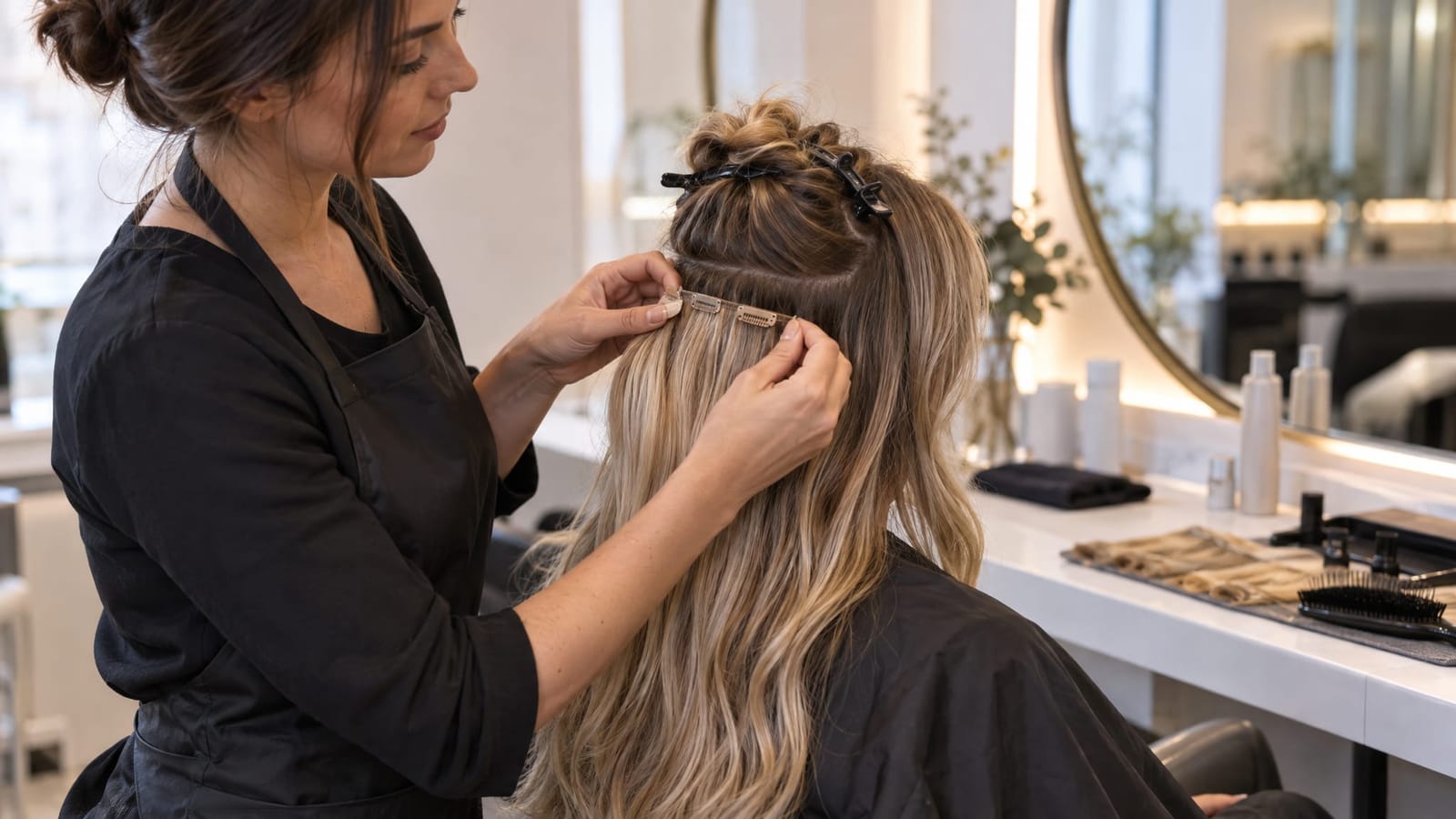
Clip-in extensions are best removed before bed, even when your style still looks beautiful. Sleeping with them attached can press the clips against your head, tug at the hair holding them in place, and leave the lengths tangled. A bonnet or satin pillowcase does not prevent movement at the attachment points.
We recommend protecting your natural hair and your extensions separately overnight. You can preserve much of the styling without keeping the clips attached. These best practices make removal, storage, and next-morning styling easier.
1. Take Clip-Ins Out Before Settling Into Bed
Clip-ins are removable styling pieces, rather than extensions intended to remain attached between salon visits. Taking them out belongs in your evening routine, just like removing other accessories.
A loose braid or ponytail may contain the extension lengths, but it leaves the clips attached while you turn and shift against the pillow. Tying everything more tightly is not a better solution because it adds tension rather than removing the attachment points.
For evenings when you expect to get home late, prepare a clear storage space beforehand. Having a brush or comb suited to the extensions and a storage pouch nearby makes removal less of a chore.
2. Open Every Clip Before Moving the Weft
A weft is the band that holds a section of extension hair. Pulling on its lengths before releasing every clip can catch your natural hair, especially when several wefts overlap.
- Remove pins, elastics, and other styling accessories so you can reach the clips.
- Separate your hair gently to expose one weft at a time.
- Support the hair near each attachment with one hand while opening the clip with the other.
- Check that every clip on the band is open, then gently lift the weft away.
- If something catches, pause and free the trapped strands with your fingers rather than pulling harder.
Work through the most accessible pieces first. Avoid sliding a partly closed clip down the length of your hair.
3. Detangle the Pieces According to Their Texture
Detangling extensions while they are off your head lets you work without pulling against your roots. Hold each piece near its band and address small sections, starting at the ends and gradually working upward.
The right approach depends on the texture:
- Straight or loosely waved pieces: Use the brush or comb recommended for the set, working gently through the ends before moving higher.
- Curly or tightly textured pieces: Follow their care directions. Finger-separating may preserve the curl pattern better than brushing through it dry.
- Styled curls: Separate obvious tangles without repeatedly brushing out a shape you want to wear again.
Avoid adding oil or conditioner simply because you are putting the pieces away. Product needs depend on the hair or fiber, and unnecessary layering can leave residue.
4. Store Extensions Dry, With the Clips Closed
Once the pieces are free of tangles, close the clips so their teeth are less likely to catch neighboring strands. Store the wefts neatly in their designated case or on an extension hanger, without crushing or tightly folding the lengths.
If the pieces are damp from washing, sweat, or styling, let them dry completely before enclosing them. Avoid leaving them in a tangled pile on a dresser or putting them away with wet towels and other accessories.
For curled pieces, arrange the lengths in loose curves rather than compressing them into a small pouch. Keeping wefts grouped by placement can also simplify the morning routine. Smaller side pieces can stay together, separate from wider back sections.
5. Use Satin or Silk for Your Natural Hair, Not as Permission to Keep Clips In
A smooth bonnet, scarf, or pillowcase can help reduce rubbing while you sleep. These accessories protect the hair resting against them, but they do not remove the pressure or pulling from attached clips.
After removing your extensions, choose an overnight arrangement that suits your natural hair and the finish you want:
- For a smooth style: A gentle wrap under a smooth scarf can help keep the hair arranged without a tight elastic.
- For curls or coils: A roomy bonnet can accommodate the texture without flattening it into a tight bundle.
- For longer lengths that tangle easily: A loose braid may keep strands contained, though it can add a wave.
Choose a comfortable fit. A bonnet does not need to feel tight to stay useful, and a pillowcase is an alternative if you prefer not to wear a head covering.
6. If You Accidentally Sleep in Them, Remove Them Gently
Falling asleep before taking your clip-ins out calls for a careful reset, not rushed brushing. Start by undoing any ponytail or braid. Locate each weft, support the surrounding hair, and release the clips individually.
If natural hair has become tangled around a clip, use your fingers to separate the strands before lifting it away. Once all the pieces are out, detangle your own hair and the extensions separately.
Do not try to brush through the entire style while the clips are still caught in it. Separating the pieces first makes it easier to see where each tangle begins.
7. Check the Clips Before Reapplying Them
Before styling the next morning, look for bent clips, rough edges, or loose stitching where a clip joins the band. Set aside a piece with a damaged attachment rather than forcing it to close.
Make sure your natural hair is dry and gently detangled before reinstalling the extensions. Adjust placement if a clip feels uncomfortable or pulls when you move your head. Recreating yesterday's look does not require placing every clip in precisely the same spot.
Frequently Asked Questions
Can I leave clip-in extensions in for a short nap?
Removing them is still the better choice. Even during a short nap, your head can rest directly on a clip, and movement against the pillow can tangle the surrounding hair. Nap length does not change how the pieces attach.
Does it matter whether my clip-ins are human hair or synthetic?
Both types are best removed before sleeping because the clips are the attachment point in either case. Fiber type matters more for brushing, washing, products, and heat styling. Follow the care instructions for your particular set.
Do clip-ins need washing after every wear?
Not automatically. Follow the set's washing instructions and pay attention to product buildup and how the pieces feel. Washing them just to refresh yesterday's style can add unnecessary drying and restyling. Always let washed pieces dry fully before storage.
A Better Overnight Routine
Keep bedtime care simple: release the clips, separate tangles, store the pieces dry, and protect your natural hair in a comfortable style. Preserving the two separately is more practical than trying to sleep in the finished look.