Relaxer vs. Texturizer: A Complete Guide for African American and Hispanic Women Considering Chemical Hair Straightening
If you've ever stood in a salon chair, or scrolled through hours of YouTube videos, trying to figure out the difference between a relaxer and a texturizer, you're not alone. These two chemical services are often mentioned in the same breath, yet they deliver very different results. And for women with naturally textured, coily, or curly hair, choosing the wrong one can mean months of unexpected outcomes and a lot of frustration.
Here's the real question most women are asking: Should I go fully straight, or do I just want my curls to be more manageable? That single answer determines which direction you go. The texturizer vs relaxer difference isn't just about chemistry: it's about your lifestyle, your hair goals, your maintenance commitment, and your hair's current health.
This guide was created for African American and Hispanic women in the DMV area who are considering a chemical hair service for the first time, or who are re-evaluating what's been working (or not working) in their current routine. By the time you finish reading, you'll understand exactly how each service works, what results to expect, who each one is best suited for, and how professional application at a trusted salon like Kabelly makes a meaningful difference in your outcome.
Let's break it all down: side by side, so you can walk into your next consultation feeling informed and confident.
What Is a Relaxer? How It Works and What It Does to Your Hair
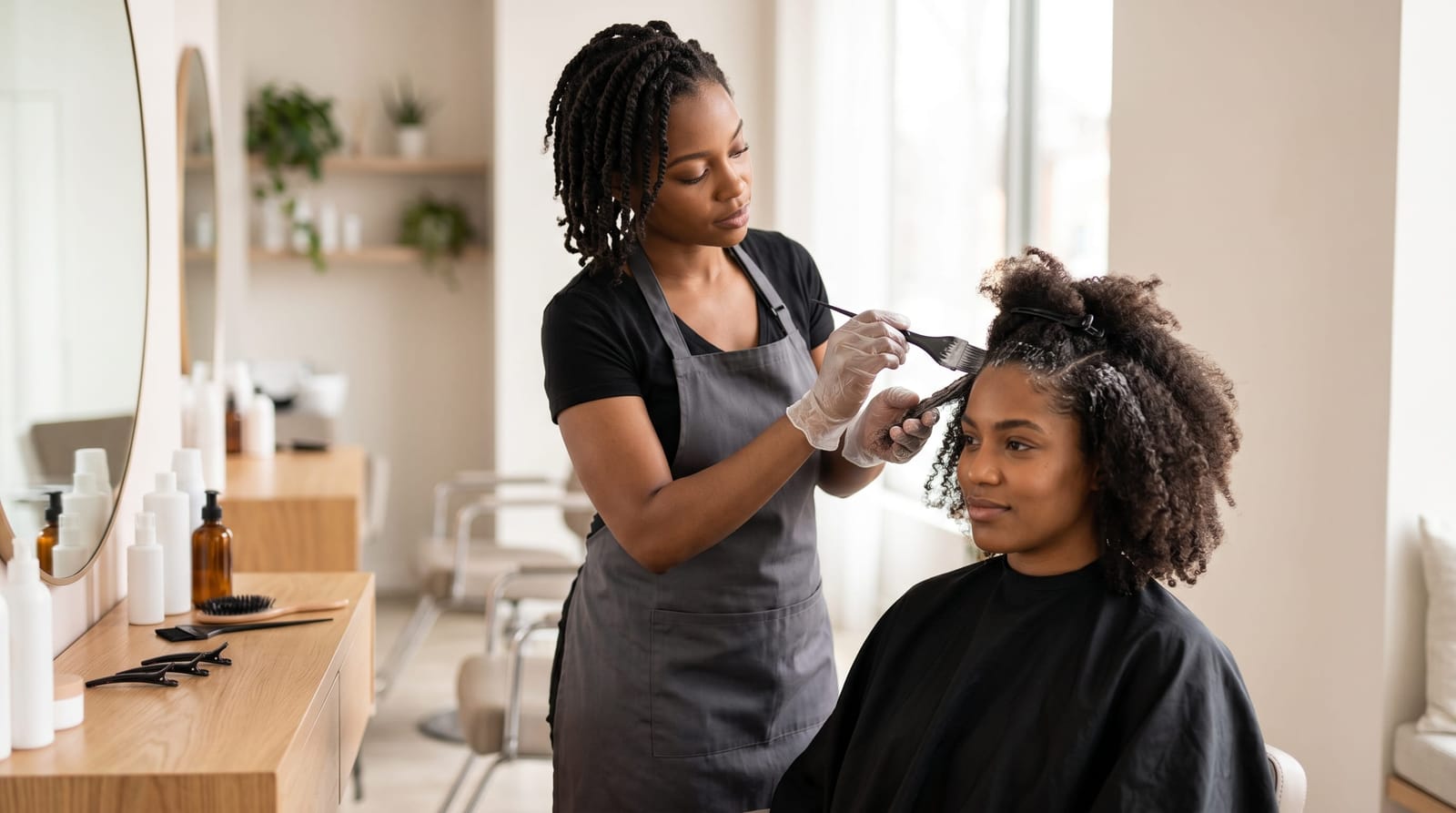
A relaxer is a chemical treatment designed to permanently alter your hair's natural curl pattern by breaking down the protein bonds, specifically the disulfide bonds, inside each hair strand. Once these bonds are restructured, the hair takes on a new, straighter shape. This is not a temporary change. Until new hair grows in, the relaxed sections remain straight.
Most relaxers fall into two main categories:
- Lye relaxers (sodium hydroxide-based): These are stronger and faster-acting, typically used on coarser or more resistant hair textures. They tend to leave hair smoother but require careful application to avoid scalp sensitivity.
- No-lye relaxers (calcium hydroxide or guanidine-based): These are slightly gentler on the scalp but can leave the hair feeling drier over time if not properly moisturized. They're often found in at-home kits.
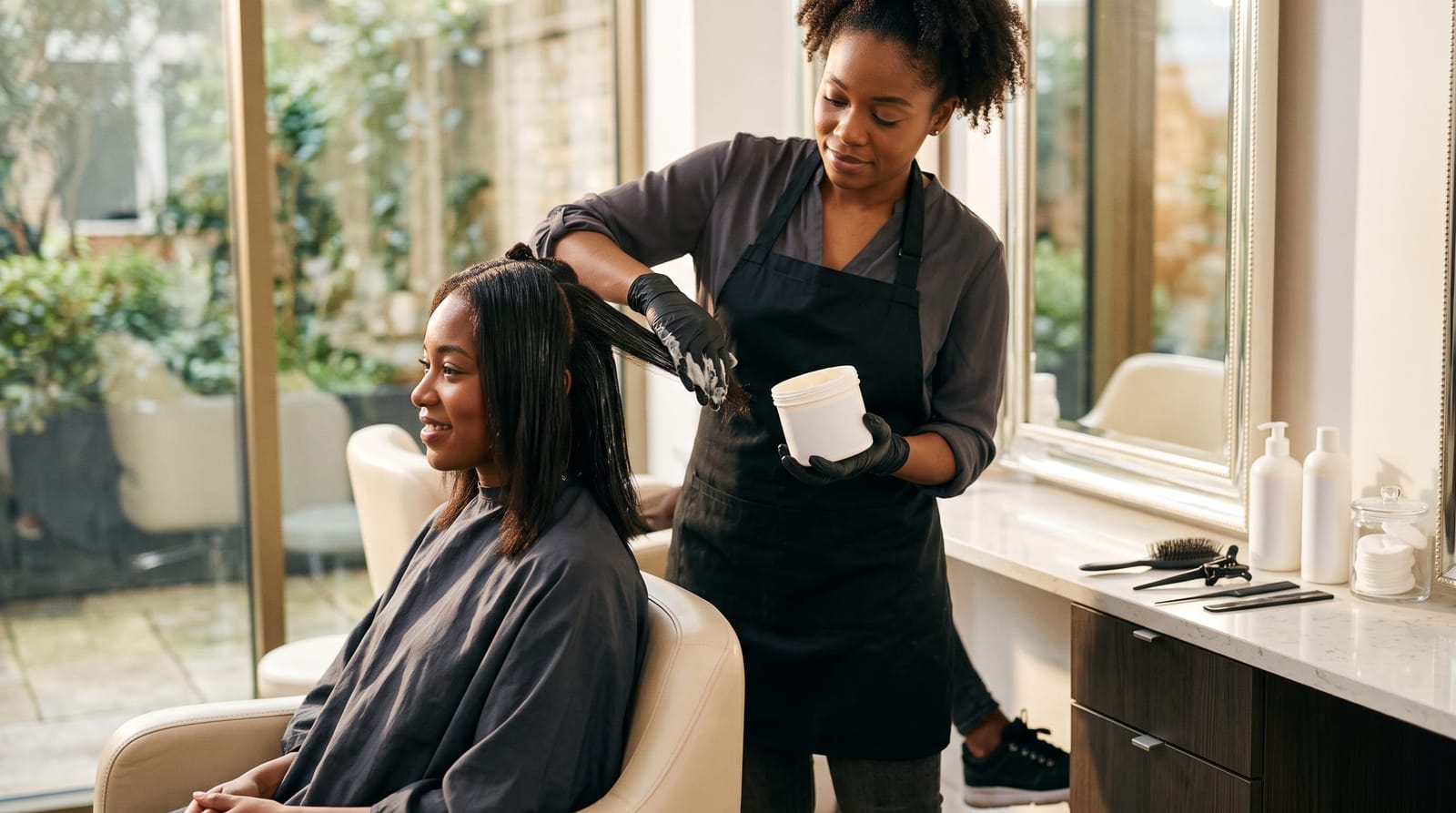
The result of a professional relaxer is hair that is fully straightened: essentially, the curl is gone from the treated portions of your strands. Styling becomes easier, wash days tend to be faster, and hair can be blown dry or flat-ironed with minimal effort. Many women find that a well-applied relaxer transforms their daily routine dramatically.
According to the Professional Beauty Association, chemical straightening services, including relaxers, remain among the most commonly requested salon services for women with Type 3 and Type 4 hair textures. Research published in dermatology literature notes that approximately 30-35% of Black women in the United States use or have used chemical relaxers, reflecting how embedded this service is in the culture of hair care.
Touch-ups are typically needed every 8 to 12 weeks as new growth emerges. The previously relaxed hair does not revert, but the new growth at the roots retains the original curl pattern: creating a clear line of demarcation that signals it's time for your next appointment.
What Is a Texturizer? Understanding the Milder Alternative
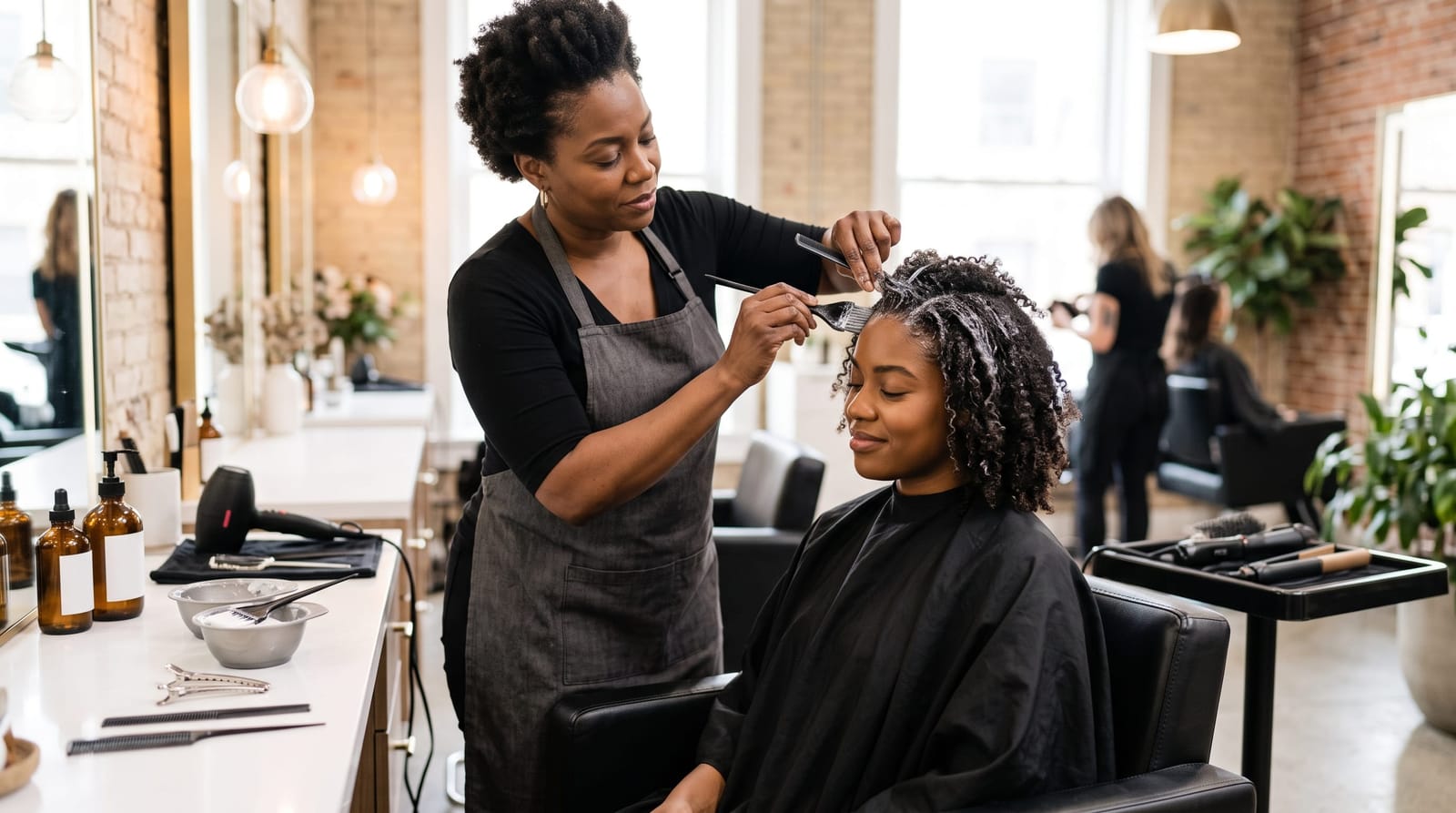
A texturizer uses the same class of chemicals as a relaxer, most commonly sodium hydroxide or calcium hydroxide, but it is applied for a significantly shorter period of time and sometimes at a lower concentration. The goal is not to eliminate your curl pattern entirely, but to loosen it. Instead of going from a tight Type 4 coil to completely straight hair, a texturizer might take that same curl from a tight coil to a softer, more defined wave or loose curl.
Think of it this way: a relaxer processes your hair to full straightness, while a texturizer processes your hair only partway, intentionally stopping before full straightening occurs. This is why timing is everything. The difference of just a few minutes during application can mean the difference between a soft curl and a much straighter result than intended.
Women who choose texturizers often share these motivations:
- They want to reduce shrinkage without losing their natural curl shape
- They find their natural texture too difficult to manage for their current lifestyle but don't want to go fully straight
- They prefer defined waves or looser curls over their original tighter coil pattern
- They're easing into chemical services for the first time and prefer a more subtle result
Because the processing time is shorter, some clients assume texturizers carry no real risk, but this is a common misconception. The chemical used is still a strong alkali, and over-processing can still occur if technique, timing, and hair health aren't carefully assessed before application. This is precisely why professional application matters as much with a texturizer as it does with a full relaxer.
Texturizer vs Relaxer Difference: A Side-by-Side Comparison
Understanding the texturizer vs relaxer difference becomes much clearer when you put both services side by side across the factors that matter most. Here's how they compare across the key categories most clients ask about:
Result and Final Appearance
- Relaxer: Hair is fully straightened. Curl pattern is permanently altered in the treated sections. Heat styling is minimal and easy.
- Texturizer: Curl pattern is loosened, not eliminated. Results vary by hair type and timing. Hair may still have visible wave or curl when air-dried.
Chemical Strength and Processing Time
- Relaxer: Processed for 15-25 minutes on average, depending on hair texture and resistance. Stronger formulations for coarser textures.
- Texturizer: Processed for a shorter time, typically 5-10 minutes, or intentionally neutralized early to stop the straightening process before completion.
Maintenance Schedule
- Relaxer: Touch-ups needed every 8-12 weeks as new growth appears. Consistency is important to keep the line of demarcation healthy.
- Texturizer: Requires a similar touch-up window, roughly every 8-12 weeks, as new curl growth emerges at the roots.
Reversibility
- Relaxer: Not reversible on treated hair. Transitioning to natural hair means growing out new growth and gradually cutting away relaxed ends.
- Texturizer: Also not reversible on treated strands. The partial alteration is permanent in the same way a full relaxer is: only the degree differs.
Candidacy
- Relaxer: Best suited for women who want a smooth, fully straight style and are committed to regular maintenance and a focused aftercare routine.
- Texturizer: A strong consideration for women who want to preserve some curl definition, reduce styling time, and ease into chemical services gradually.
Who Is Each Service Best Suited For?
One of the most important factors in any chemical service decision is honest self-assessment, not just of your hair, but of your lifestyle. A stylist at Kabelly can help you evaluate this during a thorough consultation, but here's a framework to start thinking through which direction might be the better fit for you personally.
You Might Be a Better Candidate for a Relaxer If:
- You prefer your hair completely straight for work, personal style, or ease of styling
- You have a busy schedule and want minimal daily styling effort
- Your natural texture is very tightly coiled and doesn't respond well to heat alone
- You've had texturizers before but found the result wasn't straight enough for your liking
- You are committed to a consistent 8-12 week salon touch-up schedule
You Might Be a Better Candidate for a Texturizer If:
- You love your natural curl but want it looser, more defined, or more manageable
- You want to reduce wash day time and product dependency without going fully straight
- You're newer to chemical services and want to start with something less dramatic
- Your styling preference includes wearing your hair in its natural state some days and straight or blown-out others
- Curl definition and some curl retention matter to you aesthetically
It's worth noting that hair health plays a significant role in candidacy for either service. Hair that is already compromised, whether from excessive heat, previous color, or mechanical stress, may not be the best candidate for a chemical treatment at that moment. This is something a trained stylist assesses during your pre-service consultation, and it's one of the most important conversations you can have before any chemical service begins.
Why Professional Application Produces Better Results Than At-Home Kits
Walk into any beauty supply store and you'll find a shelf of boxed relaxer and texturizer kits, many with promises of salon-quality results at home. For most women, at-home chemical services carry significantly more risk than a professionally applied treatment, and the gap between a great result and a problematic one often comes down to things you simply cannot control at home.
Here's what a professional application at a salon like Kabelly includes that at-home kits cannot replicate:
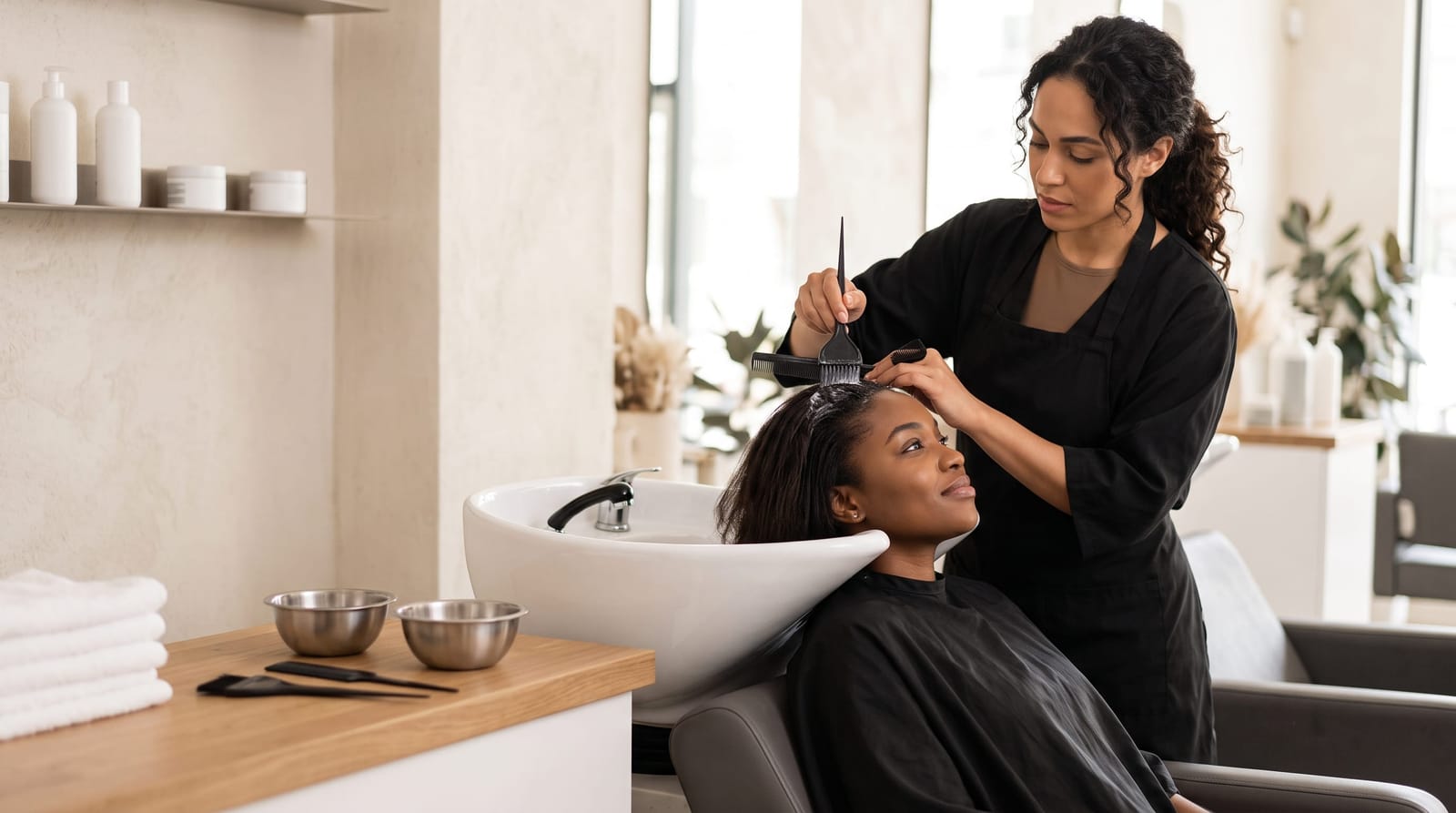
- Pre-service scalp and strand assessment: A professional evaluates your hair's current health, porosity, and texture before selecting the appropriate formula and determining timing. This assessment alone prevents the majority of over-processing incidents.
- Professional-grade products: Salon-quality relaxer formulations are often more refined and consistent than over-the-counter kits. The difference in ingredient quality affects both the safety of application and the condition of hair afterward.
- Precise timing and technique: Even a few extra minutes of processing time can result in unintended results. Professional stylists monitor this carefully, watching for the right stage before neutralizing.
- Proper neutralization and conditioning: The neutralizing process is just as critical as the chemical application. Professional neutralizers thoroughly stop the chemical process, and conditioning treatments applied at the salon help restore moisture and protein balance immediately after service.
- Personalized aftercare guidance: Your stylist can recommend specific products and routines tailored to your hair's needs after chemical service: something no generic box kit instruction sheet can provide.
Many clients who come to Kabelly for the first time are correcting outcomes from at-home kits: uneven results, breakage at the hairline, or over-processed sections mixed with under-processed areas. Professional application from the start protects both your hair and your investment.
Maintaining Chemically Processed Hair: What You Need to Know Between Appointments
Whether you choose a relaxer or a texturizer, the health of your hair between salon visits is largely determined by your aftercare routine. Chemical services don't end when you leave the salon, in many ways, your daily and weekly habits define whether your hair thrives or struggles in the weeks that follow.
Moisture Is Everything
Both relaxed and texturized hair tends to be drier than unprocessed hair, because the chemical process slightly alters the hair's ability to retain moisture. Deep conditioning treatments, ideally once a week or every other week, help keep strands hydrated, supple, and less prone to breakage. Look for products designed for chemically treated or protein-sensitive hair rather than reaching for the heaviest product on the shelf.
Gentle Cleansing Matters
Choosing the right shampoo makes a real difference for chemically processed hair. Sulfate-heavy shampoos can strip the hair's natural oils and contribute to dryness. A sulfate-free or low-lather cleanser used consistently will help your hair retain moisture without compromising cleanliness. Cleansing frequency varies by lifestyle, scalp type, and styling habits: your stylist can help you find the right balance.
Heat Styling With Intention
Relaxed hair can absolutely be styled with heat, but consistently high temperatures applied without proper heat protection can compromise hair over time. Use a quality heat protectant before any blow-drying or flat ironing, and avoid unnecessary heat on days when your hair doesn't require it. Many clients find that their relaxed hair actually needs far less heat to achieve smooth results, which reduces overall heat exposure naturally.
Watching for the Right Time to Return to the Salon
Knowing when your hair is ready for a touch-up, rather than guessing or waiting too long, helps prevent the new growth from weakening the line of demarcation and creating unnecessary tension at the roots. The window of 8 to 12 weeks is a general guideline, but your individual growth rate, lifestyle, and styling needs all factor in.
Transitioning, Combining Services, and Long-Term Planning
Chemical hair services don't exist in a vacuum: they fit into the broader story of your hair journey, and that story is always evolving. Whether you're transitioning away from a relaxer, considering adding color to your chemically processed hair, or simply trying to plan your appointments more strategically, there are a few things worth understanding.
Transitioning From Relaxed to Natural Hair
Transitioning means growing out your natural hair while gradually cutting away the previously chemically treated sections. This process takes patience: typically 12 to 24 months or longer depending on your hair growth rate and the length you want to retain. During this time, protective styles, consistent moisture, and regular trims to remove the line of demarcation help minimize breakage and keep both textures manageable. Many women find that working with a stylist throughout the transition makes it significantly more manageable and less stressful.
Combining Chemical Services With Other Treatments
It is generally not recommended to perform multiple chemical services, such as a relaxer and a color treatment, at the same time or too close together. The hair needs time to stabilize between chemical processes. However, with proper planning and adequate spacing between appointments, many clients successfully maintain both relaxed and color-treated hair. A stylist experienced in chemical services can help you map out a service schedule that honors the condition of your hair throughout.
Protein and Moisture Balance Over Time
Chemically processed hair benefits from a thoughtful balance of protein treatments and moisture. Too much protein can make hair feel stiff and brittle; too much moisture without protein support can leave it overly soft and prone to breakage. Most professional stylists recommend rotating between protein-rich and moisture-focused conditioning treatments rather than using the same product every time.
Deep Dive Topics: Explore Each Aspect of This Journey in Detail
This guide gives you the foundation, but each aspect of the relaxer and texturizer experience deserves its own thorough exploration. The following resources go deeper into the specific topics that matter most as you plan, maintain, and care for chemically processed hair:
-
What to Expect From a Texturizer
If you're considering a texturizer specifically, our detailed breakdown covers everything from first-time results to how long the service lasts and what your hair will look and feel like in the days following your appointment. Learn more about the texturizer hair treatment experience. -
Relaxer Aftercare: Building Your Between-Appointment Routine
What you do between salon visits determines how your hair holds up. This guide walks through a practical, product-specific routine for maintaining relaxed hair through wash day, styling, and everything in between. Start building your relaxer aftercare routine today. -
Choosing the Right Shampoo and Conditioner for Relaxed Hair
Not all cleansing products are appropriate for chemically treated hair. This professional guide covers the ingredients to look for, what to avoid, and how to build a consistent cleansing routine. Find the right shampoo for relaxed hair for your specific needs. -
When Is It Time for a Touch-Up?
Timing your relaxer touch-up correctly protects the health of your hair at the line of demarcation. This post covers the specific signs that signal your hair is ready, and why waiting too long can be just as problematic as going too soon. Learn how to read your own relaxer touch up schedule. -
Recognizing the Signs of Chemical Damage
Understanding what healthy chemically processed hair looks and feels like, and knowing when something seems off, helps you seek professional guidance before a small concern becomes a bigger one. Learn to recognize chemical hair damage signs so you can act early.
Conclusion: Making the Right Choice for Your Hair and Your Life
The decision between a relaxer and a texturizer is deeply personal, and there is no universally right answer. What matters most is that your choice aligns with your hair goals, fits your lifestyle, and is executed by a professional who takes the health and history of your hair seriously.
Here are the key takeaways to carry with you from this guide:
- Relaxers permanently straighten the hair; texturizers loosen the curl pattern without full straightening: the core of the texturizer vs relaxer difference
- Both services use similar chemistry; the difference lies primarily in processing time and degree of alteration
- Both require touch-ups roughly every 8-12 weeks and a consistent aftercare routine
- Professional application produces safer, more predictable results than at-home kits
- Hair health, lifestyle, and personal style goals should all inform your decision
At Kabelly, every chemical service begins with a thorough consultation because we believe the best results come from informed decisions. Whether you're considering your first texturizer, planning a relaxer touch-up, or simply exploring your options, our team is here to guide you with honesty, expertise, and care. We invite you to book a consultation and let's create a plan that truly works for your hair.