How to Protect Your Edges and Scalp During a Relaxer Application
When it comes to chemical hair services, the details matter, especially the ones you might not see. If you've ever wondered what separates a professional hair relaxer service from an at-home kit, the answer often comes down to how carefully your scalp and edges are protected throughout the process. At Kabelly, every relaxer application begins with a thoughtful, client-centered approach that puts the health of your hair and scalp first. This post breaks down exactly what that looks like and why it matters.
Why Your Edges and Scalp Deserve Extra Attention
The hairline and edges are some of the most delicate areas on your head. The skin along your temples, nape, and forehead tends to be thinner and more sensitive than the rest of your scalp, which means it can react more quickly when chemical products are applied nearby. During a relaxer service, this sensitivity becomes especially important to manage.
Research and professional standards in chemical hair care consistently show that scalp burns and hairline thinning are among the most common concerns associated with relaxer services, and nearly all of them are preventable with proper technique. Studies from salon industry training programs suggest that up to 70% of relaxer-related scalp irritation occurs at the hairline and temple areas, precisely because these zones are often rushed through or inadequately protected during application.
A skilled stylist understands that your edges aren't just a finishing touch: they're a structural part of your overall hair health. Protecting them during a relaxer isn't optional. It's a professional standard.
The Professional Preparation Process: What Happens Before the Relaxer Touches Your Hair
One of the clearest distinctions between a professional hair relaxer service and a box kit is everything that happens before the chemical is even mixed. At Kabelly, preparation is built into every appointment and typically includes the following steps:
- Scalp and hair assessment: Your stylist examines the condition of your scalp, checks for any sensitivity or existing irritation, and reviews your hair's processing history before recommending a relaxer formula.
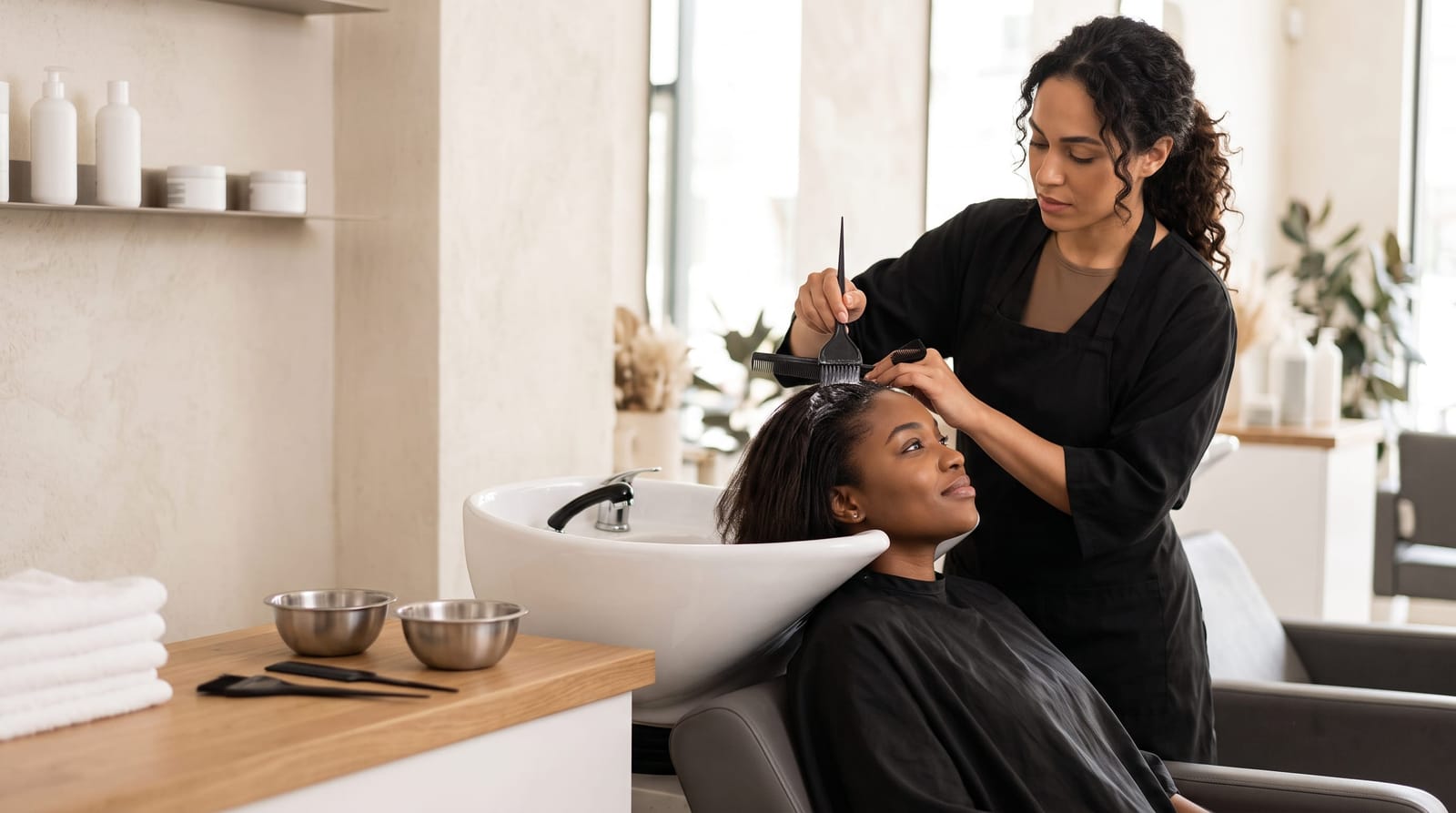
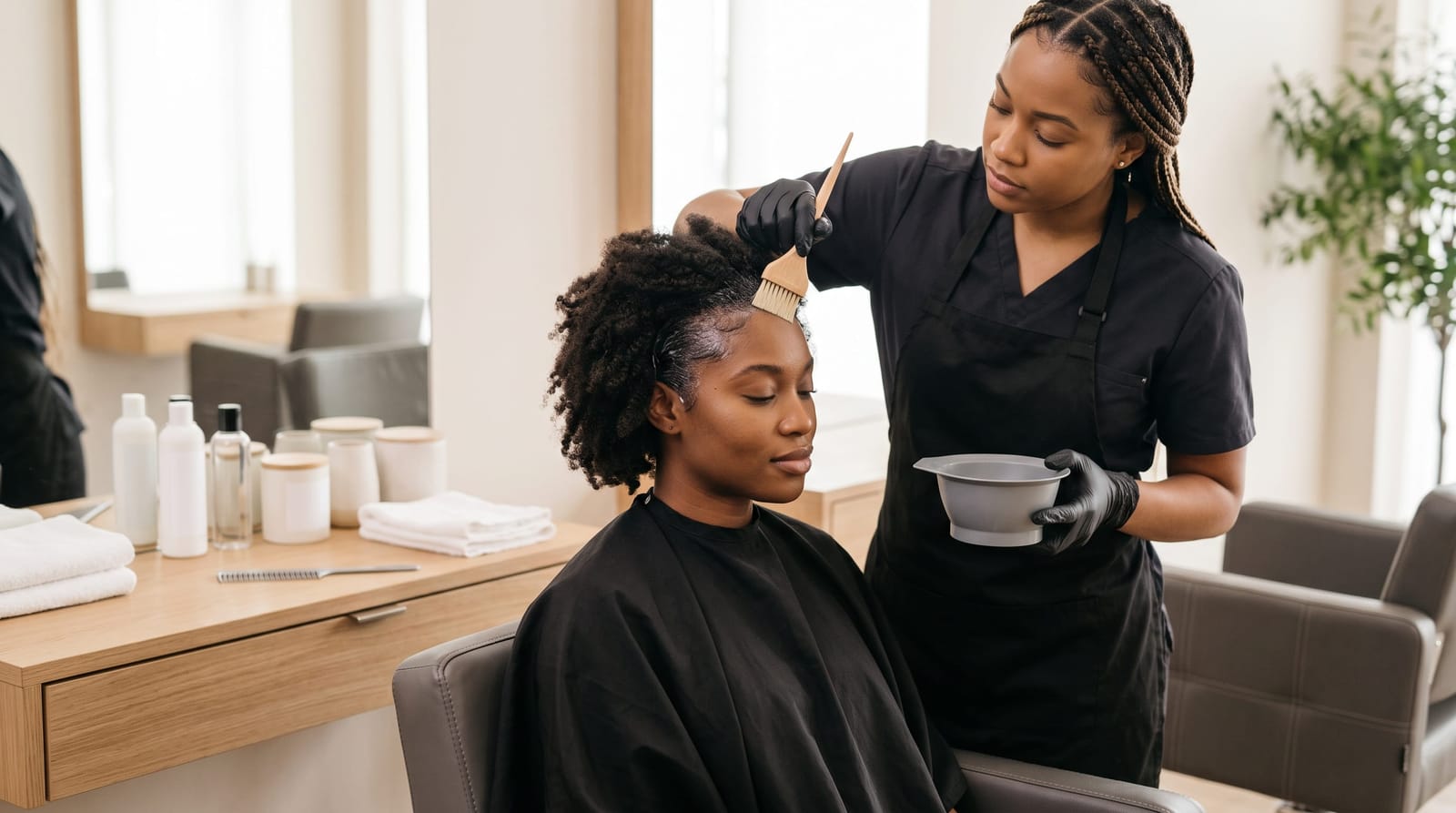
- Base coat application: A protective petroleum-based base is applied directly to the scalp and along the hairline before the relaxer is mixed. This creates a barrier between the chemical formula and your skin.
- Section mapping: Hair is sectioned into clean, even quadrants so the relaxer can be applied systematically: reducing overlap, minimizing the time any one area is exposed to the product, and ensuring the hairline is approached last.
- Timing calibration: Processing time is calculated based on your hair's texture, porosity, and current condition, not a generic number on a package. Most professional applications involve monitoring the hair every 5 minutes during processing.
- Edge and nape protection: The most sensitive areas, temple edges, nape hairline, and around the ears, receive additional protective barrier product before the relaxer is applied to those zones.
This level of intentional setup isn't possible with an at-home kit, which provides a one-size-fits-all product with no customization for your specific hair or scalp needs.
Application Techniques That Keep Sensitive Areas Safe
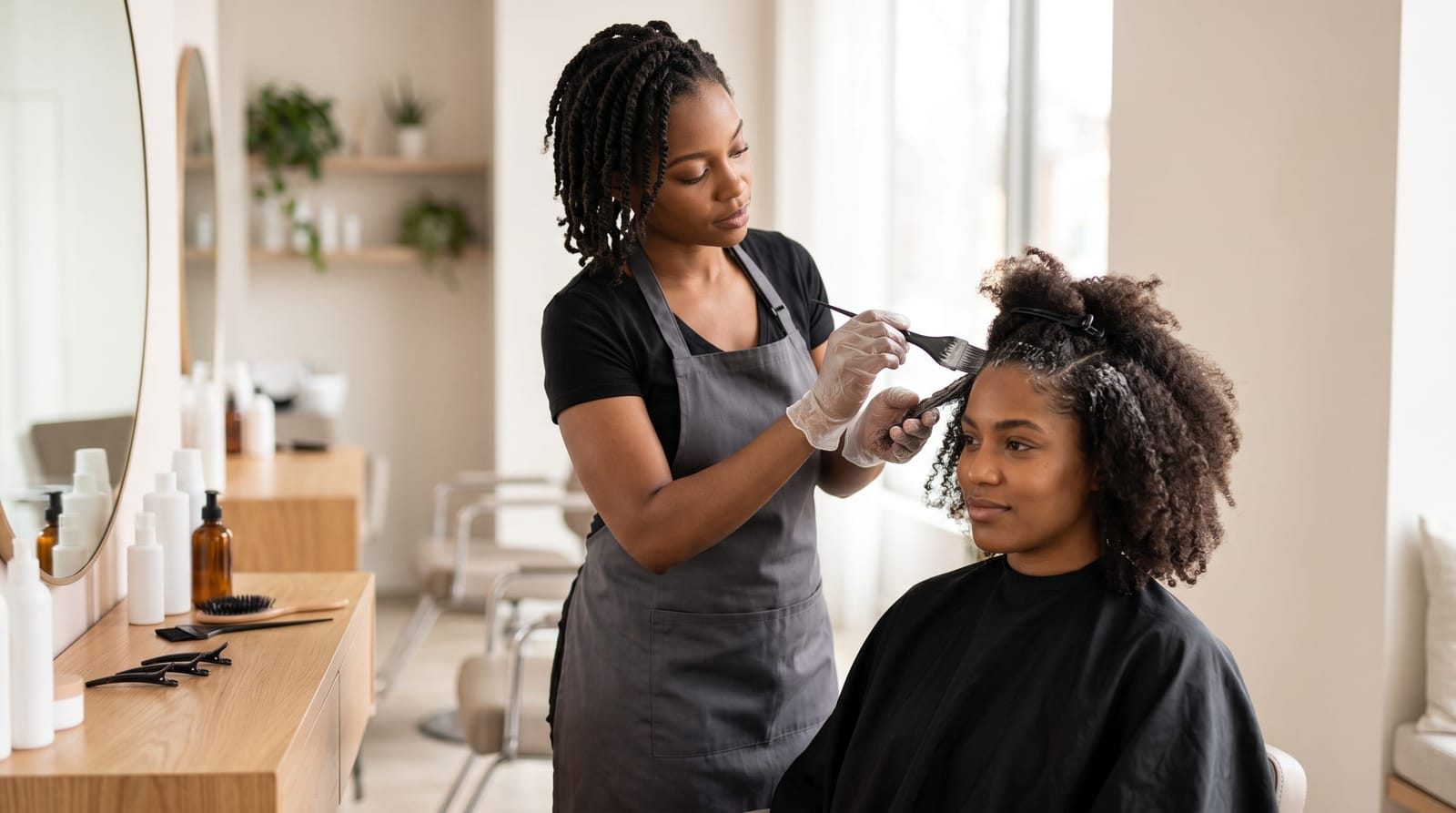
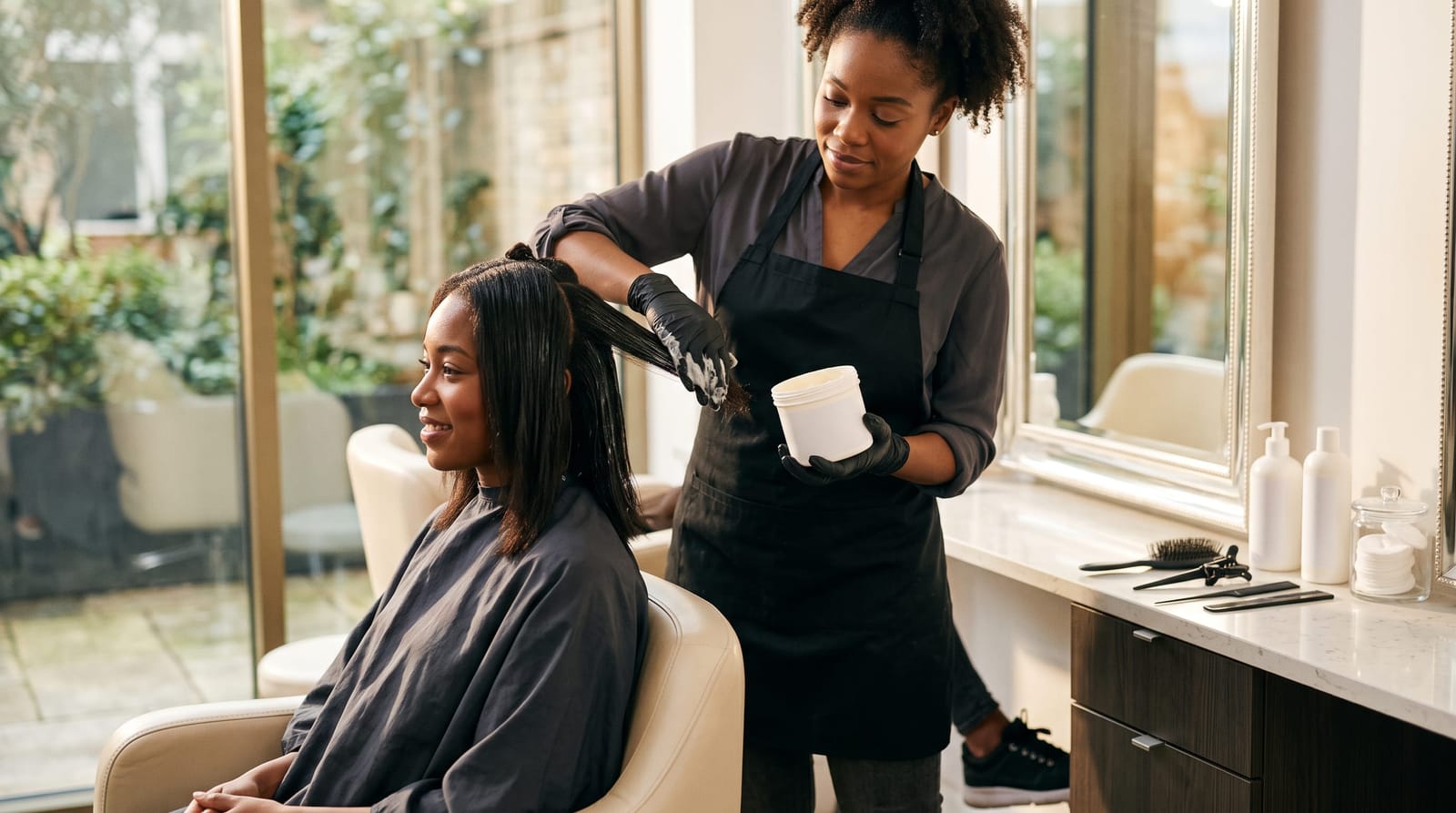
Even with proper preparation, how the relaxer is applied makes a significant difference in how your edges respond. Professional stylists are trained to apply relaxer with a brush, not their hands, using smooth, controlled strokes that distribute the product evenly while avoiding the scalp itself during the initial application phase.
Here's what a careful, edge-protective application typically looks like in practice:
- Start in the middle sections first. The center of the hair, which is typically the most resistant to processing, receives the relaxer first. This ensures the edges, which process faster due to thinner skin and more exposure, aren't sitting under chemicals while the stylist is still working through the rest of the hair.
- Apply with intention around the hairline. Near the edges, the brush is used with lighter pressure and shorter strokes to avoid pushing product onto the skin. Many stylists work inward from the hairline rather than outward to minimize contact.
- Monitor for heat and redness. A trained stylist regularly checks the scalp for any signs of discomfort or irritation throughout the process. Clients are encouraged to communicate if they feel any unusual warmth or tingling: two sensations that signal it's time to move to the rinse.
- Neutralize thoroughly. After processing, the relaxer is rinsed completely and a neutralizing shampoo is applied. This step is critical: it stops the chemical reaction and restores the hair's natural pH balance. Inadequate rinsing is one of the leading causes of post-relaxer scalp irritation.
Each of these steps reflects professional training and cannot be replicated reliably at home, which is one of the core reasons a professional hair relaxer service delivers more consistent, safer results than DIY alternatives.
What Clients Can Do to Support a Safer Application
Protecting your edges is a shared effort. While your stylist handles the technical side, there are several things you can do before and during your appointment to help the process go smoothly:
- Avoid washing your hair 48 to 72 hours before your appointment. Natural scalp oils act as an additional protective layer. Washing immediately before a relaxer removes this buffer and can increase scalp sensitivity.
- Skip heavy styling products in the days leading up to your service. Buildup along the hairline can interfere with how evenly the protective base coat is applied.
- Be honest about any scalp sensitivity. If you've had irritation during previous relaxer services, or if your scalp has been feeling tender recently, let your stylist know before the appointment begins. This information changes how the application is approached.
- Don't scratch or aggressively brush before your service. Minor abrasions along the scalp can make skin more reactive to chemical products. Arriving with your scalp undisturbed is a simple but important step.
- Communicate throughout the process. If something feels uncomfortable mid-service, speak up. Stylists rely on client feedback to make real-time adjustments.
If you're also considering color services alongside your relaxer, it's worth reading about highlights on relaxed hair to understand the timing and chemical compatibility involved before combining services.
Why Professional Application Protects Long-Term Hair Health
Relaxers work by chemically altering the protein structure of your hair strands. When applied correctly, this process creates smoother, more manageable hair. When rushed or done without precision, it can lead to breakage near the hairline, scalp sensitivity, and gradual thinning along the edges over time.
The difference in outcomes between professional and at-home applications often becomes most visible along the hairline: the area most likely to show the effects of uneven timing, inadequate protection, or over-processing. Professional stylists who specialize in relaxer services are trained specifically to prevent these outcomes, which is why investing in a quality salon experience pays off well beyond the appointment itself.
At Kabelly, chemical services are approached with the same care and customization as any other premium service. Your hair's history, texture, and sensitivity are factored into every step, because beautiful, healthy results depend on what happens during the application just as much as what you do afterward.
Frequently Asked Questions
How often should I get a professional hair relaxer service?
Most clients schedule relaxer touchups every 8 to 12 weeks, focusing only on the new growth rather than reprocessing previously relaxed hair. The exact timing depends on your hair's growth rate, texture, and overall condition: your stylist can help you determine the right schedule for your hair.
Can edges that have been thinned by past relaxer services recover?
In many cases, yes, with the right care. Reducing chemical stress to the hairline, using gentle edge care products, and allowing time between services can help support the hair's natural recovery. If you're concerned about your edges, your stylist can assess the area and recommend a tailored maintenance approach.
Is the base coat applied during a professional relaxer service the same as the product in at-home kits?
At-home relaxer kits sometimes include a small amount of petroleum-based protector, but the application in a professional setting is more thorough, more precise, and specifically customized to the most sensitive areas of your scalp. Professional base products are also typically higher quality and are applied in the right quantity for effective protection.
What should I do if my scalp feels irritated after a relaxer service?
Some mild sensitivity in the 24 to 48 hours following a relaxer service is normal. Avoid heat, heavy product application, and manipulation of the scalp during this time. If irritation persists or feels severe, contact your stylist: they can advise on appropriate aftercare and help you adjust future services to prevent recurrence.
Protecting Your Edges Is Part of Every Great Relaxer Service
A relaxer done well should leave your hair smooth, your scalp comfortable, and your edges intact. That outcome starts with careful preparation, precise application, and a stylist who treats your hairline with the same attention as the rest of your hair. At Kabelly, a professional hair relaxer service means every step, from the protective base coat to the final rinse, is handled with intention. Whether you're new to chemical services or returning for a touchup, you deserve a salon experience where the details are never overlooked.