How to Choose the Best Hair Extensions for Your Hair Type, Face Shape & Lifestyle in the DMV
The best hair extensions are the ones that blend with your everyday texture, suit your hair’s condition, and fit the amount of maintenance you want to manage. Clip-ins offer removable flexibility. Bonded wefts and quick weaves involve adhesive and planned removal. Braidless methods avoid a braided foundation but still require attention to attachment weight, placement, and upkeep.
Start with the look and routine you want, rather than choosing a method from a photo alone. Waist-length curls for an evening event create different demands from shoulder-length fullness worn through commuting, workouts, and humid Maryland afternoons.
This guide explains how to compare extension methods, choose texture and length, plan event styles, and understand the maintenance behind a polished finish. The goal is a style that feels like you, with realistic expectations about the work involved.
Start With Your Hair’s Everyday Texture and Condition
A convincing blend begins with the hair that will remain visible. That includes the texture around your part, hairline, and any leave-out, meaning your own hair left uncovered to conceal the extension attachments.
Match the texture you intend to wear most often
Natural hair does not have to be straightened to blend beautifully with extensions. Curly, coily, kinky-straight, wavy, and straighter textures create different styling possibilities. The useful question is which texture works with your normal routine.
- If you wear your natural curls most days: Compare curl size, overall fullness, and how the extension hair looks after washing, not just its styled appearance in a package.
- If you alternate between textured and smooth styles: Consider how much restyling each look requires and whether the extension hair supports those changes.
- If you usually wear a blowout: A texture with some body may blend differently from a very silky finish. Compare the extensions with your hair in its usual finished state.
- If your hair is relaxed or color-treated: Include that processing history in the selection discussion. A texture match alone does not establish whether an attachment method is appropriate.
For example, very straight extensions paired with curly leave-out may require frequent smoothing to maintain the intended blend. A closer texture match can reduce that particular styling demand without limiting the beauty of the finished look.
Separate strand thickness from density
Fine hair describes the thickness of individual strands. Low density describes how much hair grows across an area. They are not the same thing, and either can affect how attachments sit and how easily they remain concealed.
Longer or fuller extensions add weight as well as visual volume. More hair is not automatically a better choice. The desired fullness needs to be balanced against the amount of natural hair available to support and cover the attachment points.
Think about the blend from every angle
A style can look seamless from the front while showing a noticeable transition at the sides or back. Short layers, a blunt haircut, or a substantial jump in length can make blending more involved.
Useful reference photos show the front, side, and back of a style. They also make it easier to distinguish what you like: the length, the texture, the fullness, or the shape around the face.
Compare Clip-Ins, Glue Extensions, Quick Weaves, and Braidless Methods
These names do not describe four completely separate systems. A quick weave commonly uses adhesive, while “braidless” describes the absence of a braided foundation rather than one standardized attachment technique. Understanding the actual construction is more useful than choosing by name alone.
| Method | Lifestyle fit | Styling considerations | Main maintenance tradeoff |
|---|---|---|---|
| Clip-in extensions | Occasional volume, event looks, and removable length | Pieces can be positioned for a particular style, provided clips stay concealed | Application and removal become part of each wear |
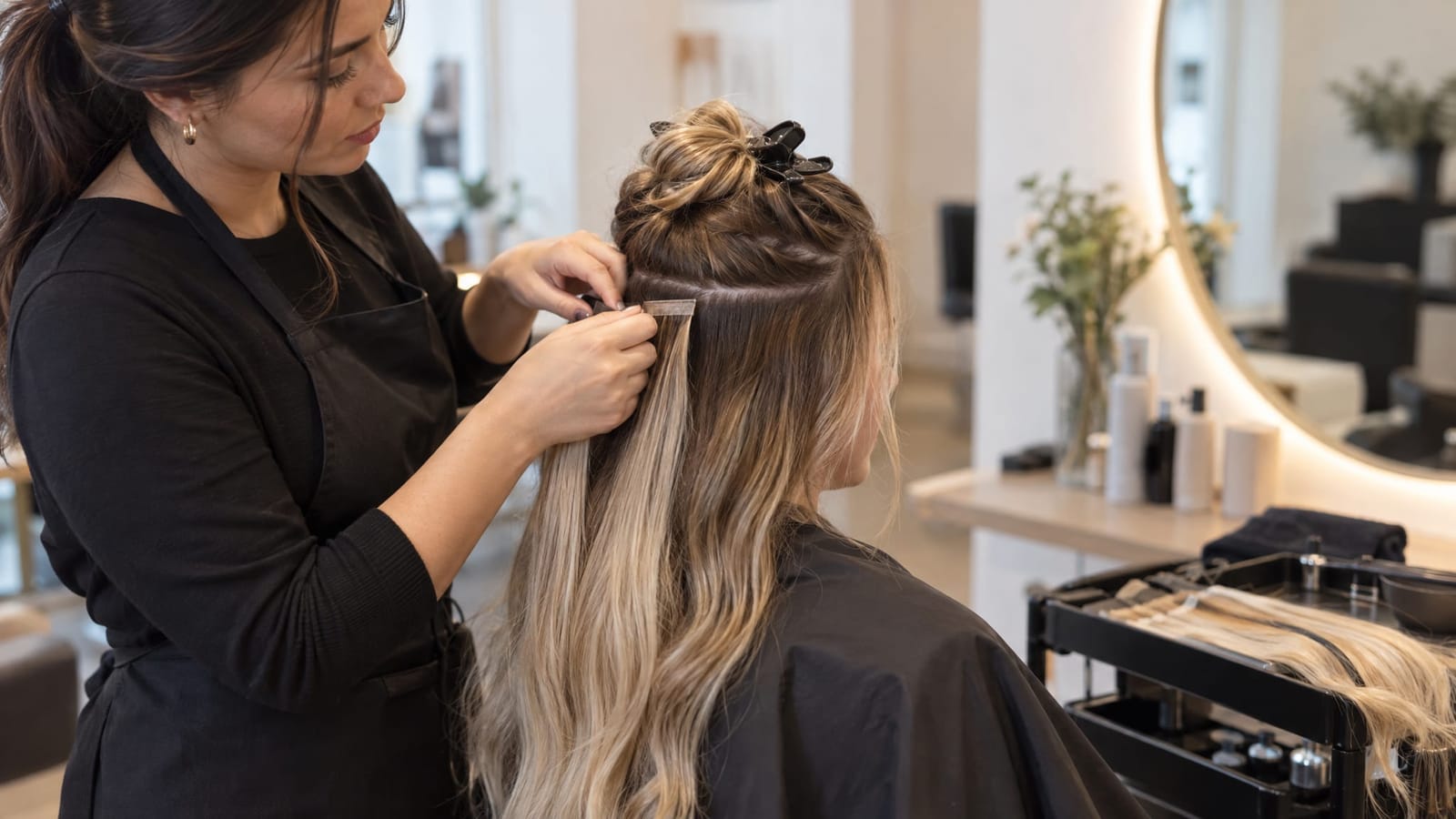
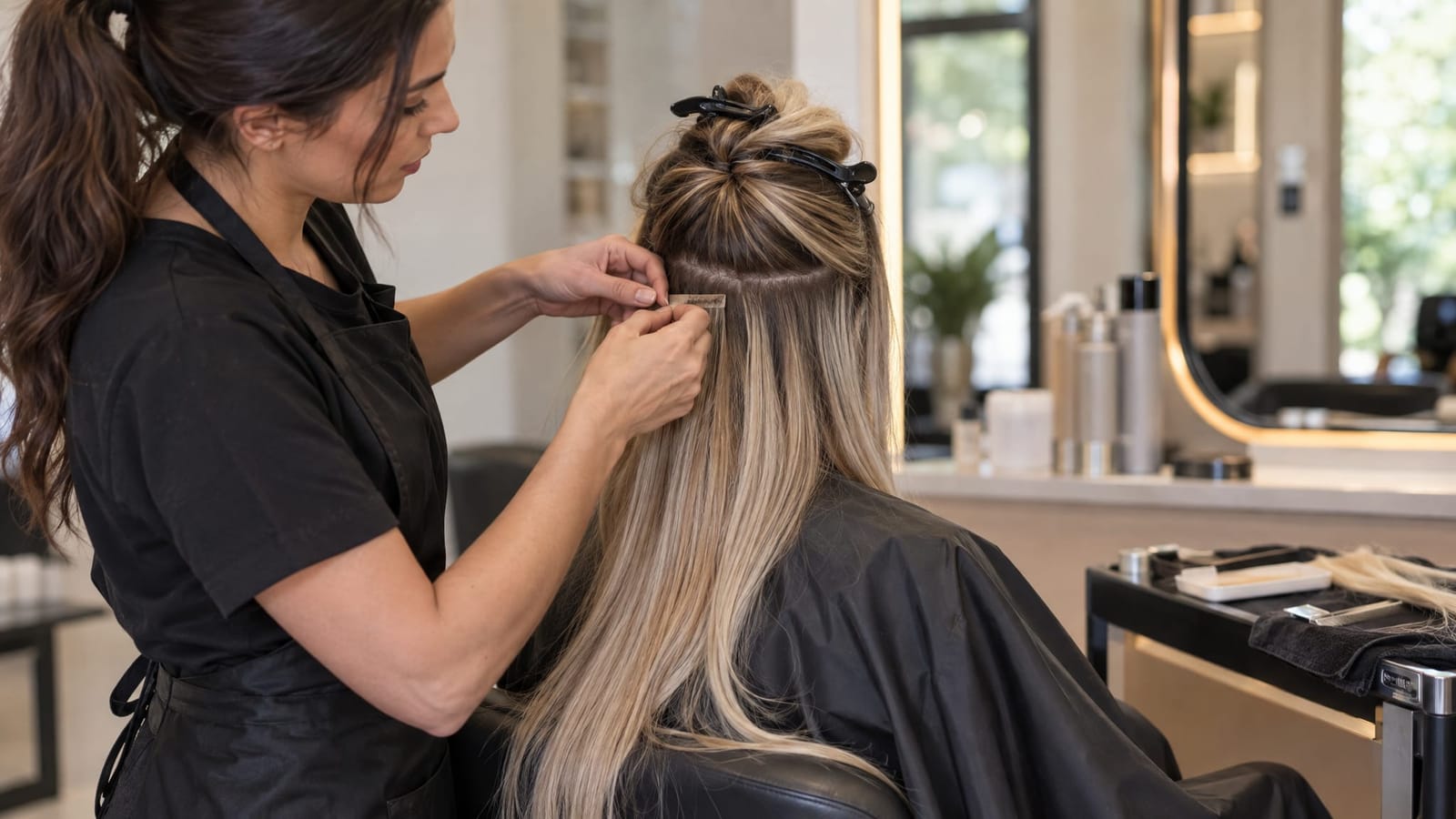
| Glue extensions or bonded wefts | A placed arrangement of wefts worn as an installed style | Placement determines parting options and how easily attachments remain covered | Adhesive compatibility and careful removal matter |
| Quick weave | A planned style built over a prepared foundation | The foundation, part, and leave-out influence versatility | Access for cleansing and the removal process need consideration |
| Braidless extensions | An installed style without a braided base | Attachment placement affects movement, updos, and visibility | Growing hair changes attachment position, creating maintenance needs |
Clip-ins: flexible, but not maintenance-free
Clip-ins attach with small clips and are designed for temporary wear. They can be useful when you want extra fullness for an event or want to explore a longer silhouette without an ongoing installation.
The flexibility comes with daily handling. The pieces need placement, blending, removal, and storage. Clips also need enough natural hair to support and conceal them. Repeatedly attaching pieces to the same small area can concentrate pulling there.
For someone who wants added volume only on occasional evenings, that tradeoff may make sense. For someone who wants extensions every morning with minimal setup, removable pieces may feel less convenient than expected.
Glue extensions: distinguish the adhesive and the placement
In this comparison, glue extensions refers to wefts attached with hair bonding adhesive. The term is sometimes used loosely, so it helps to distinguish this approach from other bonded systems rather than assuming all “glue” methods work alike.
Placement can add fullness or length in selected areas, but it also determines where the hair can be parted and whether attachments show when the hair moves. Adhesive contact and removal are important suitability considerations.
Choosing an adhesive-based method involves more than assessing the finished hairstyle. The plan also needs to account for cleansing, access to your natural hair, and removal without pulling or picking at the bonds.
Quick weave: consider the foundation beneath the style
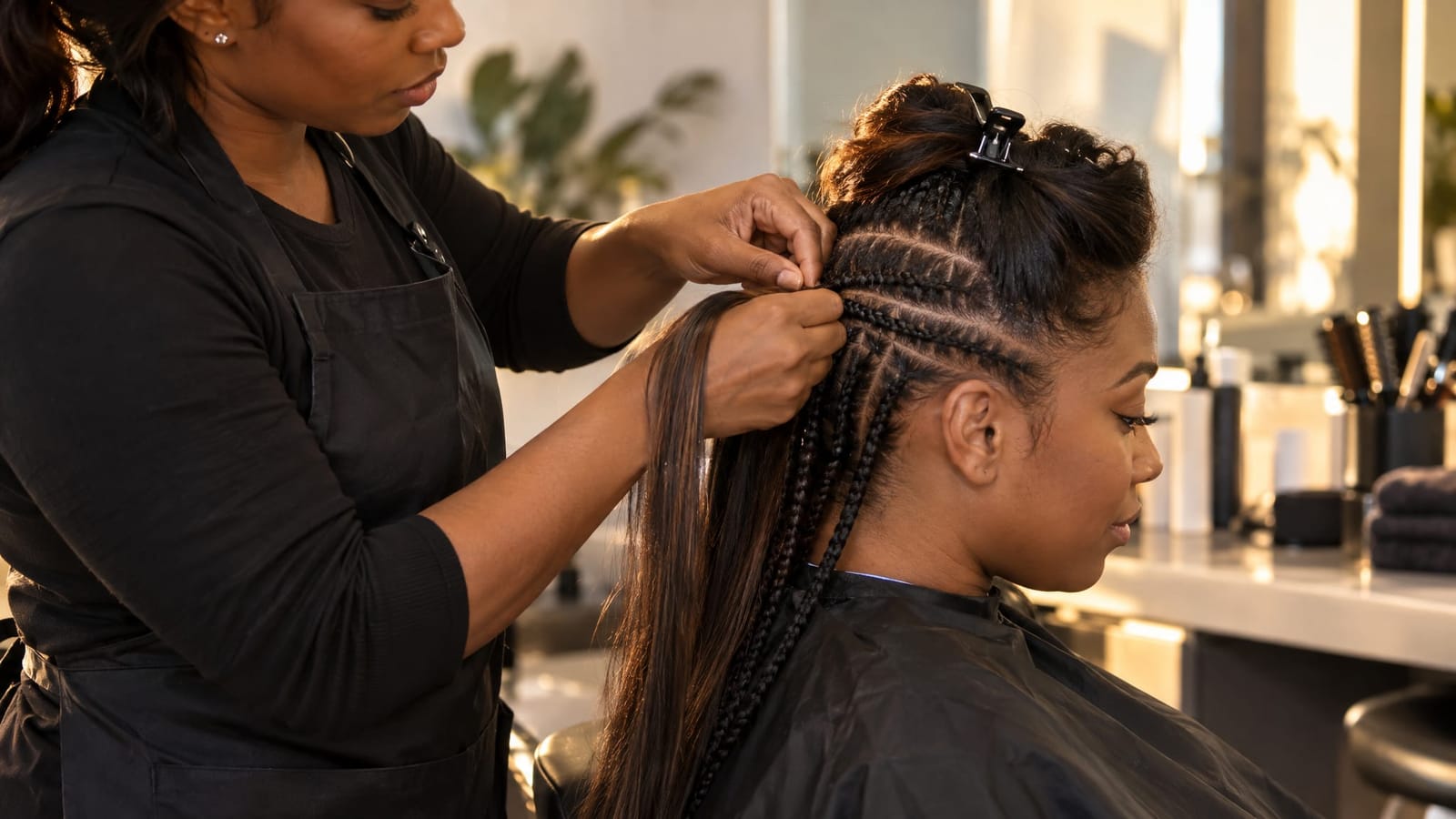
A quick weave commonly involves bonding wefts onto a prepared foundation, often incorporating a cap. It can create a defined overall shape, but the construction determines how the style behaves.
A fixed part may look polished while offering less freedom to change your part each morning. Leave-out can create a natural-looking transition, but that hair still needs its own care and blending routine.
A cap does not automatically make every application protective or prevent all adhesive contact. The foundation, weight, access for cleansing, and removal process remain important parts of the decision.
Braidless extensions: no braided base does not mean no tension
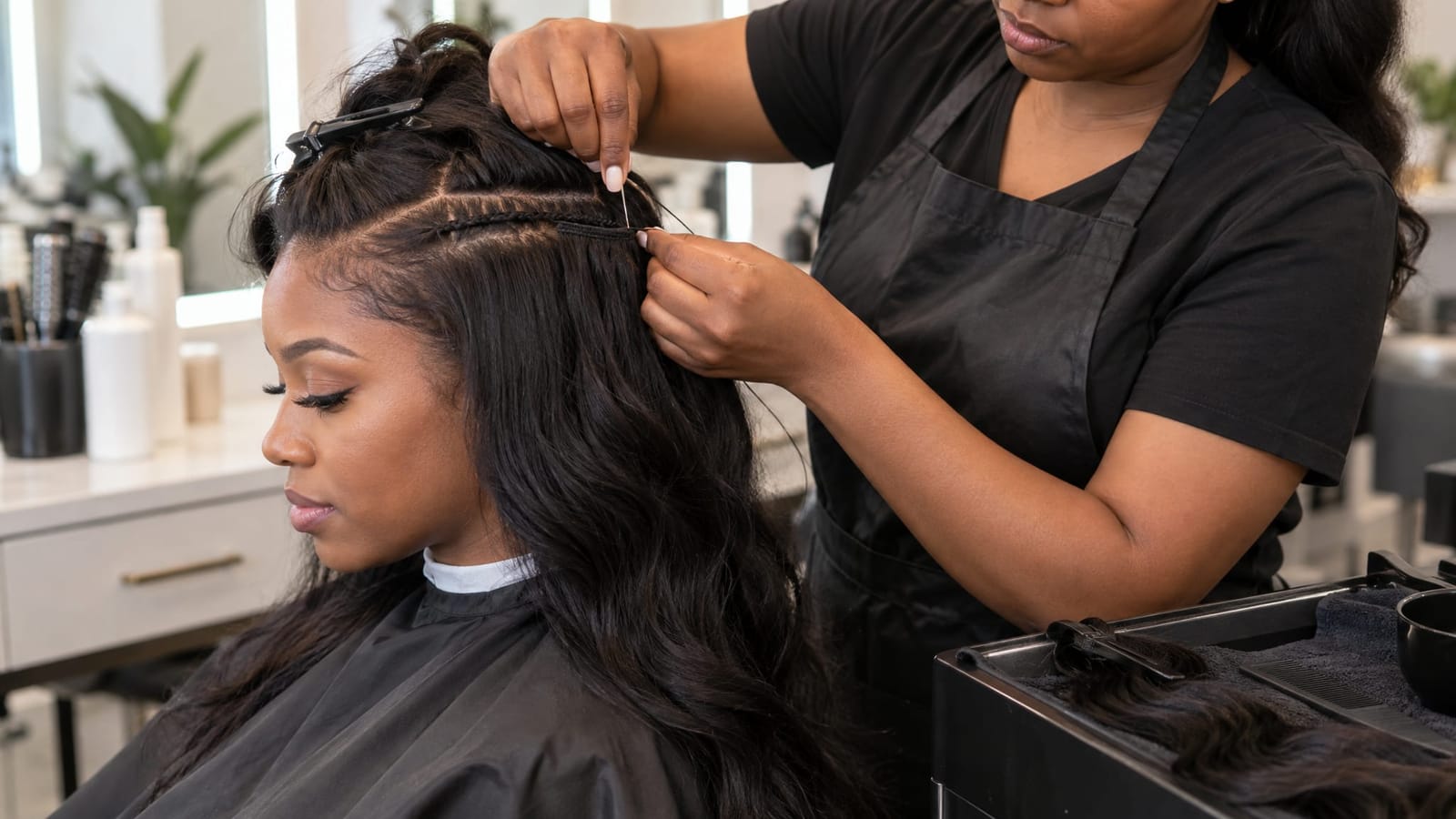
Braidless methods attach extension hair without first creating a braided foundation. Some use beads or rings to support wefts. Because the name covers different constructions, the attachment details deserve attention.
This category may appeal to someone who does not want a braided base, but the hair still carries the extensions’ weight. Density, attachment size, and placement affect both support and concealment.
As natural hair grows, attachment positions change. That creates an ongoing maintenance commitment. A high ponytail or frequently changing part also needs to be considered before placement, rather than after the finished style is complete.
Compare wear expectations, not a single longevity promise
No method name establishes one reliable wear period for everyone. The construction, your natural hair, attachment condition, cleansing routine, and maintenance all influence the plan.
Separate three different questions:
- How long is each wear? Removable clip-ins have a different pattern of use from an installed style.
- When does the installation need attention? Maintenance and removal are distinct parts of the schedule.
- Can the extension hair be reused? Reusability depends on the product and its condition, not simply the method name.
A longer installation period is not automatically better value if it makes cleansing, comfort, or timely removal harder to manage.
Choose Extension Hair for Its Actual Styling Requirements
The attachment method and the extension hair are separate decisions. Even a well-chosen method can disappoint if the texture, color, or care requirements do not suit your routine.
Human hair and synthetic fibers have different limitations
Human hair extensions generally offer more flexibility for changing the style, but they still need careful handling. Synthetic fibers vary in heat tolerance. Some permit limited heat styling under their product instructions, while others do not.
Heat settings and coloring options are product-specific. An extension piece is not automatically suitable for a hot tool or color service because it looks like natural hair. Further processing also adds another variable to blending and upkeep.
Evaluate more than softness in the package
Compare the characteristics that affect everyday wear:
- Texture after washing: Does it still work with the hair you intend to leave visible?
- Color throughout the length: Roots, mid-lengths, and ends may need different tones for a convincing match.
- Fullness through the ends: This influences whether the finished shape looks airy, tapered, or more substantial.
- Care instructions: These determine which styling habits and products fit the extension hair.
Texture matching is especially valuable in DMV humidity. If your leave-out becomes fuller while the extensions remain very sleek, the transition may become more noticeable. That is a blending consideration, not a flaw in your natural texture.
Use Face Shape to Choose a Silhouette, Not Follow a Rule
Face shape can help you describe a preferred look, but it does not dictate which lengths you can wear. Length, width, layers, parting, and curl placement work together. Two styles of the same length can frame the face very differently.
Decide where you want volume and movement
- For more vertical movement: Longer front pieces and less width at the cheeks can create a more elongated silhouette.
- For more fullness through the sides: Curls or waves near cheek and jaw level can add visual width.
- For a softer frame: Face-framing layers and curved movement can create a gentler outline than a sharply defined perimeter.
- For a strong, structured look: A fuller edge or a clear part can emphasize the shape of the hairstyle itself.
These are design choices, not corrections. A round face can look beautiful with a full curly bob, just as a longer face can suit long, sleek extensions.
Choose where the finished length will land
Shoulder, collarbone, chest, and waist placement are often more useful starting points than a package measurement. The same labeled length can land differently depending on curl pattern, placement, and body proportions.
For curly extensions, check whether the stated length describes stretched hair or the curl in its resting shape. A curl pattern that contracts noticeably will not fall like straight hair carrying the same length label.
Extra length also means more hair to detangle, dry, and manage around coats, bags, and clothing. If your goal is primarily fullness, a modest increase in length may deliver the desired silhouette with a simpler routine.
Plan the cut and blend together
The final haircut matters as much as the extension length. Face-framing pieces, layers, and the transition from your natural hair affect whether the style feels cohesive.
For removable pieces, a consistent placement plan helps preserve the intended shape after they have been cut to blend. Moving a shaped piece to a different area can change how its layers fall.
Match the Method to Your DMV Routine
A style needs to work beyond the salon mirror. Think through an ordinary week, including travel, exercise, weather, and how much time you want to spend getting ready.
Commuting and busy mornings
Clip-ins offer flexibility, but they add placement and blending to the morning routine. Installed extensions remove that particular step while creating other responsibilities, including cleansing, drying, and maintenance visits.
If you regularly tie your hair back for commuting or work, make that part of the design from the beginning. Attachment visibility in a ponytail may differ from visibility with the hair down.
Workouts and swimming
Frequent exercise adds practical questions about cleansing and drying around attachment areas. An attractive style that is difficult to maintain after workouts may not suit your schedule.
Swimming introduces water exposure and tangling considerations. The relevant care plan depends on the extension hair and attachment system. A removable option keeps the pieces separate from swimming, while an installed option requires a compatible cleansing and drying routine.
Summer humidity and winter layers
In humid weather across Maryland, Washington, D.C., and Northern Virginia, visible natural hair and extension hair may respond differently. A closer texture match or a style with intentional fullness can make that difference easier to work with.
During colder months, long hair can catch or rub against scarves, coat collars, and other layers. Length placement matters here: hair that repeatedly sits beneath a collar creates a different daily handling routine from a shorter style.
For a long day that moves between outdoors, transit, and indoor spaces, consider a shape that still looks intentional when it gains a little movement or volume.
Keep Comfort and Natural-Hair Care in the Decision
No extension method is automatically protective. Covering natural hair does not remove the need for cleansing, appropriate handling, or attention to tension.
Repeated pulling from weaves and extensions can contribute to hair loss. Tightness is not proof that an installation is secure or well suited to your hair. If you have ongoing scalp irritation or visible thinning, a licensed dermatologist can assess your individual situation before you choose another extension style.
Plan care around the attachment system
Extension maintenance includes two things: caring for the added hair and caring for the natural hair beneath it. A routine that keeps the ends looking smooth may still leave the foundation difficult to cleanse.
Useful care details include:
- How to reach the scalp and natural hair during cleansing.
- How to dry the foundation and attachment areas thoroughly.
- How to detangle without pulling at clips, bonds, beads, or wefts.
- Which products are compatible with the attachment system.
- How removal will happen, rather than improvising when the style feels overdue.
Detangling in sections, working upward from the ends while supporting the hair, helps avoid transferring every snag to an attachment point. Product instructions remain important, particularly for removable pieces and synthetic fibers.
For clip-ins, care also includes storage. Keeping clean, dry pieces organized helps prevent tangling and makes consistent placement easier at the next wear.
Plan Event Extensions Around the Finished Hairstyle
For a wedding, gala, graduation, or other occasion, choose the hairstyle before deciding how much extension hair to add. A low bun, cascading curls, and a sleek ponytail need different placement and fullness.
At Kabelly Dominican Salon in Clinton, we offer Extension Style, Bridal, and Event Hair services. Attention to detail and quality products are part of our approach, with the finished look guiding styling choices.
Helpful event details include:
- The hairstyle: Hair down, half-up, a ponytail, or an updo changes which areas remain visible.
- The outfit: Necklines, earrings, collars, and open-back details influence where length looks intentional.
- Accessories: A veil, headpiece, or decorative comb needs space within the style.
- The setting: Outdoor photographs, dancing, and travel affect how practical the shape feels.
- The desired finish: Soft volume and a tightly defined silhouette involve different expectations.
For example, a half-up style exposes areas that loose hair would normally cover. Extension placement needs to support that lifted section without revealing attachments.
Bringing existing extension pieces to a styling discussion makes it easier to compare their texture, color, and length with the planned look. A trial style can also reveal whether the accessories and overall weight feel comfortable together.
A Practical Checklist for Narrowing Your Choice
Before committing to a method or buying extension hair, organize the decision in this order:
- Define the goal. Is the priority length, fullness, a temporary event look, or a different overall shape?
- Choose the everyday texture. Match the finish you actually plan to maintain, not only an inspiration photo.
- Account for your natural hair. Include density, short layers, processing history, and any areas that need particular care.
- Decide between removable and installed wear. Compare daily setup with ongoing installation maintenance.
- Identify your essential hairstyles. Note whether you need ponytails, updos, changing parts, or mostly loose styles.
- Set a realistic care commitment. Include cleansing, drying, detangling, storage, maintenance, and removal.
- Choose length and fullness together. Aim for the silhouette you want without assuming more hair is always necessary.
This process often narrows the field more effectively than asking which method is “best.” Someone seeking occasional volume may value removable pieces, while someone seeking an installed look may prioritize access for cleansing and a manageable maintenance schedule.
Deep Dive Topics
For a closer look at a particular decision, these guides expand on the main choices:
- Special-occasion planning: Our guide to extension styles for events explores how the occasion and finished hairstyle influence styling plans.
- Length and proportion: The extension length face shape guide looks more closely at length, framing, and the overall silhouette.
- Installed-method comparisons: Explore glue extensions vs quick weave, with braidless extensions included in the comparison.
- Removable-extension routines: Our clip on extensions styling guide covers wearing, styling, and caring for clip-in pieces.
The Best Choice Supports Your Style and Your Routine
Beautiful extensions begin with a close texture match, suitable placement, and a realistic care plan. Face shape helps refine the silhouette, while lifestyle determines whether removable or installed wear feels practical.
Choose for the hair you have, the styles you enjoy, and the maintenance you are comfortable managing. Length and fullness are most satisfying when they complement your everyday life, not just the first finished look.