How Often Should You Get a Haircut? A Scheduling Guide for Curly & Relaxed Hair
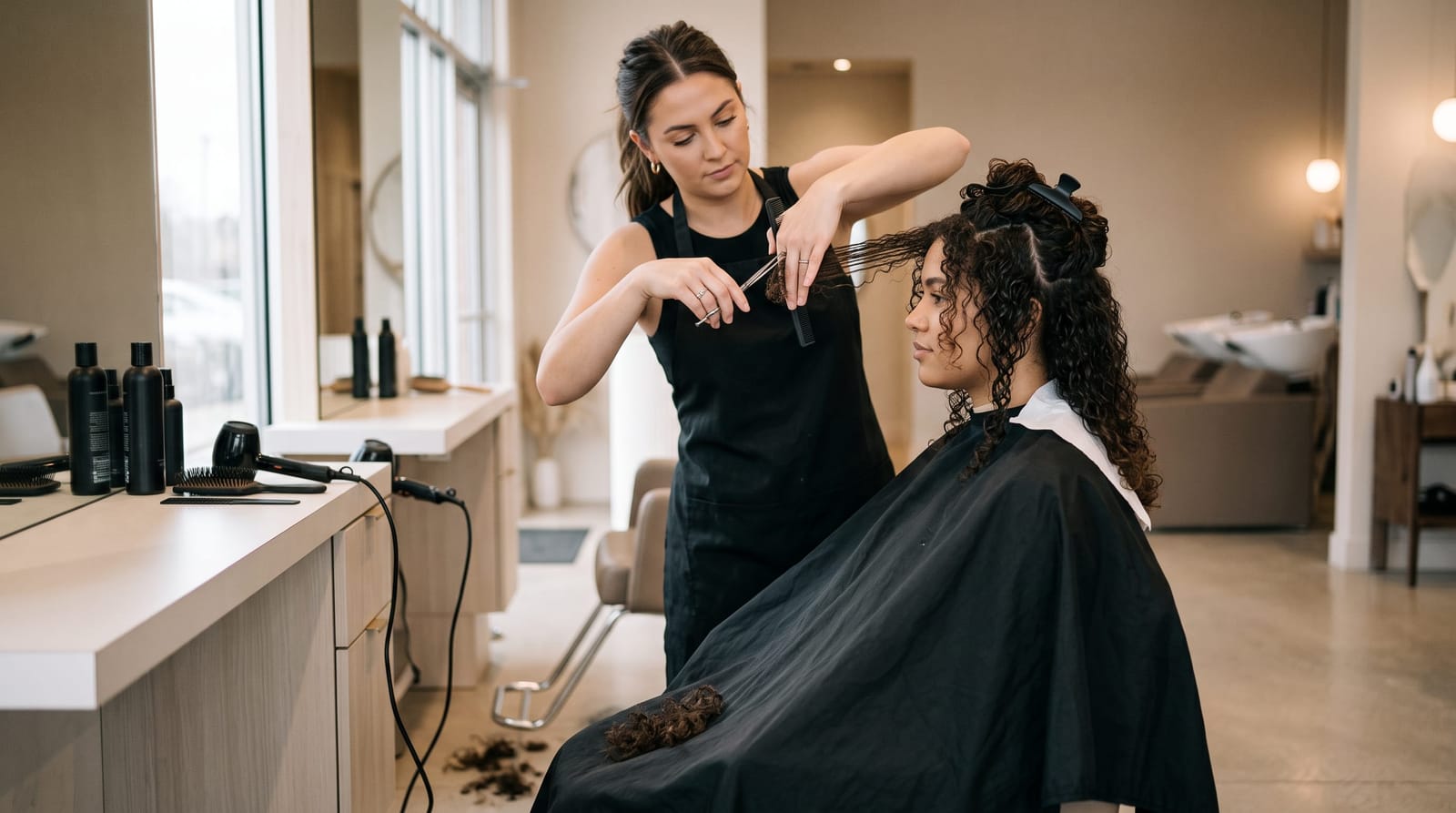
For curly and relaxed hair alike, plan haircuts around two things: when your shape stops working and when your ends need trimming. Short, closely shaped cuts generally need attention sooner than longer styles with softer outlines. Your texture matters, but it does not set the schedule on its own.
Use your next appointment to establish a check-in point based on your cut, then adjust it around your ends, styling routine, and length goals. A check-in does not have to mean removing the same amount of hair each time. Maintaining a precise bob, growing out layers, and tidying the ends of long coils are different tasks.
Step 1: Decide What Your Next Haircut Needs to Accomplish
Before choosing a date, identify your main goal. Maintaining a sculpted curly bob calls for a different plan than growing out a longer coily cut, even when both have similar textures.
- Maintain a defined shape: Plan around the point when the outline, fringe, or layers stop sitting as intended.
- Keep length while tidying the ends: Plan an assessment of the ends rather than automatically repeating the previous cut.
- Grow out a style: Discuss which sections can grow freely and which need occasional reshaping.
- Change your look: Describe the new shape you want so the appointment allows time for that work, rather than requesting a quick trim.
A precise fringe or tapered outline can feel overdue while the rest of the hair still looks balanced. Conversely, longer hair can keep its overall shape while the ends need attention. Shape maintenance and end maintenance do not always run on the same calendar.
If you are reconsidering where your layers or face-framing pieces sit, our haircut for face shape guide can help you clarify the look you want to maintain.
Step 2: Adjust the Schedule for Your Hair and Routine
Account for how you wear your hair and what has changed since the last appointment. Several considerations can apply at once: natural coils can be color-treated, and relaxed hair may also be worn under extensions.
Natural Curly and Coily Hair: Track Shape in Its Everyday State
Judge your haircut in the finish you wear most often. A stretched style reveals length differently from a wash-and-go, and the same layers can look quite different between the two. If you regularly alternate between curly and stretched styles, include both in the haircut conversation.
Shrinkage, the difference between your hair’s stretched length and how short it appears when curls draw up, affects how a cut looks. Shrinkage alone is not a reason for another haircut.
Compare your hair across a few familiar styling days. Is one side consistently fuller? Does the crown sit differently? Are the ends repeatedly catching during gentle detangling? These observations give a stylist more useful information than curl type alone.
A short, sculpted coily cut usually needs closer attention to its outline than a longer, softly layered style. With longer hair, the condition and manageability of the ends can become the deciding factor even while the shape still works. For consultation preparation, see our guide to haircuts for natural hair.
Relaxed Hair: Separate Haircut Timing From Retouch Timing
A relaxer retouch and a haircut serve different purposes. One addresses the texture of new growth; the other changes the ends, length, or shape. Considering both during the same visit can be convenient, but a chemical-service appointment does not automatically mean the same amount needs cutting every time.
Explain whether you are maintaining a short style, keeping a blunt outline, growing your hair longer, or transitioning away from relaxing. Those goals lead to different cutting plans.
Previously treated lengths can feel and behave differently from new growth. Rather than choosing an interval based only on the fact that your hair is relaxed, discuss the ends and your goal: a small trim, reshaping, or more time before cutting.
Color-Treated Hair: Consider Your Service History
“Color-treated” can describe very different routines, from occasional color refreshes to repeated lightening. The label alone does not determine when a haircut is due.
Share which services you have had, approximately when you had them, and whether the ends now feel harder to detangle or style. Include regular heat styling in that conversation. Changes in processing and styling can affect how well your previous haircut schedule fits your current routine.
A color appointment is a useful opportunity to check the shape and ends, not an automatic reason for a full haircut. Cutting removes selected sections; it does not reverse chemical processing in the hair that remains.
Extensions: Plan Around Access to Your Own Hair
Extensions can make it harder to see how your own ends and haircut are changing. If an installation limits access, the time between removal and reinstallation is a practical opportunity to assess your hair.
Keep two services distinct: cutting extensions to blend the finished style and trimming your own hair. One does not necessarily include the other.
When arranging the appointment, explain the installation type and discuss preparation. If removal, cleansing, detangling, and a cut are needed, allowing time for those separate tasks keeps the haircut from being squeezed into an appointment intended for something else.
Step 3: Notice When an Earlier Haircut Makes Sense
A calendar reminder is helpful, but the shape and ends give you a better picture of what needs attention. Compare your hair under familiar conditions, using a similar finish and styling routine.
- The outline has shifted: A bob no longer holds its intended line, a tapered cut feels fuller than you prefer, or face-framing sections fall in an awkward place.
- The ends repeatedly catch: Note where tangling happens. A stylist can assess whether the ends need trimming or your care routine needs adjusting.
- You notice visible splits: Point out the areas and agree on how much length to remove before cutting begins.
- Styling takes more effort: If your usual routine no longer produces the same balance, the layers or outline may need reshaping.
- Your preferences have changed: You can change your shape without waiting for a maintenance date.
Frizz alone is not a haircut deadline. Weather, styling choices, and the way curls dry can change the finish without changing the cut. Look for a repeated pattern rather than deciding from one frustrating hair day.
Products can temporarily improve how split ends feel or look, but that is different from removing a split section. Discuss whether a limited trim addresses the areas you notice while preserving your preferred shape. Our guide to signs it is time to get a haircut explores the difference between a style that has grown out and one that simply needs restyling.
Step 4: Choose a Trim or a Full Cut Based on the Work Needed
At Kabelly Dominican Salon in Clinton, we offer both hair trims and haircuts. The useful distinction is your intended result, not an assumed number of inches.
A Trim Preserves the Shape You Like
A trim generally aims to maintain the existing style while tidying the ends. It fits a conversation about keeping length when your layers still sit well and your overall shape feels balanced.
Be specific about your preference: “I want to maintain this shape and keep as much length as possible. Please show me what you suggest removing before we start.”
Reshaping Changes How the Cut Sits
A fuller haircut appointment makes sense when you want different layers, a new outline, a revised fringe, or a more substantial change. It also gives room to address sections that no longer work together as an old cut grows out.
A cut involving detailed curl-by-curl shaping can take time even when little length comes off. Explain the work you want rather than assuming “trim” means a shorter appointment. For more detail, explore the difference between a hair trim and a haircut.
Step 5: Build a Schedule From What Your Hair Actually Does
After the appointment, record what was done and set a reminder for the check-in discussed with your stylist. Treat it as a chance to review the cut, not a commitment to remove a fixed amount of hair.
- Save a reference photo. Photograph the cut in your everyday finish so you have a useful comparison later.
- Note the first meaningful change. Record when the fringe, layers, outline, or ends become harder to manage.
- Compare similar styling days. A freshly stretched style and tightly drawn-up curls show length differently.
- Use those observations to adjust the interval. Explain what changed and whether keeping length or maintaining a precise shape matters more.
For example, someone maintaining a precise curly bob can use the position of the outline and face-framing pieces as the main check-in cues. Someone growing longer coils can focus more on the ends while allowing the overall shape to soften. The difference is the goal, not a rule attached to the texture.
A useful haircut plan includes both a review date and a clear cutting goal. If the shape consistently grows out before that date, a shorter interval makes sense to discuss. If the shape still works and the ends remain manageable, a later visit or a more limited trim can better support your length goals.