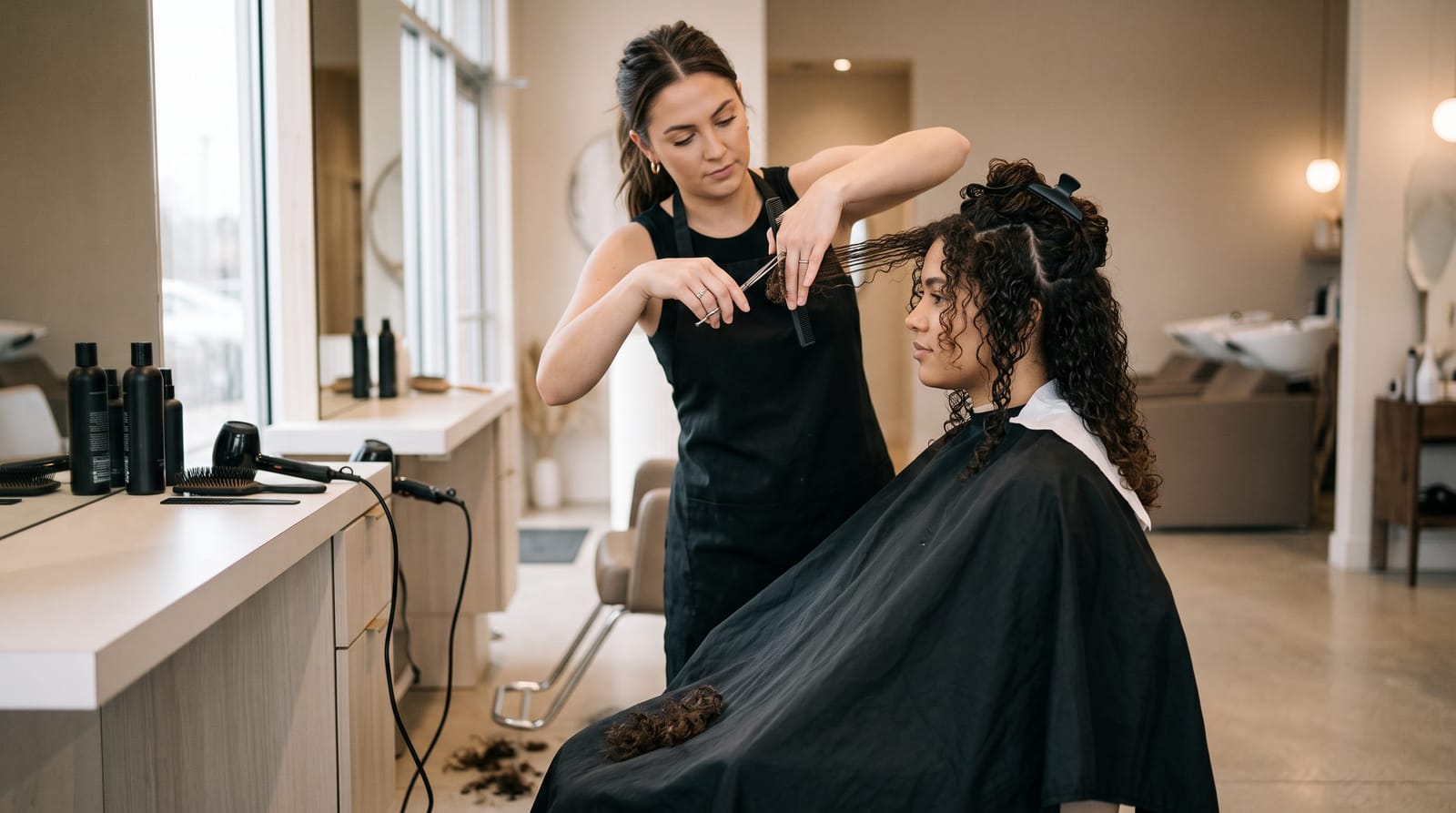
What Is a Hair Trim vs. a Haircut: And Which One Do You Actually Need?
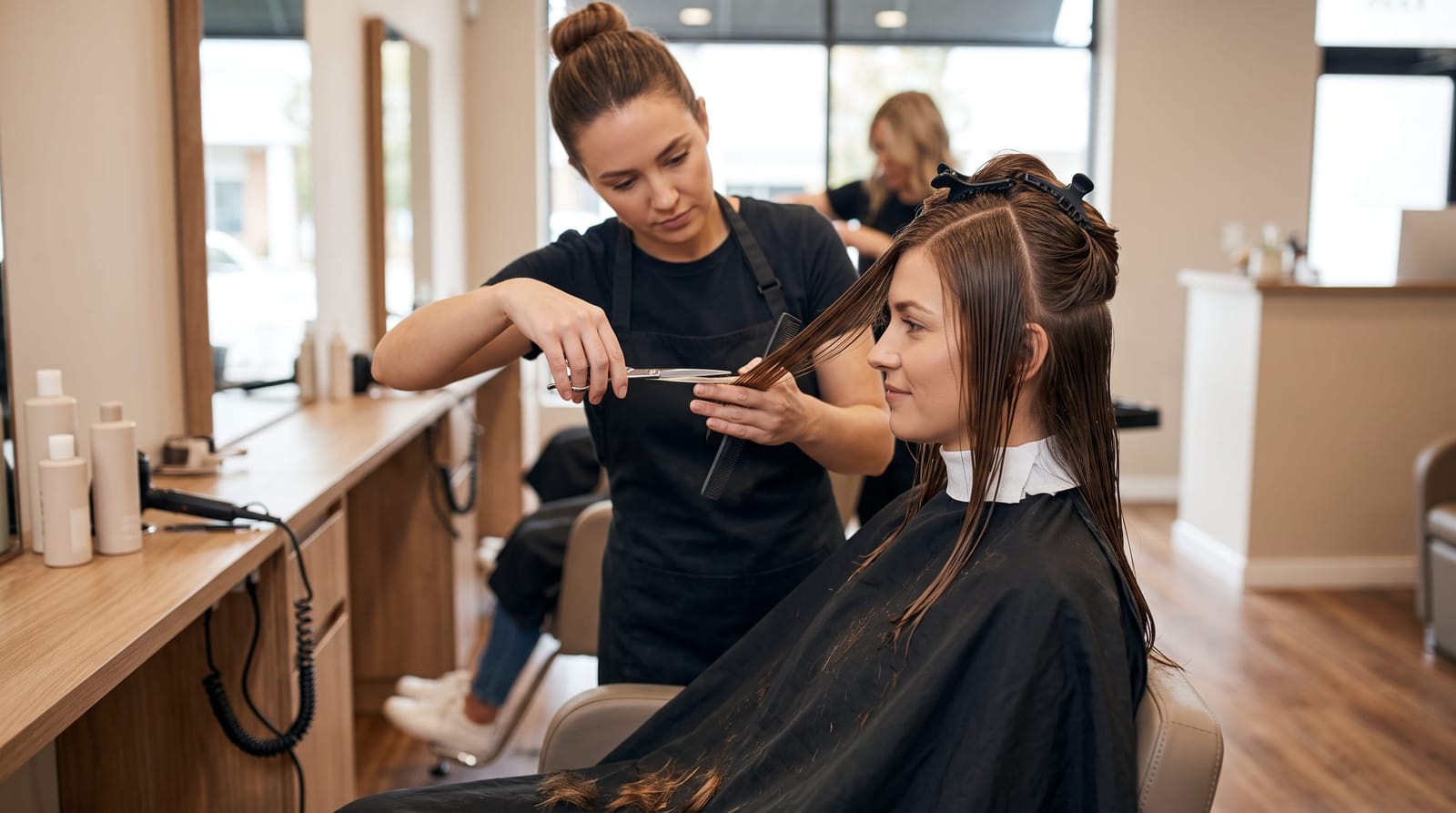
If you've ever sat down in a salon chair and felt uncertain about what to ask for, you're not alone. The difference between a trim and a haircut comes up constantly, and for women with thick, curly, or textured hair, getting it right matters more than most people realize. Booking the wrong service can mean leaving with less length than you wanted or walking out with a style that still feels shapeless. This guide breaks down exactly what separates a trim from a haircut, so you can walk into your next appointment knowing precisely what you need.
The Core Difference: Maintenance vs. Transformation
At the most basic level, a trim is about preservation, and a haircut is about change. That's the clearest way to frame the hair trim vs. haircut difference before diving into the details.
A trim removes a small amount of hair, typically less than half an inch to about an inch, with the primary goal of tidying up the ends and keeping your current shape intact. Think of it as routine upkeep, similar to maintaining a car rather than replacing it. Trims are ideal when your style is working well and you simply want to refresh it.
A haircut, on the other hand, involves intentional reshaping. This might mean removing two or more inches of length, adding layers, changing the structure around the face, or completely reworking how the hair falls. Haircuts are for moments when your look needs a real update, not just a clean-up.
For women with curly or coily hair especially, this distinction carries extra weight. Curly hair shrinks as it dries, which means even a small cut can look dramatically shorter once the curl pattern sets. Understanding whether you want to maintain or reshape helps your stylist make every snip count.
What Exactly Happens During a Trim?
A trim is a targeted service. Your stylist focuses on the perimeter of your hair, the ends, removing split or frayed strands without disturbing your overall shape. Most trims are completed in a shorter timeframe than a full haircut because the scope of work is narrower.
Here's what a typical trim addresses:
- Split or rough ends that cause tangles and breakage
- Uneven growth at the hemline
- Minor loss of shape caused by natural hair growth
- Flyaways or frizzy ends that disrupt your style's polish
Most stylists recommend trimming textured hair every 8 to 12 weeks to keep the ends clean and healthy-looking. For hair that's in good condition and styled regularly, sticking to this schedule can make a noticeable difference in how smooth and defined curls appear over time.
One important note: a trim doesn't fix a style that has fundamentally grown out of its shape. If your layers have collapsed or your cut no longer frames your face the way it did when you left the salon, that's usually a haircut situation, not a trim.
What Happens During a Haircut: And When Do You Need One?
A haircut is a more comprehensive service. Your stylist evaluates your hair's texture, density, growth pattern, face shape, and lifestyle before making any decisions about how to restructure the cut. For thick, curly hair, this process is especially thoughtful: the wrong technique can create bulk in the wrong places or remove too much curl definition.
You're likely ready for a haircut rather than a trim when:
- Your hair has lost its shape and no longer looks like the style you originally got
- Curls feel heavy, stretched, or flat rather than springy and defined
- Your layers have grown out and your hair looks one solid, shapeless mass
- You want a genuinely different look: shorter, more layered, more structured
- Your style feels like it's fighting you every morning instead of working with you
Research from hair industry professionals consistently shows that most clients wait too long between haircuts: some studies suggest the average person waits four to six months between cuts, even when their style would benefit from a visit every 10 to 12 weeks. For textured hair that's actively being shaped and maintained, getting a proper haircut at least two to three times per year tends to keep the style looking intentional rather than grown-out. You can also learn more about the specific signals to watch for in Signs Your Haircut Is Growing Out and It's Time to Book a Salon Visit.
Trim vs. Haircut for Thick and Curly Hair: Why Texture Changes Everything
Straight hair and curly hair don't behave the same way, and they don't respond to cuts and trims the same way either. For women with thick, curly, or coily hair, the trim vs. haircut conversation requires a little extra nuance.
Because curly hair shrinks significantly when dry (anywhere from 20% to 50% of its wet length depending on the curl pattern), even a modest trim can feel more dramatic than expected. A stylist experienced with textured hair knows to account for shrinkage and will often cut dry or damp to see exactly how the curl will fall before making any final decisions.
Thick curly hair also has a tendency to gain volume and width as it grows rather than length. This means that without a proper haircut to remove bulk and restore shape, hair can start to look wide and undefined, even if the length itself hasn't changed dramatically. A trim alone won't solve that problem. Reshaping the interior layers and redefining the perimeter is what brings the style back to life.
At a salon like Kabelly Dominican Salon, stylists assess each client's curl pattern, density, and growth direction before recommending a service, because the right answer isn't always the same for every head of hair.
How to Know What to Book at Your Next Appointment
If you're still unsure which service fits your situation, ask yourself these three questions before calling to book:
- Do I love my current style? If yes and it just needs freshening up, book a trim.
- Has my hair lost its shape, volume balance, or structure? If yes, you likely need a haircut.
- Am I hoping for something different: shorter, more layered, more defined? If yes, that's a haircut conversation.
It also helps to bring reference photos. Even if you're unsure of the terminology, a photo gives your stylist a clear picture of your goal and makes it easier to recommend whether a trim will get you there or whether reshaping is the better path forward.
Frequently Asked Questions
Is a trim cheaper than a haircut?
Pricing varies by salon, but trims are often priced lower than full haircuts because they involve less time and a narrower scope of work. However, some salons price both services the same since skilled styling is involved either way. It's always worth asking your salon about their specific pricing before booking.
Can a trim help my curls look more defined?
Yes: removing rough or split ends can allow curls to coil more cleanly and consistently. However, if your curls lack definition because of how the cut is layered or shaped, a trim alone may not be enough. A haircut that addresses the structure of your style will make a bigger impact on curl definition overall.
How much hair is actually removed during a trim?
A true trim typically removes between a quarter inch and one inch of hair, depending on the condition of your ends. Anything more than that starts to move into haircut territory because it begins to affect the shape and silhouette of the style, not just the condition of the ends.
How often should women with thick curly hair get a trim or haircut?
Most stylists recommend trimming textured hair every 8 to 12 weeks to maintain healthy ends, while a full haircut every 3 to 6 months helps keep the shape and structure looking intentional. The right frequency depends on your individual hair goals, growth rate, and how your current style is holding up.
Final Thoughts
The hair trim vs. haircut difference comes down to one straightforward question: are you maintaining or transforming? A trim keeps a good thing going. A haircut reworks the foundation. For women with thick, curly, or textured hair, the kind of hair that requires thoughtful technique and an experienced eye, knowing which one you need before you book your appointment makes for a smoother, more satisfying salon visit. If you're working with a growing-out style and wondering whether it's time to do something more significant, understanding how haircuts for thick curly hair in the DMV area are approached can help you make the most informed decision at your next appointment.