Can You Get a Haircut with Extensions In? What You Need to Know

If you're wearing extensions and wondering whether you need to remove them before your next appointment, you're not alone: this is one of the most common questions we hear at Kabelly Dominican Salon. The short answer is: yes, in many cases you absolutely can get a haircut with extensions in. But the real answer is a little more layered than that (pun intended). This guide breaks down exactly what's possible, what to expect, and how a skilled stylist approaches a haircut with extensions to give you a seamless, beautiful result.
Why Getting a Haircut with Extensions In Is More Common Than You Think
Getting a haircut with extensions in has become increasingly popular as extension services have grown more sophisticated. According to the Professional Beauty Association, the hair extension market has expanded significantly in recent years, with millions of women in the U.S. now wearing some form of added hair, from clip-ins and tape-ins to sew-ins and keratin bond extensions. With that growth comes a natural question: do all those extensions have to come out just for a trim?
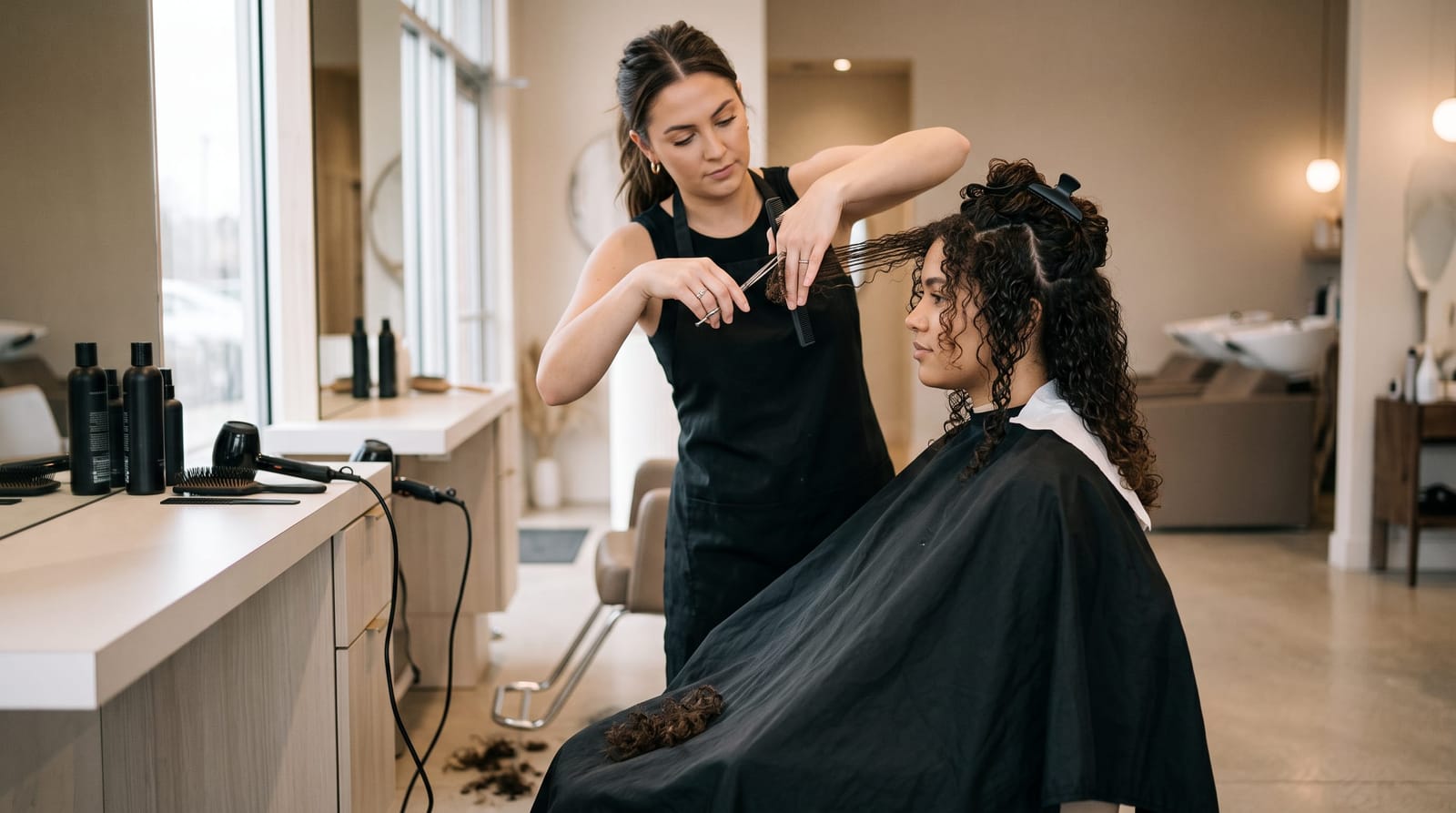
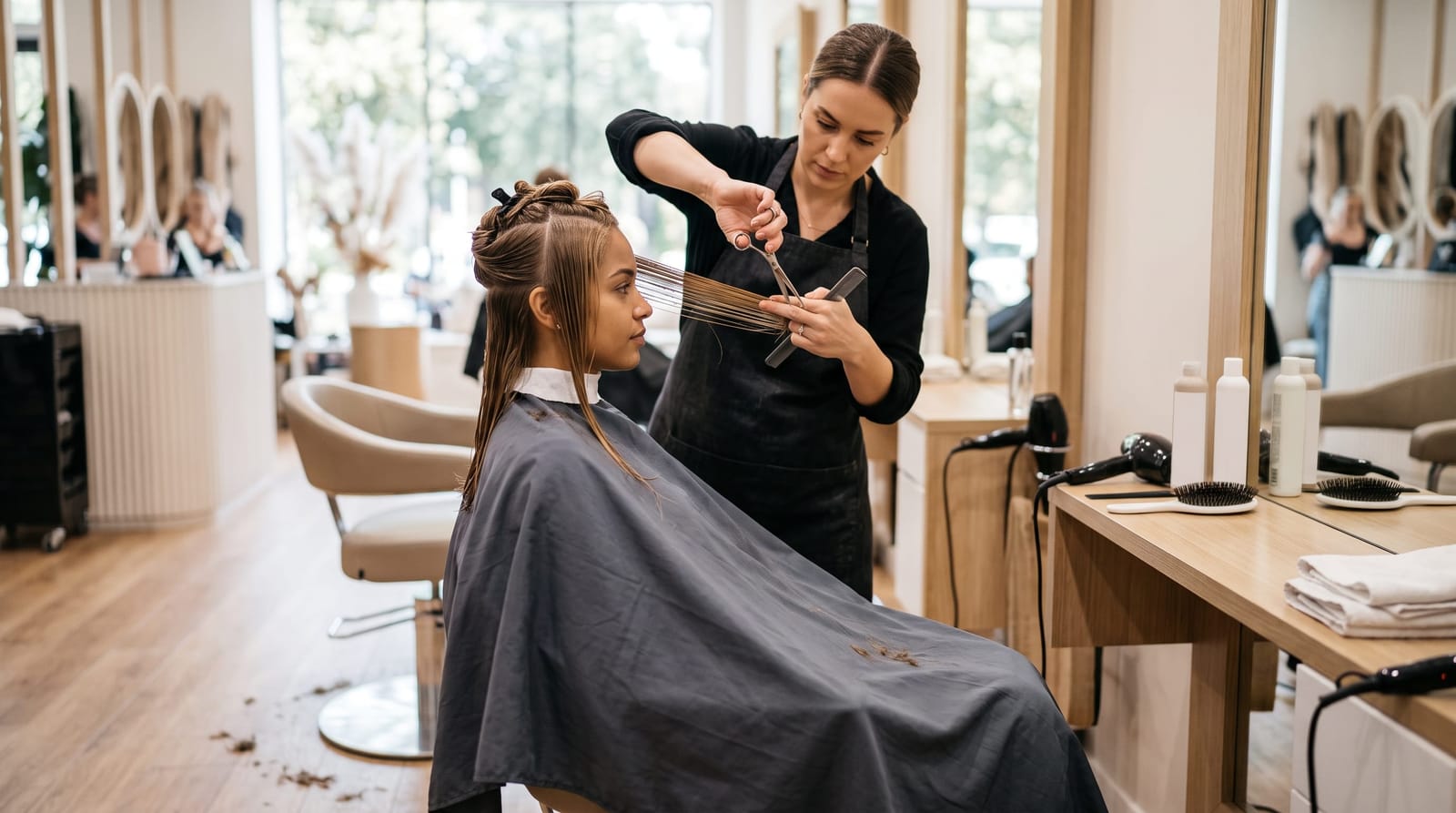
Not necessarily. Many stylists, including our team at Kabelly, are trained to cut and blend directly over installed extensions. In fact, cutting layers into extensions is a standard part of the styling process for clients who want a more natural, lived-in look. Extensions that are left uncut often sit too uniformly at one length, which can actually make the hair look artificial rather than full and dimensional. A well-placed haircut with extensions in can add bounce, reduce bulk at the ends, and help the extensions blend seamlessly with your natural hair.
The key is working with a stylist who understands both your extension type and your natural hair texture, especially important for clients with curly, coily, or thick hair, where blending requires extra care and technique.
What Types of Extensions Can Be Cut: and What Matters Most
Not all extension types are handled the same way when it comes to cutting. Here's a general breakdown of what your stylist will consider:
- Sew-in weaves: These are among the most common extensions for women with textured hair. Stylists can cut and layer the wefted hair while it's installed, especially when blending with leave-out sections.
- Tape-in extensions: Tape-ins can generally be trimmed and shaped once installed, though stylists work carefully around the adhesive bonds to avoid disruption.
- Clip-in extensions: These can often be cut before or after clipping in, depending on the desired look. Some clients bring their clip-ins to appointments specifically to have them customized.
- Keratin bond or micro-link extensions: These require the most precision when cutting, as the bonds sit close to the scalp and should not be pulled or cut through directly.
One universal factor? Your natural hair length matters. As a general guideline, having at least 3 inches of natural hair provides enough of a foundation for stylists to blend extensions effectively and get a clean, polished result. If your natural hair is very short, the leave-out or blending portion of the cut requires additional attention.
How Stylists Approach Blending a Haircut with Extensions In
Blending a haircut with extensions in is genuinely a skill: it's not the same as a standard cut. At Kabelly, our approach combines experience with textured hair and a careful eye for proportion. Here's what the process typically looks like:
Assessing the Natural Hair First
Before anything is cut, the stylist evaluates your natural hair's texture, density, and current length. For clients with thick or curly hair, this step is especially important because the curl pattern affects how much the hair will shrink or spring up once cut. A cut that looks balanced on straight hair may behave very differently on a curl.
Identifying the Blending Goal
Are we blending for a seamless length? Adding movement with layers? Removing weight at the ends? The goal determines the technique. Layered cuts are one of the most requested styles for extensions because layers add bounce and volume while breaking up the sometimes-heavy feel of added hair. Studies in professional haircare training programs consistently show that layering is the most effective technique for making extensions look natural on thicker or curlier hair types.
Cutting with Precision Around Bonds or Tracks
For installed extensions, the stylist works in sections, cutting through the extension hair while keeping the bonds, tracks, or wefts intact. This requires a steady hand and experience: particularly for curly hair clients where the cut needs to account for how curls will shrink and reshape after cutting. Point cutting and slide cutting techniques are often used to create soft, natural-looking edges rather than blunt lines that can expose where the extension ends.
When It Makes More Sense to Remove Extensions First
While getting a haircut with extensions in works well in many situations, there are times when your stylist may recommend removing them first:
- If the extensions are old, damaged, or due to be reinstalled anyway
- If you're making a significant length change, more than 3 to 4 inches, that affects your overall shape
- If your natural hair underneath needs a health-focused trim to even out breakage or split ends
- If the extensions are fully sewn in with no leave-out, making blending impossible
In these cases, the better long-term result comes from removing, cutting your natural hair, and then reinstalling or refreshing the extensions. Your stylist at Kabelly will always give you an honest assessment of which approach serves your hair best, not just what's quickest.
If you're working with thick hair that feels difficult to manage even without extensions, our guide on the best haircuts for thick hair that's hard to manage covers techniques and styles specifically designed for high-density hair types.
Tips for Getting the Best Results at Your Appointment
A little preparation goes a long way when coming in for a haircut with extensions. Here are a few practical suggestions:
- Come with your hair detangled and dry if possible: this helps your stylist see the current shape and length more accurately before washing.
- Know your extension type so you can tell your stylist exactly what you have installed. Different extension methods require different cutting approaches.
- Bring reference photos that show both the shape you want and how the extensions should blend. Visuals help eliminate guesswork.
- Be honest about how long your extensions have been in. Extensions that are 8 to 12 weeks or older may need to be removed and refreshed before a cut makes sense.
If it's your first time at a new salon and you're unsure how to communicate what you want, our guide on what to tell your stylist as a first-time client walks through how to have a clear, confident consultation so you leave with exactly what you envisioned.
Frequently Asked Questions
Can extensions be trimmed without removing them?
Yes, in most cases. Stylists trained in extension care can trim and shape extension hair while it remains installed. The technique varies depending on whether you have sew-ins, tape-ins, clip-ins, or bond extensions, but trimming installed extensions is a common part of maintaining a polished look between reinstalls.
Will cutting my extensions damage them?
Cutting extension hair itself does not damage it: hair extensions respond to scissors the same way natural hair does. The concern is more about preserving the bonds, wefts, or tape tabs during the cutting process. An experienced stylist avoids cutting through or directly against these attachment points to keep the extensions secure and wearable.
How often should extensions be trimmed?
Most stylists recommend trimming extension ends every 6 to 8 weeks, especially if you're wearing them continuously. Regular light trims prevent the ends from looking frayed or uneven and help maintain the blended shape over time. This timeline can vary depending on how you style and care for your extensions at home.
Can I get a haircut with extensions if I have curly or textured natural hair?
Absolutely, and it's actually one of the most rewarding combinations when done correctly. The key is working with a stylist who understands curly and textured hair specifically. Getting a haircut with extensions in on curly hair requires accounting for how much the natural hair will shrink back once cut, so the blending looks seamless whether your hair is wet or fully dry and in its natural curl pattern.
The Bottom Line
Getting a haircut with extensions in is not only possible: it's often the right move for clients who want their extensions to look natural, feel lighter, and blend beautifully with their own hair. The approach depends on your extension type, how long they've been in, and what kind of result you're after. At Kabelly Dominican Salon, we specialize in combining cutting expertise with extension care, particularly for clients with curly, coily, and thick textured hair. Whether you need a light trim, full layers, or a shape refresh, our team is here to help you get it right.