Glue Extensions vs. Quick Weave vs. Braidless Extensions: Which Is Right for You?
Glue extensions can suit someone who wants bonded wefts blended into their hair. A quick weave can suit someone who wants a complete style built over a prepared foundation. Bead-supported braidless extensions can suit someone who prefers an adhesive-free attachment and is comfortable with ongoing row maintenance.
The important distinction in glue extensions vs. quick weave is that they are not opposites. A quick weave usually uses glue, too. The difference is where the extensions attach and how the hair underneath is prepared.
At Kabelly Dominican Salon in Clinton, Maryland, we offer glue extensions and quick weaves. Understanding how these options compare with braidless methods starts with the installation itself, then the washing, styling and removal routine that comes with it.
First, Understand What Each Name Means
Glue extensions describe the attachment method
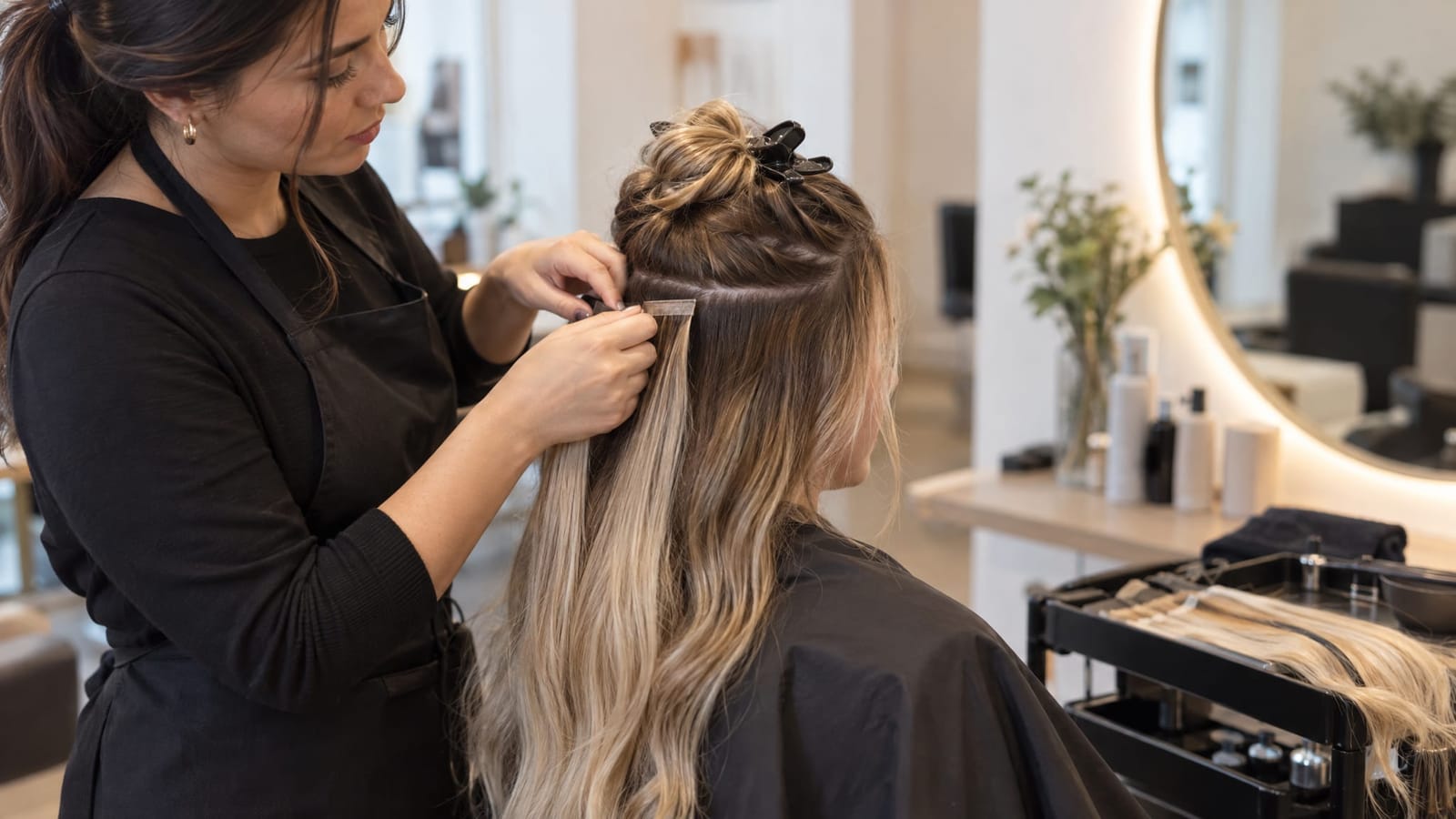
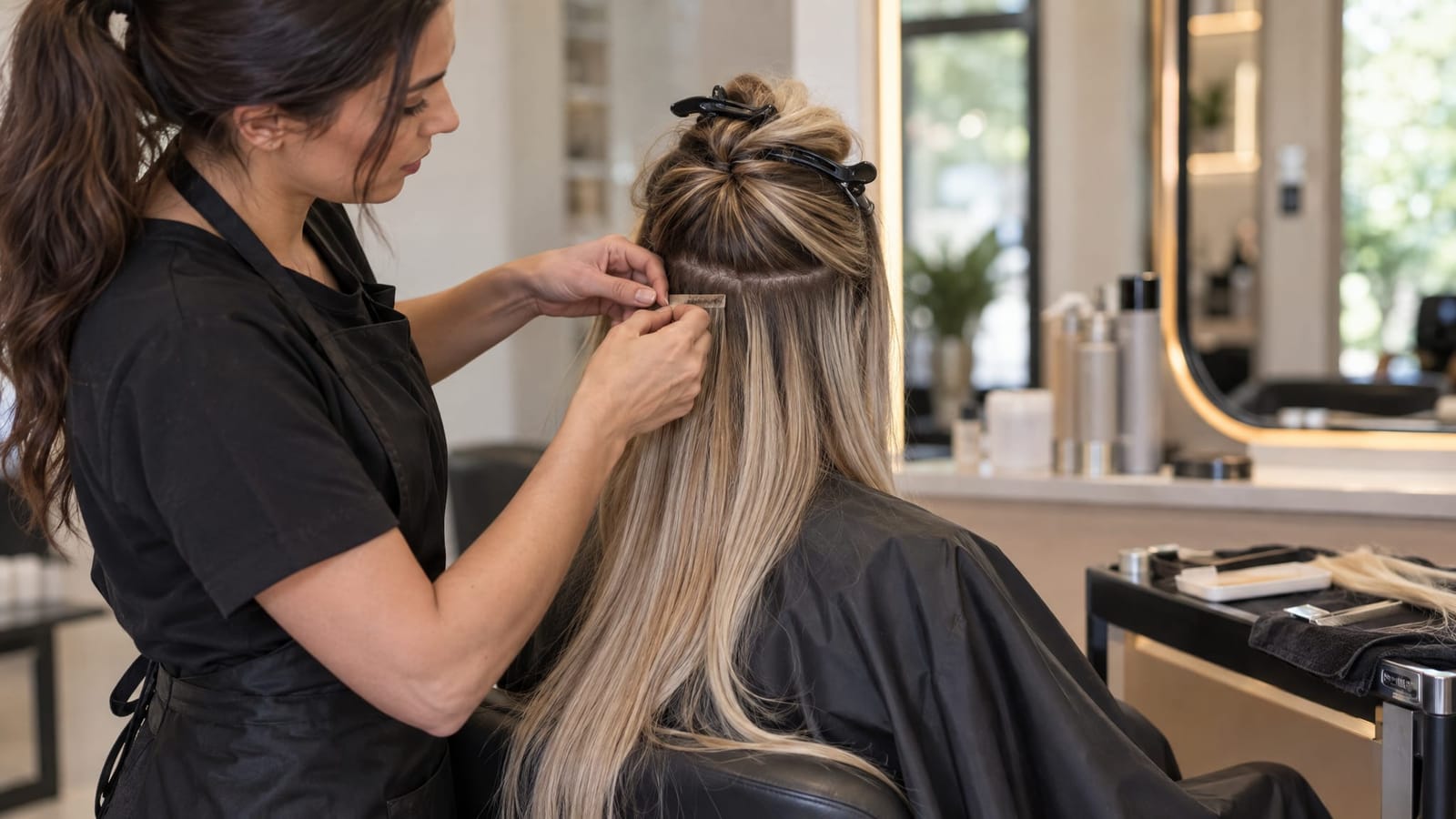
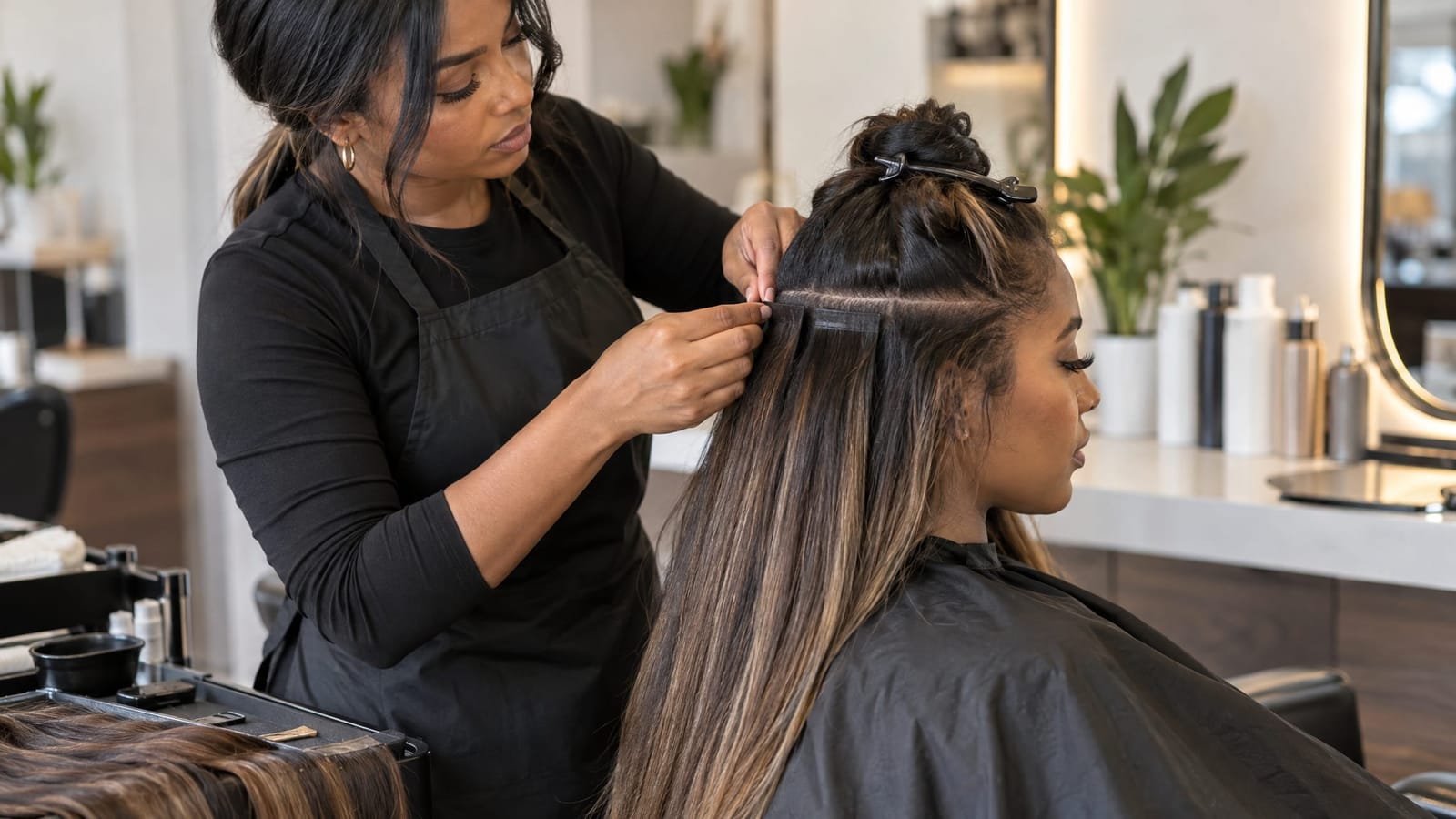
Glue extensions use bonding adhesive to secure wefts, which are strips of extension hair joined along the top. For a direct-bonded installation, wefts attach to sections of natural hair near the roots, rather than to the scalp.
This approach can add fullness or length while leaving natural hair visible for blending. Placement matters: the attachment needs enough coverage to stay concealed when the hair moves, parts or goes up.
A quick weave describes the overall installation
A quick weave generally involves arranging natural hair into a flat foundation, adding a cap or suitable protective barrier, and bonding extension wefts over it. The foundation may include braids, so “quick weave” does not necessarily mean braid-free.
A quick weave can leave some natural hair out to cover the attachments and blend with the extensions. Other designs use a closure, an extension piece that covers the top area. The amount of exposed natural hair changes the daily styling routine.
Braidless extensions need a more specific description
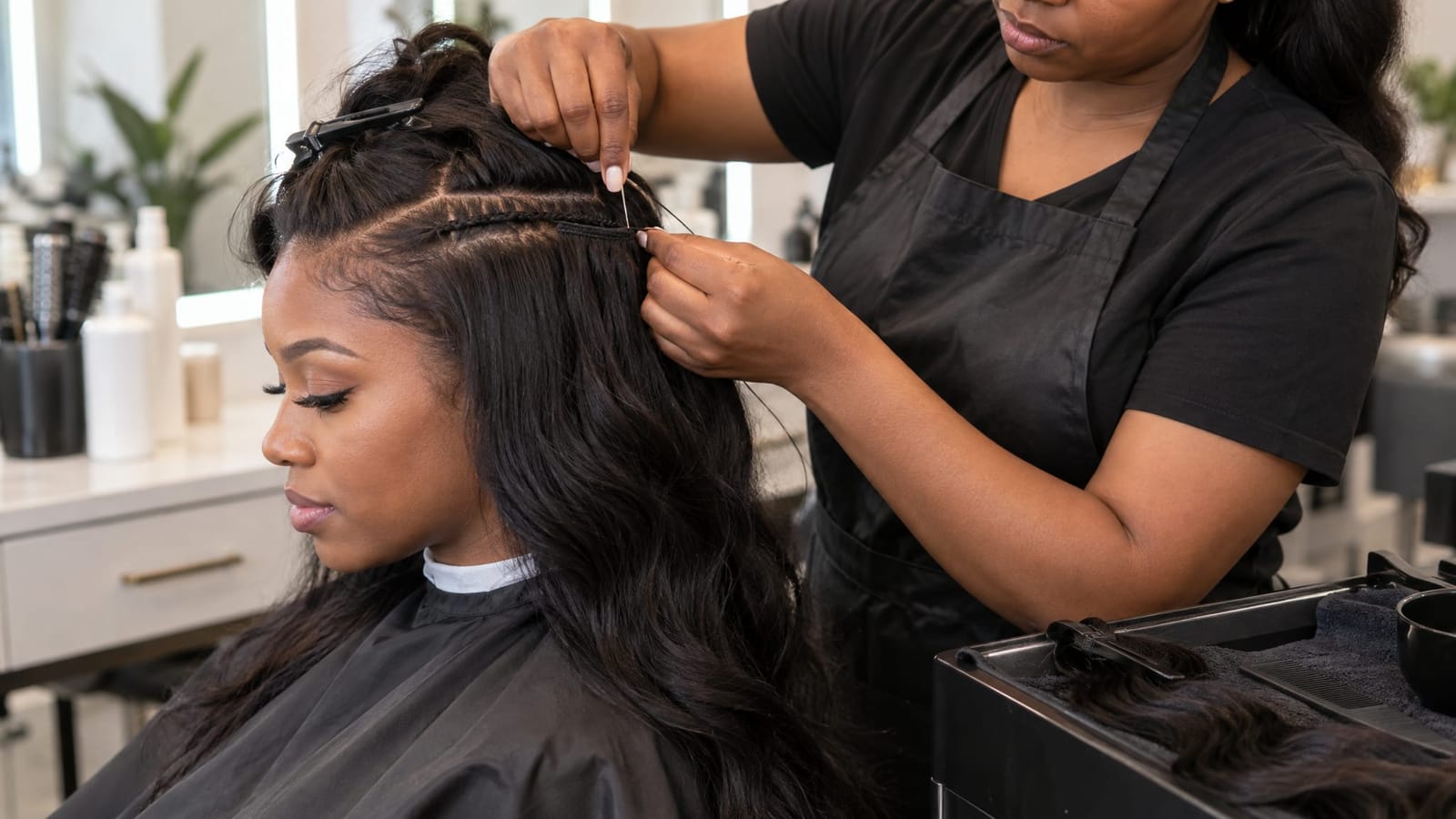
“Braidless” describes what an installation leaves out, not one universal attachment system. A common method uses small beads to create support points, with extension wefts sewn onto those rows instead of cornrows.
The braidless option compared here is a bead-supported weft installation. It does not use bonding glue, but it still places weight on the natural hair supporting each attachment.
Side-by-Side: The Differences That Affect Daily Life
| Consideration | Direct-bonded glue extensions | Quick weave | Bead-supported braidless wefts |
|---|---|---|---|
| Where extensions attach | To natural hair using bonding adhesive | Usually to a cap or barrier over a prepared foundation | To supporting rows secured with beads, without a braided base |
| Natural hair left visible | Natural hair commonly covers and blends with the wefts | Varies with leave-out and closure design | Natural hair covers the rows and blends through the style |
| Washing access | Requires care around bonded areas | The foundation makes access to the hair underneath less direct | Sections between rows remain accessible, with careful handling at attachments |
| Maintenance plan | Bond care, blending and complete adhesive removal | Foundation care, leave-out styling where applicable, and full removal | Detangling around rows and attachment adjustments as hair grows |
| Main styling limitation | Partings and updos can expose bonded wefts | The foundation and weft layout largely determine the finished shape | Row placement affects ponytails, parts and how attachments are concealed |
No method offers every benefit at once. A more enclosed foundation can reduce the amount of natural hair styled each morning, while making washing underneath more involved. A more open installation provides access between attachments but leaves more natural hair to blend.
Application Time and Wear: Compare the Whole Commitment
“Quick” does not describe the entire appointment
A quick weave involves more than bonding hair onto a cap. Detangling, cleansing, drying, preparing the foundation, placing the wefts, cutting and finishing all contribute to the appointment.
Direct-bonded extensions also need deliberate sectioning and blending. Bead-supported braidless wefts require placement of the support points, attachment of the wefts and a cut that brings the natural and added hair together.
For a useful appointment comparison, separate preparation, installation and finishing. Removing an existing style adds another task. Comparing installation alone can make one option appear simpler than the full visit actually is.
Wear time and maintenance are different questions
For bonded extensions and quick weaves, think in terms of a planned wear period followed by removal and a fresh foundation. Repeatedly adding adhesive to lifting areas is not a substitute for a complete maintenance plan.
Bead-supported rows move farther from the scalp as natural hair grows, so their upkeep includes adjustments or reinstallation. An adhesive-free attachment does not mean an installation can remain untouched.
The appropriate wear period varies with the attachment system, the supporting hair and home care. Our explanation of glue extension duration and touch-ups explores that part of the decision in more detail.
Also separate the life of the extension hair from the life of the installation. Hair that remains suitable for reuse still needs its attachments maintained or replaced.
Maintenance: Choose a Routine You Can Keep
Washing and workouts
If frequent washing is part of your routine, access to your natural hair deserves as much attention as the finished look. With direct-bonded extensions, cleansing involves working around the adhesive attachments. With a quick weave, the cap and foundation create additional layers to clean and dry.
Bead-supported rows provide spaces between attachments, but those areas still need careful washing, rinsing and drying. None of these methods makes moisture management optional.
For someone who exercises regularly, a useful comparison is how the installation will fit their usual wash schedule and how much time drying will take. Choosing only by the first-day finish overlooks a recurring part of wearing extensions.
Leave-out can be the biggest daily styling task
Leave-out is the natural hair kept outside an installation to cover attachments and blend with the extensions. A small amount can still require attention if its texture differs noticeably from the added hair.
For example, pairing tightly curled leave-out with very straight extensions creates a different routine from choosing extension hair closer to the texture you prefer to wear. The first combination requires more styling to keep the textures visually consistent.
The same consideration applies to direct-bonded and braidless wefts because natural hair generally remains visible. A closer texture match can simplify blending without making the style look less polished.
Sleeping and detangling
A satin bonnet or scarf can help reduce friction overnight. Gentle detangling starts at the ends and moves upward, with the hair supported near the attachments so brushing does not tug directly on them.
Products also need to suit the installation. Heavy buildup around attachment points complicates care, and adhesive systems have their own product requirements. A useful maintenance plan identifies what belongs on the lengths and what stays away from the bonds.
Hair Care: Look Beyond “No Braids” or “Protective”
No method is automatically gentler simply because it uses a cap or avoids cornrows. Placement, extension weight, tension, daily handling and removal all matter.
For glue extensions, removal deserves equal attention
Adhesive needs to be released with the appropriate removal process rather than pulled away from the hair. That applies whether the glue is attached directly to natural hair or used over a quick-weave foundation.
A cap or barrier helps separate adhesive from the hair underneath, but it does not replace careful placement and removal. The installation plan is incomplete without a clear way to take the style down.
For braidless wefts, the supporting hair matters
Beads eliminate bonding adhesive in this method, but the natural hair still supports the extension rows. Adding more length or density also adds weight. A fuller result needs enough supporting hair and enough coverage to conceal the attachments.
Fine strands, lower density and fragile areas call for particular attention to row placement and extension weight. These are fitting considerations, not reasons to assume that one method works for every person with the same curl pattern. Our overview of braidless extensions and hair health explains the tradeoffs further.
Which Method Fits Your Styling Priorities?
Glue extensions: consider them for blended fullness or length
Direct-bonded wefts are worth considering when the goal is adding hair within a style that keeps natural hair visible. The key questions are whether there is enough coverage over the bonds and whether your preferred parting or updo will expose them.
For example, someone who wears their hair down most days has different placement needs from someone who alternates between a deep side part and a high ponytail. The desired movement matters as much as the desired length.
Quick weave: consider it for a defined, complete look
A quick weave is worth considering when the priority is a cohesive shape built over a prepared foundation, such as a sculpted bob or a layered, full-bodied style.
The tradeoff is flexibility. A style designed around one parting does not automatically accommodate a different part or a pulled-back finish. Deciding on the silhouette first helps the foundation and weft placement support that look.
Braidless wefts: consider them when adhesive-free attachment is a priority
Bead-supported braidless wefts are worth considering when avoiding bonding glue matters and regular attachment maintenance fits your routine. They still need suitable supporting hair, room for the rows and enough coverage to keep the finish discreet.
For someone who likes wearing natural hair blended throughout the style, this approach offers a different construction from a capped quick weave. It does not remove the need to manage texture, detangling or visible attachments.
If the goal is extra fullness for one evening rather than an installed style, clip-ins belong in the comparison, too. We also offer clip-in extensions, which provide an option that can be removed after wear.
Make the Decision With the Finished Style and Upkeep in Mind
A useful installation plan answers five practical questions:
- Where will the extensions attach, and what will cover those attachments?
- How much natural hair will remain exposed for blending?
- Will the placement accommodate your usual parting and everyday hairstyles?
- How will washing, drying and maintenance fit your routine?
- What will removal involve?
The strongest choice is not simply glue versus no glue. It is the installation that supports your preferred finish without giving you an upkeep routine you do not want. Compare the foundation, visible natural hair and removal plan first. Those details make the difference between liking a style in a photo and enjoying wearing it.