Do Relaxed Hair Clients Need Different Haircuts Than Natural Hair Clients?
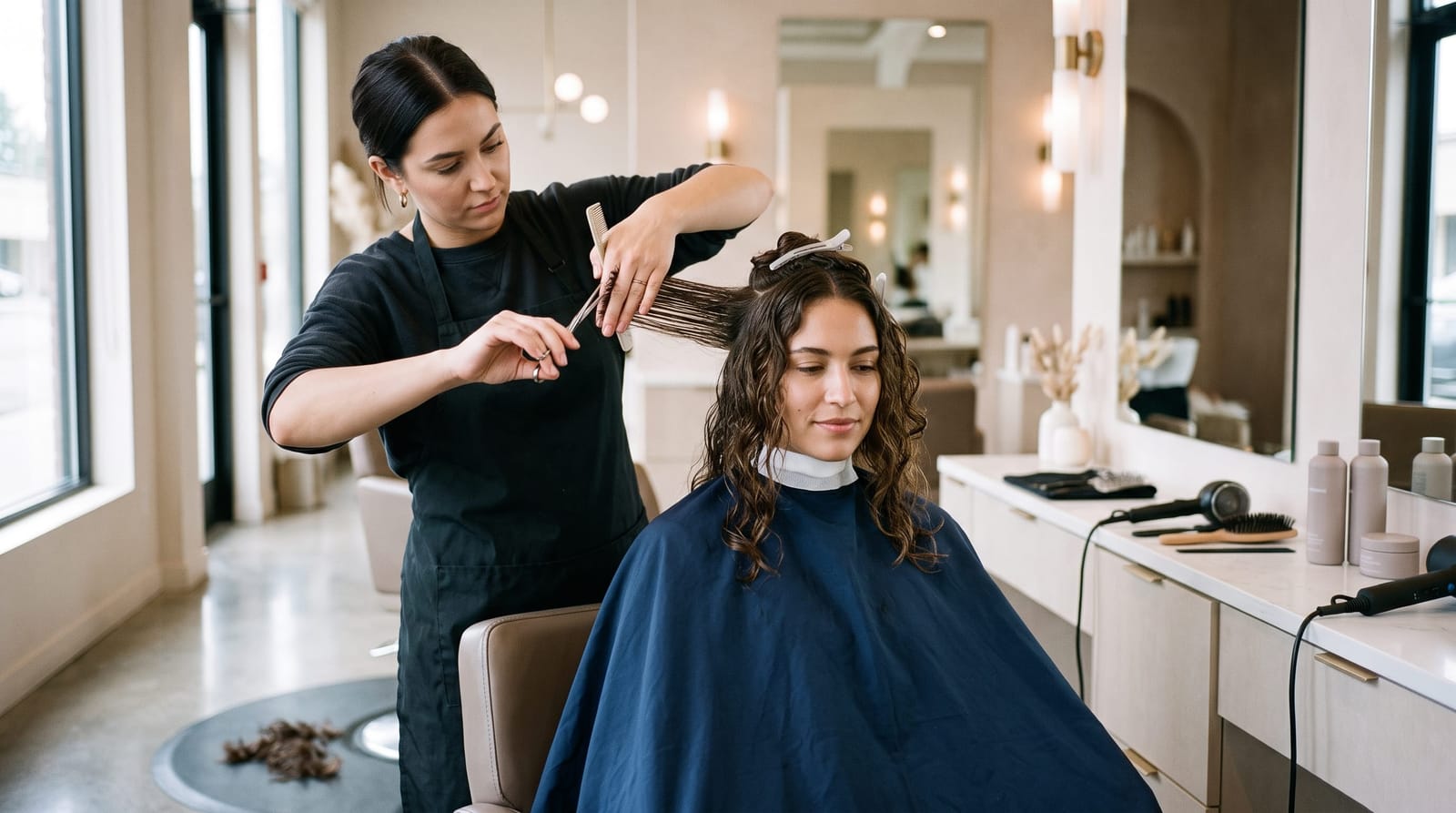
Relaxed and natural hair often benefit from different cutting approaches, but they do not need entirely different haircut styles. Both can suit bobs, layers, tapered shapes, and clean outlines. What changes is how the cut accounts for curl pattern, shrinkage, the condition of the ends, and the way you usually wear your hair.
The most useful question is not simply whether your hair is relaxed or natural. It is whether the finished shape will work with your texture and your everyday styling routine.
What Changes When Hair Is Relaxed?
A relaxer chemically alters bonds within the hair to straighten it. That change is permanent on the treated lengths, while new growth retains its natural texture. Chemical processing can also reduce strand strength, making the condition of the hair an important consideration during a haircut.
Natural hair has not had its curl pattern permanently altered by a relaxer. It may be worn curly, coily, stretched, or temporarily straightened with a blowout. As curls dry and return to their usual shape, the hair can look shorter than it does when wet or stretched. This is shrinkage, and its extent can vary across the same head of hair.
Neither label tells the whole story. Two people with natural hair may need different cutting approaches, just as two people with relaxed hair may have different densities, processing histories, and styling preferences.
Cutting Relaxed Hair: Shape, Fullness, and the Condition of the Ends
On hair worn straight, the outline of a haircut is easy to see. Uneven lengths may stand out, so a balanced perimeter and well-placed layers matter. But relaxed hair does not automatically require a blunt cut or rule out layers.
- Blunt outlines can make the ends look fuller. They may suit someone who wants a defined bob or a substantial-looking edge on longer hair.
- Layers can add movement. Their placement depends on density and the desired shape. Removing too much weight can leave the ends looking thinner than intended.
- Wet and dry cutting can both have a place. A dry check helps show how the finished shape falls. The choice is not determined by relaxed status alone.
- New growth needs consideration. Where natural roots meet relaxed lengths, the textures behave differently. Gentle handling matters, especially when detangling and sectioning.
A clean outline can improve the appearance of the ends, but the cut still needs to reflect their condition. A very light trim and a more substantial reshaping serve different purposes.
Cutting Natural Hair: Shrinkage and the Everyday Finish
For natural hair, the main length decision is how short the hair will look when worn in its usual style, not just how long it measures when stretched. A shoulder-length reference photo can mean something quite different on straight hair than on curls that spring upward as they dry.
Several approaches can help address that difference:
- Looking at dry curls before cutting shows their usual shape, where they sit, and whether some sections shrink more than others.
- Wet or stretched cutting can make it easier to compare lengths and create an outline. The finished shape still needs to account for how the hair behaves afterward.
- Dry curl shaping allows adjustments based on how individual curls or sections fall. It can be useful for someone who mainly wears their hair curly, but it is not a requirement for every curl pattern.
- Working in sections helps account for differences in curl pattern and density around the head.
- Dusting removes a very small amount from the tips. It can suit a light maintenance trim, but it may not remove split or worn areas that extend farther up the ends.
If you alternate between curls and blowouts, explain that before the cut. A shape designed around individual curls may not look perfectly even when straightened, while an even stretched cut may fall differently once the curls return. The priority is a shape that suits the finish you wear most often, with a clear understanding of the tradeoff.
The Same Style Can Need a Different Plan
Think of a bob as a shape rather than a single cutting formula. On relaxed hair worn straight, its defining feature might be a crisp outline at the jaw. On natural curls, a similar silhouette may require leaving more length to allow for shrinkage and adjusting where the volume sits.
Face-framing choices also depend on your preferences. For example, haircut ideas for round faces with curly or coily hair can help you compare silhouettes, but face shape is a starting point, not a rule that limits your options.
For either texture, these details help narrow the choice:
- Density: How much hair is present affects fullness and how much weight layers can remove.
- Strand thickness: Fine and coarse describe individual strands, not how much hair you have. Fine hair can still be dense.
- Styling time: A cut that relies on daily restyling may not suit a simple morning routine.
- Practical length: Mention whether you want to gather your hair into a ponytail, bun, or another regular style.
Transitioning Hair Needs Its Own Length Decision
When you are growing out a relaxer, natural roots and relaxed lengths can respond differently to washing, drying, and styling. The haircut needs to account for both while supporting your preferred pace of transition.
Gradual trims preserve more length while removing relaxed ends over time. A shorter cut removes more processed length at once but brings a bigger change in shape and styling. Neither option is automatically better. The decision depends on how much length you want to keep and how you prefer to manage the two textures.
Be ready to discuss when you last had a relaxer, any color or lightening services, and how you usually style your hair. That history helps explain why different sections may need different handling.
Do Relaxed and Natural Hair Need Different Trim Schedules?
Not necessarily. Relaxed status alone does not determine how often a trim is needed. The condition of the ends, heat and chemical processing, daily handling, and the haircut itself all affect how often to get a professional haircut or trim.
A sharply outlined bob may need reshaping before a longer, softer style does. Someone growing out their hair may prefer small maintenance trims, but leaving visibly split ends in place does not preserve their condition. Useful reasons to reassess a cut include ends that catch during detangling, visible splits, or a shape that no longer falls as intended.
Conditioning and trimming also do different jobs. Deep-conditioning treatments can help with softness and manageability, while a trim physically removes the ends being cut. One does not replace the other.
What to Discuss Before Your Haircut
We offer haircuts and trims at Kabelly Dominican Salon in Clinton. For a clear conversation about your cut, bring a reference photo and explain what you like about it: the outline, the movement, the fullness, or where the shortest pieces sit.
Also describe how you normally wear your hair, your processing history, and the amount of length you are comfortable removing. If your hair is curly, distinguish between stretched length and where you want it to fall when dry.
The goal is not to assign one haircut to relaxed hair and another to natural hair. It is to choose a shape you enjoy, then adapt the cutting approach to your hair and the way you live with it.