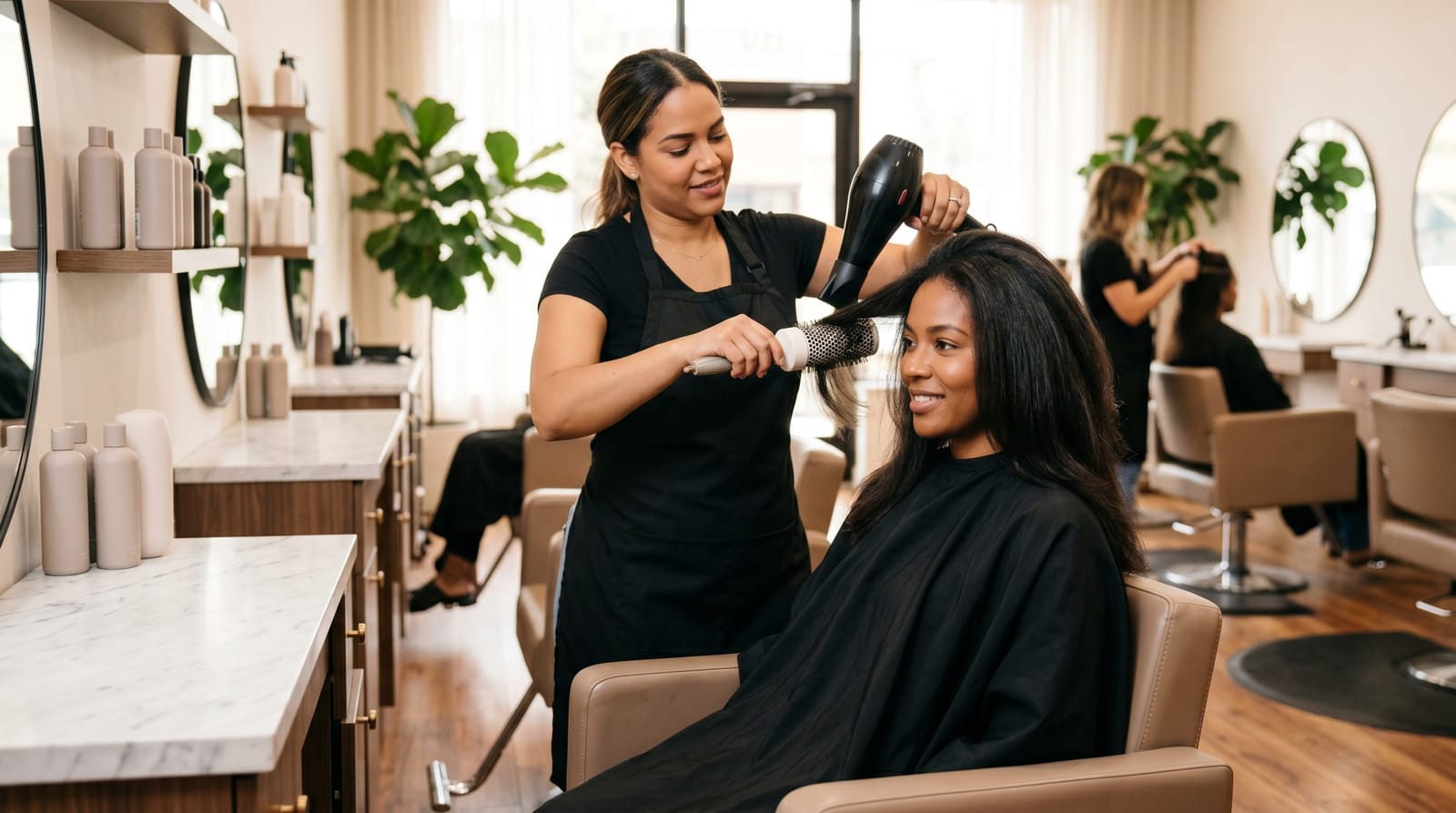
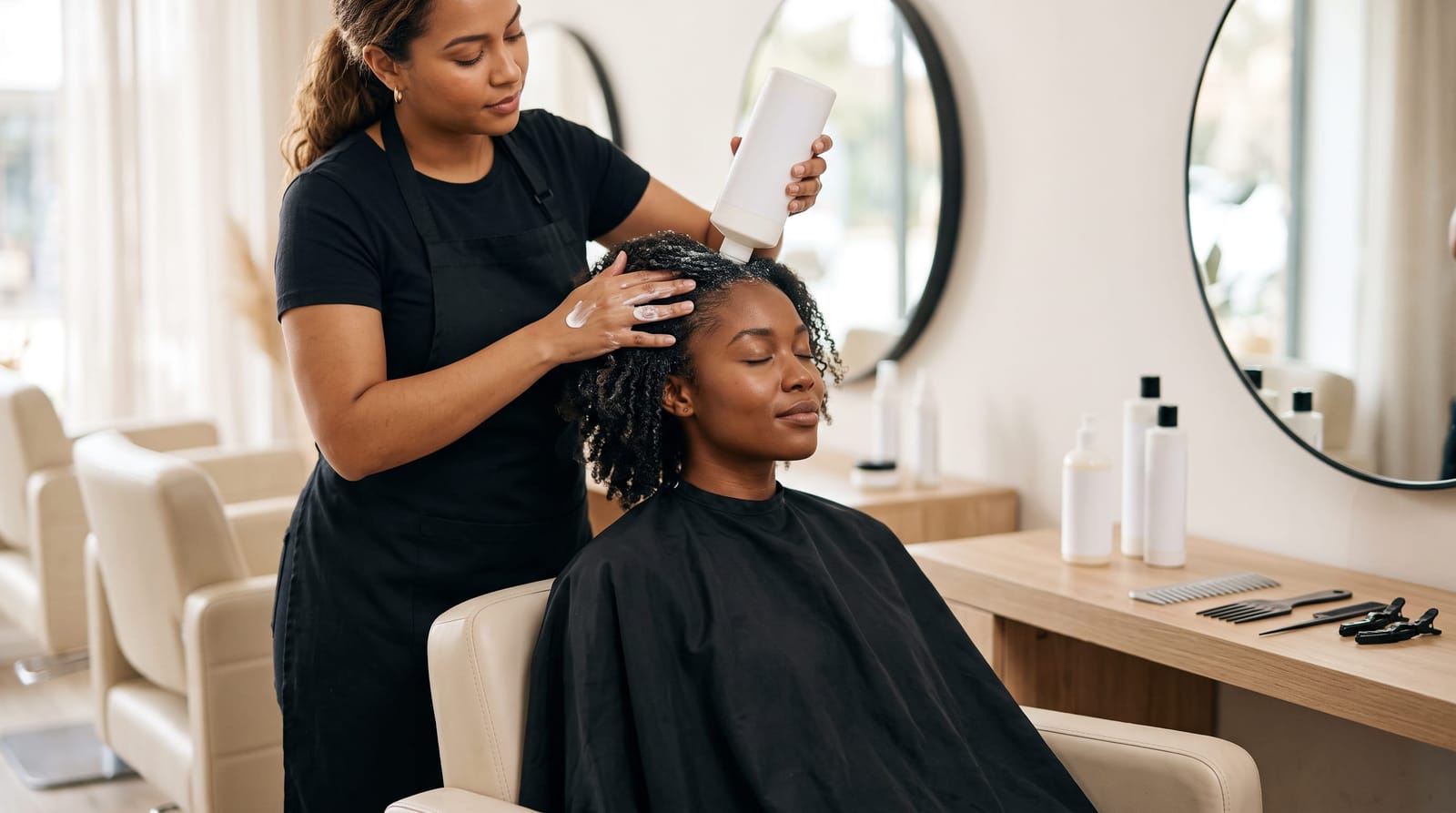
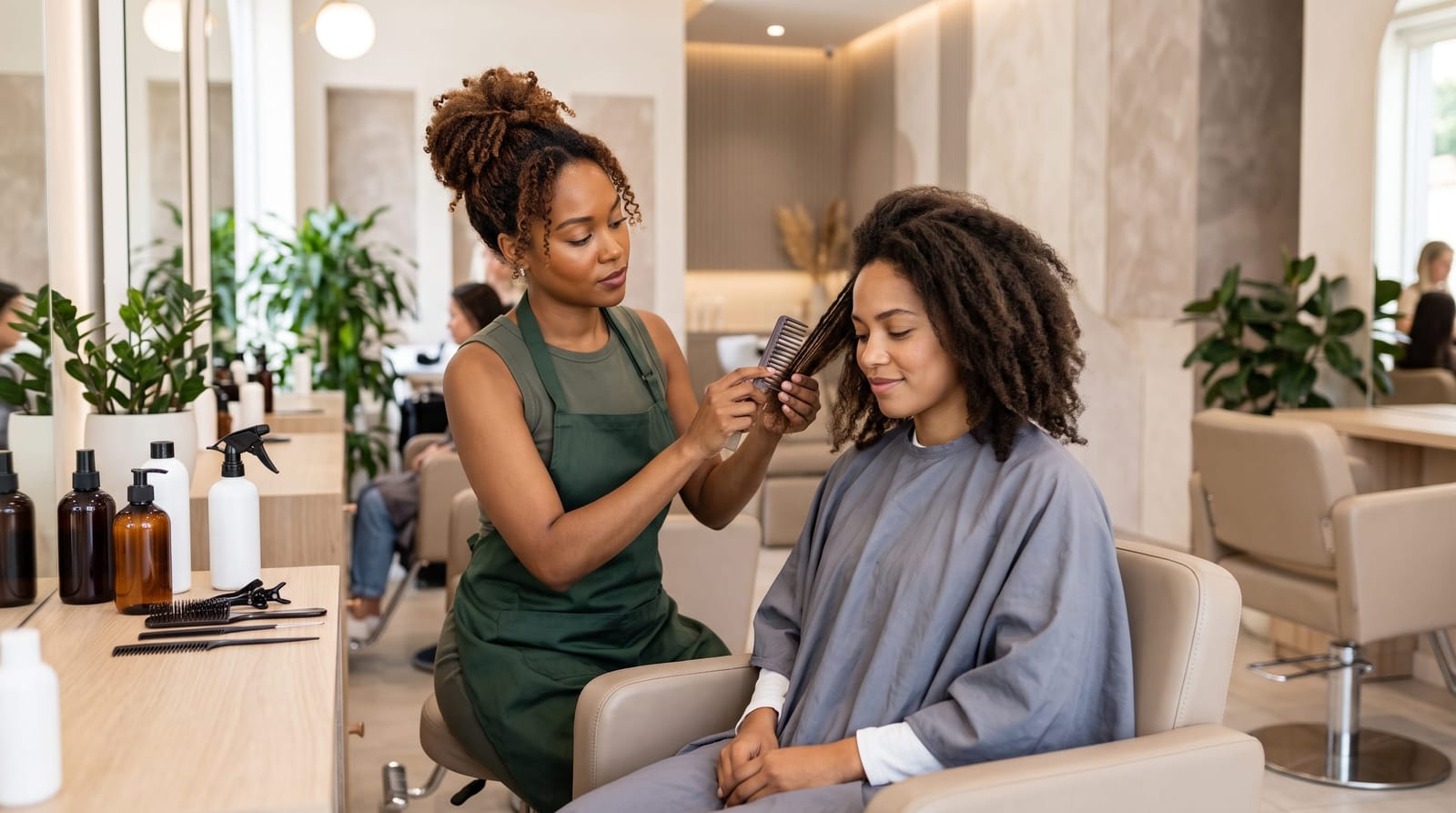
What Is the Difference Between a Regular Blow Out and a Blow Out for Braids?
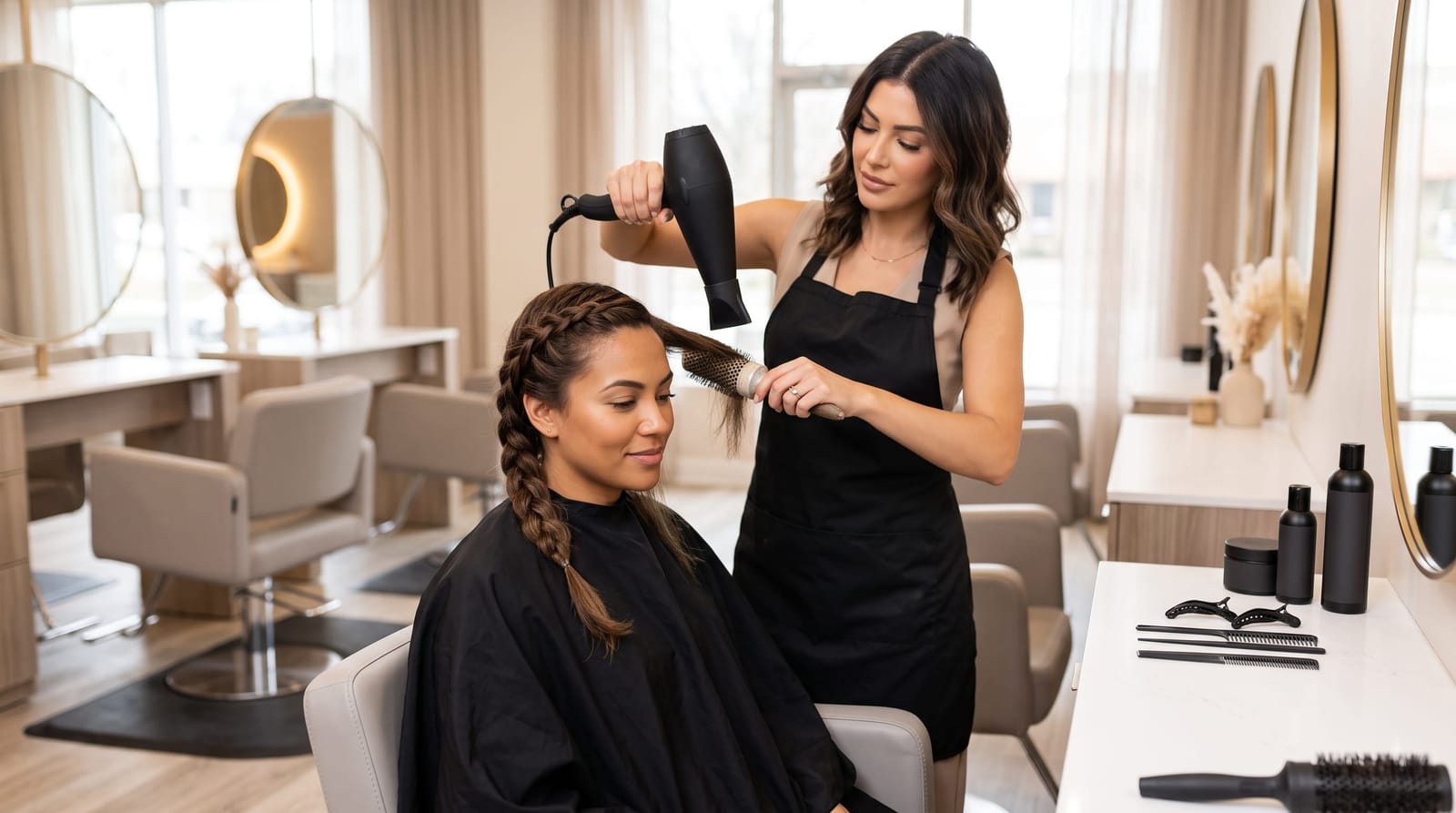
If you've ever searched "wash and set vs blow out" or wondered whether your post-braid appointment is the same thing as a standard blowout, you're not alone. These two services sound similar, and yes, both involve washing and drying your hair, but they are genuinely different experiences designed for different hair needs. Understanding that difference matters, especially when you're transitioning out of a protective style and your hair deserves more than a one-size-fits-all approach.
Why the Comparison Matters for Protective Style Wearers
When most people think of a blowout, they imagine freshly washed hair being styled smooth and voluminous with a blow dryer. A wash and set, by contrast, traditionally involves setting hair on rollers after washing and drying it flat: prioritizing moisture retention and a structured curl or wave pattern rather than a stretched, elongated finish. Both are real, beautiful services. But neither of them is the same as a blow out for braids.
The blow out for braids is its own category of service: one that exists specifically for clients coming out of box braids, knotless braids, Senegalese twists, goddess locs, and similar protective styles. When hair has been braided for anywhere from four to eight weeks (sometimes longer), it arrives at the salon in a completely different condition than freshly loose hair. That distinction shapes everything about how the service is performed.
What Happens to Hair After Weeks in Braids
Hair doesn't stop shedding just because it's braided. On average, people shed between 50 and 100 strands of hair per day under normal circumstances. When hair is locked into a protective style, that shed hair has nowhere to go: it collects inside the braids, tangling around the natural strands. After six to eight weeks, you can have weeks' worth of shed hair matted within your natural hair, and that buildup requires a completely different approach than standard detangling.
Additionally, product buildup, scalp debris, and moisture imbalance all accumulate during extended protective styles. The scalp may be dry or congested, and the hair itself may feel brittle or knotted in areas where it's been under tension. A regular blowout appointment is simply not equipped to handle this level of preparation, and trying to rush through it without the right technique can lead to unnecessary breakage and frustration.
How a Blow Out for Braids Differs: A Side-by-Side Breakdown
Here's a clear comparison of what separates a standard blowout or wash and set from the specialized blow out for braids service:
Detangling Requirements
- Standard blowout: Light detangling on freshly washed, relatively knot-free hair. May take 5 to 10 minutes.
- Wash and set: Similar light detangling, followed by roller setting for a defined finish.
- Blow out for braids: Section-by-section manual detangling to remove weeks of shed hair and loosen matted knots before any water or heat is applied. This alone can take 30 to 60 minutes depending on hair length and density.
Product Usage
- Standard blowout: Focuses on hold products: heat protectants, smoothing serums, and light finishing creams to create a polished, frizz-free result.
- Wash and set: Emphasizes moisture retention: leave-in conditioners, setting lotions, and curl-defining products that work with the hair's natural texture.
- Blow out for braids: Requires deep conditioning treatments and intensive detangling products before styling even begins. The goal is restoration first, smoothness second.
Time Investment
- Standard blowout: Typically 45 minutes to 1.5 hours for most hair types.
- Wash and set: Often 1 to 2 hours, including roller setting and drying time under a hooded dryer.
- Blow out for braids: Can range from 2 to 3+ hours depending on hair length, density, and braid duration, because detangling, cleansing, conditioning, and blow drying each receive full, unhurried attention.
Technique Differences
- Standard blowout: Stylists work through clean, smooth sections with a round brush and blow dryer, focusing on lift, smoothness, and shine.
- Wash and set: Hair is wound onto rollers while wet and dried under controlled heat for a uniform wave or curl pattern.
- Blow out for braids: The stylist must work methodically through each section: first finger-detangling dry hair to remove shed strands, then cleansing, then deep conditioning under heat to restore elasticity, then carefully blow drying with tension techniques that stretch and smooth without stressing the hair shaft.
Why This Service Requires Professional Expertise
The blow out for braids is not a service you want to book at a general salon that doesn't specialize in it. The techniques involved, gentle pre-detangling on dry hair, strategic deep conditioning, and low-tension blow drying on hair that may already be feeling stressed, require a stylist who understands how protective style hair behaves coming out of a long-term install.
At Kabelly Salon, the blow out after braid removal DMV clients receive is specifically designed for this transition. The service accounts for the real condition your hair is in, not the condition a standard blowout menu assumes. That means the right products, the right amount of time, and the right hands-on attention to get your hair feeling healthy, refreshed, and beautifully restored. Our team works with clients who wear braids regularly and understands the rhythm of protective style maintenance in the DMV community.
Frequently Asked Questions
Can I just get a regular blowout after taking out my braids?
Technically, yes, but it's generally not the most effective approach. A standard blowout appointment doesn't account for the pre-detangling phase, extended conditioning time, or the specialized handling that post-braid hair typically needs. Trying to rush through the detangling step to fit into a regular service time slot can put unnecessary stress on hair that's already been through weeks of tension. A service designed specifically for post-braid hair gives your strands the full attention they deserve at this stage.
Is a wash and set a good option after braids?
A wash and set focuses on defining texture and retaining moisture, which can be beneficial for natural hair. However, it still doesn't include the intensive pre-detangling and restoration phase that hair typically needs after a long-term protective style. If you're transitioning out of braids and want your hair to feel truly refreshed and manageable, a blow out for braids is designed to address those specific needs first, and a wash and set can be a wonderful follow-up service once your hair is detangled and restored.
How long does a blow out for braids last compared to a regular blowout?
A regular blowout typically lasts 3 to 5 days before the style begins to loosen or frizz with humidity and daily activity. A blow out for braids, because it involves a more thorough cleansing and conditioning foundation, can deliver similarly lasting results, but the primary goal isn't longevity of the style, it's restoration of the hair's health and manageability coming out of the protective style. Think of it as a reset appointment, not just a style appointment.
How often should I get a blow out for braids?
Most clients who wear protective styles get a blow out for braids each time they remove a set of braids, whether that's every six weeks, eight weeks, or longer depending on their rotation. It functions as the essential transition service between installs, helping to maintain the health of your natural hair over time rather than going straight from one protective style into another without giving your hair a proper refresh.
The Bottom Line
A wash and set, a standard blowout, and a blow out for braids are three distinct services designed for three different sets of hair needs. If you're coming out of a protective style in the DMV and want a service that truly meets your hair where it is, not where a standard menu assumes it is, the blow out for braids is the right choice. It's a specialized, thoughtful service that respects the work your hair has been through and gives it the professional care it needs to thrive.