The Complete Guide to Haircuts for Thick, Curly & Textured Hair in the DMV Area
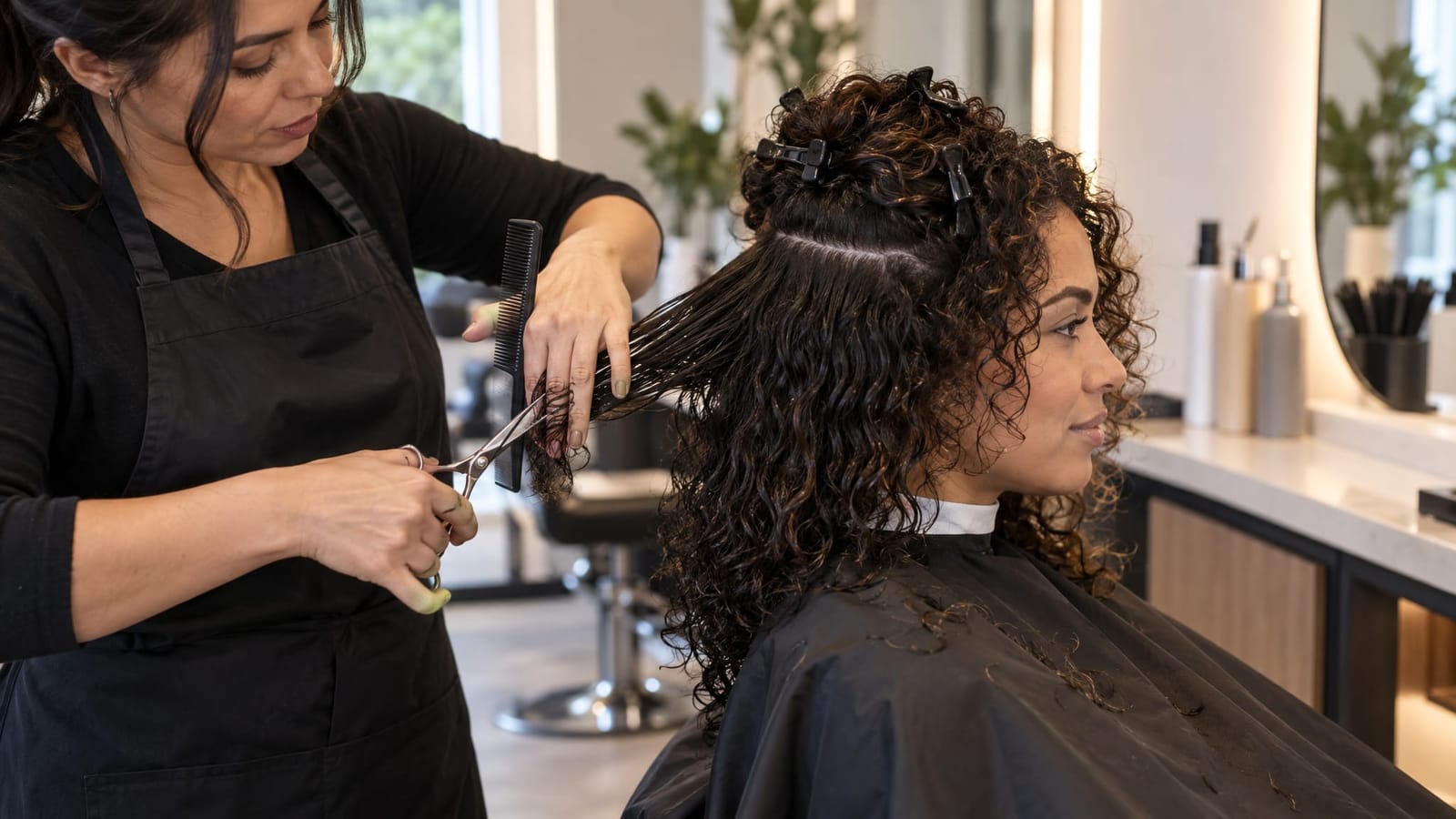
The right haircut for thick, curly hair gives volume a deliberate shape, leaves room for shrinkage, and works with the way you actually wear your hair. Long layers can preserve length while redistributing fullness. A rounded cut can celebrate volume. A bob or cropped shape can create a more defined outline, with different styling and maintenance needs.
The choice is not simply between keeping your hair long and cutting it short. Density, strand thickness, curl pattern, and your preferred finish all influence where a stylist places the shortest pieces and how much weight stays at the ends.
For anyone comparing haircuts for thick, curly hair in the DMV, the most useful starting point is your everyday routine. Do you wear your curls loose, alternate between curls and blowouts, or rely on ponytails and pinned-up styles? This guide explains how those choices translate into a cut, what to discuss at a Dominican salon, and how to keep the shape working between visits.
Understand Your Texture Before Choosing a Shape
“Thick, curly hair” describes several characteristics that do not always go together. Separating them makes it easier to explain what you want changed and what you want preserved.
Density and strand thickness are different
Density describes how closely hair grows across the scalp. Strand thickness describes the width of an individual hair. You can have densely packed fine strands, thicker strands with less overall density, or a combination.
This distinction matters when requesting “less bulk.” Dense hair may need fullness redistributed through the shape, rather than extensive thinning. Fine strands can look sparse at the ends if too much hair is removed internally, even when the overall head of hair feels very full.
Instead of saying only “make it lighter,” identify the area that feels heavy: the lower half, behind the ears, the crown, or the back. That gives the haircut a more precise goal.
Curl patterns can vary across one head
The front may form loose spirals while the back has tighter coils. One side may sit higher than the other after drying. A cut that looks level when stretched does not necessarily create a level outline when the hair returns to its natural pattern.
A useful assessment looks at these differences rather than treating every section as identical. Mention areas that consistently behave differently, especially pieces that spring up around the face or flatten at the crown.
Shrinkage changes where the finished cut sits
Shrinkage is the difference between stretched length and the length you see when curls or coils settle. It varies with texture, styling, and the section of hair being considered.
Describe your desired length in its finished state: “I want the front to reach my chin when curly,” for example. That is clearer than naming only the amount you want removed. Photos of both your natural texture and your stretched or blown-out hair can help show the difference.
Choose a Haircut by Where You Want Volume
Before selecting a haircut name, decide what the silhouette should do. Do you want fullness near the crown, a rounded outline, a stronger bottom edge, or an open shape around the face? These decisions are more useful than choosing a trend without considering its structure.
Long layers: preserve length while redistributing fullness
Long layers create different lengths through the hair while keeping an overall long outline. They suit someone who enjoys length but does not want all the fullness concentrated near the bottom.
The key decision is how short the shortest layer becomes. Higher layers create a more noticeable change in shape, but they also introduce pieces that may escape a ponytail or sit differently during a blowout. Longer, connected layers offer a subtler change and can support a routine that alternates between curly and smooth styles.
Rounded layers: make volume part of the design
A rounded cut distributes fullness around the head instead of leaving a narrow top and a much wider bottom. It is a useful direction when the goal is a full, intentional curly silhouette rather than reduced volume everywhere.
Specify whether you want a compact rounded shape or a larger outline. Also discuss how the front connects to the sides. A shorter front section can create a different effect from longer pieces that frame the cheeks and jaw.
A curly bob or lob: establish a clear perimeter
A bob creates a defined outline around the face and neck. A lob, or longer bob, keeps more length toward the shoulders. Either can include layers; neither has to mean a completely blunt cut.
On dense hair, the choice between a solid bottom edge and a more layered interior changes how the shape looks and moves. If tying your hair back matters, check the intended finished length at the front and nape, not just the longest point at the back. Shorter does not automatically mean easier to gather or quicker to restyle.
A curly shag or fringe: emphasize movement and the front
A shag uses more visible differences in length, often with shorter crown layers and face-framing pieces. A fringe, or bangs, brings additional attention to the front.
These choices suit someone who enjoys a more layered outline, but they change daily styling. Short front pieces may need refreshing independently from the rest of the hair. They also sit differently when blown out, so the intended curly length and smooth length both deserve attention before cutting.
A tapered or cropped shape: create contrast between sections
A tapered cut keeps some areas shorter while preserving more length elsewhere, often through the top. It can give curls and coils a strong outline without keeping the same length all around.
The tradeoff is upkeep. A compact shape can show changes in proportion as it grows, even if daily detangling and styling involve less hair. Decide whether a closely maintained outline or a softer grow-out matters more to you.
Use Face Shape as a Preference Tool, Not a Rule
Face shape can help guide the placement of volume and shorter pieces, but it does not determine which haircuts you are allowed to wear. The useful question is where you want the eye to land.
- To emphasize the cheekbones: Discuss face-framing pieces that settle near that area when curly, rather than measuring their stretched length alone.
- To bring attention to the jaw: A bob or a defined edge near the jaw creates a clear visual line.
- To add fullness at the sides: Rounded layers can place more of the silhouette around the cheeks and temples.
- To keep the face more open: Longer front pieces that move away from the face may suit your styling preferences better than a fringe.
If you describe your face as round, oval, square, or heart-shaped, treat that as a conversation starter. There is no need to “correct” its proportions. A round face can look beautiful with a rounded haircut, just as a defined jaw can be emphasized rather than softened.
Include practical details, too. Glasses, your usual part, and how often you tuck hair behind your ears affect face-framing choices. A fringe that looks appealing in a photograph may feel less useful if you prefer nothing resting on your forehead.
Understand Wet Cutting, Dry Cutting, and Weight Removal
Technique matters because curls do not behave like straight lines. Still, no single method is automatically right for every textured haircut. The method needs to serve the desired shape, the hair’s behavior, and the way it will be worn.
Wet cutting offers control, but finished length needs context
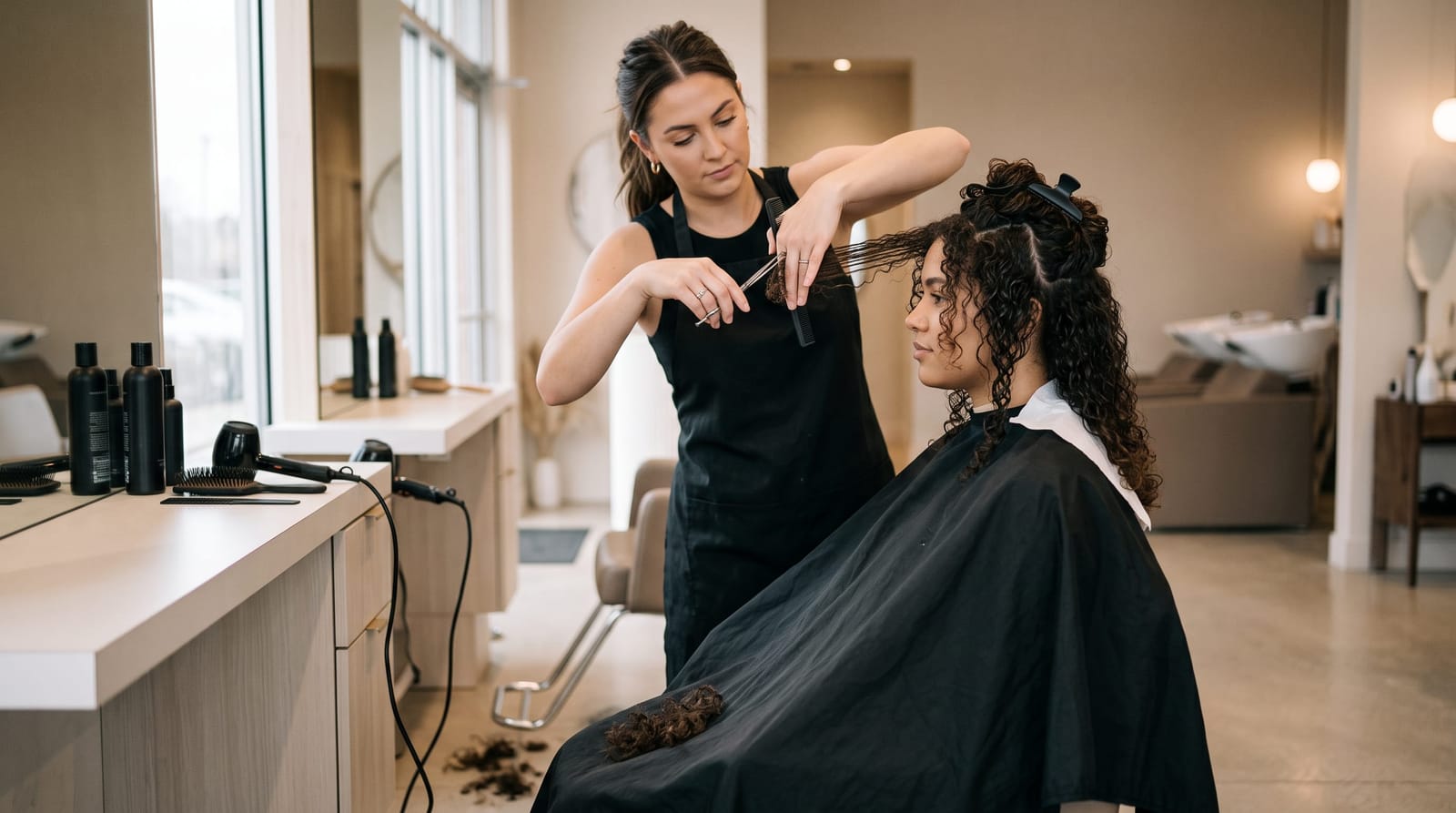
Wet hair can be sectioned and aligned clearly, making it useful for establishing a perimeter and connected layers. The important distinction is that wet or stretched hair is not showing its final curly length.
Consistent handling matters. Pulling one section more firmly than another changes how much it stretches during cutting. Allowing for shrinkage, especially near the front and in tighter sections, is part of planning the finished result.
Dry cutting shows the resting curl shape
Cutting dry hair in its natural pattern lets a stylist see where individual sections settle and how the outline sits. This can be useful for adjusting visible balance and areas with different curl patterns.
The starting style matters, however. A stretched twist-out, a blowout, and freely dried curls present different shapes. A dry assessment is most relevant when it reflects the texture you want the haircut to support.
A cut designed primarily around individual curls also needs thoughtful planning if you frequently wear your hair straight. Curly balance and a smooth, continuous outline are related goals, but they are not identical.
A combined approach can address structure and finish
Wet cutting and dry refinement are not opposing philosophies. A stylist can establish the structure in one state and assess the finished outline in another. What matters is how the approach accounts for your texture and styling habits, not whether it carries a particular label.
Removing weight is not the same as adding layers
Layers create deliberate differences in length. Internal weight removal takes hair out within the shape to reduce fullness in selected areas. These techniques can work together, but they do different jobs.
Tools such as thinning shears and razors are not automatically unsuitable for textured hair. Their effect depends on placement, technique, and the desired finish. Broad thinning without a clear purpose can leave ends looking sparse or introduce short pieces where you wanted a fuller curl grouping.
A useful explanation identifies the specific area being changed and the reason. “Reduce fullness behind the ears while keeping the bottom edge substantial” is more informative than “thin it out everywhere.”
Recognize Common Cutting Mistakes Without Judging by a Salon Label
Problems can arise when textured hair is approached as though every section stretches, dries, and settles the same way. A salon’s name or category alone does not tell you how carefully those differences will be considered.
- Measuring only while the hair is stretched. This can overlook where the front or tighter sections will sit when curly. Define the target length in the finish you wear most often.
- Removing bulk without preserving the outline. Less fullness is not always a better shape. Identify what needs to feel lighter and which areas need to stay full.
- Copying a photograph without comparing texture. A reference with looser curls or lower density may rely on a different structure. Separate what you like about its length, volume, fringe, and finish.
- Checking the cut only after a smooth blowout. A smooth finish shows one version of the haircut. If natural curls are your main style, discuss their intended shape as well.
- Assuming every uneven-looking curl needs cutting. Parting, stretching, and styling can change where a section rests. Consider those factors before treating every difference as excess length.
The value of textured-hair understanding is in these distinctions. A strong consultation connects the cutting decisions to your everyday hair, rather than offering the same layering or thinning approach for everyone.
What to Expect When Planning a Cut at a Dominican Salon
A Dominican salon offers a setting where haircut choices and styled finishes can be considered together. The important distinction is whether your main goal is a curly shape, a smooth outline, or versatility between the two. A blowout can show the movement of layers, but it does not display the haircut exactly as natural curls will.
At Kabelly Dominican Salon in Clinton, MD, our master stylists provide signature cuts and hair trims tailored to you. We also offer Hair Detangle, Wash & Set, and Wash & Blowout services. These address different parts of hair preparation and styling, so the haircut goal and the desired finish deserve separate consideration.
Prepare a clear description of your routine
You do not need technical vocabulary. A few specific details are more useful:
- How you wear your hair most days, including curls, blowouts, ponytails, or pinned-up styles.
- Where the current shape feels too full, too flat, or difficult to manage.
- The shortest finished length you are comfortable with.
- Whether the front and nape need to fit into your usual updo.
- How much time you want to spend refreshing the style.
- Any color or texture-changing services that affect how your hair behaves.
Follow the preparation instructions for your appointment. Avoid assuming that every haircut begins with the same wash, detangling, or finishing process.
Use reference photos to define individual features
Bring images with a similar curl pattern and overall fullness where possible. Then explain the specific feature you like: the rounded outline, the longer front, the substantial ends, or the height at the crown.
A photo of your own hair on a day you liked it can be especially useful. It shows your actual texture and helps distinguish a desired haircut change from a preferred styling result.
Agree on priorities before length comes off
“Keep it long” leaves room for different interpretations. “Keep enough curly length for a low ponytail, with no fringe” sets a clearer boundary.
For someone who alternates between curls and blowouts, the discussion might prioritize longer connected layers over sharply separated lengths. For someone who wears curls almost exclusively, the resting curl silhouette may carry more weight. Neither choice is better in general; each serves a different routine.
Our attention to detail matters in personalized cutting. The useful measure of that detail is whether the shape, length, and finish relate to what you want to wear, not simply whether the haircut looks polished at the end of an appointment.
Maintain the Shape Between Salon Visits
A haircut establishes the outline. Cleansing, conditioning, detangling, drying, and refreshing influence how clearly that outline shows from day to day. Maintenance works best when it supports the cut rather than repeatedly forcing the hair into a different shape.
Keep your everyday styling method reasonably consistent
If you want to judge how the cut is settling, compare it under similar conditions. Changing the part, stretching the roots differently, or switching from loose curls to a twist-out can make the same cut appear fuller, longer, or less even.
For dense hair, working in manageable sections helps distribute styling product throughout the hair instead of coating only the outer surface. Use enough product to support your preferred finish without assuming more product will solve an unwanted shape.
Detangle without turning every snag into a trimming decision
Work through tangles gently from the ends upward, using a detangling method and product suited to your routine. Pulling through a large tangled section makes it harder to control the hair and can cause breakage.
If one area repeatedly catches, note where it happens and how the ends feel. A trim may be part of maintaining the cut, but tangles alone do not explain every styling difficulty.
Preserve the arrangement of your curls overnight
A satin bonnet, scarf, or pillowcase can reduce friction while you sleep. Longer curls may fit comfortably in a loose, high gathering; shorter shapes may be easier to cover without pulling them upward.
Choose a method that does not tightly stretch the front or flatten the areas where you want volume. In the morning, refresh the sections that need attention instead of automatically restyling the entire head.
Let the shape guide your trim schedule
The right interval depends on the haircut and how precisely you want to maintain it. A short taper or defined fringe shows growth differently from long layers designed for a softer outline.
Useful signs that the shape needs attention include:
- The front no longer sits where you intended.
- Fullness has shifted toward the bottom or behind the ears.
- The ends look less substantial than the rest of the cut.
- Your usual styling method no longer produces the outline you prefer.
Take a photo when the haircut feels especially easy to wear. It creates a practical reference for the length and proportions you want to maintain.
Deep Dive Topics for More Specific Haircut Decisions
Once the overall direction is clear, these five areas help refine the details of a textured haircut:
- Density, shrinkage, and cutting technique: Focus on how the front, crown, sides, and nape differ. This is especially useful when one section consistently sits higher or feels fuller than the others.
- Layering and shape selection: Compare the shortest layer, the bottom edge, and the placement of volume. These details explain why two haircuts with the same name can look very different.
- Face framing and fringe: Consider where shorter pieces land both curly and smooth, whether they tuck behind the ears, and how they interact with your usual part.
- Maintenance and grow-out: Decide which features need a precise outline and which can soften over time. This helps distinguish a cut that is easy to style from one that is easy to maintain.
- The salon consultation and finishing choice: Separate the haircut’s structure from its final styling. A clear plan accounts for both the appointment-day finish and the texture you wear afterward.
A Haircut That Works Beyond the Salon Finish
A successful haircut for thick, curly, or textured hair begins with clear priorities: where you want volume, how much finished length you want to keep, and which styles need to remain practical. Face shape and reference photos can refine the design, while an understanding of density and shrinkage guides the cutting decisions.
The goal is not to make every curl behave identically. It is to give your texture a thoughtful shape that fits your routine and remains understandable when you style it yourself.