Signs of Hair Damage from Chemical Processing
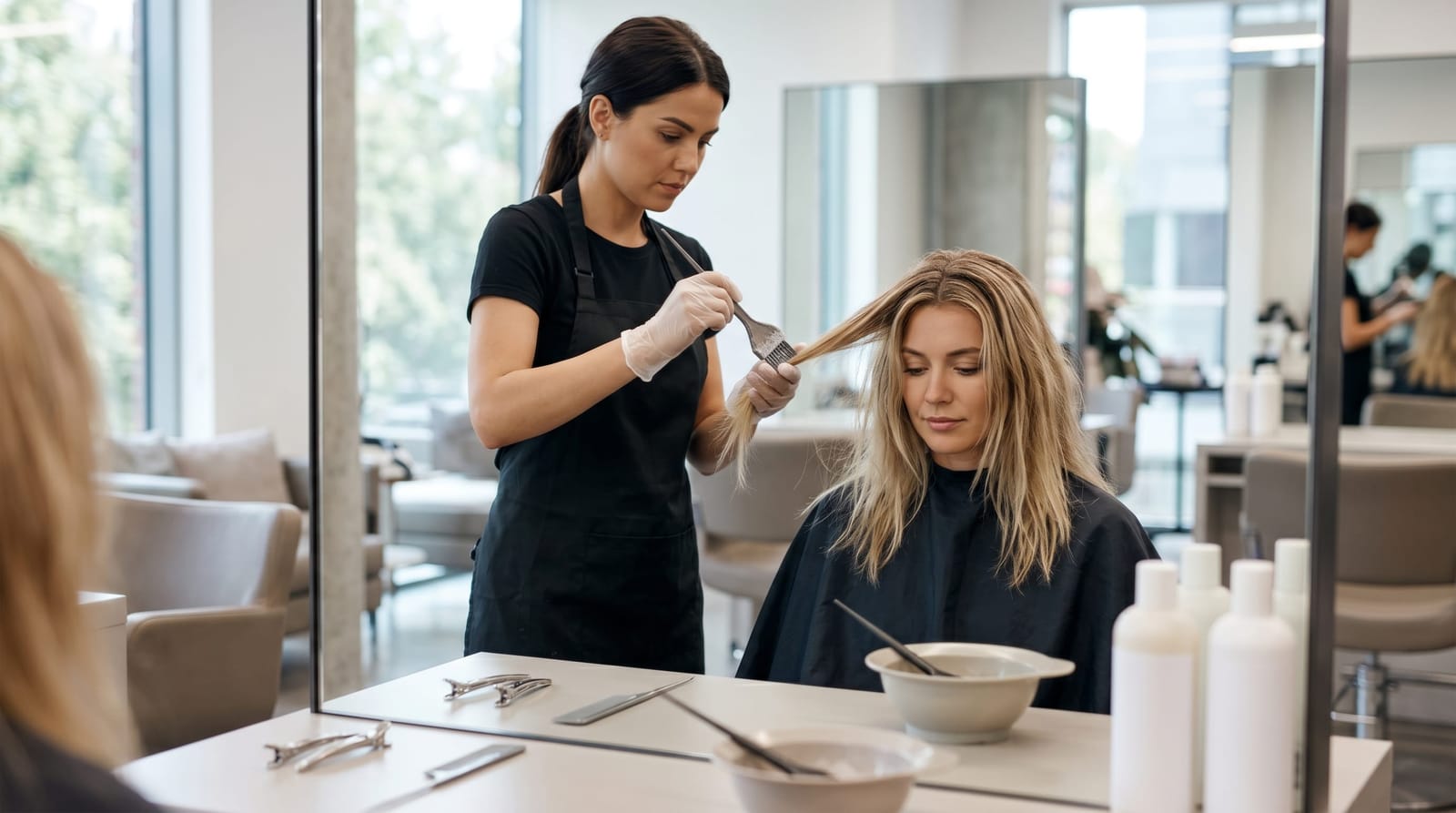
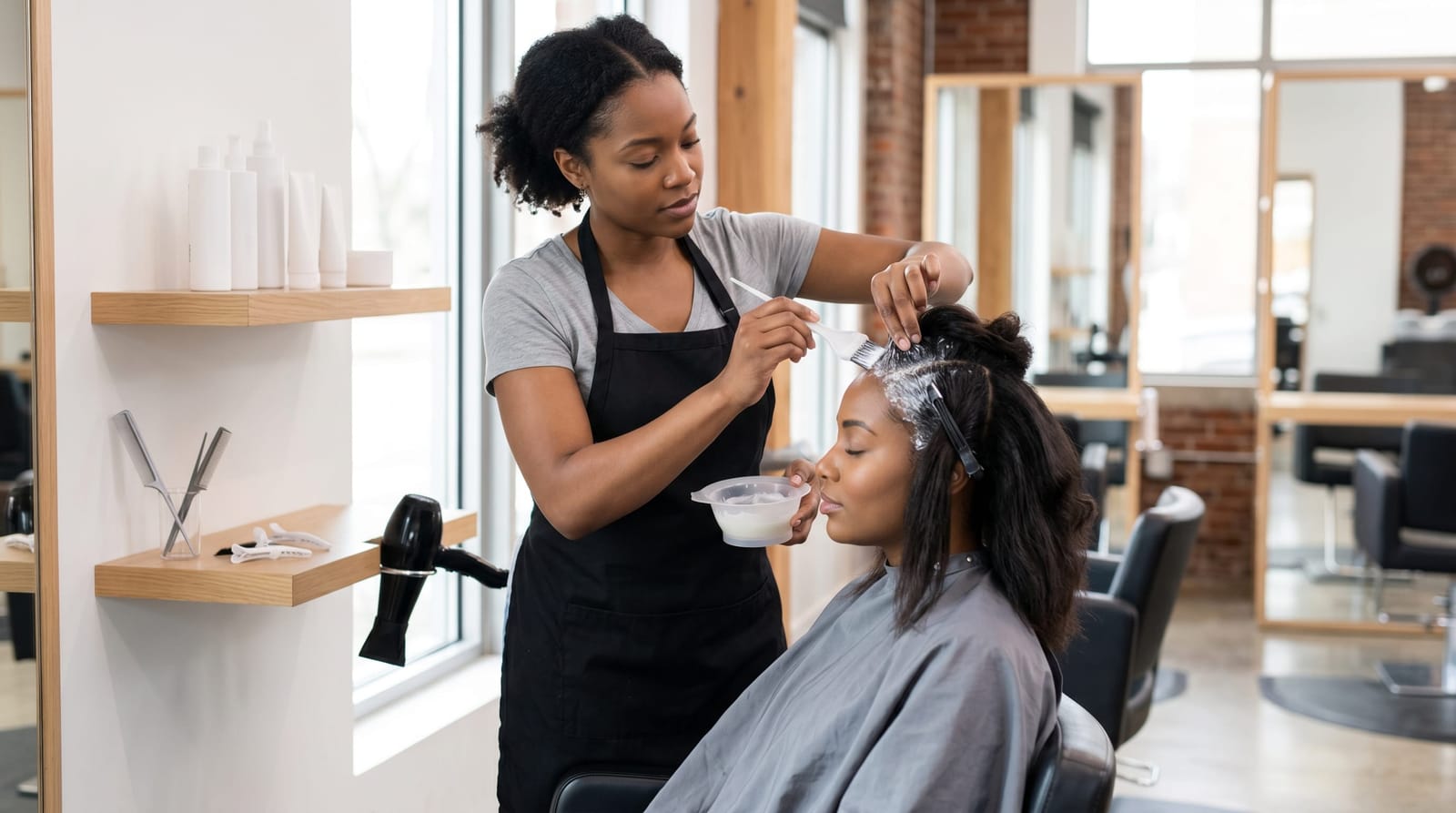
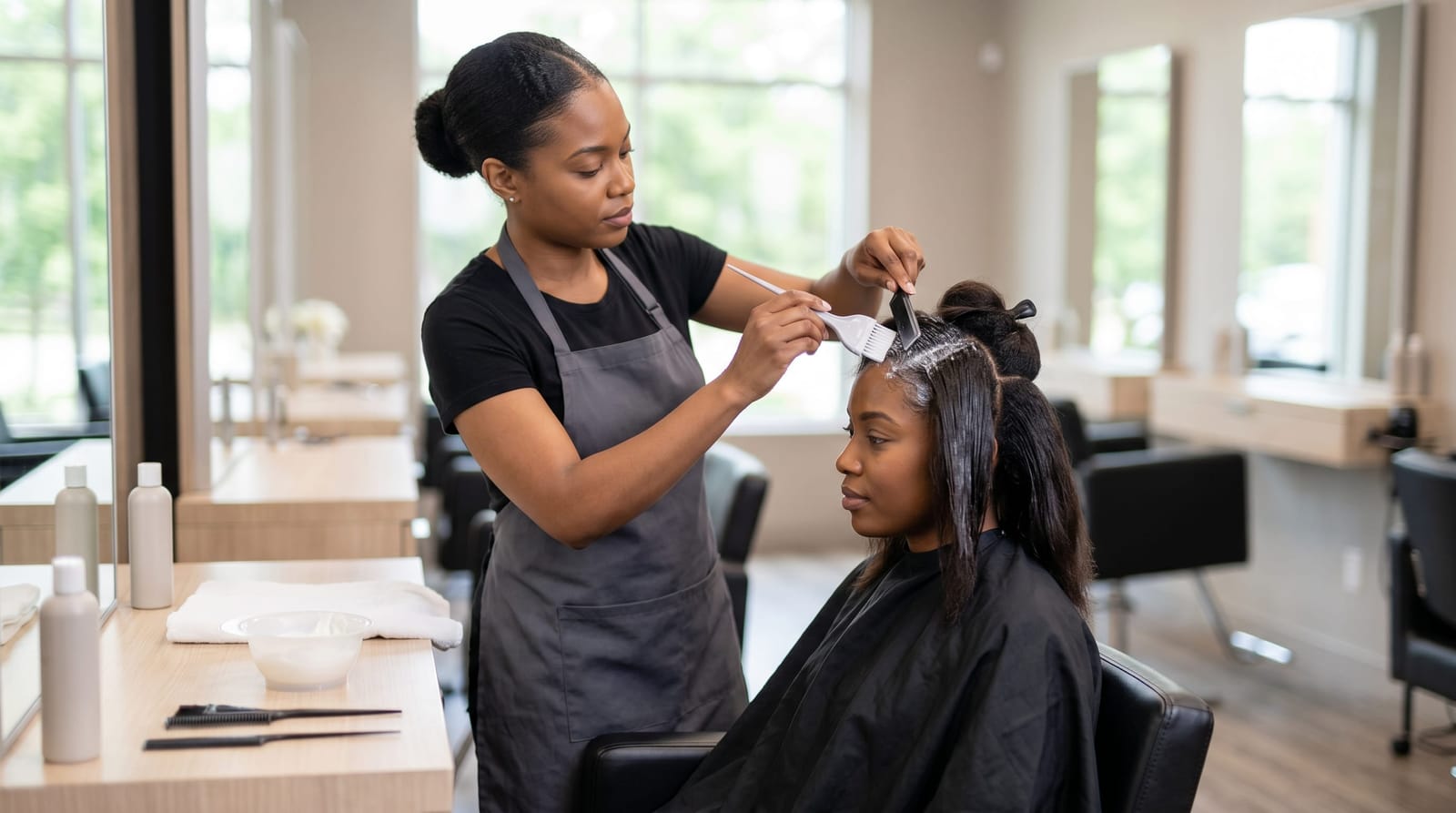
Chemical services like relaxers, texturizers, and keratin treatments can beautifully transform your hair, but they also place real stress on its internal structure. Knowing how to spot chemical hair damage signs early is the difference between a quick recovery and serious, long-term breakage. Whether you're a first-time relaxer client or someone who's been chemically processing for years, this guide walks you through exactly what to look for, how to prevent further harm, and when it's time to sit down with a professional.
How Chemical Treatments Damage Hair at the Structural Level
To understand chemical hair damage signs, it helps to understand what's happening beneath the surface. Your hair strand has three layers: the cuticle (the outer protective shield), the cortex (the protein-rich middle layer that gives hair strength and elasticity), and the medulla (the innermost core). Chemical processing, whether from relaxers, bleach, or perms, doesn't just alter the surface. It penetrates the cortex directly.
Relaxers, for example, work by breaking the disulfide bonds inside the cortex that give curly hair its shape. This is a controlled chemical reaction, but when it's repeated too frequently, applied over previously processed hair without proper assessment, or left on too long, it strips protein from the cortex faster than the hair can recover. The cuticle also takes a hit: repeated chemical exposure lifts and roughens the cuticle scales, making it harder for the hair to retain moisture and leaving it vulnerable to environmental stress.
The result is hair that looks and feels fundamentally different from its healthy baseline. Recognizing those changes is step one.
The Most Common Chemical Hair Damage Signs to Watch For
Chemical hair damage signs exist on a spectrum from mild to severe. Here's what to look and feel for:
Dryness and Brittleness
Healthy hair holds moisture. When the cuticle is damaged, moisture escapes freely and the hair feels perpetually dry regardless of how much conditioner you apply. Brittle hair snaps easily when handled and often looks dull or lackluster even right after washing.
Excessive Breakage
Some shedding is normal, 50 to 100 strands per day is typical. But if you're noticing short, broken pieces on your pillow, in your comb, or along your hairline, that's a chemical hair damage sign that shouldn't be ignored. Breakage is different from shedding: shed hairs have a white bulb at the root; broken strands do not.
Loss of Elasticity
The stretch test is one of the most reliable ways to check for chemical hair damage. Take a single wet strand and gently stretch it. Healthy hair stretches up to 30% of its length and springs back. Damaged hair either snaps immediately with almost no stretch, or it stretches and doesn't return to its original length: a spongy, mushy feeling often described as "gummy." The gummy texture, in particular, is a serious chemical hair damage sign indicating the cortex has been severely compromised.
Excessive Frizz and Rough Texture
When cuticle scales are raised and uneven, hair cannot lie smooth. Frizz, tangles, and a rough, straw-like texture are all chemical hair damage signs, especially when they appear suddenly after a service or worsen between treatments.
Split Ends and Mid-Shaft Splits
Split ends are one of the most visible chemical hair damage signs. More concerning are mid-shaft splits, where the hair strand separates partway up rather than just at the tip. These indicate that damage has traveled up the hair shaft and that trimming alone won't solve the problem.
How to Prevent Chemical Hair Damage Before It Starts
Prevention is significantly easier than repair. If you're receiving regular chemical services, the following strategies help protect your hair between appointments:
- Stick to a proper retouch schedule. Relaxers and texturizers should only be applied to new growth: never to previously processed hair. Overlapping chemicals is one of the leading causes of severe chemical hair damage. Most professionals recommend 8 to 12 weeks between relaxer retouches.
- Prioritize protein and moisture balance. Chemically processed hair needs both. Protein treatments rebuild the cortex, while deep conditioning restores moisture. Using the right shampoo for relaxed hair is a crucial part of maintaining that balance without stripping the hair further.
- Reduce heat styling between chemical services. Heat compounds chemical hair damage significantly. If you must use flat irons or blow dryers, always apply a heat protectant and use the lowest effective temperature.
- Protect your hair at night. Sleeping on a satin or silk pillowcase and wearing a satin bonnet reduces friction, which can worsen existing chemical hair damage signs like breakage and split ends.
- Communicate openly with your stylist. Before any chemical service, a thorough consultation should assess your hair's current condition. If chemical hair damage signs are already present, a skilled stylist will recommend postponing the service or adjusting the formula.
When to Seek Professional Treatment or a Repair Plan
Mild chemical hair damage, minor dryness, a few split ends, can often be managed at home with the right products and habits. But some chemical hair damage signs require professional intervention. You should consult a licensed professional if:
- Your hair feels gummy or mushy when wet (severe protein loss)
- Breakage is occurring near the scalp or at the hairline
- You're losing significant length despite not cutting your hair
- Patches of the hair feel significantly thinner than the rest
- The scalp is experiencing irritation, sores, or tenderness from a recent chemical service
A professional can perform a thorough strand and elasticity assessment to determine the degree of damage and recommend a targeted recovery plan. This might include a series of protein reconstructor treatments, a temporary hold on chemical services, a strategic trim to remove the most compromised lengths, or a modified chemical formula for future services. Attempting to continue chemical processing on severely damaged hair without professional guidance almost always makes the chemical hair damage signs worse, not better.
If you're in the DMV area and concerned about your hair's current condition, a consultation at a salon experienced in chemical services is always worth the investment before your next appointment.
Frequently Asked Questions About Chemical Hair Damage Signs
Can I still get a relaxer if my hair is showing chemical hair damage signs?
It depends on the severity. Minor dryness or split ends may be managed with proper preparation, but if your hair is showing serious chemical hair damage signs, like gummy texture, significant breakage, or loss of elasticity, most professional stylists will recommend postponing chemical services until the hair is stabilized. Applying a relaxer to severely compromised hair can cause irreversible damage or even hair loss.
How long does it take to repair chemically damaged hair?
There's no single timeline. Because hair grows roughly half an inch per month, full recovery often depends on how much new growth you can cultivate while caring for existing strands. Mild chemical hair damage may show improvement within 4 to 8 weeks of consistent treatment. Severe damage may require months of intensive care, strategic trims, and a pause on further chemical processing.
What is the difference between heat damage and chemical hair damage signs?
Both affect the hair's protein structure, but they present slightly differently. Heat damage typically causes permanently straightened sections in naturally curly or textured hair, loss of curl pattern, and extreme dryness. Chemical hair damage signs often include gummy texture when wet, breakage at processed areas, and a distinct loss of elasticity. Many clients experience both simultaneously, since heat styling is commonly used between chemical services.
Can protein treatments fix chemical hair damage?
Protein treatments can significantly strengthen hair that has lost protein from chemical processing, reducing breakage and improving texture. However, they are not a cure for severely damaged hair and must be balanced with moisturizing treatments: too much protein without moisture creates a different type of brittleness. A professional can help you find the right balance based on your specific chemical hair damage signs.
Understanding Your Hair's Signals
Chemical hair damage signs are your hair's way of communicating that its internal structure needs support. Dryness, breakage, loss of elasticity, and gummy texture are not just cosmetic issues: they're indicators of real structural compromise that requires attention. The good news is that with early identification, a smart home care routine, and guidance from a skilled stylist, most chemical hair damage is manageable and often reversible. Staying informed is the first step toward keeping your chemically processed hair strong, healthy, and beautiful long-term.