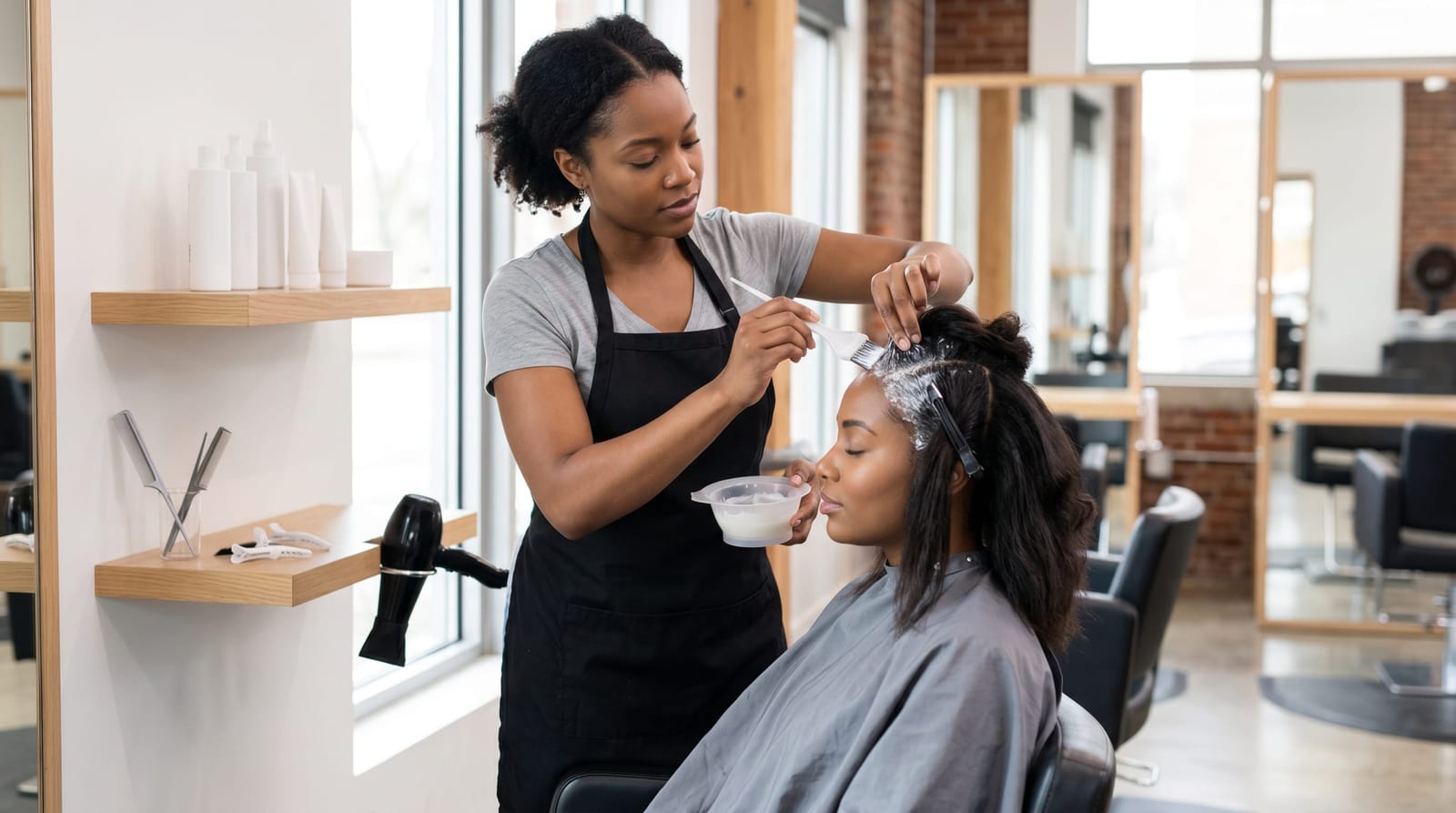
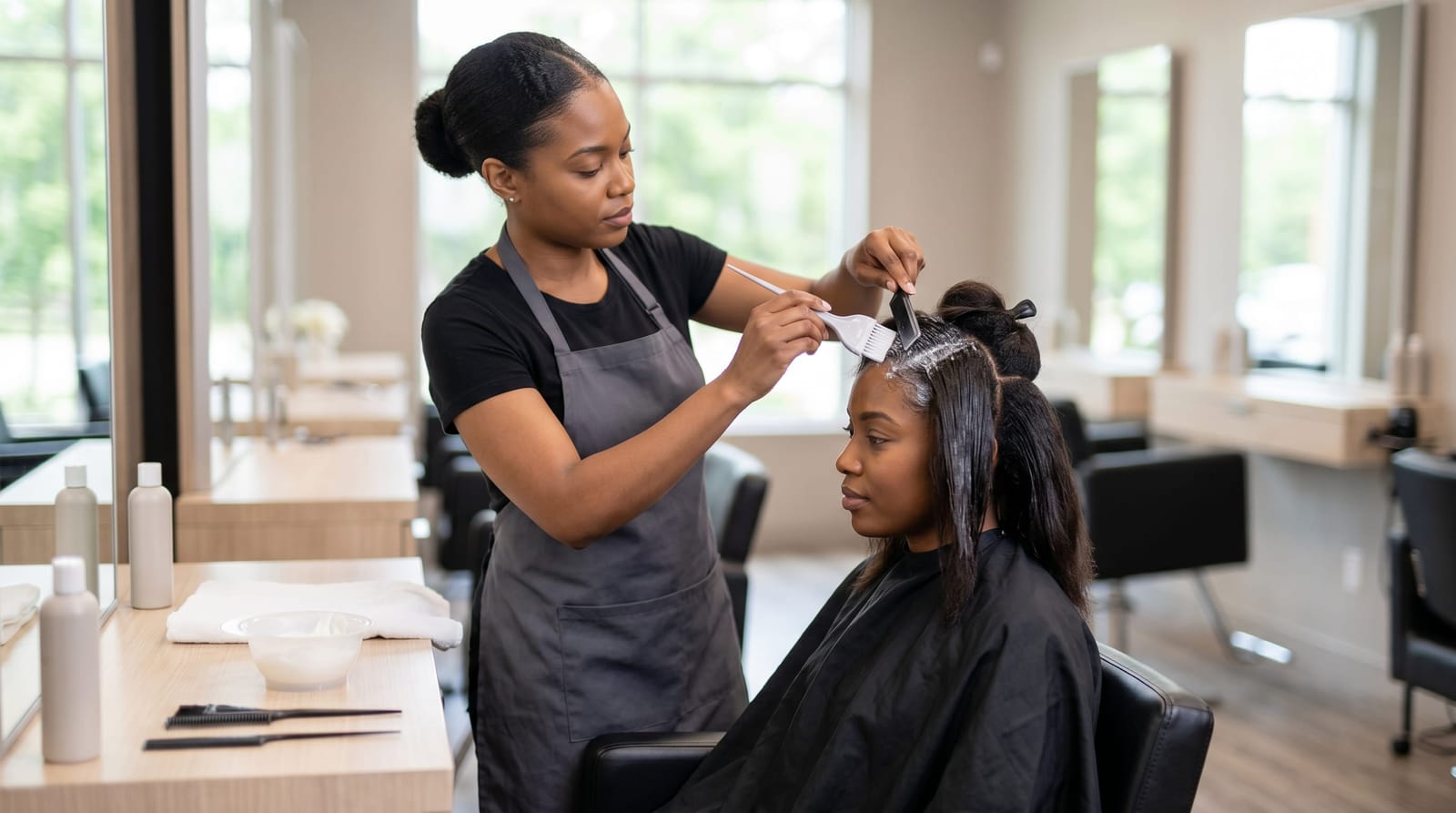
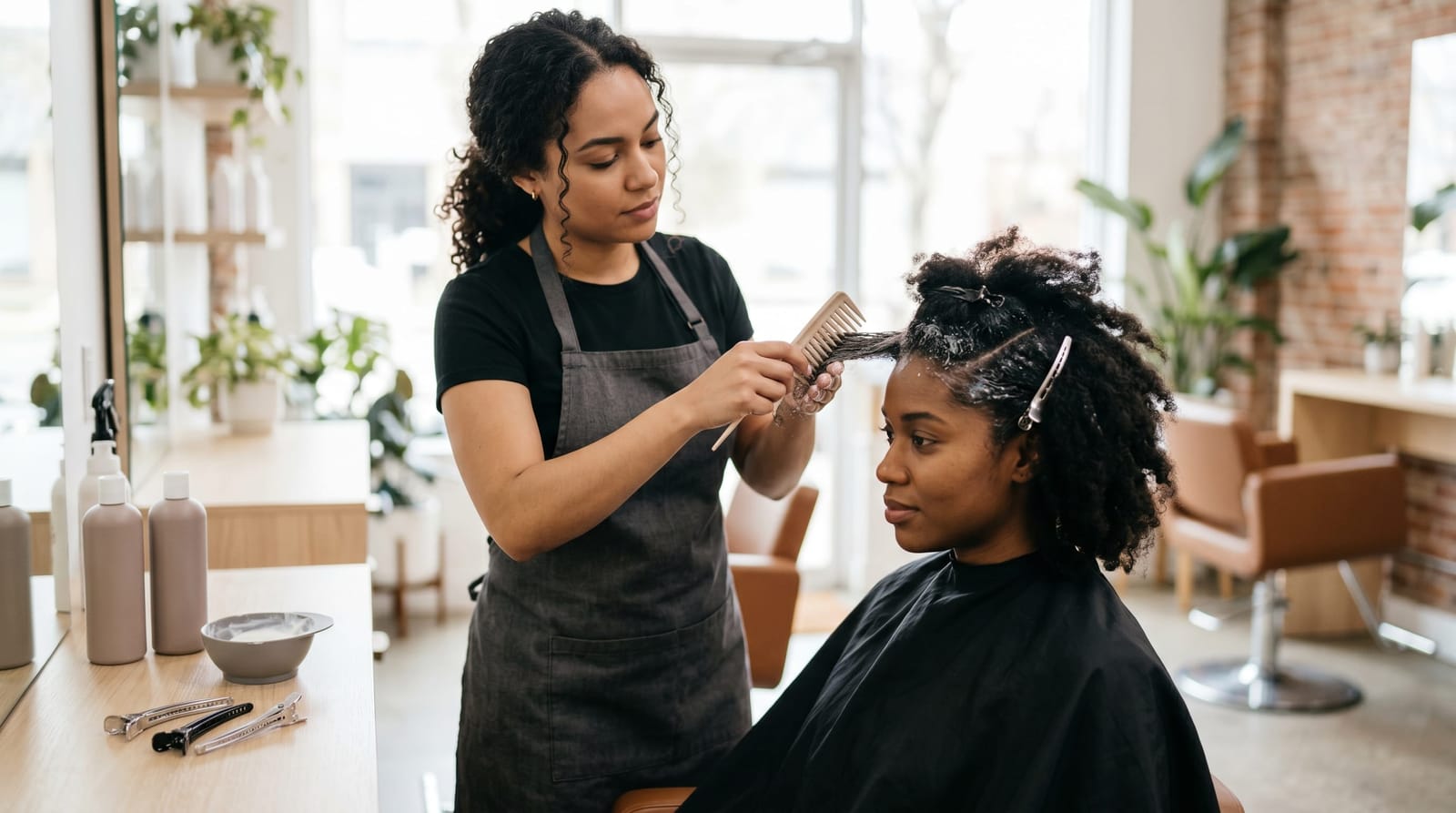
Professional Hair Chemical Processing: Relaxers, Texturizers & Keratin Treatments
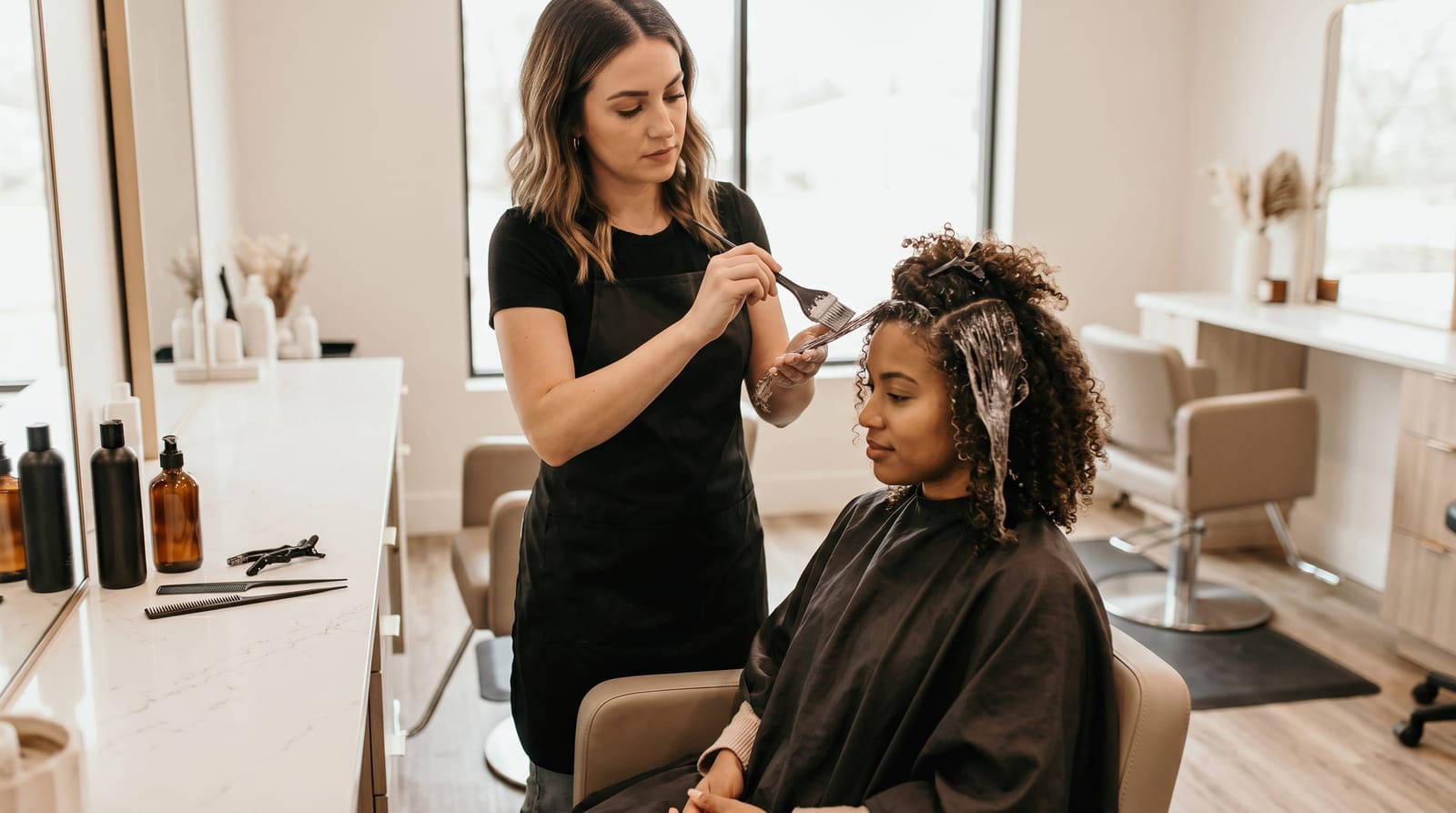
Choosing between a relaxer, texturizer and keratin treatment starts with the result you want. Relaxers permanently straighten or significantly loosen the treated hair. Texturizers permanently loosen its curl pattern. Keratin treatments focus on smoothing and frizz reduction, with effects that vary by formula. These services are not interchangeable, especially when it comes to preserving curls and planning maintenance.
If you're comparing hair relaxer salons in the DMV, look beyond the finished style. Your previous color services, existing chemical treatments and preferred everyday routine all matter. A polished result begins with choosing a service that fits both your hair and how you want to wear it.
What Chemical Processing Changes
A blowout changes your hair's shape temporarily. Relaxers and texturizers chemically alter bonds within the strand, creating a lasting change in the treated lengths. New growth still emerges with your natural texture, so the difference between roots and processed hair becomes part of your maintenance routine.
Keratin treatments belong to a different category of smoothing services. They generally combine a smoothing formula with heat, but the name “keratin” does not describe one universal formula or process. They are not simply a conditioning treatment, and they do not all preserve curls in the same way.
The most useful distinction is this: a service that changes texture is different from styling that washes out. If you enjoy switching between straight styles and your existing curls, that distinction deserves attention before choosing a chemical treatment.
Hair Relaxers: A Permanent Texture Change
A relaxer changes the chemical bonds responsible for the hair's curl pattern. The goal is a straighter texture, although the degree of straightening depends on the product, application and hair itself.
Products commonly described as “lye” and “no-lye” use different formulations. Neither label means a product is automatically gentle or suitable for every head of hair. Product selection, controlled application and the correct rinsing and neutralizing steps all matter. With hydroxide relaxers, neutralizing shampoo helps bring the hair's pH back down after rinsing; it does not restore the original curl-forming bonds.
When a Relaxer Fits the Goal
A relaxer is most relevant when you want an ongoing, significantly straighter texture and are comfortable with permanent change to the treated lengths. It is not a wash-out way to try straight hair, and relaxed hair can still need styling to achieve your preferred finish.
Useful points to weigh include:
- Your preferred look: Do you want straight hair most of the time, or do you want to return to your current curls between styles?
- Your chemical history: Previous relaxers, lightening and other treatments affect product compatibility and how much additional processing the hair can tolerate.
- Your maintenance plan: A relaxer touch-up schedule depends on new growth, hair condition and the product used, rather than one interval for everyone.
- The transition between textures: The point where natural growth meets relaxed hair needs gentle handling during detangling and styling.
Permanent means the processed section stays altered. Returning to your original texture involves growing out that hair, rather than waiting for the relaxer to wash away. Our guide to the professional hair relaxer service explores the appointment and its results in more detail.
Texturizers: Looser Curls, Not Less Commitment
A texturizer uses relaxer-type chemistry with the intention of loosening curls rather than fully straightening them. The result may retain visible curl or wave, but the treated hair is still permanently changed.
That makes a texturizer different from a temporary curl-softening product. It is not automatically gentler because the service aims for a smaller texture change, and a shorter application does not remove the risks associated with chemical processing.
What to Expect from Curl Loosening
A texturizer cannot reliably turn one curl category into a particular other category. Hair often has several patterns across the head, and those sections can respond differently. A reference photo can communicate the look you like, but it cannot establish the result a formula will produce on your hair.
- Processing: Timing follows the specific product and the hair assessment, not a universal number of minutes.
- Result: The aim is a looser pattern, but curl definition and uniformity are not guaranteed.
- Maintenance: Continuing the look involves planning touch-ups as new growth comes in, while avoiding unnecessary processing of already-treated lengths.
- Commitment: Like relaxed hair, texturized lengths do not return to their original pattern after washing.
If preserving your exact curls matters more than loosening them, that is an important reason to consider styling options instead. For more on the distinction, explore our guide to texturizer hair treatment.
Keratin Treatments: Smoothing with Formula-Specific Results
Keratin treatments are designed to smooth the hair and reduce frizz. Some also noticeably loosen curls. Their effects come from the complete formula and application process, not from keratin protein alone.
Unlike a relaxer, a keratin smoothing treatment generally fades over time. Its duration depends on the formula, your hair and your care routine. A single promise about how many months it will last is less useful than understanding the particular treatment being applied.
Details That Matter Before Treatment
- Curl retention: Explain whether you want a sleeker blowout, softer volume or curls that remain visibly defined. Those are different goals.
- Product and heat requirements: The formula determines the application steps, heat settings and precautions involved.
- Previous processing: Compatibility with color-treated, highlighted or previously relaxed hair needs an individual assessment. Lightening history is especially relevant when planning another service.
- First-wash instructions: Waiting periods and restrictions on tying or clipping the hair differ by treatment. A universal three-day rule does not apply to every formula.
- Long-term expectations: Smoother-looking hair is not the same as permanently repaired hair.
Our guide to keratin treatments for smoothing and frizz control takes a closer look at this option.
Choose by Your Routine, Not Just Your Curl Type
Curl categories can help describe your texture, but they do not determine which chemical service fits you. Two people with similar curls may have different strand thickness, color history, condition and styling preferences.
These questions make the decision more practical:
- What do I want my hair to look like after washing? A straight salon finish does not show how the hair will behave when air-dried. Discuss both the styled finish and the expected texture between appointments.
- How important is keeping my current curl pattern? If returning to those curls is a priority, a permanent texture service conflicts with that goal.
- What maintenance fits my routine? Relaxers and texturizers create a difference between new growth and processed lengths. Keratin treatments involve deciding whether to repeat the service as smoothing fades.
- What else am I planning? Upcoming highlights, color changes, extensions or other chemical services belong in the same conversation, rather than being planned separately.
For example, wanting smooth hair for occasional work events does not necessarily call for a permanent texture change. A wash and blowout offers a temporary styling route. Wanting straighter hair after every wash is a different goal, with a different maintenance commitment.
Consultation and Safety: What Deserves Attention
Chemical processing needs an individual assessment by a licensed stylist, not a choice based on curl type alone. For personalized guidance about our keratin treatments, our licensed stylists are the appropriate people to discuss your hair history and styling goals with.
A useful consultation covers:
- Past services: Include salon and at-home color, bleach, relaxers, texturizers and smoothing treatments. Previously processed hair can remain in the lengths long after an appointment.
- Current condition: Breakage, tangling, scalp irritation and previous reactions are relevant to whether and when processing is appropriate.
- The proposed product: Discuss its intended result, compatibility with earlier treatments and required precautions.
- Testing: A strand test helps assess how a small section responds. It is different from any skin-sensitivity test required by the product instructions.
- The finish and upkeep: Clarify what the service changes and what will still depend on blow-drying, setting or other styling.
During processing, burning, stinging, itching or uncomfortable heat are reasons to alert the stylist immediately, not signs that the treatment is working. Application time, rinsing, neutralization where required, heat use and ventilation all need to match the product's instructions.
Aftercare That Matches the Service
Good aftercare starts with instructions for the exact treatment used. A routine for relaxed hair is not automatically the right routine for a keratin treatment.
- Keep the first-wash instructions clear. Note when washing is allowed and whether there are temporary restrictions on clips, hair ties or moisture.
- Choose compatible cleansing and conditioning products. Follow the treatment's product guidance rather than assuming one shampoo label suits every chemical service.
- Detangle gently. Working in sections and easing through the ends first reduces unnecessary pulling, especially where processed hair meets new growth.
- Limit repeated heat passes. Heat protectant supports a styling routine, but it does not make unlimited heat harmless.
- Plan additional services together. Color, lightening and repeat texture treatments need to account for what is already on the hair.
Conditioning can improve softness and manageability, but it does not reverse a relaxer or texturizer. More frequent processing is not a substitute for aftercare. Our guide to a relaxer aftercare routine and chemical-treatment maintenance explores care between appointments.
What to Look for in a Hair Relaxer Salon in the DMV
When comparing salons, focus on experience with the specific treatment you want and the quality of the consultation. A beautiful finished photo is useful for discussing style, but it does not explain product compatibility or how that result will be maintained.
Helpful questions include:
- What experience does the stylist have with this service on hair with a similar texture and processing history?
- Why does the proposed formula fit the intended result?
- How will previously treated lengths be accounted for during a touch-up?
- What texture can I expect when the hair is washed and left without heat styling?
- What is included in the service, and what maintenance will it involve?
Clear explanations and realistic expectations are more useful than promises of effortless styling or a particular result for everyone.
At Kabelly Dominican Salon, also known as Ka Belly Salon, in Clinton, Maryland, we offer keratin treatments and Wash & Blowout services. These serve different goals: smoothing through a treatment, or enjoying a temporary styled finish. Keeping that distinction clear helps you choose without committing to more texture change than you want.
Explore the Service That Fits Your Goal
- For permanent straightening: Read about the professional hair relaxer service.
- For permanent curl loosening: Explore the texturizer hair treatment guide.
- For smoothing and frizz reduction: Learn more about keratin treatment services.
- For care between appointments: Review the relaxer aftercare routine and maintenance guide.