Post-Braid Blow Out: How Dominican Salons Handle the Transition From Protective Styles

A Dominican blowout can give natural hair a smooth, airy finish after braids, but the preparation matters as much as the styling. Trapped shed hair needs to be released, tangles worked through, and buildup washed away before heat enters the process. Conditioning then helps make the hair easier to manage.
The important difference in a post-braid appointment is that extra preparation, not a hotter dryer or a straighter finish. A blowout is also optional after a protective style. It is a styling choice, not a required step for maintaining natural hair.
Why Hair Needs Extra Attention After Braids
The scalp sheds about 50 to 100 hairs per day. While hair is braided, some of those released strands remain caught within the style instead of falling away. At takedown, they can wrap around attached strands and make detangling more involved.
Product residue can also collect near the base of each braid. That means hair may need careful separation before a thorough shampoo, rather than going straight from takedown to washing and brushing. Wearing braids does not automatically mean your hair is damaged, and time in the style alone does not determine which treatment it needs.
For the transition between takedown and styling, our blow out for braids guide provides additional preparation steps.
Preparation Comes Before Heat
Release Shed Hair and Work Through Tangles
Start with small, manageable sections. Gently separate loose shed hair with your fingers, using a detangling product when needed to help strands slide past one another. Work from the ends toward the roots rather than dragging a comb from the scalp through a knot.
Support the section above a tangle to reduce pulling. If a comb stops moving easily, make the section smaller and loosen the knot before continuing. Dense tangles deserve attention before shampooing; they are not something to brush through during the blow-dry.
Cleanse Without Bunching the Hair Together
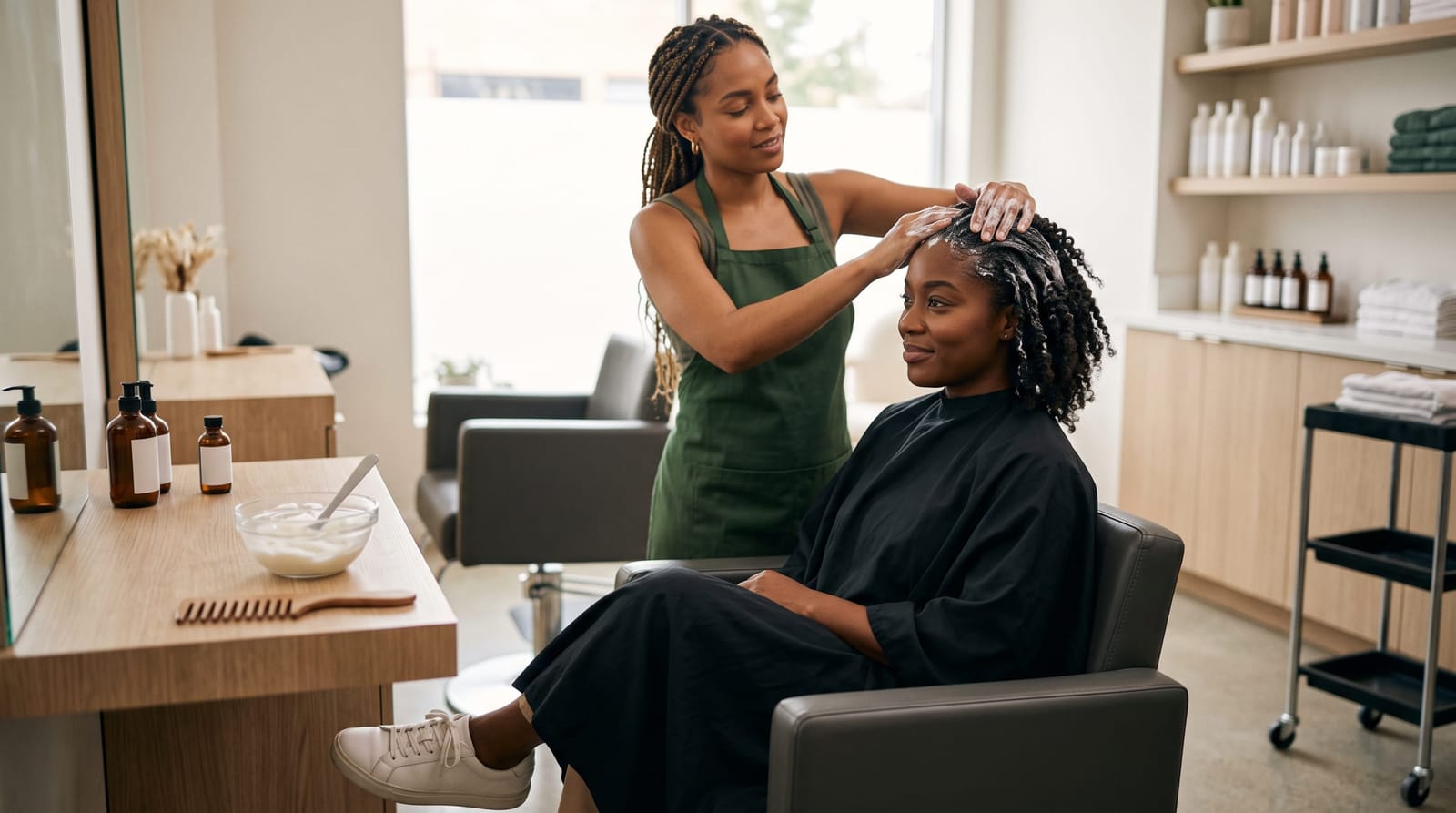
Once the main tangles and trapped shed strands are released, cleansing removes accumulated styling products and refreshes the scalp. Keeping longer hair organized in sections can make it easier to wash without tangling it again. Scrubbing the lengths into a pile adds work to the next detangling step.
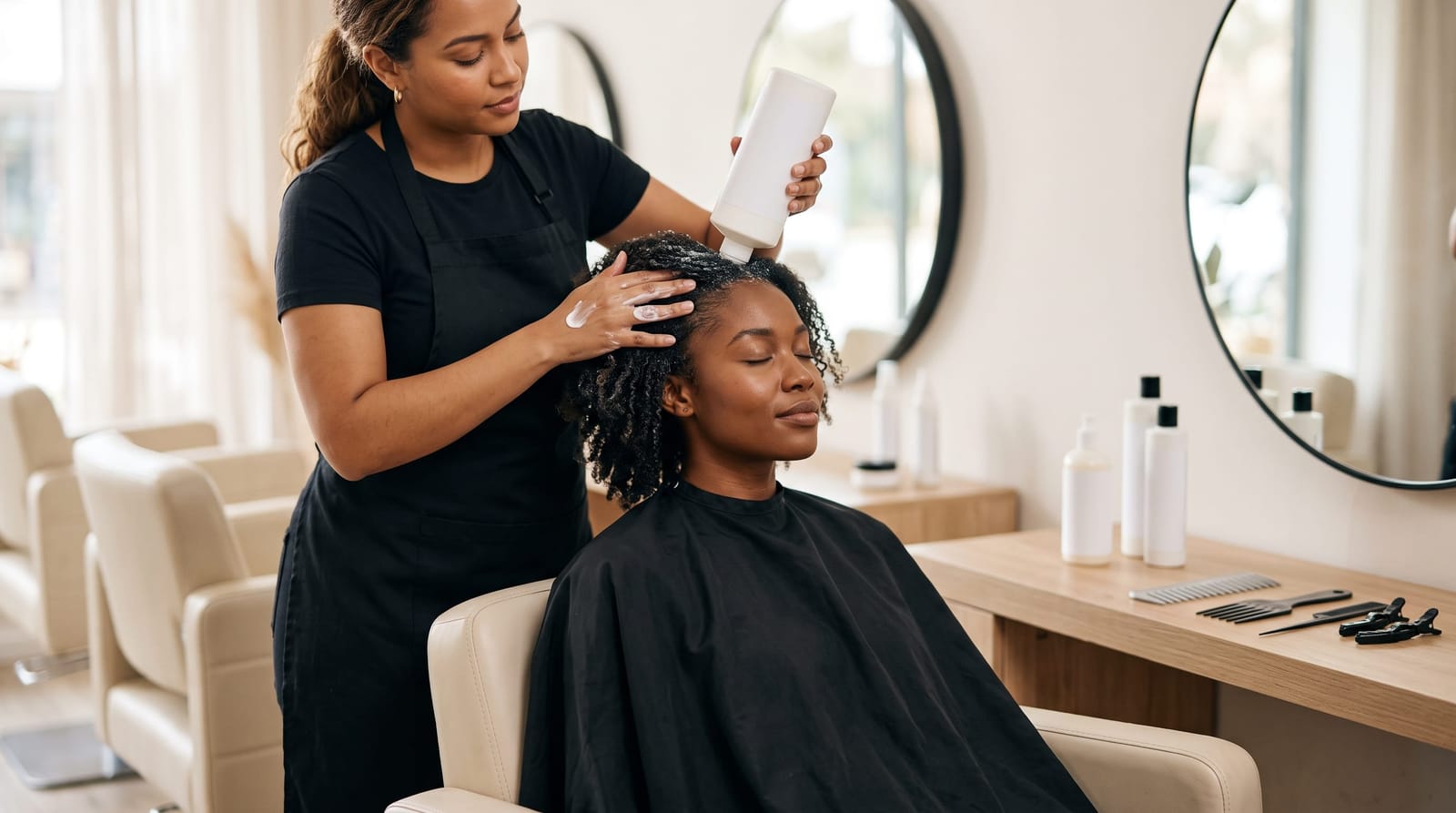
After rinsing, conditioner provides slip, meaning it helps strands move past one another more easily. This is a useful point to finish detangling before rinsing and styling.
Choose Conditioning for Manageability, Not as a Guarantee
A deep conditioning treatment can be useful when hair feels rough or remains difficult to manage. It is not automatically necessary after every braid style, and a protein-containing treatment is not a universal requirement either.
Rather than relying on professional heat technique to restore your hair's softness, give cleansing, conditioning and detangling their own place in the process. Heat creates the styled finish; it does not replace preparation.
Different products serve different purposes:
- Rinse-out conditioners and masks help soften the feel of the hair and improve manageability.
- Leave-in conditioners provide additional conditioning when suited to the hair and intended finish.
- Heat protectants are formulated for heat styling. An oil or shine serum is not a substitute unless it is also labeled for that purpose.
Our hair needs deep conditioning signs guide explores when extra conditioning may be useful between protective styles.
How the Dominican Blowout Creates Its Finish
Roller Setting and Brush Styling Have Different Roles
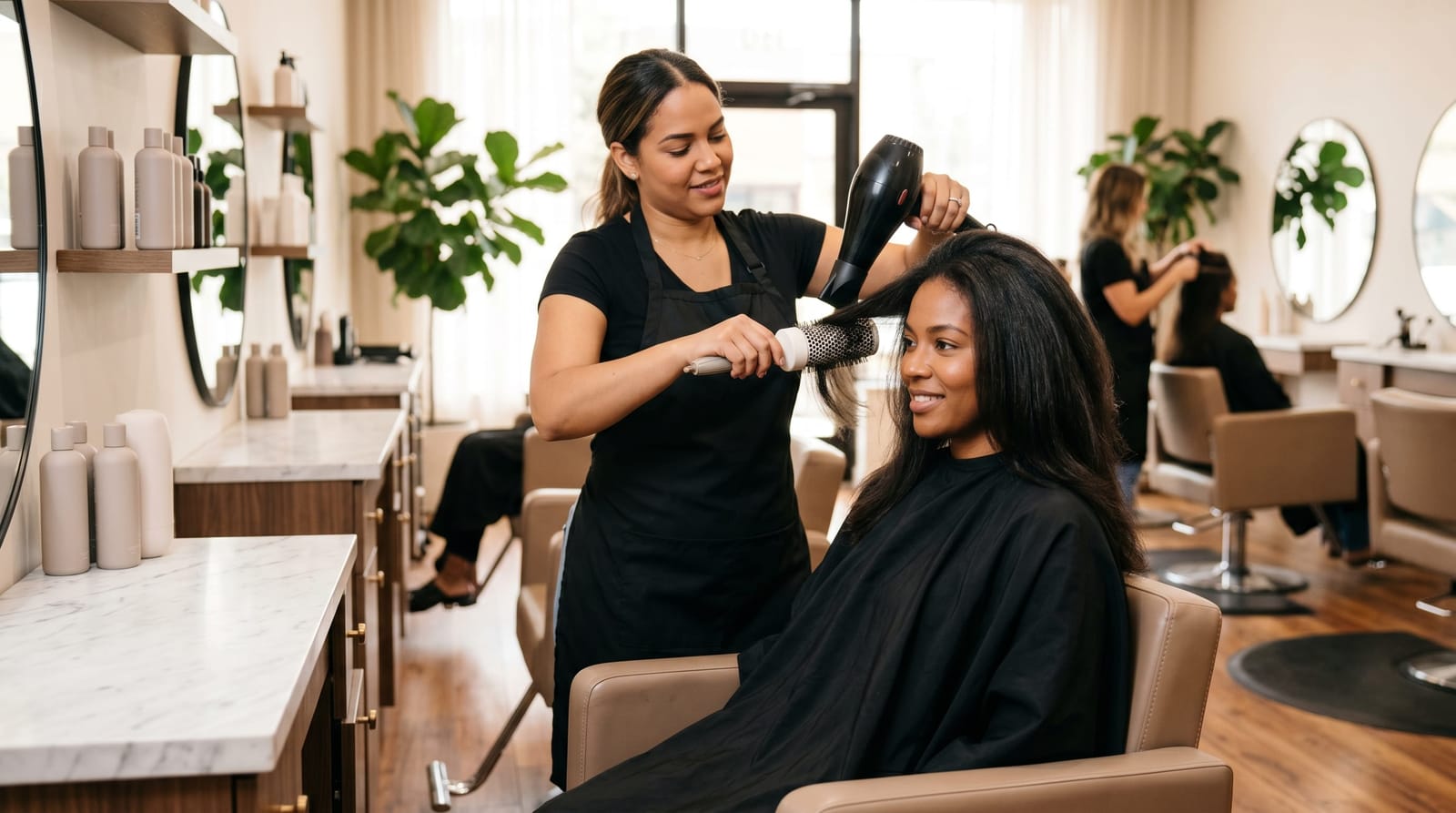
A Dominican blowout commonly combines a roller set under a hooded dryer with brush-and-dryer finishing. Other approaches rely more on direct blow-drying. The sequence varies, so the service name alone does not describe every step.
Rollers help stretch the hair and create body. During brush styling, the stylist works through sections while directing airflow along the hair. A round brush can add lift, movement and curved ends; a smoother finish depends on how the sections are shaped and dried.
For post-braid hair, the priority is having fully detangled sections before this stage. Brush tension is for styling, not for forcing through knots. The comparison of wash and set vs blow out is helpful when considering the preparation and finish you want.
More Heat Is Not the Answer to More Texture
Heat and brush tension need to suit the hair being styled. Manageable sections and controlled airflow help avoid repeatedly working over the same area. A concentrator nozzle directs airflow, while heat protectant adds protection without making heat exposure risk-free.
A Dominican blowout does not require a chemical relaxer, but that does not make every heat technique equally suitable for natural hair. Repeated or excessive heat can affect curl definition. Discussing heat preferences before styling is especially useful if keeping your natural texture is a priority.
A flat iron is not automatically needed to finish the look. A soft, voluminous result and a very sleek result are different goals, and that choice belongs in the styling conversation.
Planning Your Post-Braid Visit at Kabelly
At Kabelly Dominican Salon in Clinton, we offer Hair Detangle, Wash & Blowout, Wash & Set, and Blowout for Braids. When planning a visit, distinguish between the preparation your hair needs and the style you want afterward. Coming out of braids and preparing for a new braid installation are different starting points.
Useful details to share include:
- Your takedown stage: Whether all braids and added hair have been removed, and whether tangles remain.
- Your recent hair history: Color, lightening, relaxers or other chemical services that may affect styling choices.
- Your preferred finish: Root volume, curved ends, a smooth look with body, or simply stretched hair.
- Your routine afterward: Workouts, frequent washing or plans for another protective style.
For example, “My braids are out, but I still have tangles near the roots, and I want a smooth finish with volume” communicates more than requesting a blowout alone. It makes the preparation and the styling goal equally clear.
Maintaining the Finish Without Chasing a Fixed Timeline
How long a blowout stays smooth depends on your texture, humidity, perspiration, washing and nighttime care. It is a temporary style, so a fixed number of days is not a useful promise.
- Protect the shape overnight. A silk or satin bonnet, scarf or pillowcase helps reduce friction. Choose a loose arrangement that does not flatten the volume you want to keep.
- Keep finishing products light. Small amounts are easier to distribute without weighing down the style.
- Limit repeated heat touch-ups. Restyling the same sections each morning adds heat exposure. A soft updo can accommodate texture returning at the roots.
- Let cleansing needs come first. Preserving a blowout is not a reason to postpone washing when your hair or scalp needs it.
If another braid style is next, the blowout is not a necessary bridge between installations. Clean, conditioned, fully detangled hair matters more than achieving a very straight finish. Gentle removal habits also carry into the next cycle, as discussed in our guide to prevent extension damage.
The most useful post-braid plan starts with what your hair needs now, then considers the finish you want. Careful preparation makes room for a polished style without treating extra heat, extra products or an elaborate service as automatic requirements.