Deep Conditioning After Braids: Why It's the Most Important Step
When you finally take down a long-term protective style, the relief is real, but so is the work ahead. As part of a full blow out for braids service, deep conditioning is not just a nice add-on. It is the foundation of healthy post-braid recovery. Extended braid wear changes your hair's moisture balance in ways that aren't always visible right away. By the time your hair feels dry, brittle, or unusually tangled, the depletion is already well underway. This guide explains exactly what happens to your hair during braid wear, how to recognize the signs that deep conditioning is urgently needed, and why professional treatment at Kabelly makes all the difference in restoring your hair's strength, softness, and elasticity before and after a blow out.
What Extended Braid Wear Does to Your Hair
Braids are one of the most effective protective styles available, but "protective" does not mean maintenance-free. Hair worn in braids for four, six, or even eight weeks experiences a gradual shift in its internal moisture levels. Here is why:
- Your scalp produces natural oils, but those oils cannot travel down the length of braided hair the way they would with loose strands.
- Environmental exposure, dry air, sun, wind, draws moisture from the hair that is not being replaced through regular washing and conditioning.
- Braid tension, especially near the roots, can stress the hair shaft over time, making it more vulnerable to breakage when the style is finally removed.
- Product buildup from leave-ins, edge control, and styling sprays accumulates over weeks, potentially blocking the hair's ability to absorb moisture efficiently.
Research shows that dry, brittle hair and excessive frizz are among the top signs that moisture reserves have been significantly depleted. After a long braid install, particularly one lasting six weeks or more, nearly every hair type shows some level of moisture loss. The hair may look fine while still braided, but the real condition reveals itself the moment the braids come out.
This is exactly why deep conditioning is not optional for post-braid care. It is the step that begins to reverse weeks of moisture and protein imbalance before any heat styling, including a blow out, takes place.
The Most Common Signs Your Hair Needs Deep Conditioning
Not sure if your hair is signaling distress? Knowing what to look for makes all the difference. These are the most recognizable hair needs deep conditioning signs that stylists at Kabelly see regularly after braid removal:
Dryness and Brittleness
Hair that snaps easily when stretched, rather than bouncing back, is telling you it needs moisture and protein. Dry hair lacks the internal hydration needed to flex without breaking. After weeks in braids, this is one of the most consistent signs we see.
Excessive Frizz and Tangling
Some frizz is normal. Extreme frizz, the kind that makes detangling feel like an impossible task, points to a raised cuticle layer that is struggling to stay smooth. Moisture deficiency keeps the cuticle from lying flat, which increases both frizz and tangling significantly.
Dull, Lifeless Appearance
Healthy hair reflects light. When hair looks flat, muted, or generally dull even after washing, it often means the cuticle is damaged or dehydrated. Deep conditioning smooths the cuticle and helps restore that natural sheen.
Color Fading Faster Than Usual
For color-treated clients, rapid color fading is a meaningful sign of moisture loss. Dehydrated hair cannot hold pigment the way healthy, well-conditioned hair can. If your color looks washed out just weeks after your appointment, your hair may be telling you it needs more conditioning support.
Unusual Shedding at Braid Removal
Some shedding during braid takedown is completely normal: hair sheds naturally every day, and those strands simply collect inside the braids. However, excessive shedding, especially accompanied by breakage near the mid-shaft or ends, suggests that hair health needs immediate attention through conditioning before any styling takes place.
Moisture vs. Protein: Understanding What Your Hair Actually Needs
One of the most important things a professional stylist assesses before a deep conditioning treatment is whether your hair needs moisture, protein, or a combination of both. These are not the same thing, and using the wrong type of treatment can actually make things worse.
Signs of Moisture Deficiency
- Hair feels rough or straw-like to the touch
- Curls look shrunken or misshapen
- Hair lacks elasticity: it breaks rather than stretches
- Excessive frizz in humid conditions
Signs of Protein Deficiency
- Hair feels mushy or gummy when wet
- Strands stretch too much and do not spring back
- Hair looks limp and lacks body or structure
- Increased shedding and breakage even without manipulation
Over-conditioning with moisture when protein is what is needed can result in hair that feels limp, greasy, and lacks definition. The reverse, too much protein without adequate moisture, can cause hair to feel hard and become more prone to snapping. A skilled stylist evaluates your hair's current state before choosing the right treatment formula. This is one of the reasons professional deep conditioning is so different from simply applying a store-bought mask at home.
Why Professional Deep Conditioning Before a Blow Out Matters
Sequencing matters enormously in post-braid care. Deep conditioning before a blow out is not about skipping steps: it is about protecting your hair from unnecessary stress during the heat styling process.
Here is what happens when hair goes into a blow out without being properly conditioned first:
- Dry, brittle strands are more susceptible to heat damage because they have no internal moisture buffer
- Detangling becomes significantly more difficult, increasing the risk of breakage during the process
- The blow out result may look rough or uneven because the hair cuticle is not smooth enough to reflect a sleek finish
- Hair may feel stiff or dry rather than soft and bouncy after styling
When deep conditioning is done first, with the right treatment for your hair's specific needs, the blow out process becomes smoother, gentler, and far more effective. Conditioned hair detangles more easily, responds better to heat, and holds the style longer. Studies on hair fiber hydration show that well-moisturized hair has significantly better elasticity and tensile strength than dehydrated strands, making it more resilient during blow drying and stretching.
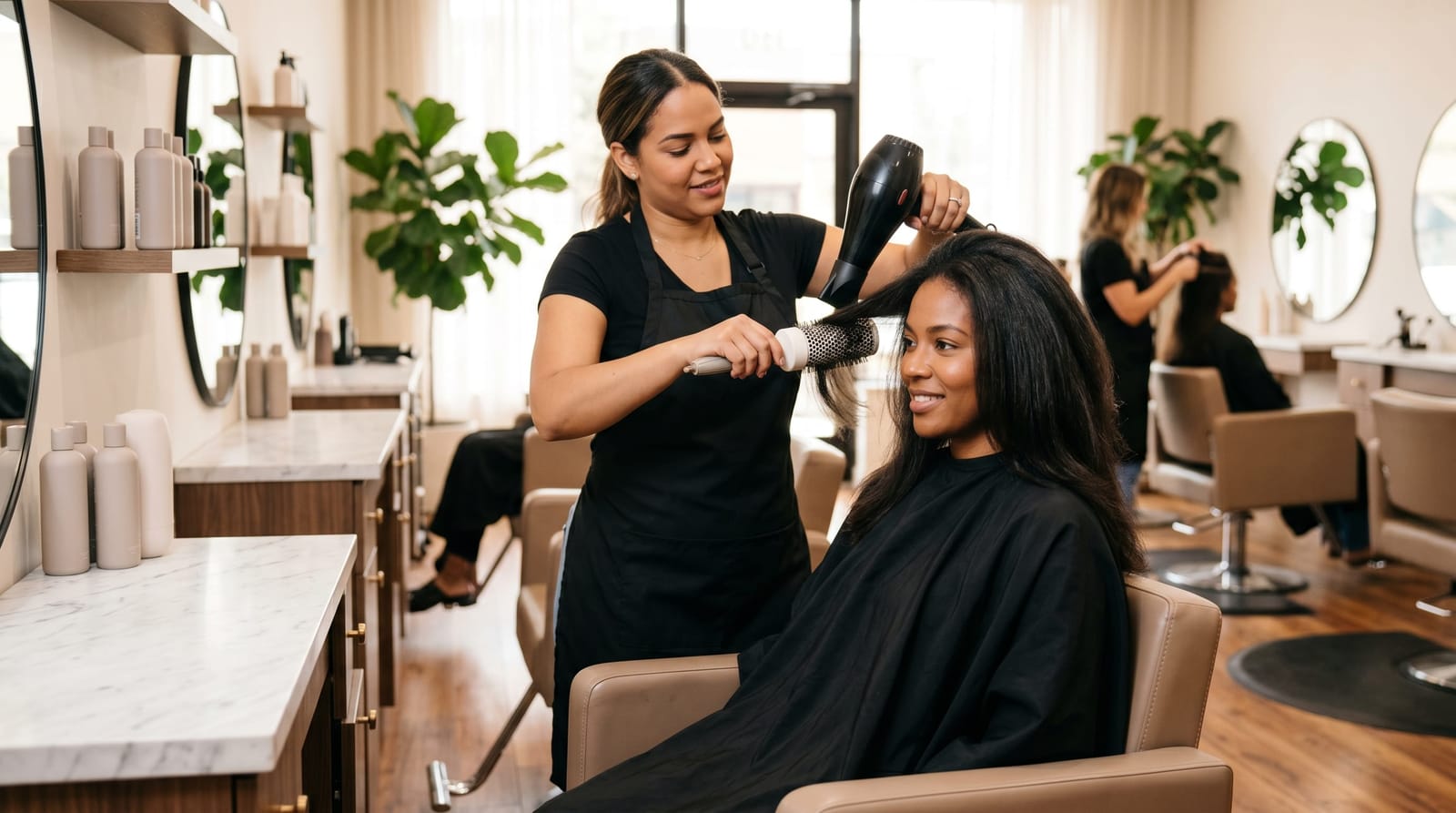
At Kabelly, deep conditioning is built into the post-braid blow out service as an intentional step, not an afterthought.
Deep Conditioning After the Blow Out: Locking In the Results
The conversation around post-braid conditioning does not end once the blow out is done. A follow-up deep conditioning treatment in the days after your appointment plays an equally important role in how your hair recovers and how long your results last.
After a blow out, your hair has been detangled, stretched, and styled with heat. Even when done professionally and carefully, that process asks something of your strands. A conditioning treatment within the first week after your blow out helps:
- Replenish any moisture displaced during the drying and styling process
- Maintain the softness and manageability that the blow out created
- Keep the hair in a healthy, conditioned state before your next style, whether that is another blow out, a protective style, or something else entirely
- Reduce frizz and support longer-lasting results between salon visits
How often you condition after a protective style depends on your specific hair type, condition, and how your hair responds. Understanding your personal deep conditioning frequency schedule is one of the best investments you can make in your long-term hair health. Your Kabelly stylist can help you build a realistic home care routine that fits your lifestyle without over-complicating things.
What to Expect From a Deep Conditioning Treatment at Kabelly
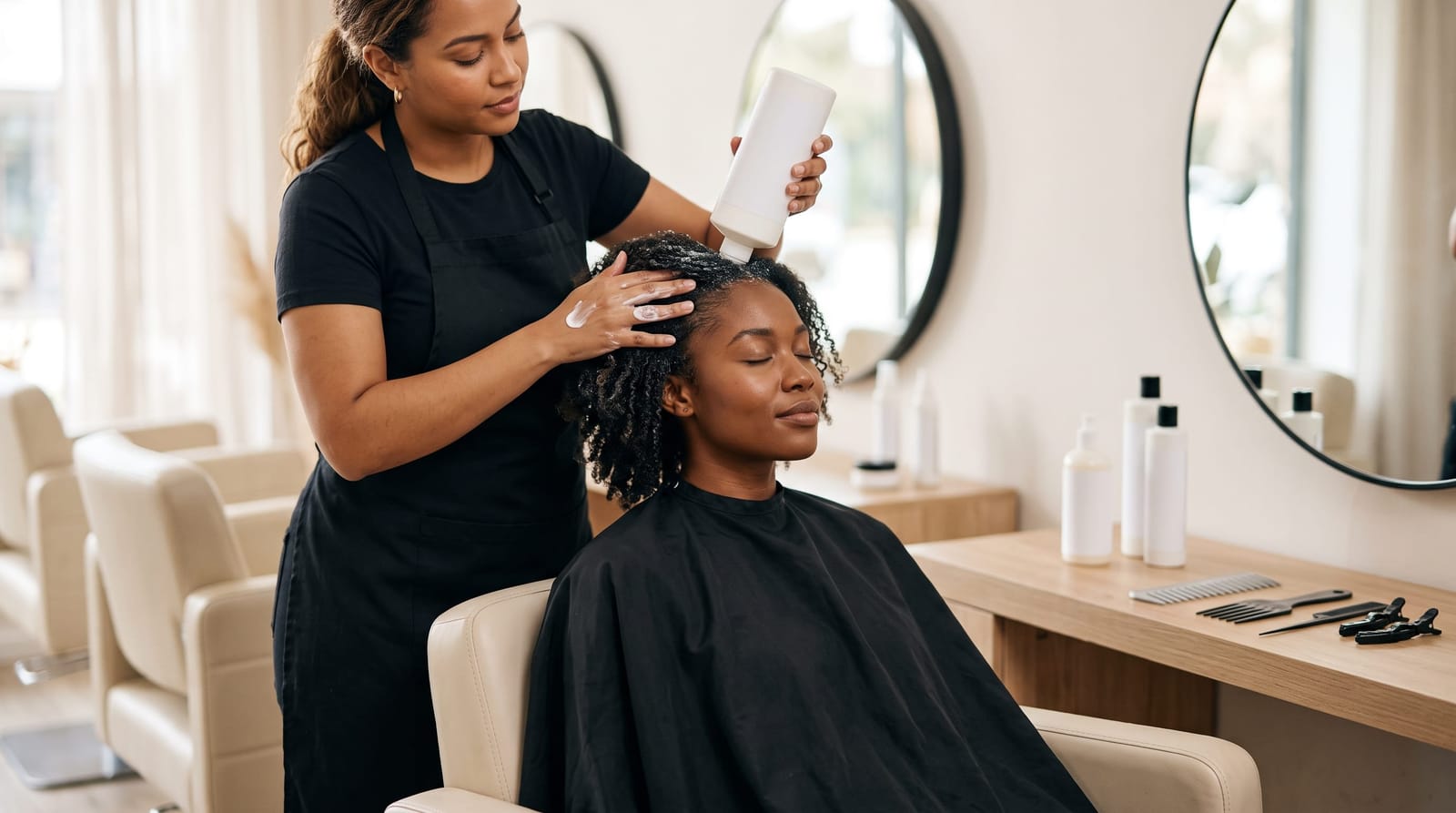
Professional deep conditioning at Kabelly is a tailored experience, not a one-size-fits-all treatment applied the same way for every client. Here is what the process typically looks like:
Consultation and Assessment
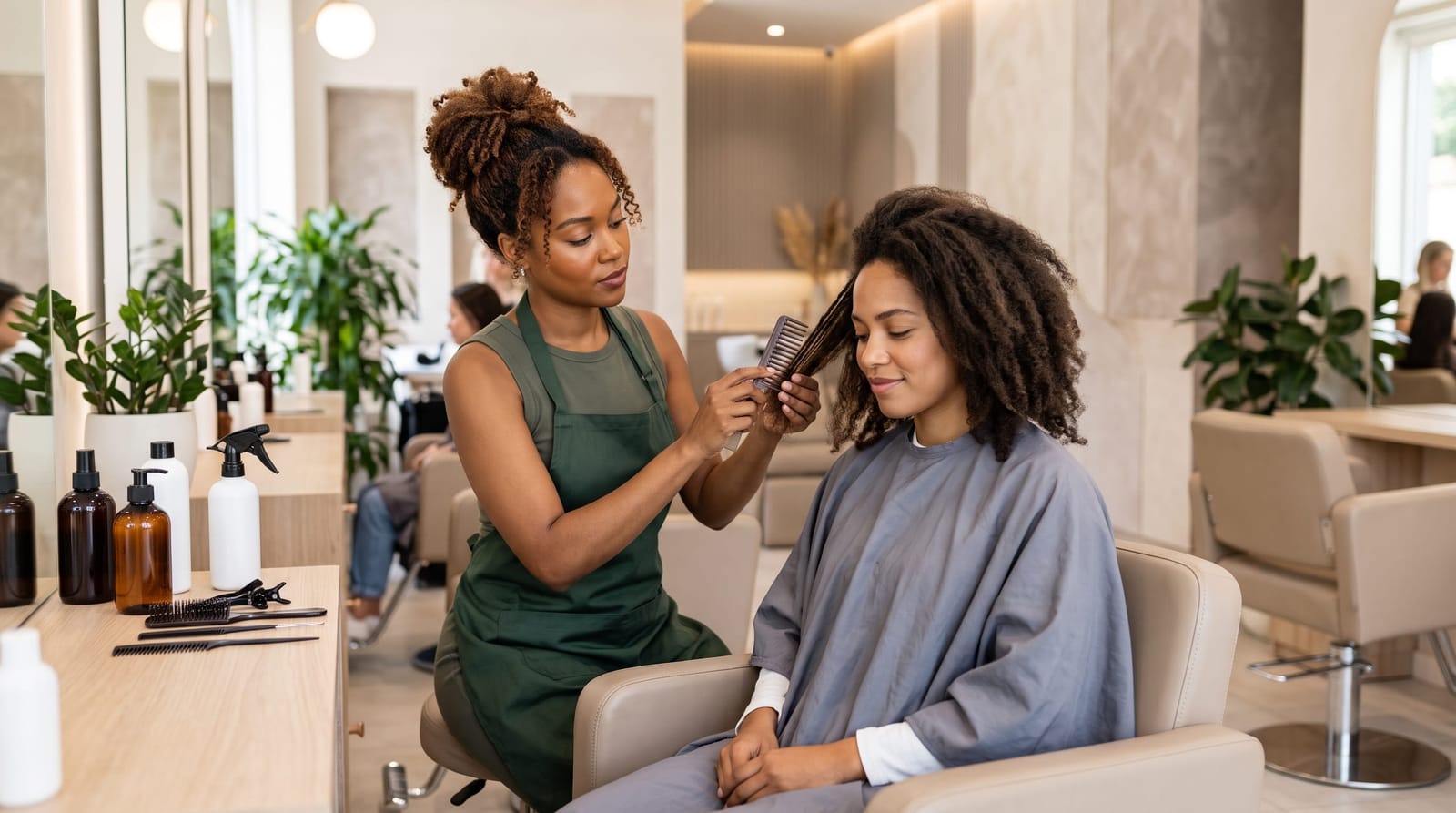
Your stylist begins by evaluating your hair's current condition: checking for moisture vs. protein balance, observing how the hair feels and stretches, and noting any areas of particular concern such as dryness at the ends or tension near the roots.
Product Selection
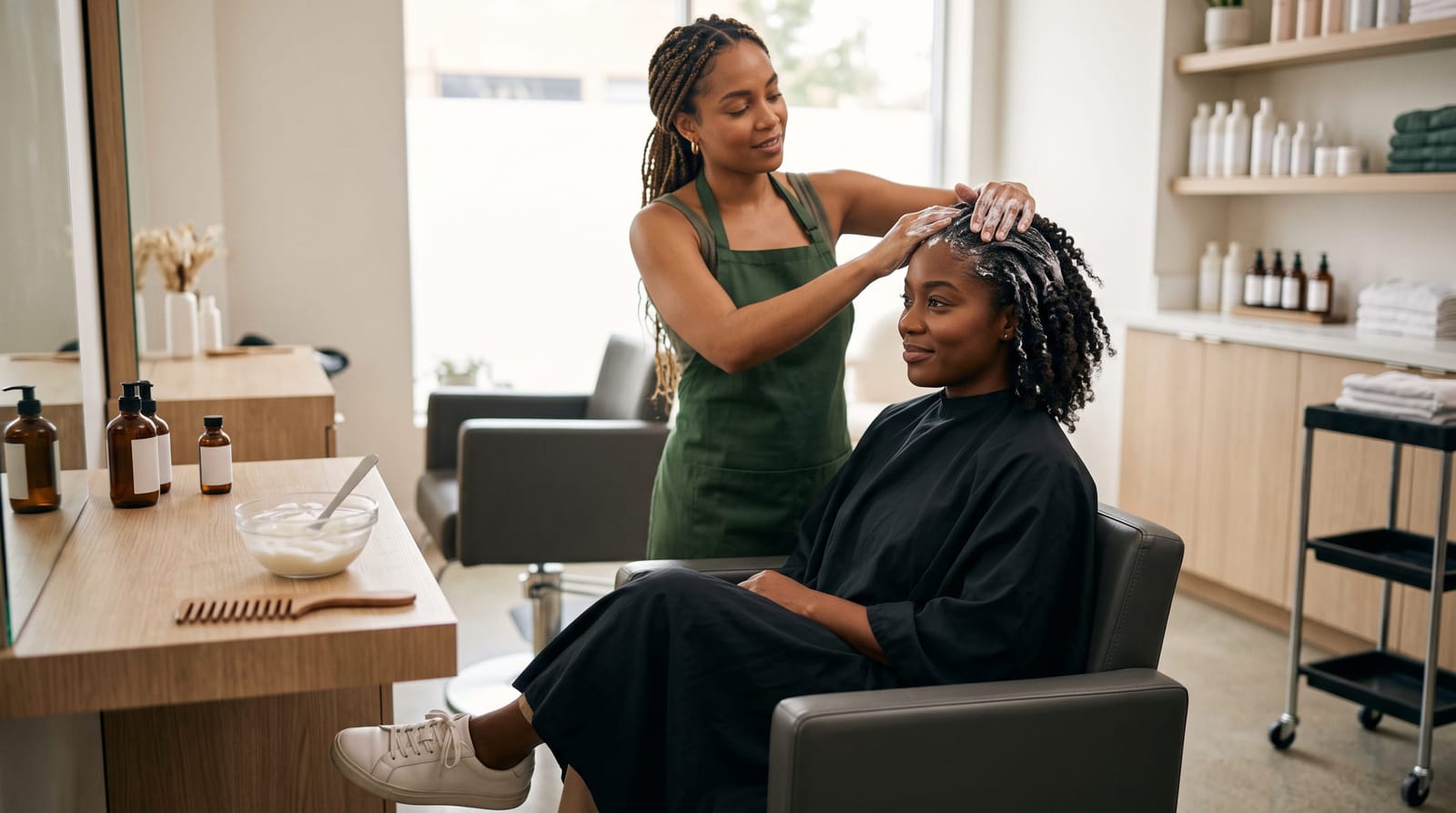
Based on the assessment, a treatment is selected that targets your hair's specific needs. This might be a deeply hydrating mask, a protein-infused treatment, or a combination approach for hair that needs both support and moisture restoration.
Application and Processing
The treatment is applied in sections for even coverage, then processed under a hooded dryer or with steam to help the conditioning agents penetrate the hair shaft more effectively. Processing times typically range from 15 to 30 minutes depending on the treatment used and the hair's condition.
Rinse and Preparation for Styling
After rinsing, the hair is ready for the blow out process: softer, more manageable, and better protected against the heat to come.
If you are ready to take the next step in your post-braid recovery, reviewing what a full post-braid care routine looks like from start to finish can help you feel prepared and confident walking into your appointment. Our blow out for braids guide walks through each stage of the process in detail.
Related Topics Worth Exploring
Deep conditioning is one piece of a larger post-braid care picture. If you want to go deeper on related details, here are a few specific topics that connect to this one:
- How your deep conditioning frequency should shift based on braid duration and hair type, especially if you rotate between protective styles regularly
- The visible and physical signs that indicate your hair needs a full break from braids, not just a conditioning treatment, before reinstalling any style
- How to maintain conditioned, healthy hair between salon appointments without over-manipulating your strands
Each of these topics builds on the foundation of post-braid restoration and helps you make informed decisions about your hair care between visits.
Final Thoughts: Give Your Hair the Reset It Deserves
Protective styles do real work for your hair, but they also ask a lot of it over time. Deep conditioning after braid removal is the step that bridges the gap between weeks of low-manipulation styling and the healthy, thriving hair you want going forward. It restores what extended wear depletes, prepares your hair for the blow out process, and sets the foundation for whatever style comes next. At Kabelly, this step is built into every post-braid experience because we know that healthy hair starts with the right treatment at the right time. Ready to give your hair the restoration it needs? Book your post-braid blow out appointment with Kabelly today and let us take care of the rest.