Keratin Treatment vs. Relaxer vs. Texturizer: Which Smoothing Service Is Right for You?
If you've ever found yourself standing in front of the mirror wondering how to finally get a handle on frizz, shrinkage, or unmanageable texture, you're not alone. Choosing between a keratin treatment, a relaxer, and a texturizer is one of the most common decisions African American and Hispanic women face when it comes to chemical smoothing services, and it's not always a straightforward one. Each option works differently, delivers different results, and comes with its own set of maintenance needs. As part of our complete guide to keratin treatments at a Dominican salon in the DMV area, this post takes a deeper look at all three side by side, so you can walk into your next salon appointment feeling confident and informed about what's right for your hair.
Understanding How Each Service Works
Before comparing results and maintenance, it helps to understand what's actually happening to your hair during each of these services. All three are chemical processes, meaning they alter the internal structure of the hair strand, but they work in meaningfully different ways.
How a Keratin Treatment Works
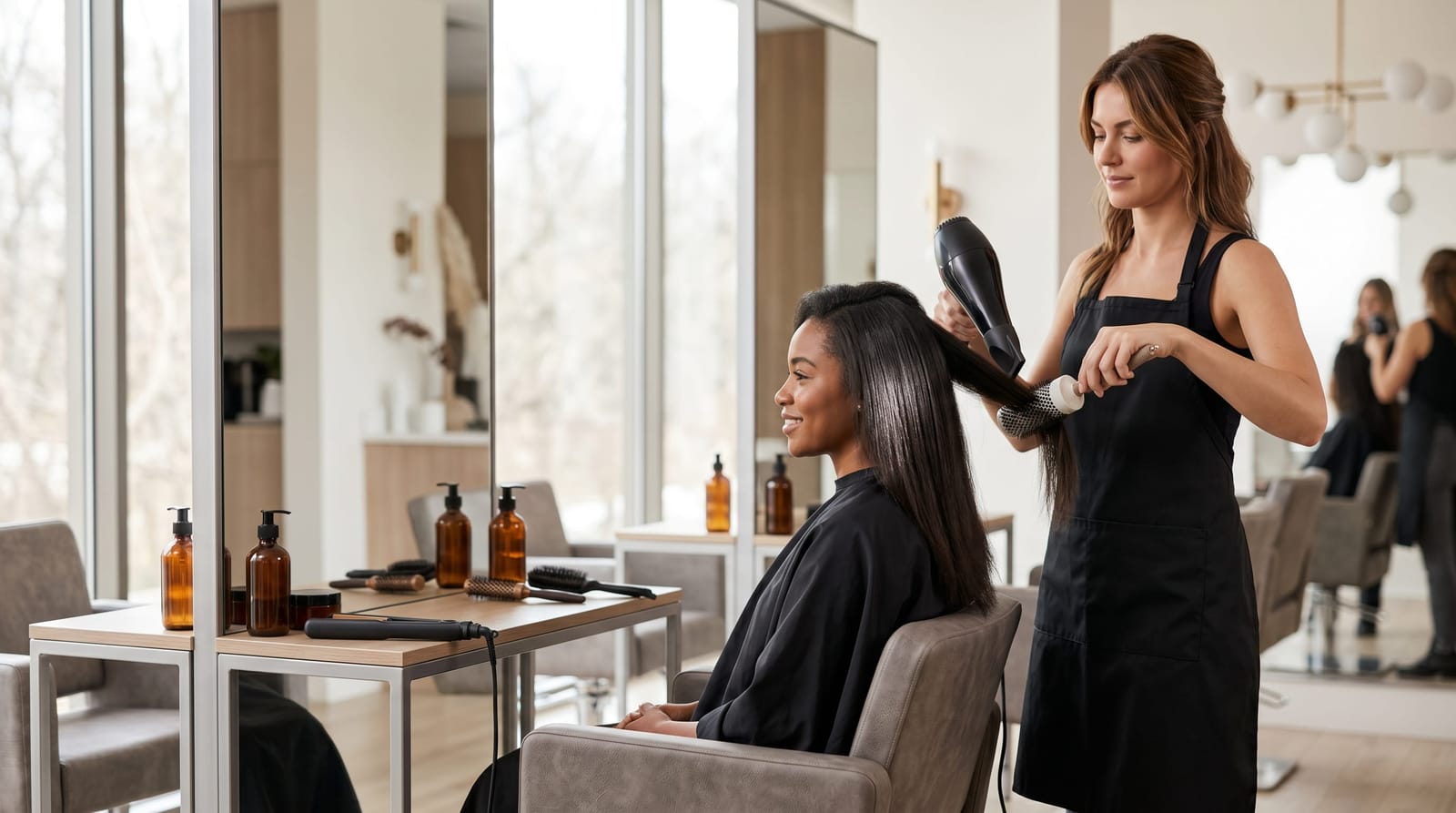
A keratin treatment is a semi-permanent smoothing service that works by coating the hair strand with a keratin-based formula and then sealing it in with heat. Rather than breaking down the hair's protein bonds, it fills and smooths the outermost layer of the hair shaft, reducing frizz and making hair more manageable. The result is smoother, shinier, softer hair that still retains some of its natural movement. Keratin treatments are not permanent: they gradually fade over time with washing and heat styling, typically lasting anywhere from two to five months depending on your hair type and how well you maintain them.
How a Relaxer Works
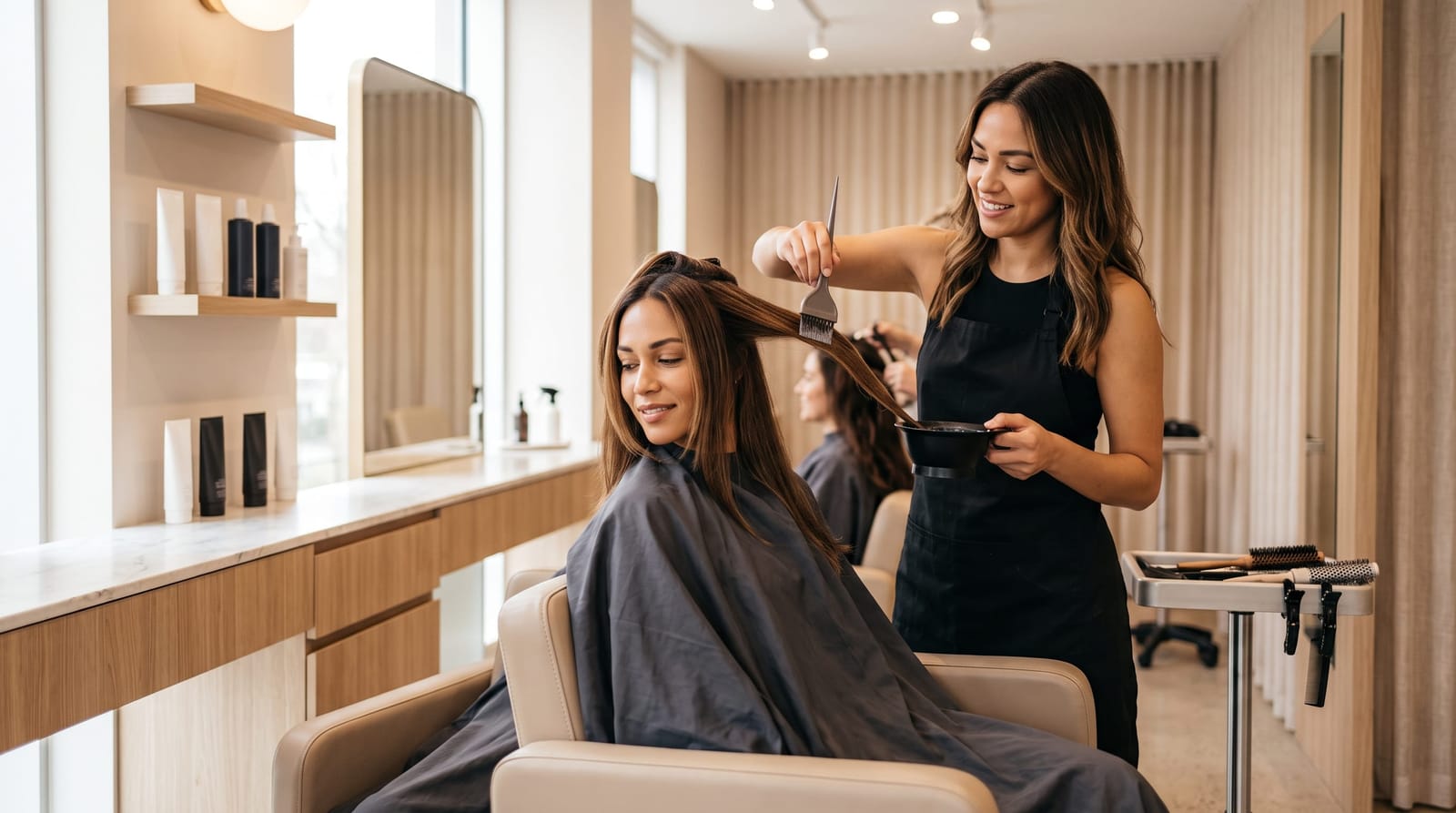
A relaxer is a permanent chemical service that actually breaks down the disulfide bonds inside the hair strand and restructures them in a straighter position. Once those bonds are altered, they don't return to their original state: new growth will come in with your natural texture, but the treated portion stays straight until it's cut off. Relaxers are designed for clients who want full, long-lasting straightness with minimal daily styling effort. Because they penetrate deep into the hair's cortex, relaxers require careful application and consistent upkeep to keep the hair healthy and strong.
How a Texturizer Works
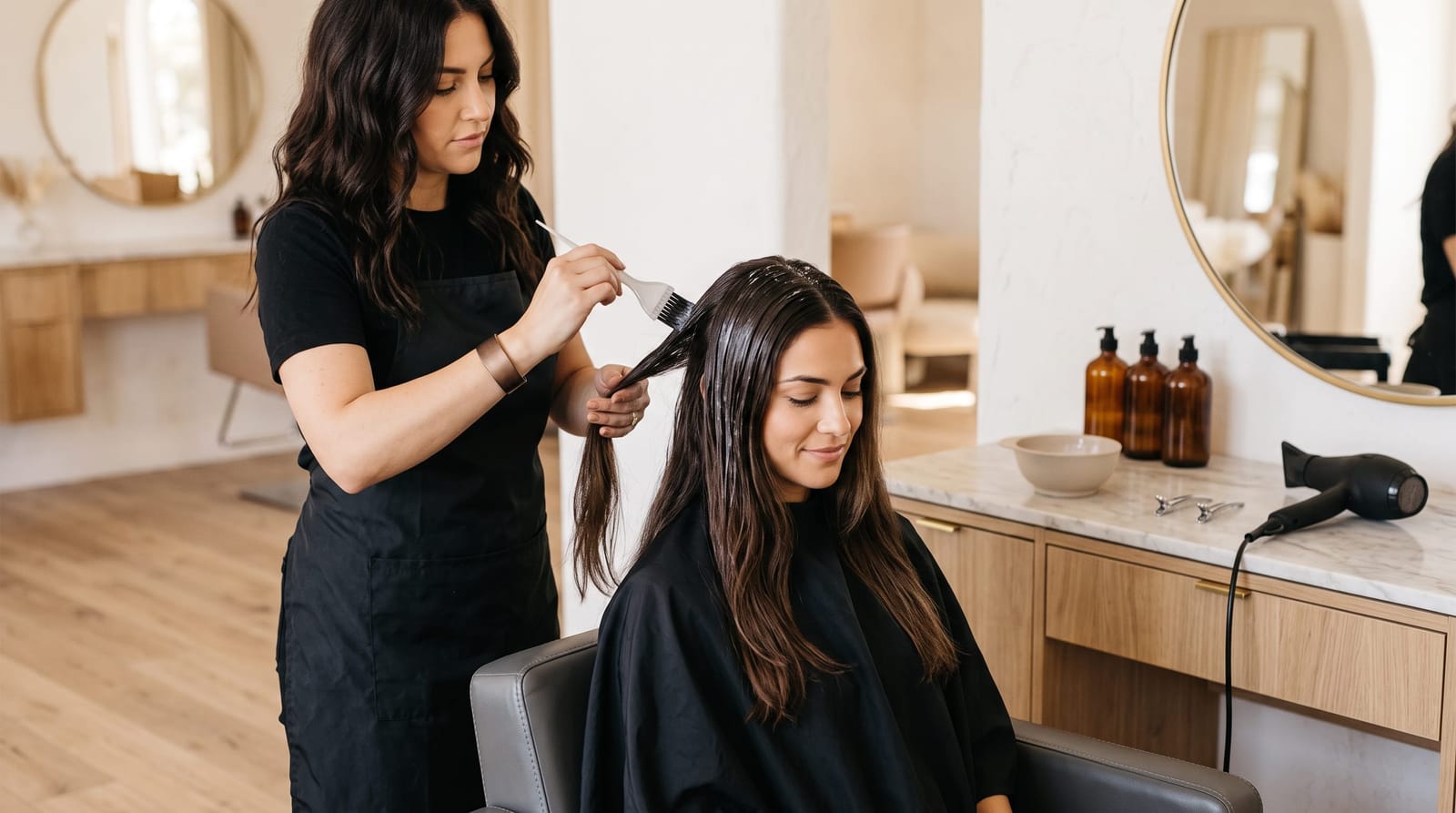
A texturizer uses the same chemistry as a relaxer, typically the same active ingredients, but is applied for a shorter amount of time or in a lighter concentration. The result is not full straightness, but a loosened curl pattern that's easier to style, less prone to shrinkage, and more defined. Think of it as a relaxer that's intentionally left "underdone." Hair that's been texturized still has visible texture and movement, just softer and more elongated than the original pattern. Like a relaxer, a texturizer is permanent in the sense that the treated hair won't revert, but new growth will continue to come in with your natural curl.
Comparing Results: What Will Your Hair Actually Look Like?
One of the biggest differences between these three services is the kind of finish they deliver, and understanding that difference is key to setting realistic expectations.
Keratin Treatment Results
After a keratin treatment, hair looks polished, smooth, and glossy. Frizz is dramatically reduced, blowouts dry faster and last longer, and hair feels noticeably softer to the touch. However, your natural curl pattern is still there underneath: it's simply calmed down. On humid days or after washing, you'll likely still see some wave or curl if you let your hair air dry. Many clients love this because it gives them flexibility: they can wear their hair sleek and straight or add soft waves without the treatment fighting them.
Relaxer Results
A relaxer delivers the most dramatic straightening result of the three. Once processed and properly neutralized, hair lies flat, straight, and smooth with very little natural curl remaining. For clients who want bone-straight hair every day with minimal styling effort, a relaxer is often the most practical long-term choice. The key trade-off is that the result is permanent, meaning you're committed to that texture until regrowth is trimmed away.
Texturizer Results
A texturizer lands somewhere in the middle. Hair looks more defined, less frizzy, and noticeably elongated, but it doesn't go fully straight. Clients who love their natural curl but find it difficult to manage, style consistently, or grow out without excessive shrinkage often find a texturizer to be a beautiful compromise. It works especially well on shorter to medium-length hair where defined, controlled curl is the goal rather than full straightness.
Hair Type Suitability: Which Textures Respond Best to Each Service?
Not every smoothing service is a perfect match for every hair texture, and working with a stylist who understands your specific curl pattern makes all the difference. If you're searching for a texturizer vs relaxer difference that actually applies to your hair type, this section matters most.
Best Candidates for Keratin Treatments
Keratin treatments work beautifully on a wide range of textures, from wavy and loosely curly to tightly coiled hair. They're particularly popular among clients with thick, frizzy, or humidity-prone hair who want smoother results without committing to permanent chemical straightening. Clients with color-treated hair, highlights, or those who are transitioning away from a relaxer often prefer keratin treatments because they're gentler and don't require breaking down any bonds. They're also a great option for clients with thick, curly, or coily hair textures who want to reduce daily styling time without losing their curl identity altogether.
Best Candidates for Relaxers
Relaxers are best suited for clients with medium to coarse, tightly curled or coily hair who are looking for long-term straight results with minimal daily effort. They're a strong choice for clients who don't want to use heat tools every day but still want consistently sleek, manageable hair. Relaxers work well on longer hair where the weight of the hair alone may not be enough to elongate tight curls naturally.
Best Candidates for Texturizers
Texturizers tend to work best on shorter to medium-length hair with type 3 or type 4 curl patterns. They're ideal for clients who love having texture and movement in their hair but want their curls to be more predictable, defined, and easy to wear on a daily basis. If you've been natural for a while but find that managing shrinkage is your biggest challenge, a texturizer can make a meaningful difference without fully removing your curl.
Maintenance and Upkeep: What's the Long-Term Commitment?
Every smoothing service comes with a maintenance routine, and understanding what's involved before you book your appointment is part of making the right choice for your lifestyle.
Maintaining a Keratin Treatment
After a keratin treatment, the biggest maintenance rule is using sulfate-free shampoo. Sulfates strip the keratin coating faster, shortening the life of your treatment significantly. You'll also want to avoid excessive moisture at the roots for the first few days post-service, depending on the formula used. Beyond that, keratin-treated hair is actually easier to maintain than untreated hair: blowouts take less time, frizz is reduced, and your overall styling routine becomes more effortless. Touch-ups are typically needed every three to five months.
Maintaining a Relaxer
Relaxed hair requires consistent touch-up appointments every six to eight weeks, specifically targeting the new growth that comes in with your natural texture. Allowing too much time between touch-ups can create a line of demarcation, a fragile point where relaxed and natural hair meet, which can lead to breakage. Regular deep conditioning, protein treatments, and trimming are all part of keeping relaxed hair in great shape long-term. Clients who already have a relaxer and are curious about layering other services on top should explore what's possible, including whether getting a keratin treatment on relaxed hair is a compatible option for added smoothness between touch-ups.
Maintaining a Texturizer
Because texturized hair still has texture and curl, daily styling tends to be more flexible: you can wear wash-and-go styles, twist-outs, or blown-out looks depending on the day. Touch-ups follow a similar timeline to relaxers, roughly every six to ten weeks on new growth, though some clients stretch longer depending on how defined they want their curl to look. Moisture is especially important for texturized hair, so keeping a consistent deep conditioning routine is non-negotiable.
Side-by-Side Summary: Choosing What's Right for You
Still deciding? Here's a quick comparison to bring everything together in one place.
- Keratin Treatment: Semi-permanent, fades over time, reduces frizz without removing curl, works on most textures including color-treated hair, low-commitment, requires sulfate-free products
- Relaxer: Permanent, fully straightens hair, best for medium to coarse coily textures, requires consistent touch-ups every 6-8 weeks, long-term commitment to straight hair
- Texturizer: Permanent on treated hair, loosens curl rather than removing it, best for shorter to medium hair with tight curl patterns, flexible styling options, touch-ups every 6-10 weeks
The right choice really comes down to three things: the finish you want, the lifestyle you lead, and how much daily styling effort you're willing to invest. If you love the idea of waking up to smoother hair without giving up your curl entirely, a keratin treatment may be your ideal starting point. If you want permanent straightness and minimal daily styling, a relaxer might be the more practical long-term choice. And if you want your curls to stay, just softer, more defined, and easier to manage, a texturizer might be exactly what you've been looking for.
Related Topics Worth Exploring
If you're leaning toward a keratin treatment but have specific concerns about your hair type or history, there's more to dig into. If you currently have a relaxer and are wondering whether a keratin treatment can be layered on top safely, it's a common question with a nuanced answer worth understanding before your appointment. Similarly, if your hair is on the thicker, curlier, or more coily side and you've been told keratin treatments "might not work" on your texture, that's worth exploring more closely: the results can be surprisingly transformative when the right formula is matched to your hair.
Ready to Find Your Perfect Smoothing Service?
Navigating chemical smoothing services doesn't have to feel overwhelming, especially when you have the right stylist guiding the conversation. At Kabelly Salon, our team specializes in working with the full range of textures that African American and Hispanic women bring through our doors every day. Whether you're considering your very first keratin treatment, ready to revisit a relaxer, or curious about what a texturizer could do for your curl definition, we're here to help you make the choice that actually fits your hair, your goals, and your life. Book a consultation at our DMV-area salon and let's talk through what's right for you.