Is Your Hair Damaged? The Complete Guide to Hair Health Assessment and Damage Recovery for Textured Hair
You run your fingers through your hair and something feels off: a little rough, a little thin, a little more fragile than it used to be. Maybe your curls aren't bouncing back the way they should. Maybe your ends look dull no matter how much conditioner you apply. Or maybe you've just cycled through a few too many chemical services without giving your strands a real chance to recover. Whatever brought you here, you're in the right place.
Understanding your hair's actual condition, not just how it looks on a good day, is one of the most important things you can do for your long-term hair health. A proper hair health assessment removes the guesswork and gives you a clear picture of what your hair needs right now, whether that's deep hydration, protein support, a fresh trim, or a slower approach to your next chemical service.
This guide was written specifically for clients with textured, chemically processed, or heat-styled hair: particularly African American and Hispanic women who know firsthand how much work goes into maintaining beautiful hair and how quickly damage can sneak up on you. By the time you finish reading, you'll know how to evaluate your hair at home, what to expect from a professional hair health assessment salon visit, the most common causes of damage in textured hair, and exactly what a real recovery plan looks like. Let's start from the beginning.
What Is a Hair Health Assessment and Why Does It Matter?
A hair health assessment is a structured evaluation of your hair and scalp's current condition. Think of it as a wellness check, but for your strands. Rather than guessing whether your hair needs moisture or protein, or booking a chemical service without knowing if your hair can handle it, an assessment gives you real answers based on what's actually happening at the strand level.
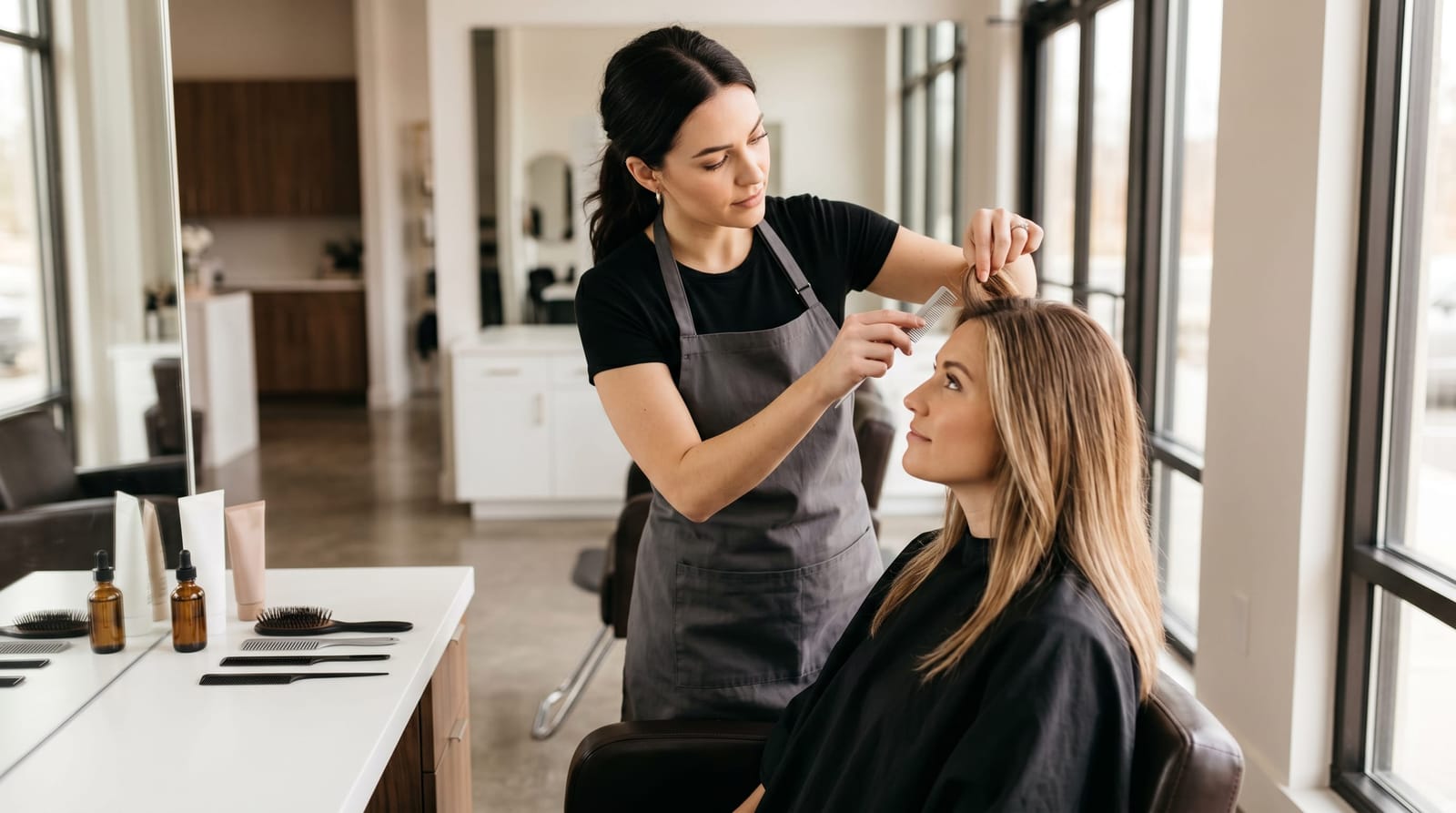
At a professional level, a hair health assessment salon visit typically involves a trained stylist examining your hair's porosity, elasticity, moisture balance, density, and scalp condition. Some salons use advanced tools like high-magnification microscopy or digital analyzers to evaluate follicle density and strand integrity in detail. Others rely on hands-on tests and years of trained observation: both approaches are valid when performed by an experienced stylist.
Why does this matter so much for textured hair specifically? Because curly, coily, and chemically processed hair has unique structural characteristics that make it more vulnerable to certain types of damage. The natural curl pattern creates bends and twists in the hair shaft where moisture is harder to retain and where breakage is more likely to occur. Add relaxers, color, keratin treatments, or frequent heat styling into the mix, and the need for a clear-eyed hair health picture becomes even more important.
Without an assessment, it's easy to fall into a cycle of treating symptoms without addressing the root cause. You might add more moisture to hair that actually needs protein, or push forward with a color appointment when your hair is telling you it needs a break. A quality hair health assessment helps you and your stylist make smarter, more personalized decisions, and that's where real progress begins.
The Four Key Indicators Stylists Use to Evaluate Hair Health
Whether you're doing a quick self-check at home or sitting down with a professional stylist for a full consultation, there are four main indicators that paint the clearest picture of your hair's current health. Understanding each one helps you become a more informed participant in your own hair care, and helps your stylist build a plan that actually works for you.
1. Porosity
Porosity refers to how well your hair absorbs and retains moisture. Hair with high porosity absorbs water quickly but loses it just as fast, often leaving strands feeling dry and frizzy shortly after washing. Low porosity hair, on the other hand, resists moisture absorption but holds it well once it's in. A simple at-home test: drop a clean strand of hair into a glass of water. If it sinks quickly, your hair is likely high porosity. If it floats, it's low porosity. Normal porosity hair settles somewhere in the middle. Knowing your porosity helps determine which products and treatments will actually penetrate your strands: a critical factor in effective conditioning.
2. Elasticity
Elasticity measures how well your hair stretches and returns to its original shape without breaking. Healthy hair with good elasticity has a natural spring to it: it stretches slightly when wet and bounces back. Hair with low elasticity feels limp or snaps with very little tension, which is often a sign of protein deficiency or chemical overprocessing. To test at home, gently stretch a wet strand between two fingers. If it barely stretches before breaking, that's a signal your hair may need protein support.
3. Moisture Levels
Moisture and porosity are connected, but they're not the same thing. Your hair can have high porosity and still be severely dehydrated: meaning it's taking in water but not holding it. Stylists assess moisture levels by feeling the hair's texture (does it feel like straw, or does it have some softness?), observing how the hair responds to water, and evaluating shine and flexibility. Dehydrated hair tends to look dull, feel rough, tangle easily, and break at the ends.
4. Breakage and Strand Integrity
Looking at actual breakage patterns tells a stylist a lot about where damage is occurring and why. Is hair breaking at the ends? Along the middle of the shaft? Near the root? Each pattern points to a different cause: heat damage, chemical overprocessing, mechanical breakage from tight styles or improper detangling, or even product buildup. A professional stylist can often identify these patterns quickly through a hands-on examination, sometimes supplemented by magnification tools that allow them to see the hair cuticle up close.
Common Causes of Hair Damage in Textured and Chemically Processed Hair
Damage rarely happens all at once. It tends to build slowly, one skipped treatment here, one rushed chemical service there, until one day you notice your hair isn't responding the way it used to. Understanding the most common causes helps you identify what may have contributed to your hair's current state and what to avoid as you move through recovery.
Chemical Overprocessing
Relaxers, color treatments, keratin services, and texturizers all alter the structure of the hair shaft. When these services are applied too frequently, overlapped onto previously processed hair, or not followed with proper conditioning care, they can weaken the hair's protein bonds significantly. Signs of chemical overprocessing include extreme brittleness, loss of curl definition, gummy texture when wet, and excessive shedding. This is one of the most common concerns we see in our DMV clientele, and it's absolutely recoverable with the right plan.
Heat Styling Without Adequate Protection
Regular use of flat irons, blow dryers, and curling tools can cause cumulative damage over time, especially when temperatures are too high or heat protectant is skipped. Textured hair is particularly sensitive because the natural curl pattern makes it harder for the scalp's natural oils to travel down the hair shaft, leaving strands more vulnerable to heat's drying effects. Consistent high-heat styling without adequate moisture replenishment is one of the fastest roads to brittle, dull ends.
Protective Style Tension and Neglect
Protective styles like braids, sew-in weaves, and faux locs are wonderful tools for length retention, but they require care both during installation and after removal. Styles installed too tightly can cause traction stress along the hairline and scalp. Wearing a style for too long without moisture maintenance can leave hair severely dehydrated. And rushing through the takedown process without careful detangling can cause significant mechanical breakage. Protective styles work best as part of a thoughtful routine, not as a set-it-and-forget-it approach.
Skipping Trims and Ignoring Split Ends
Split ends don't stay put. Once a strand splits, that split travels up the shaft, causing progressive breakage that makes hair appear thinner and shorter over time. Many clients avoid trims out of fear of losing length, but regular trims are actually one of the most effective tools for retaining length in the long run. Fresh, clean ends hold moisture better, tangle less, and respond more readily to conditioning treatments.
Product Buildup and Scalp Neglect
Heavy products, dry shampoos, and infrequent washing can lead to buildup on the scalp and hair shaft that blocks moisture absorption and weighs hair down. A healthy scalp is the foundation of healthy hair growth, when it's congested, the hair it produces is often weakened from the start.
How to Do a Basic Hair Health Assessment at Home
You don't need professional tools to get a general sense of where your hair stands. A simple at-home hair health assessment can give you enough information to start a conversation with your stylist and make smarter choices about your hair care in the meantime. Here's a straightforward approach:
- Start with clean, product-free hair. Wash with a clarifying or gentle shampoo and do not add any styling products before your assessment. You want to see your hair's natural behavior, not how it performs with product help.
- Run the porosity test. Drop a clean strand in a glass of water and observe where it sits after two minutes. High porosity sinks; low porosity floats; normal porosity hovers in the middle.
- Check your elasticity. Gently stretch a damp strand between your fingers. Healthy hair stretches about 30% of its length before returning to normal. If it snaps almost immediately, that's a sign of protein weakness.
- Look at your ends. Under good lighting, examine a section of your ends. Do they look frayed, translucent, or thin? Are there visible splits? Rough or see-through ends are a clear signal that it's time for a trim and conditioning support.
- Notice how your hair feels when dry. Run your fingers through dry, product-free hair. Does it feel soft and flexible, or rough and crunchy? Does it tangle easily even when freshly washed? Texture and manageability are honest indicators of moisture balance.
- Pay attention to shedding and breakage patterns. A certain amount of daily shedding is completely normal: most people lose between 50 and 100 strands per day, according to the American Academy of Dermatology. But if you're noticing short broken pieces throughout your hair or significant thinning in certain areas, that's worth bringing up with a professional stylist.
Keep in mind that a home assessment gives you a starting point, not a complete diagnosis. A professional stylist who specializes in textured and chemically processed hair will be able to see things that are difficult to assess on your own, and will have the training to recommend the right services based on what they find.
What to Expect From a Professional Hair Health Assessment at the Salon
Booking a professional hair health assessment salon consultation is one of the smartest investments you can make in your hair, especially before any chemical service, a major style change, or if you've been experiencing persistent breakage or dryness that home care isn't resolving.
At Kabelly Salon, a professional hair consultation begins with a conversation. Your stylist will ask about your chemical history, how often you apply heat, your current home care routine, what protective styles you wear and how frequently, and any concerns you've been noticing. This history is just as important as the physical examination: context matters enormously when evaluating hair condition.
From there, your stylist will physically examine your hair and scalp, assessing porosity, elasticity, moisture balance, and strand integrity using hands-on techniques refined through professional training and experience. Depending on what's found during the assessment, your stylist may recommend starting with a clarifying or chelating treatment to remove buildup before more targeted treatments can penetrate effectively.
The outcome of a thorough assessment isn't a list of things wrong with your hair: it's a personalized plan. That plan might include a series of deep conditioning sessions, a protein treatment to rebuild elasticity, a light trim to remove compromised ends, or a staged approach to your next chemical service that prioritizes the health of your strands above all else. Think of it less like a report card and more like a roadmap toward your hair goals.
Kabelly's Hair Damage Recovery Services: What We Offer and When You Need Them
Once you have a clear picture of where your hair stands, recovery becomes a focused and intentional process rather than a guessing game. At Kabelly Salon, we offer a range of professional services specifically designed to address the most common damage concerns in textured and chemically processed hair. Here's what each service does and when it's typically recommended:
Deep Conditioning Treatments
Deep conditioning is the cornerstone of any hair recovery plan. Unlike a rinse-out conditioner, deep conditioners are formulated to penetrate the hair shaft and restore moisture, softness, and flexibility from the inside out. For high-porosity hair that loses moisture quickly, regular professional deep conditioning is often the single most impactful service available. Most clients experiencing dryness, dullness, or general brittleness benefit from beginning their recovery here. To understand the hair needs deep conditioning signs and what they mean for your hair, we've put together a detailed breakdown in our dedicated guide.
Protein Treatments
When hair has been weakened by chemical services, heat damage, or physical stress, its protein structure, specifically keratin, becomes compromised. Protein treatments work by temporarily filling in gaps along the hair shaft, restoring strength, elasticity, and resilience. These treatments are particularly valuable for hair that snaps easily, feels limp or gummy when wet, or has been through multiple overlapping chemical processes. Understanding the balance between protein and moisture is one of the most nuanced parts of hair care: our complete breakdown of protein vs moisture hair treatment will help you understand exactly which one your hair is asking for.
Precision Trims and Dusting
A trim is not just maintenance: it's often a critical component of a recovery plan. Removing split, frayed, or severely damaged ends stops the upward progression of breakage and allows your healthier hair to retain length more effectively. During recovery, some clients need a more significant cut to remove compromised length; others benefit from "dusting," which removes only the most damaged portion of the ends without significant length loss. Your stylist will recommend the right approach based on what your ends actually need.
Staged Chemical Service Planning
If you've been through heavy chemical processing and want to continue with color, relaxers, or other chemical services, the key is pacing and preparation. Attempting to rush a chemical service on compromised hair often leads to more damage: sometimes irreversible. Instead, Kabelly's approach involves building your hair's health to a point where it can safely undergo the service you want, then proceeding in stages that minimize overlap and stress on your strands. This patient, personalized approach produces far better results and protects your hair for the long term. For a full walkthrough of what this looks like in practice, our guide on conditioning for damaged hair walks through the process step by step.
Scalp Treatments and Clarifying Services
Product buildup and scalp congestion can significantly impair how well other treatments perform. A clarifying treatment removes mineral deposits, product residue, and excess oil from the hair shaft and scalp, creating a clean slate for moisture and protein treatments to actually penetrate and work. For clients who use heavy styling products or live in areas with hard water, which is common throughout the DMV region, clarifying treatments are often a recommended first step before any recovery protocol begins.
Building a Recovery Timeline That Works for Your Hair
One of the most important things to understand about hair damage recovery is that it's a process, not an event. A single treatment, no matter how good, won't undo months or years of accumulated stress on your strands. Real, lasting improvement comes from consistency, patience, and a willingness to let your hair guide the pace.
For clients with mild damage, some dryness, slight loss of elasticity, rough ends, a recovery plan might look like two to three professional deep conditioning sessions over six to eight weeks, paired with a targeted home care routine that maintains that moisture between appointments. For clients with more significant damage, severe breakage, multiple overlapping chemical services, extreme brittleness, recovery typically unfolds over several months and involves a combination of protein and moisture treatments, regular trims, and a temporary hold on any additional chemical services while the hair rebuilds its integrity.
Your home care routine between salon visits matters enormously. The right shampoo, the right conditioner, the right frequency of washing, and how you handle your hair when it's wet all contribute to how quickly you progress. Developing a thoughtful hair health routine maintenance plan that complements your salon visits is one of the highest-impact things you can do to accelerate your results.
It's also worth noting that the DMV region's seasonal climate plays a real role in hair health. Humid summers, cold dry winters, and the transition periods in between all affect how your hair behaves and what it needs. Adjusting your care approach with the seasons, not just relying on one routine year-round, is part of a truly complete hair health strategy. Our guide on seasonal hair conditioning needs covers exactly how to adapt your routine to keep your hair thriving in every season.
Explore the Full Hair Health Topic Collection
This guide covers the full landscape of hair health assessment and damage recovery, but each topic within it deserves its own deep dive. Below, you'll find our complete collection of resources that build on what you've learned here. Whether you're trying to diagnose a specific concern, understand a particular treatment, or build a long-term plan, these guides were written to help you move forward with confidence.
-
Seasonal Hair Care: How to Protect Your Hair From DMV Weather Year-Round
The DMV's climate creates specific, seasonal challenges for textured and chemically processed hair, from summer humidity that swells the cuticle to winter dryness that strips moisture. This guide walks through how to adjust your routine and your salon visits around seasonal hair conditioning needs so your hair stays healthy and manageable all year long.
-
Signs Your Hair Needs Deep Conditioning: How to Know When It's Time for Treatment
Dryness, tangling, dullness, and breakage are all signals, but not all of them mean the same thing. This post breaks down the clearest hair needs deep conditioning signs so you can recognize when your hair is asking for real hydration and understand how to respond before the problem gets worse.
-
Protein vs. Moisture Treatment: What Does Your Hair Actually Need?
Protein and moisture are both essential, but giving your hair the wrong one at the wrong time can backfire. This detailed guide explains the difference between the two, how to read your hair's signals accurately, and how to navigate the protein vs moisture hair treatment decision with confidence.
-
How to Build a Healthy Hair Maintenance Routine Around Your Salon Visits
Your salon appointments are the foundation, but your daily and weekly habits are what sustain your results. This guide shows you how to build a hair health routine maintenance plan that works with your lifestyle, your hair type, and your salon schedule, not against them.
-
How to Recover From Over-Processed or Chemically Damaged Hair: A Staged Salon Plan
If your hair has been through multiple chemical services without adequate recovery time, this is the guide for you. It outlines a realistic, staged approach to conditioning for damaged hair that gradually rebuilds your hair's strength while keeping your long-term goals in sight.
Your Hair Health Journey Starts With One Honest Look
There's something genuinely empowering about understanding your hair, not just styling it, but actually knowing how it works, what it needs, and how to give it that. A thoughtful hair health assessment salon visit is often the turning point for clients who've been struggling with damage for years without knowing exactly why or where to start. It replaces frustration with a plan.
Whether your hair is mildly dry and in need of some extra attention, or it's been through years of chemical processing and is ready for a real recovery plan, Kabelly Salon is here to help you move forward with expertise, care, and a personalized approach that honors your hair's unique needs. We work with textured, chemically processed, and heat-styled hair every day, and we know that healthy hair isn't about perfection. It's about giving your strands what they need to be their strongest, most beautiful version.
Ready to get a clear picture of your hair's current health and a real plan for where to go from here? Book a hair health consultation at Kabelly Salon today. Your strands will thank you.