Is It Safe to Color Your Hair After a Relaxer?
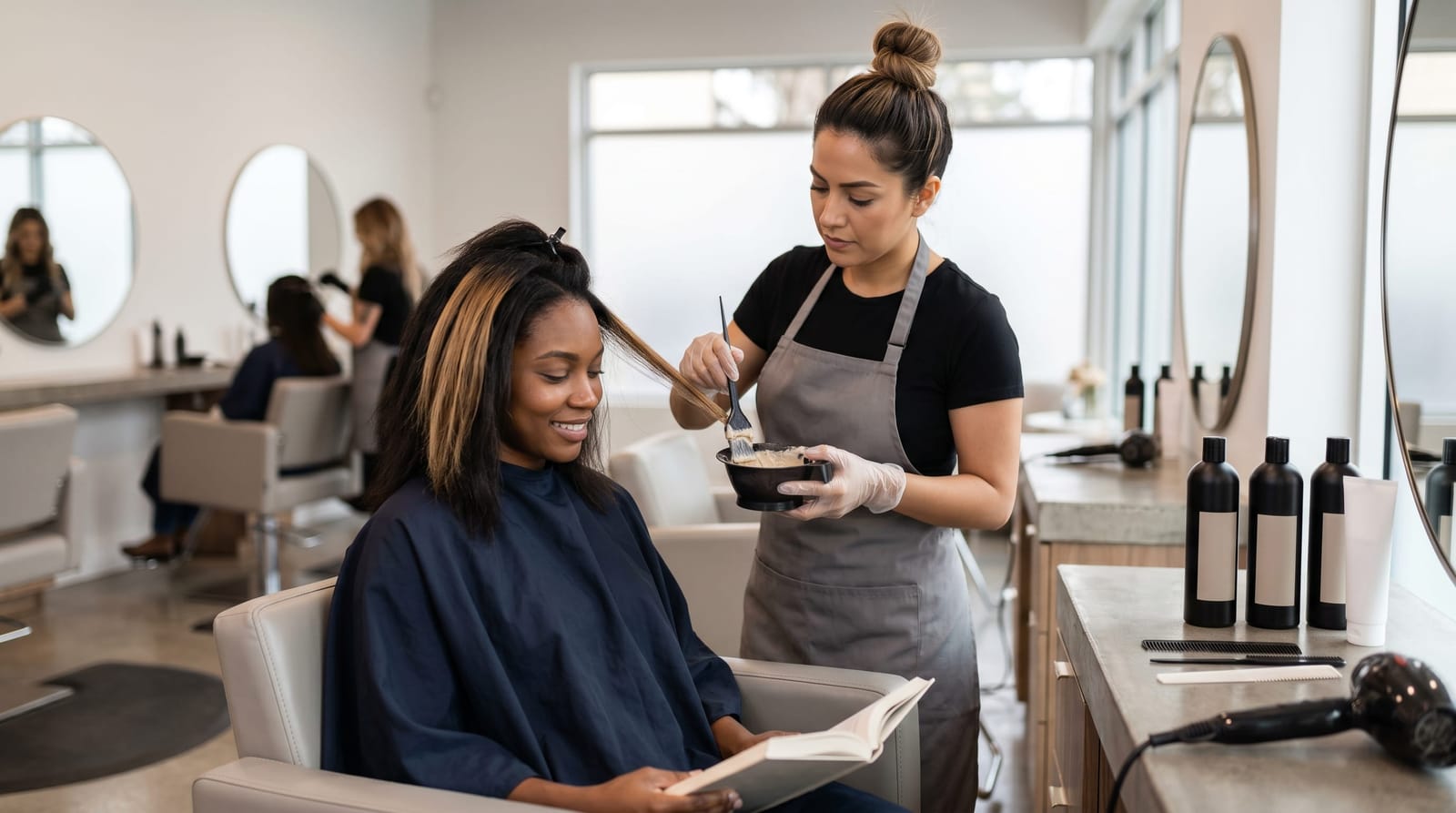
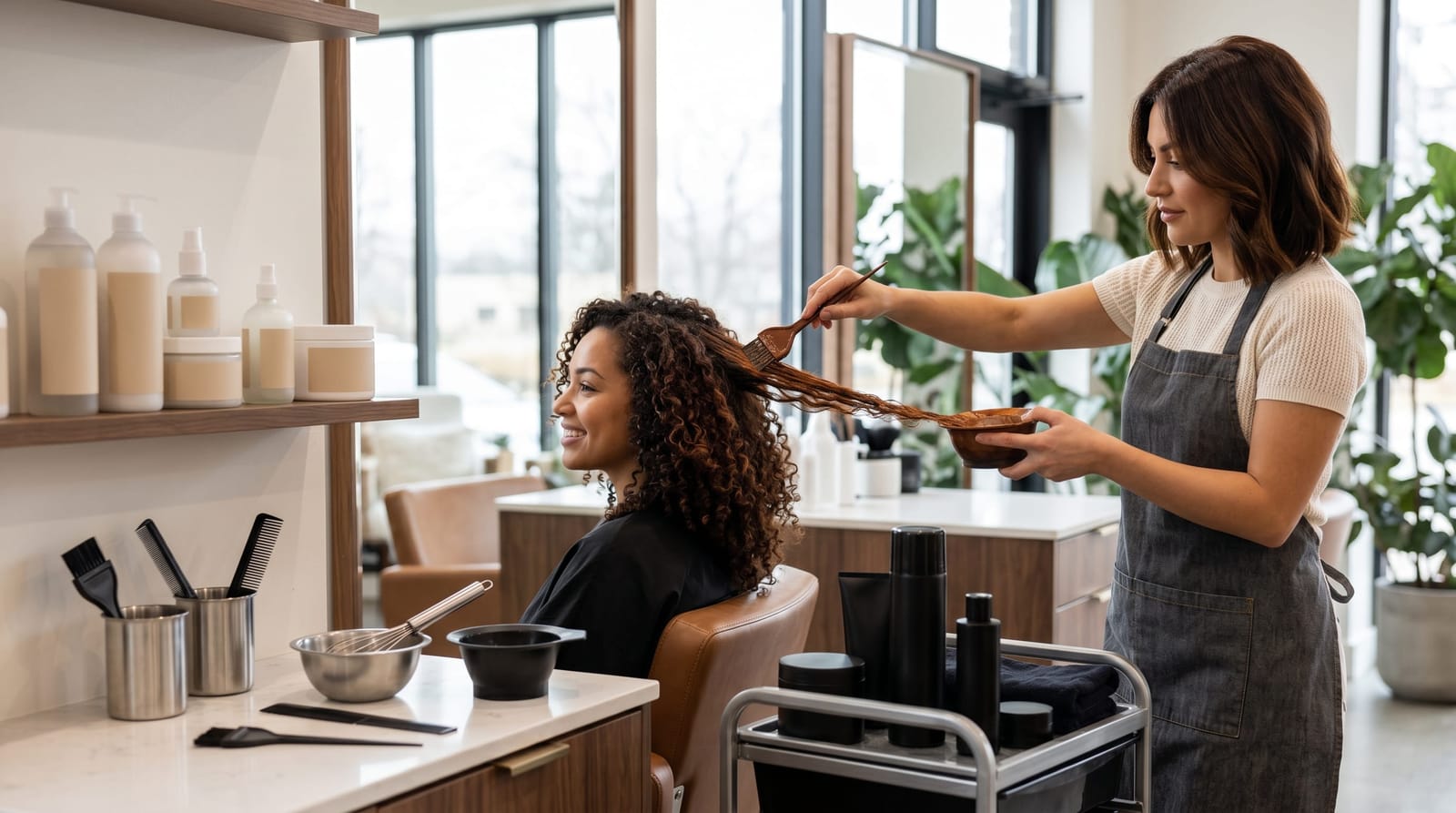
If you've ever wondered whether it's safe to book a color appointment right after getting a relaxer, you're asking exactly the right question, and you're not alone. Combining two chemical services is one of the most common concerns we hear from clients at Ka Belly Salon, especially those working toward rich, vibrant color on textured hair. The honest answer? It depends on your hair's current condition. Before any color is applied, it's essential to understand chemical hair damage signs and know what your strands can realistically handle.
Why Relaxers and Color Don't Always Mix Well Right Away
Both relaxers and hair color use chemicals that alter the structure of your hair shaft. A relaxer works by breaking down the protein bonds that give your hair its natural curl pattern, while color, especially lightening services, opens the hair cuticle to deposit or remove pigment. When you do both too close together, your hair doesn't have enough time to recover between processes.
Think of it this way: after a relaxer, your hair is in a temporarily vulnerable state. The cuticle has been through a significant chemical shift, and the strands need time to stabilize before they can withstand anything else. Jumping straight into a color service on top of freshly relaxed hair dramatically increases the risk of breakage, uneven color results, and long-term structural damage.
This is why the timing between services matters so much, and why a knowledgeable colorist will always assess your hair before layering chemical treatments.
How Long Should You Wait Between a Relaxer and Color?
The general professional guideline is to wait a minimum of two weeks between a relaxer and a color service. However, that two-week window is really the starting point, not the finish line. At Ka Belly Salon, we recommend a more individualized approach based on how your hair actually responds to the relaxer before moving forward with color.
Here's a simple breakdown of how timing typically works:
- 0-2 weeks after a relaxer: Color should not be applied. Hair is in its most fragile state and needs time to restabilize.
- 2-4 weeks after a relaxer: Color may be possible, but only after a thorough strand assessment and with a conditioning treatment completed beforehand.
- 4+ weeks after a relaxer: This is generally the safer window for color, especially for more significant services like highlights or lightening.
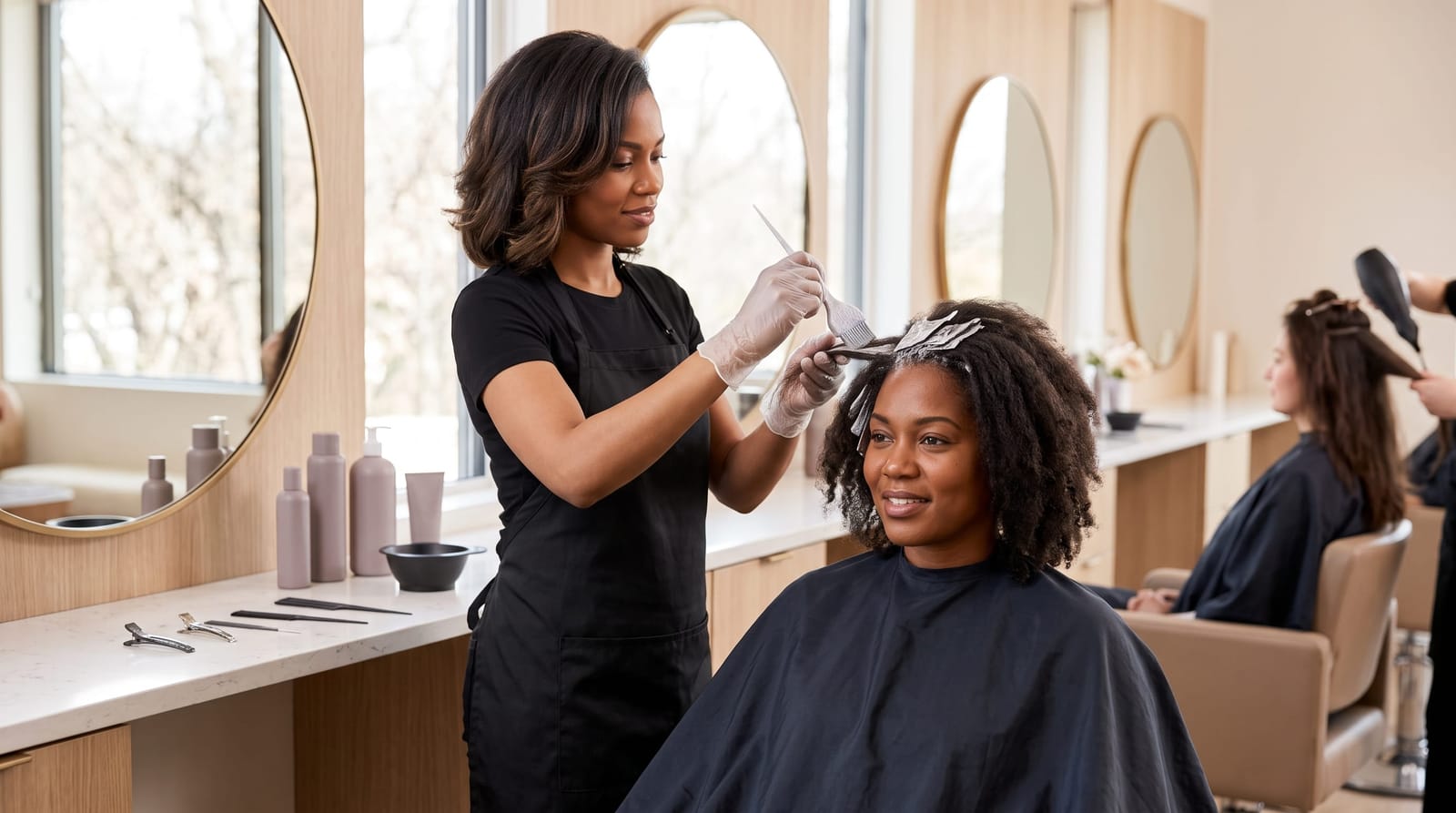
It's also worth noting that if you're considering highlights on chemically treated hair, the same careful approach applies. The principles are similar to what we consider when a client asks about pairing color with other chemical services: timing, hair integrity, and proper preparation all work together to protect your strands.
How Kabelly Assesses Hair Strength Before Combining Services
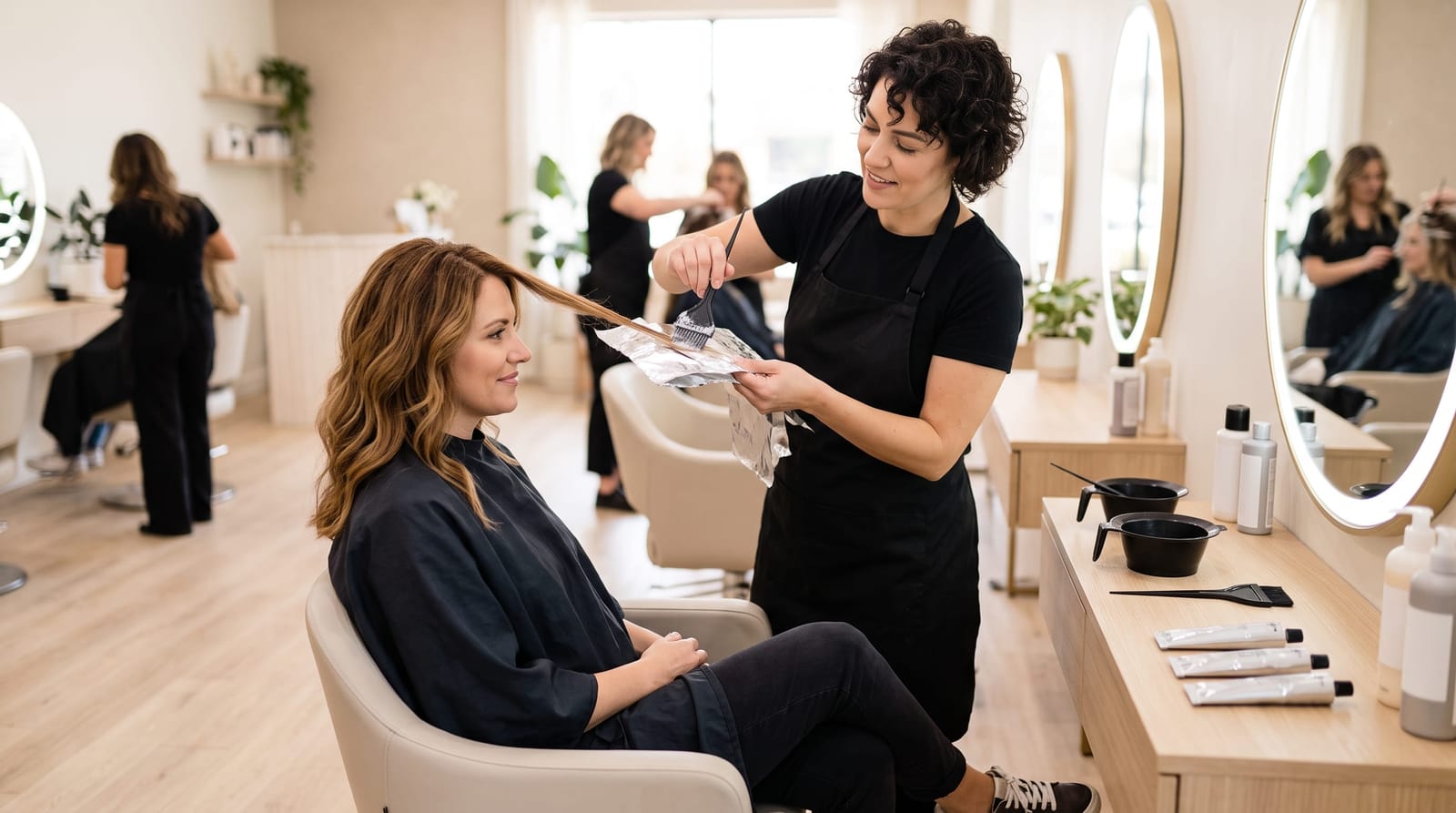
Before any color is applied to chemically processed hair, a proper assessment isn't just helpful: it's essential. At Ka Belly Salon, this evaluation happens through a combination of consultation, visual inspection, and hands-on testing that helps us determine whether your hair is truly ready for color or whether a conditioning phase needs to come first.
Here's what that assessment looks like in practice:
The Elasticity Test
We gently stretch a small strand of hair while it's wet. Healthy hair with good elasticity will stretch slightly and spring back into place. Hair that has been compromised by chemical processing will either snap quickly or feel gummy and weak: both are signs that color would add too much stress to the strand.
Porosity Check
High-porosity hair, common in relaxed or previously colored hair, absorbs products quickly but also loses moisture fast. If your hair is highly porous, it can grab color unevenly, leading to patchy results or color that fades too quickly. We factor this into every color plan we create.
Scalp and Strand Visual Inspection
We look at the overall appearance of the hair from root to tip, checking for any visible signs of stress before proceeding. This step is where recognizing chemical hair damage signs makes all the difference in how we move forward.
Chemical Hair Damage Signs to Know Before Your Appointment
Understanding chemical hair damage signs helps you walk into your salon consultation with awareness, and helps your stylist make the best recommendation for your hair's health. If you're noticing any of the following between appointments, it's important to mention them before any color service is discussed.
- Excessive dryness or brittleness: Hair that feels rough, straw-like, or snaps easily when you run your fingers through it is showing clear stress signals.
- Unusual shedding or breakage: Some shedding is completely normal, but if you're noticing noticeably more hair on your brush or in the shower, that's worth paying attention to.
- Gummy or mushy texture when wet: This is one of the more telling chemical hair damage signs: hair that feels soft in an unstable, almost elastic way when wet has lost significant protein integrity.
- Split ends traveling up the shaft: When splits go beyond the tip and move up the strand, the hair is too compromised to hold up well under additional chemical processing.
- Dull, uneven appearance: Healthy hair reflects light evenly. When color looks flat, uneven, or lifeless, the cuticle may already be too damaged to respond well to more color.
- Dry or sensitive scalp: Irritation, flaking, or sensitivity following a relaxer can indicate that the scalp and strands need recovery time before any follow-up chemical service.
Recognizing these chemical hair damage signs early, before your appointment, gives your stylist the information needed to protect your hair and create a treatment plan that actually works in your favor.
What Happens If Your Hair Needs to Condition First
Sometimes the most luxurious thing a colorist can do for a client is say, "Let's build your hair up before we add color." This isn't a setback: it's the foundation of a great color result. At Ka Belly Salon, if we determine that your hair shows signs of stress or weakness after chemical processing, we'll recommend a strengthening or deep conditioning phase before any color is applied.
This typically involves one or more protein-based or bond-building treatments that help reinforce the hair's internal structure. Once the hair has regained better elasticity and moisture balance, it becomes a much more stable canvas for color: meaning better results, longer-lasting vibrancy, and significantly less risk of breakage during or after the service.
Skipping this step to rush into color is almost always what leads to the frustrating results clients describe: color that looks great for a week, then fades unevenly, or hair that feels worse after the appointment than before. We'd rather take the time to do it right.
Frequently Asked Questions
Can I get highlights after a relaxer?
Highlights involve lightening, which is a more intensive process than deposit-only color. It's generally recommended to wait longer before adding highlights after a relaxer, typically four to six weeks minimum, and only after confirming your hair has good elasticity and strength. A thorough consultation is always the first step.
What are the most important chemical hair damage signs to watch for at home?
The most telling signs include hair that feels gummy when wet, breaks easily with minimal tension, appears dull or uneven in texture, or sheds noticeably more than usual. If you're seeing any of these between salon visits, bring it up at your next consultation before any chemical service is discussed.
How do I know if my hair is strong enough for color after a relaxer?
The best way to know is through a professional assessment that includes an elasticity test, porosity check, and visual inspection by your stylist. At-home, you can do a simple stretch test on a single wet strand, if it snaps without stretching at all, your hair may need conditioning support before color is introduced.
Is it ever okay to do a relaxer and color on the same day?
In most cases, no. Applying both services on the same day puts an extreme amount of stress on the hair shaft and scalp. There are very specific, limited scenarios where a professional might apply a deposit-only gloss after a relaxer, but this would only be done by an experienced colorist after careful evaluation, and never with lightening involved.
The Bottom Line
Coloring your hair after a relaxer can absolutely be done beautifully and safely, but only when the timing is right and your hair is truly ready. Watching for chemical hair damage signs, waiting the appropriate amount of time between services, and working with a colorist who takes the assessment process seriously are the three pillars of protecting your hair while still achieving the color you love. At Ka Belly Salon, we're here to help you get stunning results without compromising the health of your strands. Because beautiful color and healthy hair? They're not mutually exclusive.