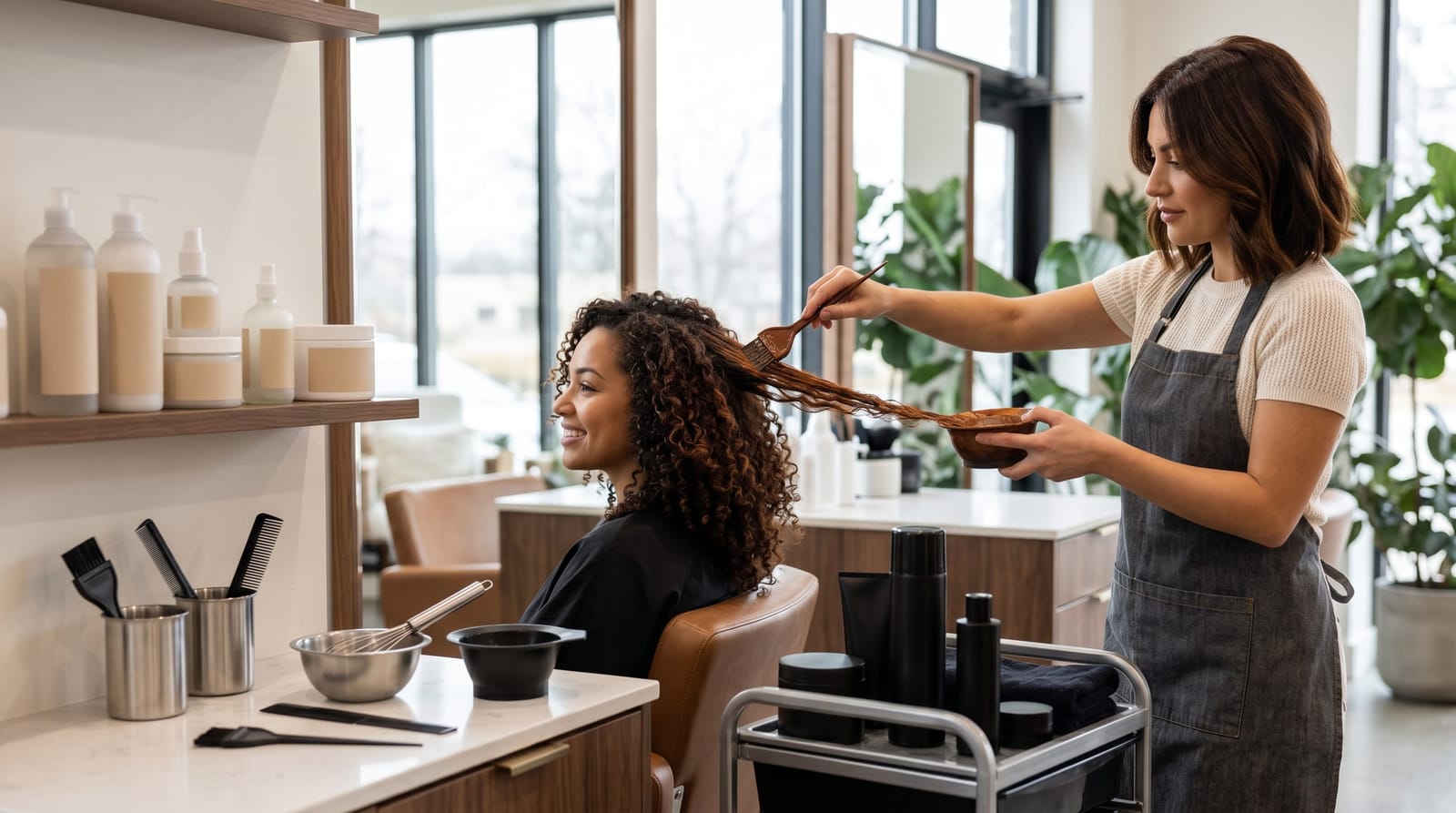
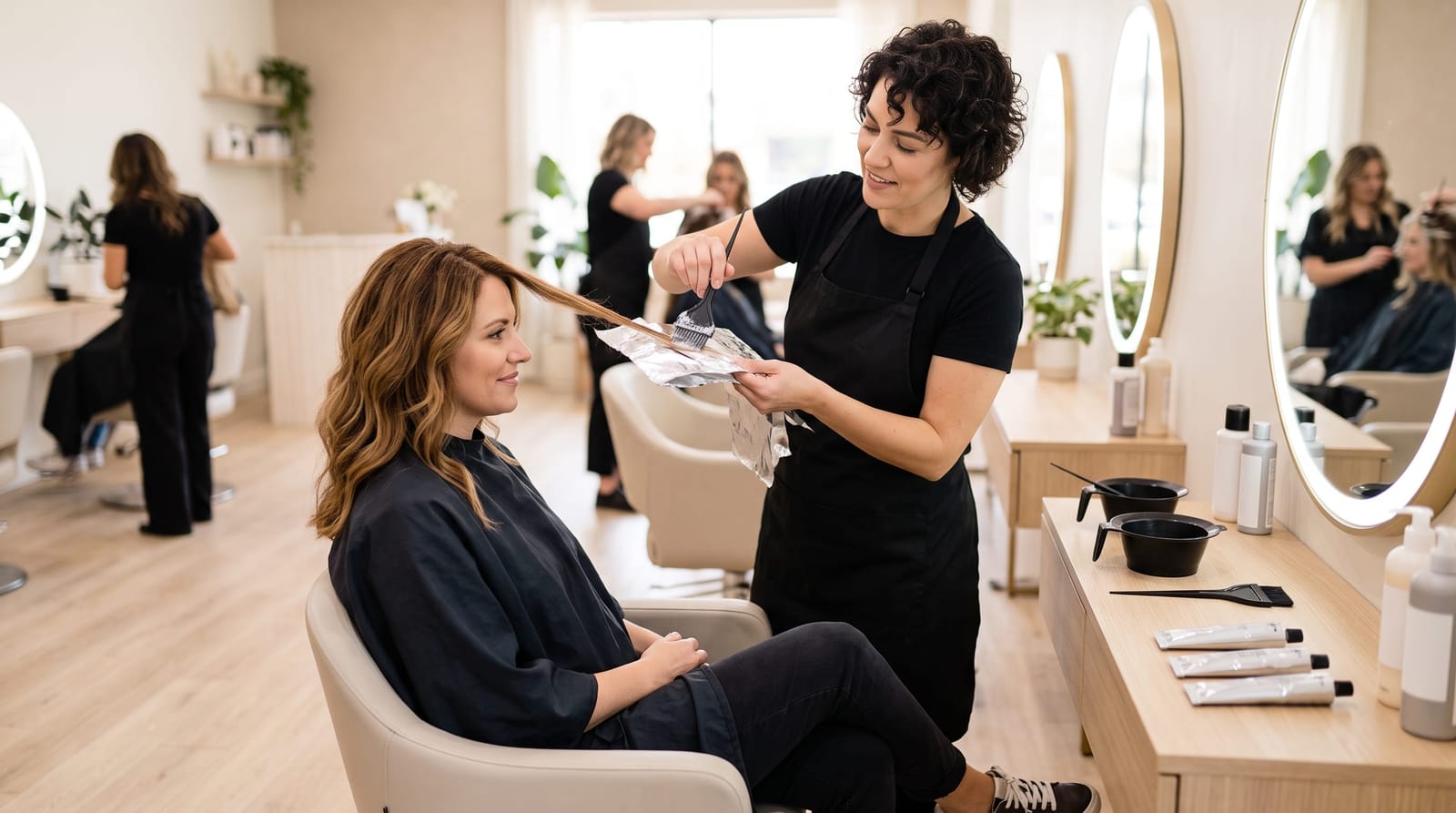
Highlights on Relaxed or Chemically Treated Hair: What You Must Know Before Booking
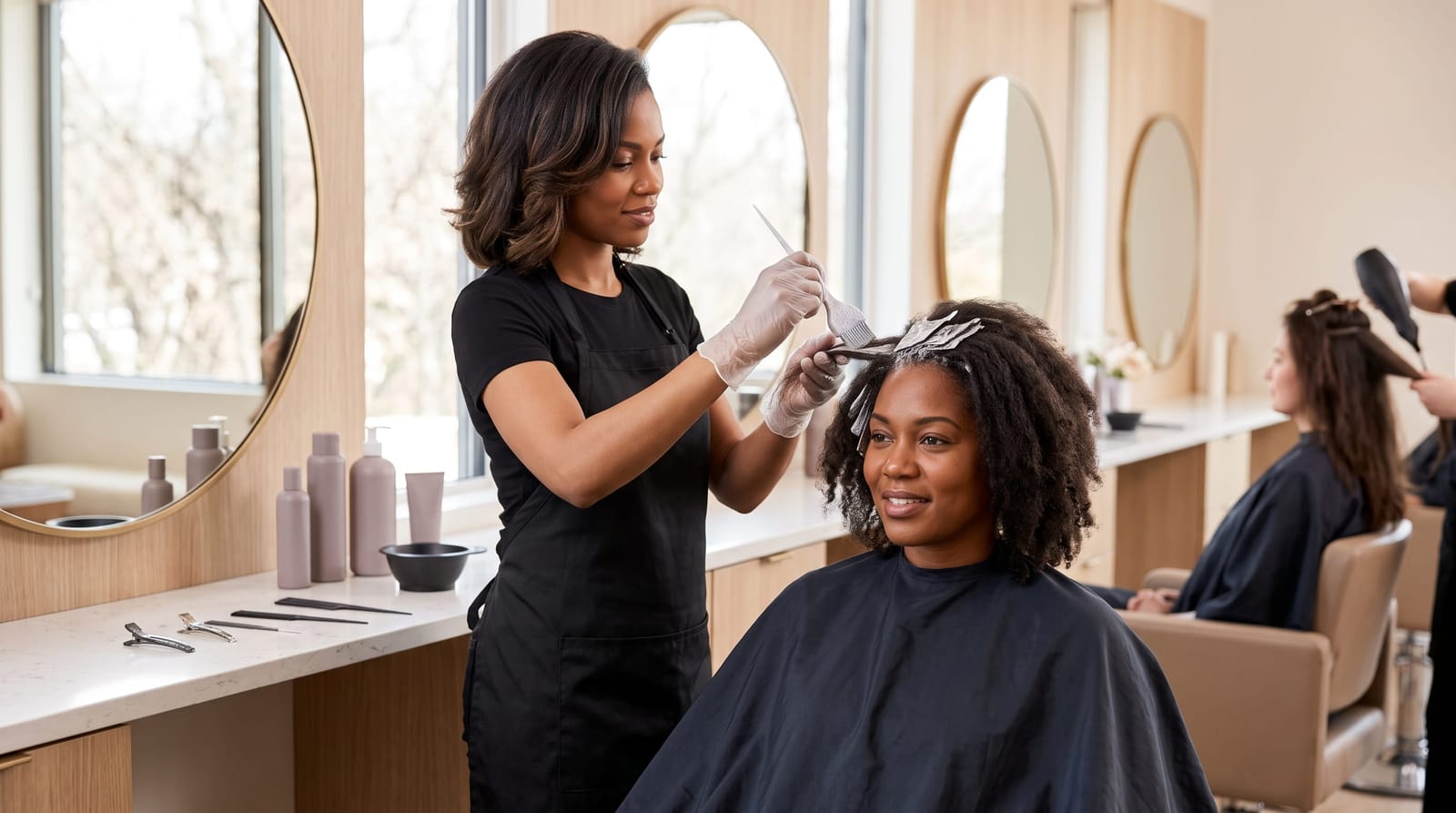
If you've been exploring options for hair color for dark skin tones DMV clients with chemically treated hair, you already know the conversation gets more nuanced than simply picking a shade. Adding highlights on relaxed hair, or hair that's been texturized or keratin-treated, is one of the most rewarding services a colorist can offer, but it's also one that requires real preparation, timing, and expertise to do safely. The results can be stunning: sun-kissed dimension, depth, and warmth that work beautifully on melanin-rich complexions. But the process involves overlapping chemical histories that, without proper planning, can compromise your hair's integrity. This guide breaks down what every client should understand before booking highlights on chemically treated hair, from the science of overlapping services to what a professional consultation actually involves.
Why Chemically Treated Hair Responds Differently to Highlights
To understand why highlights on relaxed hair require extra care, it helps to understand what each chemical service actually does to the hair strand. A relaxer works by permanently breaking down the disulfide bonds in the hair, the bonds responsible for curl and texture, and restructuring them in a straighter formation. Lightener (used for highlights) works by opening the cuticle and oxidizing the melanin inside the cortex to lift color. Both processes alter the hair's internal structure. When both services are applied to the same strand, the cumulative effect on the hair's protein bonds is significantly greater than either service alone.
Relaxed hair tends to have a more porous, fragile cuticle than unprocessed hair, which means it absorbs lightener faster and can reach a state of over-processing more quickly. This isn't a reason to avoid highlights altogether: millions of women with relaxed hair wear beautiful, healthy highlighted styles. It is, however, a reason to approach the service with intention, professional-grade products, and a stylist who understands the specific needs of chemically treated textures.
Understanding these structural changes is the foundation of a safe highlight service. It's also why the conversation about chemical hair damage signs is so important to have before any color appointment, not after.
The Two-Week Rule: Timing Between Services Is Non-Negotiable
One of the most consistent pieces of guidance from professional colorists who specialize in chemically treated hair is the importance of timing between services. According to industry professionals cited in Modern Salon, the standard recommendation is to wait a minimum of two weeks after a relaxer application before adding color or lightener. This waiting period allows the hair's cuticle to settle and close after the relaxer's chemical activity, reducing the risk of overlapping chemical stress on the strand.
In practice, this means that booking a relaxer and highlights in the same appointment, or even within the same week, significantly increases the likelihood of breakage, uneven lift, and scalp sensitivity. Many experienced colorists follow a strict sequence: relax first, allow two full weeks to pass, then apply highlights.
What Happens When You Don't Wait
When highlights are applied too soon after a relaxer, the hair's cuticle is still in a vulnerable, slightly open state. Lightener penetrates too rapidly, lifting unevenly and potentially over-processing sections of hair that were most recently relaxed. This can result in porous, gummy strands that are prone to breakage, color that pulls brassier than expected, and in more extreme cases, significant hair loss along highlighted sections. Waiting the recommended two weeks is a straightforward step that makes a measurable difference in the outcome.
Planning Your Salon Schedule
For clients who want to maintain both services, creating a realistic appointment calendar matters. A good rule of thumb: plan your relaxer touch-up first, let two weeks pass, then book your highlight appointment. Many clients at Kabelly come in for a consultation to map out their color and chemical services over several months: this kind of proactive planning protects your hair and keeps your results looking intentional, not reactive.
Strand Tests: The Step That Protects Your Hair Before Anything Else
A strand test is exactly what it sounds like: a small test application of lightener to a discreet section of hair before the full service begins. For clients with relaxed, texturized, or keratin-treated hair, a strand test is not optional: it's the clearest way to understand how the hair will respond to lightener before committing to a full head of highlights.
During a strand test, your stylist applies lightener to a small section, monitors the lift at timed intervals (typically every 5 to 10 minutes), and evaluates the hair's elasticity, texture, and color response throughout the process. This process reveals critical information: how fast the hair lifts, whether the hair maintains its strength under the lightener, and what the realistic achievable level of lightness is without compromising integrity.
What a Strand Test Actually Tells Your Colorist
- Lift speed: Relaxed hair often lifts faster than unprocessed hair, sometimes reaching the same level in 30-40% less processing time. A strand test confirms this before it becomes a problem.
- Elasticity check: Healthy hair stretches slightly when wet and returns to its original length. Hair that stretches excessively or breaks during this check needs a strengthening treatment before color.
- Porosity level: High-porosity hair absorbs and releases moisture (and chemicals) more quickly. Understanding your hair's porosity helps your colorist choose the right developer strength: typically a lower volume developer like 10 or 20 vol for relaxed hair.
- Color tone preview: A strand test shows whether the hair pulls warm, brassy, or clean during the lift, which informs toning decisions after highlights are complete.
Clients booking highlights on relaxed hair for the first time should always request a strand test at their consultation. It takes extra time, but it's the step that separates a beautiful result from a damaging one.
Keratin Treatments and Highlights: A Different Kind of Overlap
Keratin treatments present a separate but related set of considerations for clients interested in highlights. Unlike relaxers, keratin treatments don't restructure the hair's bonds: they coat the hair with a protein-based formula (typically containing formaldehyde or formaldehyde-releasing compounds) that reduces frizz and smooths the cuticle. The interaction between keratin coatings and lightener is different from the relaxer-lightener interaction, but it still warrants careful planning.
Applying highlights before a keratin treatment is generally easier: the color is processed first, then the keratin smooths and seals the cuticle over the highlighted strands. Applying highlights after a keratin treatment is trickier, because the coating can block even lightener penetration and create patchy, uneven results. Most colorists recommend waiting at least two to four weeks after a keratin treatment before attempting highlights, and using a lightener formulated to work through protein-coated hair.
If you've recently had a keratin treatment and want to explore color, the full picture on coloring after keratin treatment is worth reviewing before your appointment. The timing and product selection details matter more than most clients expect.
Choosing the Right Highlight Technique for Relaxed Hair
Not all highlight techniques are equally appropriate for relaxed or chemically treated hair. The method your colorist selects has a direct impact on how much stress the hair experiences during the service and how the final result looks on your specific texture and skin tone.
Foil Highlights
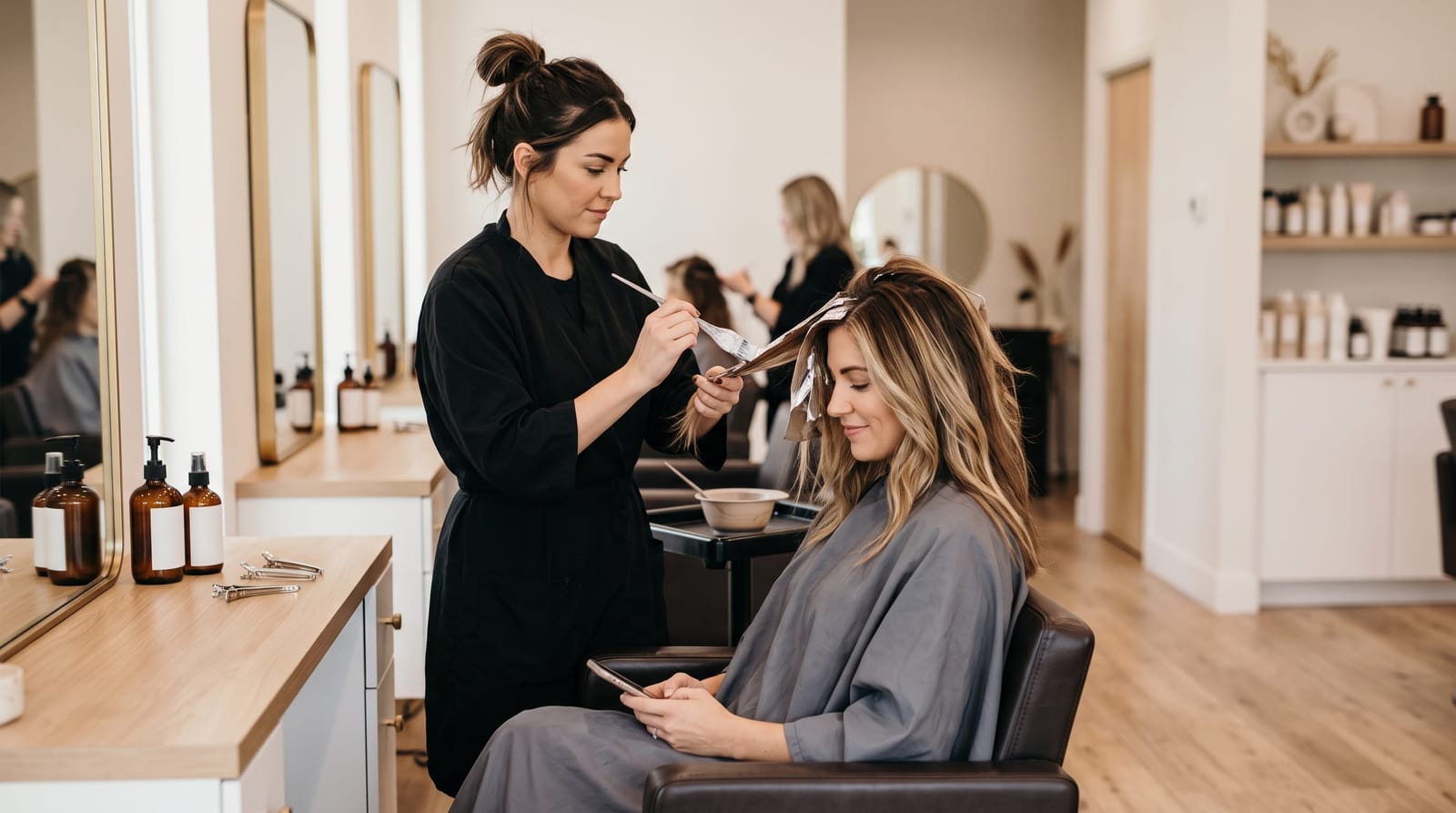
Traditional foil highlights place lightener on precise sections of hair, wrapping them in foil to generate heat and speed processing. On relaxed hair, foils work well for creating defined, consistent color placement, but the heat generated inside the foil can accelerate lift speed, which is why timing and monitoring are especially important. Your colorist may check foils more frequently (every 5 to 7 minutes rather than every 10 to 15) and use a gentler developer to compensate.
Balayage and Freehand Painting
Balayage, a freehand painting technique, tends to be gentler on relaxed hair because there's no foil heat acceleration and the lightener is typically applied more sparsely, creating a softer, more blended result. Balayage is an excellent option for clients who want dimension without high contrast, and the softer demarcation lines mean less visible regrowth between appointments. For clients exploring hair color for black hair, balayage offers beautiful warmth and depth that complements dark base colors naturally.
Partial vs. Full Highlights
For clients new to highlights on relaxed hair, starting with a partial highlight service, face-framing pieces, crown highlights, or a few scattered sections, is a lower-commitment entry point that allows both client and colorist to assess how the hair responds before progressing to a fuller service. Many stylists recommend this phased approach for clients with significant chemical history in their hair.
Maintaining Highlighted Relaxed Hair Between Appointments
Once highlights are in place, the maintenance routine changes significantly. Highlighted hair, especially on a relaxed base, has higher porosity than unprocessed hair and requires consistent moisture and protein support to stay healthy and vibrant between salon visits.
A few key practices make a meaningful difference:
- Use a sulfate-free, color-safe shampoo: Sulfates strip color faster and can exacerbate dryness in already-porous highlighted strands.
- Deep condition weekly: Relaxed and highlighted hair benefits from alternating between moisture-focused and protein-rich deep conditioners. Most clients find a weekly deep conditioning session keeps their hair feeling and looking its best.
- Protect hair at night: Sleeping with a satin bonnet or on a satin pillowcase reduces friction on highlighted strands, which can be more prone to mechanical breakage when dry.
- Limit heat tool use between appointments: Frequent heat on highlighted relaxed hair compounds stress on the strand. When heat styling is necessary, a quality thermal protectant applied to damp hair before drying is a non-negotiable step.
- Schedule toner refresh appointments: Highlights on dark hair, especially warmer-toned relaxed hair, can pull brassy between full color appointments. A toner gloss every 4 to 6 weeks keeps the color looking fresh without additional lift.
Approximately 60 to 70 percent of color longevity is determined by at-home care rather than the salon service itself, which means what you do between appointments matters as much as the color service itself.
Related Topics Worth Exploring
If you're doing deeper research before your appointment, there are a few specific topics that connect directly to highlights on chemically treated hair. Understanding chemical hair damage signs helps you assess your hair's current condition honestly before adding any additional service. And if your hair has been keratin-treated rather than relaxed, the specifics of coloring after keratin treatment address the unique considerations for that chemical overlap. Both are worth reading before your consultation, especially if you've had multiple chemical services over the past year.
Conclusion
Highlights on relaxed hair are absolutely achievable, and when done by a colorist who understands chemically treated textures, the results can be genuinely beautiful. The key is preparation: respecting the two-week minimum between services, completing a strand test, choosing the right highlighting technique for your hair's current condition, and building a maintenance routine that supports your color between visits. Skipping any of these steps is where the risk lies.
At Kabelly, every color service for chemically treated hair begins with an honest consultation about your hair's history and goals. If you're ready to explore highlights on relaxed hair with a colorist who will protect your hair's integrity every step of the way, book your consultation today, and let's create a color plan that works beautifully for your hair, your skin tone, and your lifestyle.