How Often Should You Get Your Extensions Moved Up or Replaced?
If you're wearing hair extensions, one of the most common questions that comes up is: when exactly do you need to come back in? Whether you're rocking bonded extensions, a sewn-in weft, or clip-ins you reach for on weekends, staying on the right haircut frequency schedule makes all the difference between extensions that look fresh and ones that start to feel like a chore. This guide breaks down exactly what to expect based on your extension type, and how Kabelly Salon approaches maintenance scheduling for clients throughout the DMV.
Why Extension Maintenance Isn't One-Size-Fits-All
Your natural hair grows roughly half an inch per month on average, which means every four to six weeks, there's noticeable new growth between your scalp and the attachment point of your extensions. That gap isn't just a visual thing. As growth increases, the weight distribution shifts, and extensions that once sat beautifully can start to feel uncomfortable or look uneven.
The right maintenance interval depends on a few personal factors:
- Your natural hair growth rate (some clients grow closer to three-quarters of an inch per month)
- The type of extensions you're wearing
- How well you're caring for them between appointments
- Your lifestyle: activity level, how often you wash, and how you sleep
Understanding these variables is the foundation of a smart haircut frequency schedule that keeps your hair looking its best without over-maintaining or under-maintaining.
Maintenance Timelines by Extension Type
Bonded (Fusion or Keratin Tip) Extensions
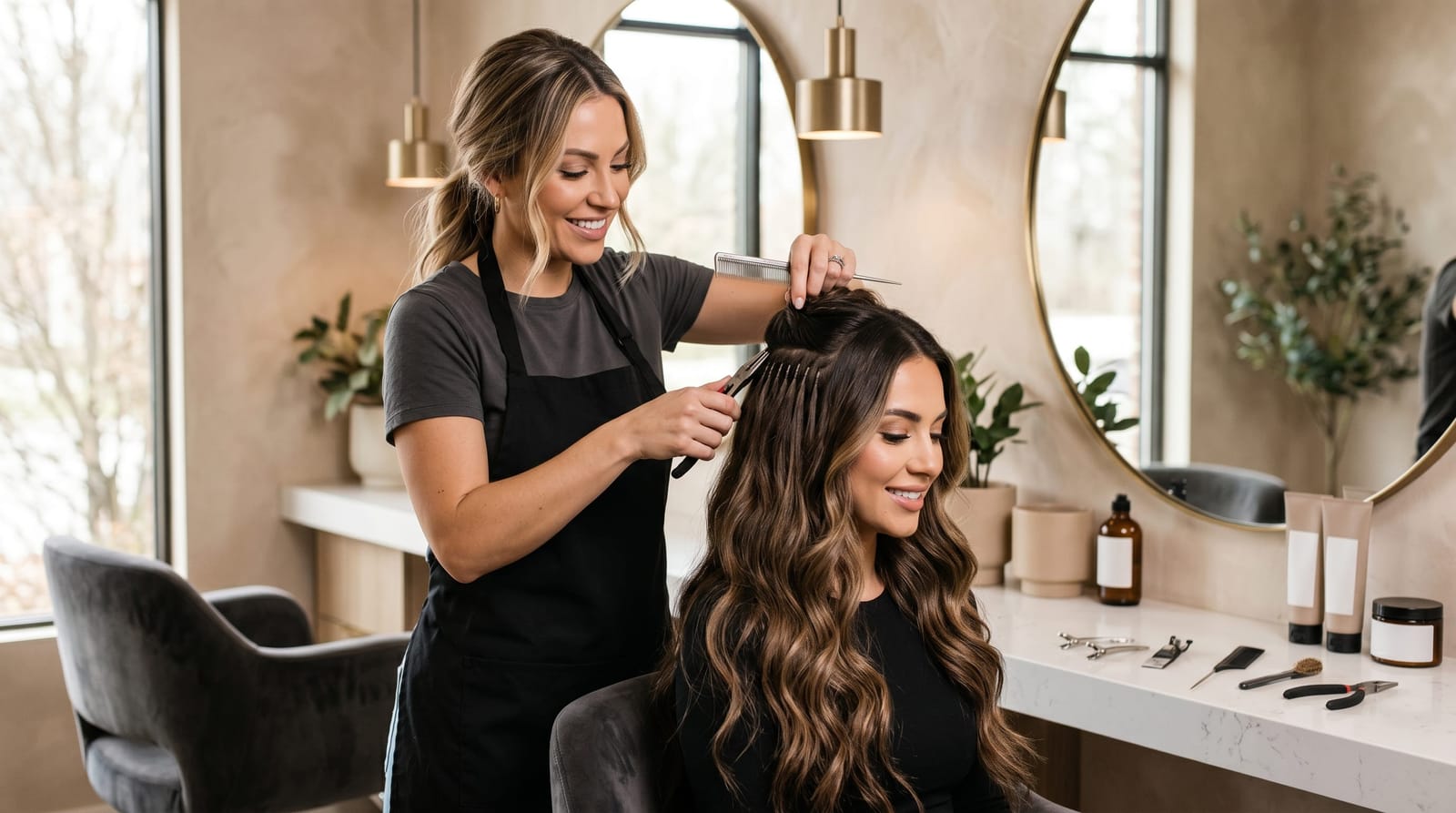
Bonded extensions, whether I-tip, U-tip, or keratin flat-tip, are attached directly to small sections of your natural hair. Because the bonds sit close to the root, new growth is the primary reason you'll need a move-up appointment. Most clients come in every 6 to 8 weeks to have their bonds repositioned closer to the scalp. Waiting beyond 10 to 12 weeks is generally not recommended, as the bond sits too far down the hair shaft to blend properly or distribute weight evenly.
Full replacement (removing all bonds and applying a fresh set) typically happens every 3 to 4 months, though this varies based on how many bonds were applied and the condition of the hair at removal.
Sewn-In Wefts (Beaded or Braidless)
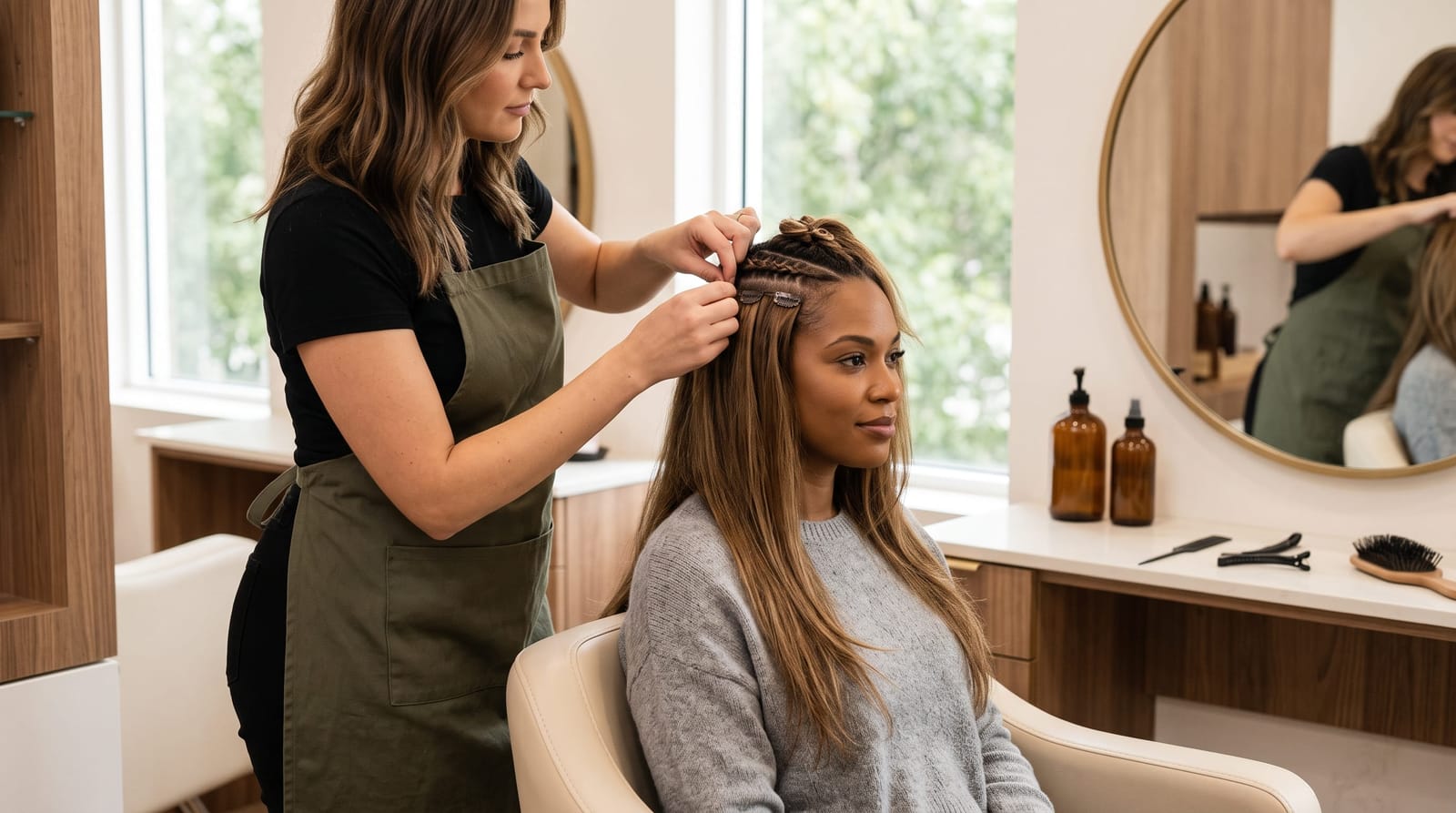
Sewn-in or beaded weft extensions are one of the most popular options for clients with thicker or more textured natural hair. Because they're attached in larger panels rather than individual strands, the maintenance window is slightly more forgiving: most clients return every 6 to 10 weeks for a move-up, depending on how quickly their hair grows.
Wefts that sit more than an inch and a half from the scalp can start to feel loose or shift placement, which affects both comfort and the overall look. A consistent haircut frequency schedule, typically every 8 weeks for most weft clients, keeps everything sitting exactly where it should.
Tape-In Extensions
Tape-in extensions tend to need the most frequent repositioning of all semi-permanent styles. Because they lie flat against the hair in thin, horizontal sections, even a small amount of new growth creates visible separation. Most tape-in clients come in every 4 to 6 weeks, with a full reapplication using fresh tape every 2 to 3 maintenance appointments.
One important note for tape-in wearers: oily scalp types or frequent washing can cause tape to loosen faster, meaning your personal schedule may lean closer to the 4-week mark.
Clip-In Extensions
Clip-ins don't require a move-up schedule since they're removed and reapplied by you at home. However, they do benefit from professional care on a regular basis. Most clip-in clients bring their pieces in every 3 to 4 months for a professional wash, conditioning treatment, and light trim to remove any split ends that have developed on the extension hair itself.
If you're wearing clip-ins 4 or more times per week, consider checking in with your stylist about whether a semi-permanent option might actually reduce daily wear-and-tear over time. You can also read more about glue hair extensions near me to compare attachment styles and what might suit your daily routine.
What Happens If You Wait Too Long?
Stretching your maintenance appointments past the recommended window doesn't just affect how your extensions look: it can make the removal and reapplication process more involved. Here's what often happens when appointments are pushed too far:
- Matting near the roots: Natural hair can tangle around bonds or beads when growth is excessive, making removal more time-intensive
- Uneven blending: Extensions sitting too far from the scalp create a visible line between your natural hair and the extension hair
- Weight imbalance: Extension weight shifts as they slide down, which can feel uncomfortable during daily wear
- More frequent full replacements: Ironically, waiting longer between appointments often means more hair is shed and tangled in the extensions, shortening the overall lifespan of the set
Staying consistent with your haircut frequency schedule is ultimately the most low-maintenance approach in the long run.
How Kabelly Schedules Extension Maintenance for DMV Clients
At Kabelly Salon, hair extension maintenance in the DMV is built around each client's individual hair profile, not a generic calendar. During your initial extension appointment, your stylist will discuss your natural growth rate, lifestyle, and goals to create a personalized maintenance plan before you even leave the salon.
For most clients, this looks something like:
- First maintenance check-in: 6 to 8 weeks after initial application
- Mid-cycle appointment: A professional blowout or styling visit around week 10 to keep the hair looking polished between move-ups
- Full refresh or reapplication: Every 3 to 4 months depending on extension type and condition
Clients are also given specific home care guidance, including washing frequency, recommended products, and how to sleep with extensions, so that each visit is as straightforward as possible. Hair extension maintenance in the DMV shouldn't feel stressful or complicated, and Kabelly's approach is designed to make every stage of the process feel manageable and enjoyable.
Whether you're a first-time extension wearer or you've been wearing extensions for years, having a consistent care schedule makes the entire experience smoother, and keeps your hair looking like it just walked out of the salon, week after week.
Frequently Asked Questions
How do I know if my extensions need to be moved up sooner than my scheduled appointment?
Signs that it might be time to move up your appointment include visible gaps between your scalp and the extension attachment, increased tangling near the roots, extensions that feel loose or shift during styling, or general discomfort from the weight distribution changing. If you're noticing any of these things before your next scheduled visit, it's worth reaching out to your stylist sooner rather than later.
Can I trim my extensions at home between salon visits?
It's best to avoid DIY trimming on extension hair, especially if your extensions are blended into your natural hair. Even a small uneven cut can affect how the blend looks and feels. If your ends are feeling rough or dry between visits, a professional trim at your next appointment is the safest approach.
How long do hair extensions typically last before a full replacement is needed?
Most high-quality semi-permanent extensions last anywhere from 3 to 6 months with proper maintenance. Bonded and weft styles on the longer end of that range with regular move-ups, while tape-ins may need a fresh set of tape and occasionally fresh hair around the 3-month mark. Clip-in hair can last 12 months or more with regular professional conditioning care.
Does my natural hair need a trim at the same time as my extension move-up?
Not necessarily at every appointment, but your stylist may recommend a light trim every 6 to 8 weeks to keep your natural ends healthy and blending seamlessly with the extension hair. According to professional hair care guidelines, regular trims every 6 to 8 weeks are one of the most effective ways to maintain overall hair health and prevent split ends from traveling up the hair shaft.
Staying on Schedule Makes Everything Easier
Extensions are a beautiful investment, and like any investment, they reward consistency. Whether you're on a 6-week tape-in schedule or coming in every 8 weeks for a weft move-up, staying ahead of your natural hair growth is what keeps your look seamless, comfortable, and genuinely enjoyable to wear. If you're unsure where to start or your lifestyle is shifting and your current schedule no longer feels right, a conversation with your stylist is always the best first step. At Kabelly, we're here to make hair extension maintenance in the DMV feel effortless, from your first appointment to every one that follows.