How to Sleep With Clip-On Hair Extensions Without Damaging Them
If you've spent time reading through our complete guide to maintaining hair extensions, you already know that how you care for your extensions between salon visits makes a huge difference in how long they last and how healthy your natural hair stays underneath. One area that often catches new extension wearers off guard? Nighttime care. Specifically, what to do, and what not to do, when it's time to go to sleep. Sleeping with clip extensions incorrectly is one of the fastest ways to shorten their lifespan and stress your natural hair at the same time. This beginner's guide walks you through everything you need to know: whether to remove them, how to store them properly, and how to protect both your extensions and your natural hair overnight.
Should You Actually Sleep With Clip-On Extensions In?
Let's start with the most common question: is it ever okay to leave clip-on extensions in overnight? The short answer, from professional stylists and extension specialists alike, is generally no, and there are real, practical reasons behind that guidance.
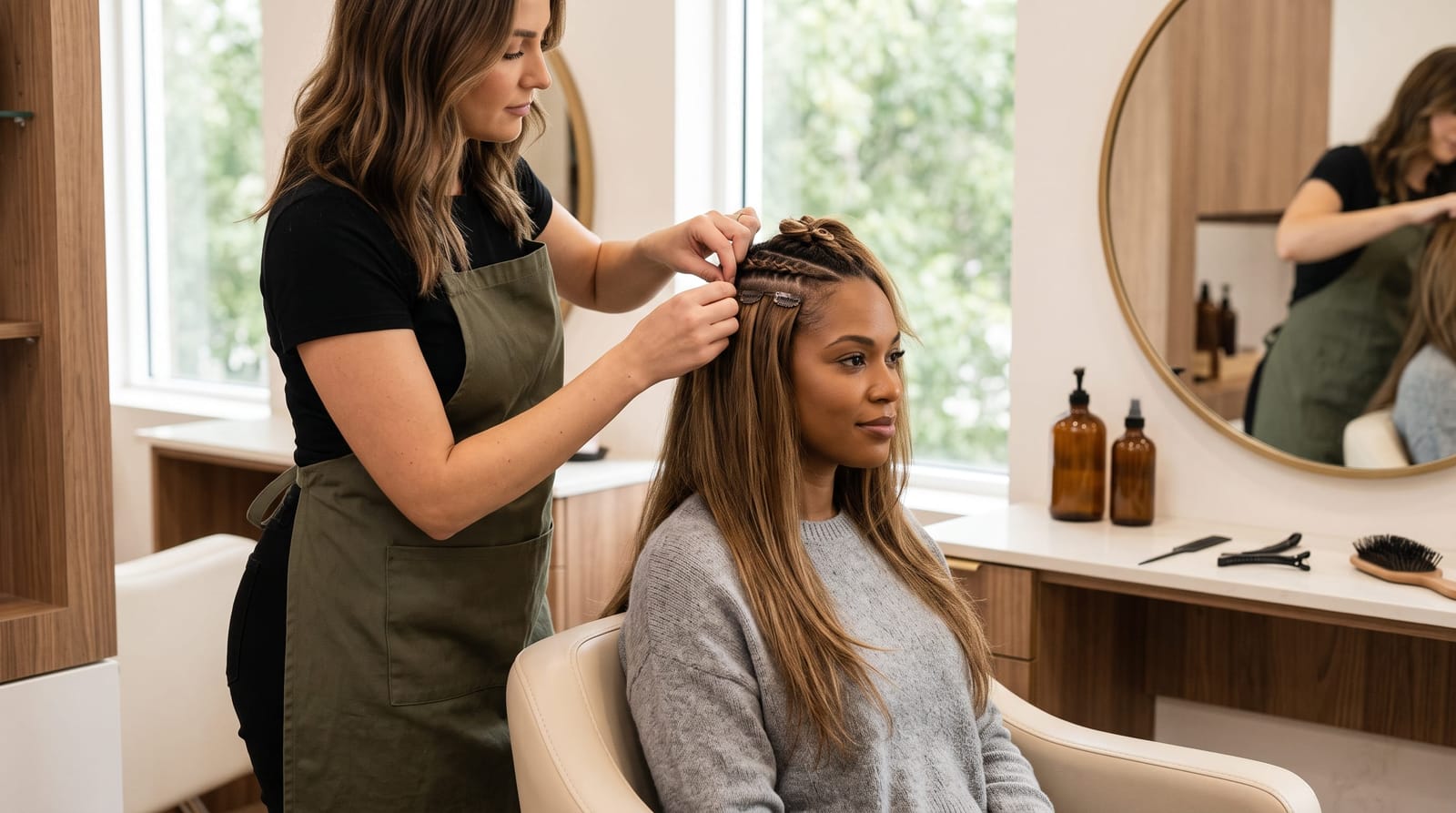
Clip-on extensions are designed for daytime wear and temporary styling. Unlike semi-permanent methods such as tape-ins or sew-ins, clip-ons rely on pressure-grip combs that attach directly to your root area. While that attachment is convenient and secure during the day, it becomes a source of tension on your scalp and hair follicles when you're lying down, tossing, and turning for six to eight hours at night.
According to extension care specialists, consistently sleeping with clip-ins attached can lead to:
- Tangling and matting where the extension wefts meet your natural hair
- Unnecessary pulling and friction on the hair shaft and scalp
- Loosening of the clip mechanisms over time, reducing the overall lifespan of your extensions
- Breakage along the sections where clips are gripped, especially near fine or delicate hairlines
- Extension wefts becoming misshapen, bent, or crushed from being slept on
The good news is that removing clip-ons before bed takes about three to five minutes once you have a routine down. The even better news: taking them out consistently can extend the lifespan of quality extensions from an average of three to six months of occasional wear to well over a year with proper care.
A Step-by-Step Guide to Removing Clip-On Extensions Before Bed
If you're new to clip-on extensions, removing them at the end of the day might feel awkward at first, but it becomes second nature quickly. Here's how to do it gently and correctly every time.
Step 1: Find a Well-Lit Mirror
Trying to unclip extensions by feel alone in dim lighting often leads to yanking instead of releasing. Take two extra minutes and use a lighted mirror or a well-lit bathroom space. This makes the process smoother and prevents accidental hair pulling.
Step 2: Work From the Bottom Up
Start with the lowest row of extensions first and work your way upward toward the crown. Removing the top layers first can tangle them into the sections below. Working bottom to top keeps everything organized and pull-free.
Step 3: Press the Clip Open Before Pulling
This is where most beginners make their first mistake. Always press the snap clip open with your fingers before attempting to remove the weft. Pulling without releasing the clip first causes friction on the hair shaft and can snap delicate strands. Press, open, and slide: never tug.
Step 4: Gently Detangle Each Weft Immediately
Once each weft is removed, give it a quick, gentle brush from ends to roots using a soft-bristle or loop brush. Doing this right away prevents overnight tangles from setting in while the extensions sit in storage.
How to Store Clip-On Extensions Overnight (and Why It Matters)
Proper storage is just as important as proper removal. Extensions that are tossed onto a vanity, stuffed into a drawer, or left draped over a chair will develop tangles, frizz, and misshapen wefts: regardless of the quality of the hair itself.
Here's what professional-level extension storage looks like at home:
- Use a dedicated extension hanger or holder. These are specifically designed to keep wefts hanging straight and tangle-free overnight. They're inexpensive and widely available online.
- Store in a silk or satin bag if hanging isn't an option. Satin and silk reduce friction, which means less frizz and fewer tangles when you reach for them the next morning.
- Keep them away from heat sources. Storing extensions near a bathroom vent, radiator, or sunny windowsill can dry out the hair strands over time, making them more prone to frizzing and dullness.
- Lay flat in a box as a third option. If you have a shallow box or an extension case, laying wefts flat (without folding or crumpling them) is a perfectly acceptable storage method.
- Never store them while damp. If your extensions got wet during the day or were styled with water-based products, allow them to air dry fully before storing. Storing damp extensions can encourage mildew and weaken the weft stitching.
The goal is consistency. When storing your extensions becomes part of your nightly routine, the way you store jewelry or charge your phone, you'll naturally add years of wearability to your investment. For guidance on which products to use before storing, check out this overview of best deep conditioner products that are safe for extension care.
How to Protect Your Natural Hair Overnight After Removing Extensions
Once the extensions are out and stored, your natural hair still needs attention before bed. This step is something many beginners skip, and it's one of the most important parts of the entire routine.
Throughout the day, your hair has been held in structured sections by the clip attachments. At night, it needs to relax, breathe, and be protected from friction against your pillow.
Switch to a Silk or Satin Pillowcase
Cotton pillowcases create significantly more friction against hair than silk or satin surfaces. That friction causes frizz, tangles, and over time, breakage along the hair shaft, especially in the sections where clips were attached during the day. Silk and satin pillowcases are widely considered one of the simplest, most effective hair-health upgrades available. Studies on hair fiber friction have shown that smooth fabric surfaces like satin can reduce mechanical stress on hair by a meaningful margin compared to cotton weaves.
Loosely Braid or Wrap Your Natural Hair
A loose braid, a soft low bun, or a gentle wrap using a silk scarf minimizes overnight tangling and keeps your natural hair protected while you sleep. Avoid tight elastic bands, which can create creases or stress on the hair shaft. Opt for fabric scrunchies or spiral hair ties instead.
Apply a Light Overnight Treatment if Needed
If your natural hair tends toward dryness, particularly at the ends, a small amount of lightweight oil or leave-in conditioner applied before bed can make a noticeable difference in morning texture. Keep it light and focus on the mid-lengths to ends rather than the roots.
What Happens When Proper Nighttime Care Is Skipped
It helps to understand the real-world outcomes of skipping nighttime extension care, not to create worry, but to make the "why" behind these habits feel concrete and worth the effort.
Here's what consistently happens when clip-on extension wearers skip removal and storage routines:
- Matting within 1 to 3 nights. Human hair extensions can mat quickly when left attached during sleep. Once matted, detangling can cause significant shedding from the weft and strain on your natural hair.
- Clip mechanism wear at 30 to 60 days. Clips that are never released and re-snapped, only slept on, lose their grip strength much faster than those that are removed nightly. Many wearers report clips becoming loose and unreliable after just 4 to 8 weeks of overnight wear.
- Scalp tenderness and tension buildup. Six to eight hours of clip pressure against the same attachment points night after night can create noticeable tenderness around the scalp. This is your hair and scalp signaling that they need a break from the added weight and pressure.
- Shortened extension lifespan. Quality clip-on extensions that are well maintained can last 9 to 18 months with regular use. Without proper nighttime care, that same set might show significant wear within 3 to 4 months.
At Kabelly Salon, our stylists see these outcomes regularly, and they're entirely avoidable with a simple five-minute nightly routine. If you're curious about how clip-ons compare to other extension styles in terms of daily and overnight care, our breakdown of clip on extensions styling options covers that in detail.
Kabelly's Approach to Clip-On Extension Education
At Kabelly Salon in the DMV area, clip-on extensions are one of the most requested services, and a big part of why clients have such positive experiences with them is the education that comes with every application. Our stylists don't just attach wefts and send clients on their way. They walk through how to remove extensions gently, how to brush and store them, and how to build a nighttime routine that keeps both the extensions and the natural hair underneath in great condition.
Clip-ons are one of the most beginner-friendly extension styles available, precisely because they offer flexibility: you wear them when you want them, and you take them out when you don't. That freedom is only enjoyable when you know how to care for them properly between wears.
Whether you're preparing for a special event, experimenting with length and volume for the first time, or looking for a low-commitment way to try extensions before committing to a semi-permanent method, clip-ons are an excellent starting point. For styling tips that help extensions blend seamlessly with your natural hair, explore our guide on clip on extensions styling for a natural, polished finish.
Related Topics Worth Exploring
This guide focuses specifically on nighttime care for clip-on extensions, but there's much more to explore within the broader world of extension maintenance. A few related topics that tie directly into what you've read here:
- Choosing between clip-ons and glue extensions for everyday wear, If you're wondering whether clip-ons are the right long-term choice for your lifestyle, a side-by-side look at clip on extensions styling options and glue-in methods can help clarify that decision.
- The right products for extension maintenance, Not all hair products are extension-friendly. Understanding which conditioners, oils, and styling products are safe for use on both extensions and natural hair is a key part of long-term care. See our guide on best deep conditioner products for extension-safe recommendations.
- Natural blending techniques for clip-ons: Once you've mastered removal and storage, the next step is styling your clip-ins so they blend beautifully with your natural texture and layers.
The Takeaway: A Simple Nightly Routine Makes All the Difference
Sleeping with clip extensions in isn't a habit worth holding onto: the impact on both your extensions and your natural hair simply isn't worth the few minutes of convenience it saves. The good news is that a proper nighttime routine is genuinely simple: remove from bottom to top, press before releasing, brush each weft, store in a silk bag or on a hanger, and protect your natural hair with a satin pillowcase and a gentle wrap. That's it. Five to ten minutes at most, in exchange for extensions that last longer, look better, and feel more comfortable every time you wear them.
If you're new to clip-on extensions or want personalized guidance on application, blending, and care, the team at Kabelly Salon is here to help. Book a consultation and let us show you how beautiful, and how manageable, extensions can be when you have the right support from the start.