Hair Health Assessment and Treatment Planning
When it comes to professional deep conditioning and hair health treatments, one size has never fit all. Every client who walks through a salon door carries a unique hair history: years of chemical processing, heat styling, environmental exposure, or simply genetics that shape how their strands behave and respond to care. A professional hair health assessment salon visit is the critical first step that separates truly transformative results from temporary fixes. Rather than guessing which treatments your hair needs, a structured assessment identifies exactly what is happening at the strand and scalp level, creates a personalized roadmap, and sets measurable benchmarks so you can track real improvement over time. In this post, we will walk through the full assessment process, what professionals look for, how treatment plans are built, and why ongoing monitoring is what turns a single salon visit into lasting hair health.
What Is a Professional Hair Health Assessment?
A professional hair health assessment is a systematic clinical evaluation of the hair shaft, scalp condition, and overall follicle health conducted by a trained stylist or certified trichologist. Unlike a standard consultation before a haircut or color appointment, a dedicated hair health assessment salon session typically lasts between 45 and 90 minutes and involves both visual inspection and, in many cases, diagnostic technology.
According to industry data, approximately 80% of clients seeking restorative treatments arrive without a clear understanding of what type of damage their hair has sustained, which means they have often been using products or at-home treatments that are poorly matched to their actual needs. A formal assessment closes that gap immediately.
What Happens During the Assessment Session
During a professional hair health assessment, the stylist or trichologist will typically evaluate the following:
- Hair porosity: Whether the cuticle layer absorbs moisture too quickly (high porosity), too slowly (low porosity), or at a balanced rate (normal porosity). Porosity directly determines how well conditioning treatments penetrate the shaft.
- Hair elasticity: Healthy hair can stretch up to 30% of its length when wet before breaking. Low elasticity indicates protein deficiency or internal cortex damage.
- Scalp condition: Evaluating sebum production levels, scalp pH, presence of buildup, dryness, flaking, or signs of inflammation.
- Density and texture: Counting follicle groupings per square centimeter (healthy scalp density ranges from 80 to 120 follicles per square centimeter) and identifying natural texture patterns.
- Damage type and severity: Distinguishing between mechanical damage, chemical damage, thermal damage, and environmental damage: each of which requires a different treatment approach.
Advanced Diagnostic Tools
Many salons now use digital microscopy or scalp scanning technology, such as the Kérastase K-SCAN system, that magnifies the scalp surface up to 60 times, revealing issues invisible to the naked eye. These tools generate images that can be saved, creating a visual baseline to compare against at future appointments. Trichologists may also use trichoscopy to assess follicle miniaturization patterns that could indicate early thinning. This level of detail allows the treatment plan to be far more precise than anything a general product recommendation could provide.
Identifying the Four Primary Types of Hair Damage
One of the most valuable outcomes of a hair health assessment salon visit is an accurate damage diagnosis. Not all damaged hair looks or behaves the same way, and applying the wrong treatment can actually worsen the condition. Professionals are trained to distinguish between four primary damage categories.
1. Chemical Damage
Chemical damage occurs when the disulfide bonds within the hair's cortex are broken or altered through bleaching, coloring, perming, or relaxing services. The cuticle layer is often raised permanently, and the cortex becomes porous and fragile. Studies suggest that a single full-bleach session can reduce tensile strength by up to 45%, making protein-rich restorative treatments a clinical priority rather than a luxury. Clients with chemically processed hair are among the most common candidates for structured treatment planning.
2. Thermal Damage
Repeated exposure to temperatures above 230°C (446°F) without adequate heat protection causes the hair's moisture bonds to break down and the cuticle to crack. Thermal damage often presents as persistent dryness, frizz that does not resolve with standard conditioners, and split ends that begin mid-shaft rather than only at the tip.
3. Mechanical Damage
Friction, aggressive brushing, tight hairstyles, and improper detangling cause mechanical damage, often called traction damage when follicle stress is involved. This type presents as breakage concentrated at points of tension, often around the hairline or where elastics are regularly placed.
4. Environmental and Oxidative Damage
UV radiation, hard water mineral deposits, chlorine, and pollution contribute to oxidative damage that degrades the hair's lipid barrier and dulls the cuticle surface. Clients who spend significant time outdoors or swim regularly often present with this damage type combined with one of the others above.
Accurately identifying which combination of these damage types is present, and to what degree, allows the stylist to determine whether the client needs intensive protein reconstruction, lipid replenishment, hydration-focused conditioning, or a sequential combination of all three. If you are unsure whether your hair has reached a point where professional intervention is needed, reviewing the common hair needs deep conditioning signs can help you self-assess before your appointment.
Building a Personalized Hair Treatment Plan
The assessment data collected in the first session becomes the foundation of a structured, time-bound treatment plan. This is where the hair health assessment salon experience truly differentiates itself from a standard conditioning appointment. A professional treatment plan is not a single visit: it is a protocol.
Phase 1: Stabilization (Weeks 1-4)
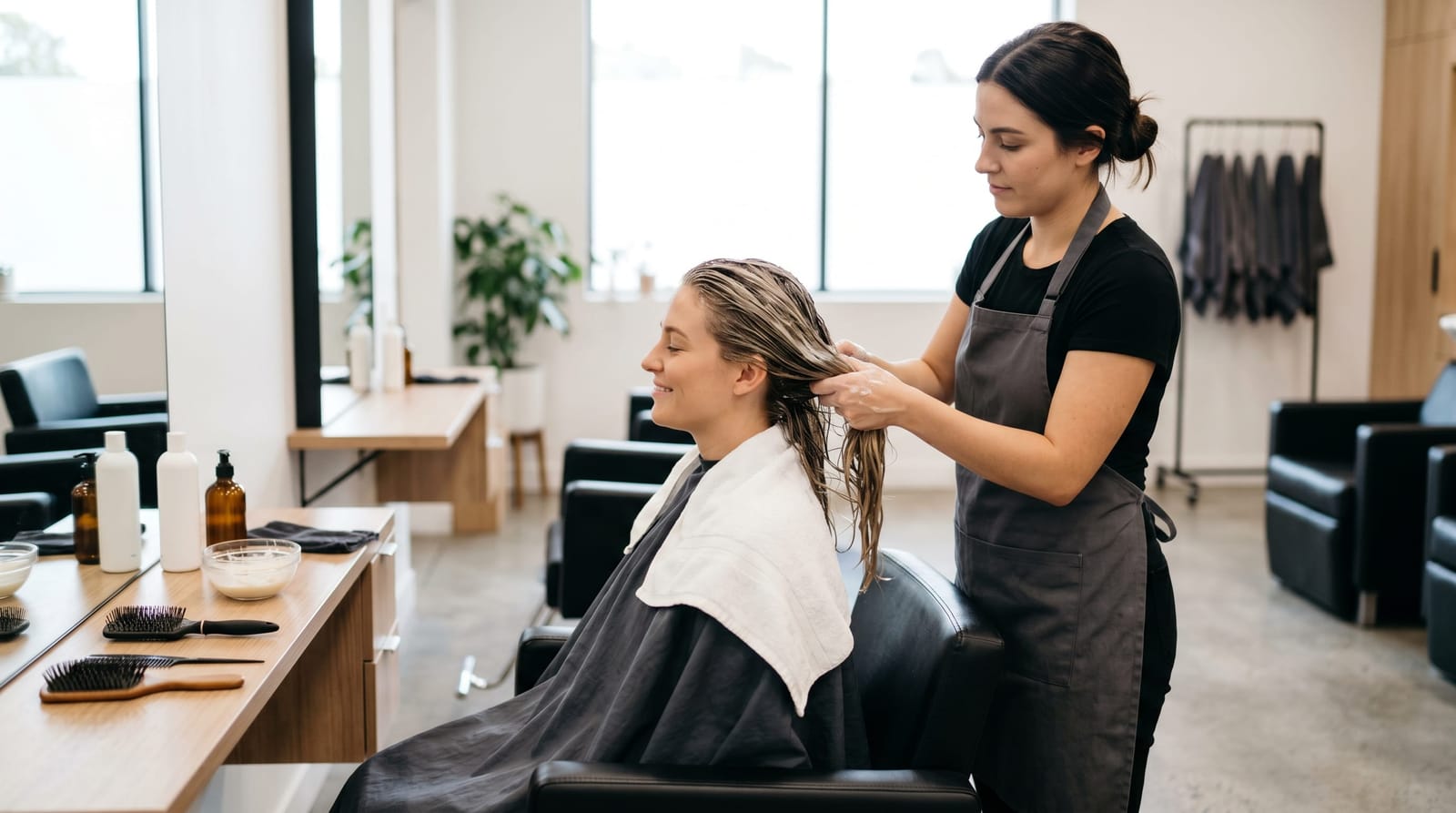
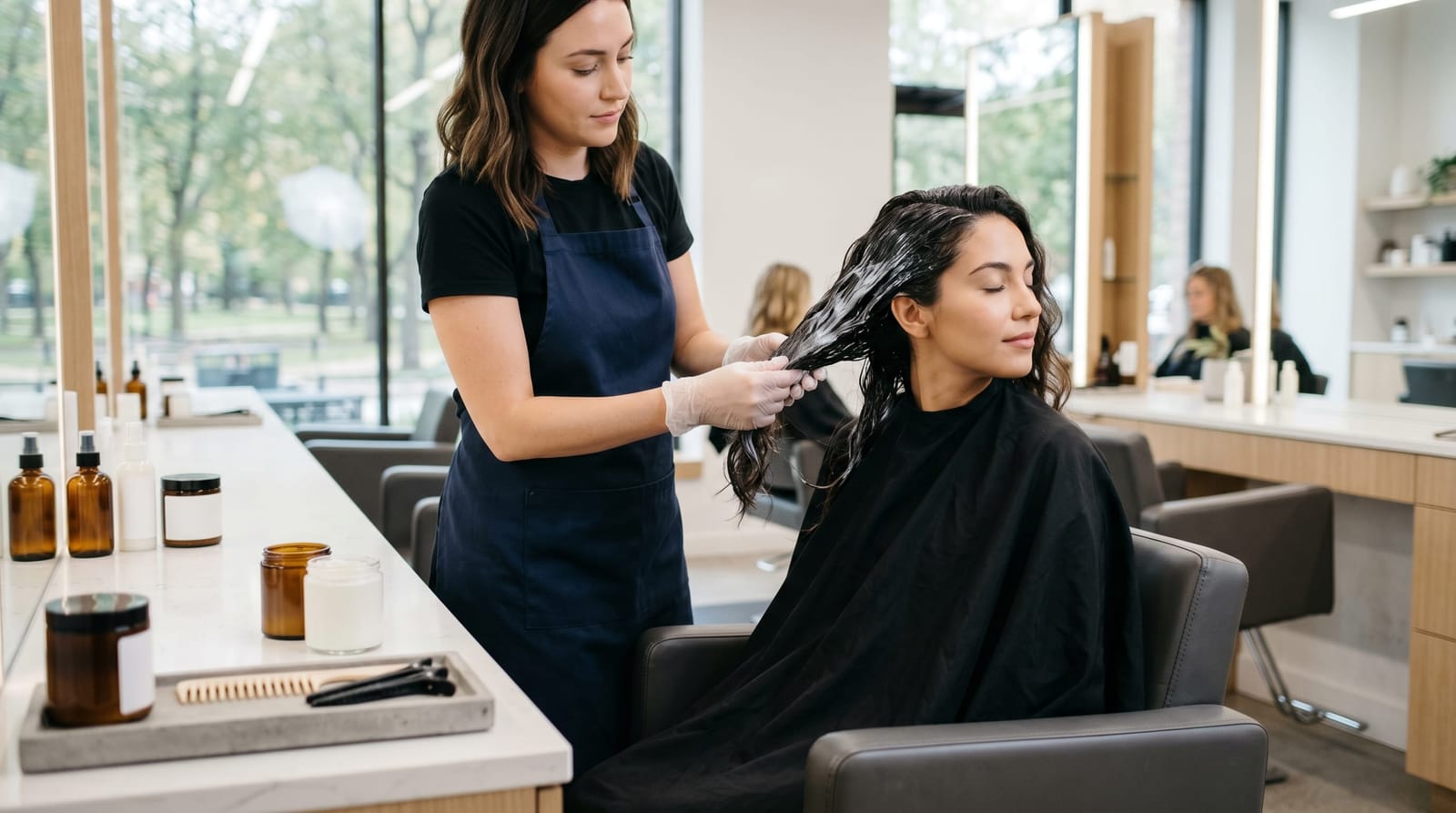
The first phase focuses on stopping active damage progression and restoring baseline moisture and protein balance. This typically involves one or two in-salon treatments, often a professional deep conditioning service or a bond-building treatment: combined with a prescribed at-home routine using professional-grade products between visits. During this phase, the stylist may recommend avoiding chemical services entirely.
Phase 2: Restoration (Weeks 4-12)
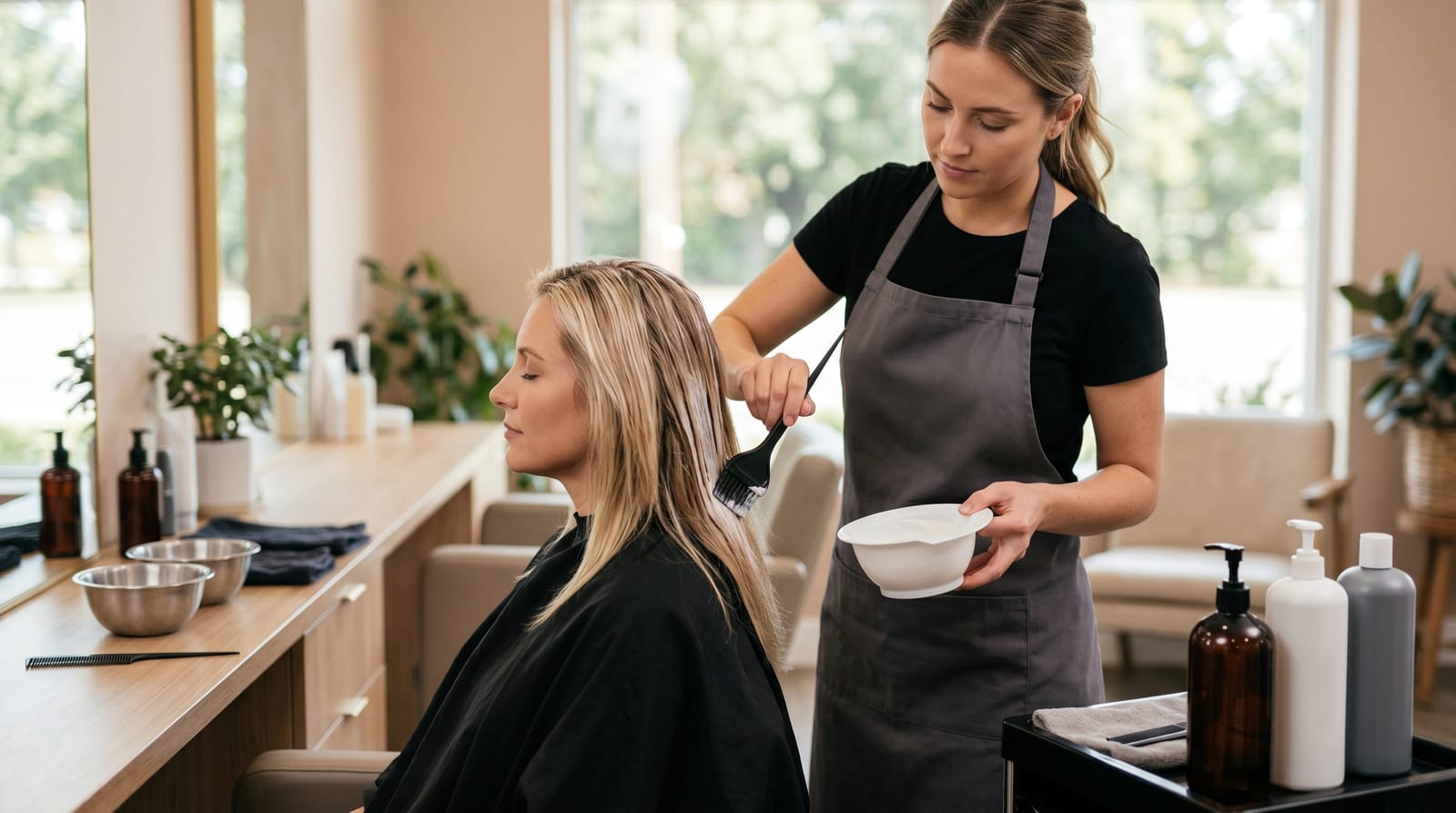
Once the hair is stabilized, restoration treatments target the specific damage type identified in the assessment. For chemically damaged hair, this may mean a series of six to eight weekly protein reconstruction treatments. For thermally damaged hair, ceramide and lipid infusion protocols rebuild the cuticle barrier over four to six sessions. Progress is measurable: improved elasticity scores, reduced breakage at the comb test, and visible cuticle smoothing under digital microscopy all serve as objective benchmarks.
Phase 3: Maintenance and Prevention
The final phase shifts from reactive treatment to proactive maintenance. The stylist establishes a monthly or bi-monthly schedule of conditioning treatments calibrated to the client's specific lifestyle, chemical service frequency, and seasonal factors. Clients at this stage are also educated on refined at-home care practices. This phase is where many clients transition to conditioning treatments for chemically processed hair as a long-term protective strategy, or adopt consistent at-home hair health maintenance routines designed to extend the results of in-salon work.
Monitoring Hair Health Progress Over Time
A treatment plan without measurement is simply a series of appointments. Professional progress monitoring is what allows the stylist to adapt the protocol based on how the hair is actually responding, which is rarely exactly as predicted, given the number of variables involved in daily hair care.
Objective Progress Markers
Trained stylists track progress using several objective indicators at each follow-up visit:
- Elasticity retest: Comparing the wet-stretch result against the baseline recorded at the initial assessment.
- Porosity retest: Using the float test or thermal response to assess whether the cuticle has sealed and moisture retention has improved.
- Breakage inventory: Noting the volume of shed and broken hairs during the combing process and comparing it to previous sessions.
- Digital scalp comparison: Side-by-side microscopy images from the initial assessment and current session reveal measurable changes in cuticle integrity, scalp sebum levels, and follicle health.
- Client-reported metrics: Drying time (over-porous hair dries extremely fast), product absorption rates, and daily manageability are subjective but clinically relevant data points.
Adjusting the Plan as Hair Responds
It is common for treatment plans to be modified at the four-week and eight-week marks. For example, a client who responds exceptionally well to protein treatments in phase one may need a moisture-heavy rebalancing treatment in phase two to prevent protein overload: a condition where excess protein makes the hair stiff, brittle, and paradoxically more prone to breakage. Monitoring catches this before it becomes a setback. On average, clients who follow a structured, monitored treatment plan see measurable elasticity improvement within six to eight weeks and report significantly reduced breakage within the first 30 days.
The Role of the Stylist Versus the Trichologist
Understanding who is performing your hair health assessment helps set appropriate expectations. Most salon-based hair health assessments are conducted by experienced stylists with advanced training in hair science: capable of identifying the four damage types, recommending appropriate conditioning protocols, and monitoring progress using professional tools. A certified trichologist, by contrast, has completed specialized postgraduate training in scalp and hair disorders and is equipped to diagnose medical conditions such as alopecia areata, seborrheic dermatitis, androgenetic hair loss, or scalp psoriasis. Initial trichology assessments are typically scheduled as standalone appointments, separate from any treatment services, and take approximately one hour of focused diagnostic work.
For clients whose primary concern is cosmetic damage and conditioning, a highly trained salon stylist conducting a structured hair health assessment is entirely appropriate. For clients experiencing significant hair shedding (more than 100 strands per day on a consistent basis), visible scalp patches, or scalp discomfort, a referral to a trichologist or dermatologist as part of the treatment plan is the responsible professional recommendation.
When the assessment is complete and a plan is in place, many clients begin their restoration journey with a professional deep conditioning service that is specifically selected based on their damage profile: rather than a generic treatment chosen off the menu. That precision is exactly what a proper assessment makes possible.
Related Details: Deeper Topics Within Hair Health Assessment
A full understanding of hair health assessment connects to several specific areas worth exploring in greater depth. Knowing the early warning signs that your hair has crossed a threshold requiring professional care is one of the most practical pieces of knowledge you can carry: the detailed breakdown of hair needs deep conditioning signs covers those indicators comprehensively. Additional detail topics within this cluster include the specific differences between moisture and protein imbalance, scalp pH and its effect on product performance, and how hard water mineral buildup is identified and treated during the assessment process. Each of these feeds back into the central treatment planning framework covered here.
Conclusion
A professional hair health assessment salon visit is the difference between treating symptoms and solving the underlying problem. By systematically analyzing damage type, scalp condition, porosity, and elasticity, and then building a phased, measurable treatment protocol, a skilled stylist transforms what might otherwise be a frustrating cycle of temporary results into genuine, trackable hair restoration. Whether you are dealing with years of chemical processing, thermal damage, or simply hair that has never felt as strong as it should, the assessment is where meaningful change begins. Book a dedicated hair health assessment at our salon today, and leave with a clear, personalized plan, not just a conditioning treatment, but a roadmap to the healthiest version of your hair.