Conditioning Treatments for Chemically Processed Hair
When it comes to conditioning for damaged hair, chemically processed hair presents a unique set of challenges that generic moisture routines simply cannot address. Whether your hair has been relaxed, colored, highlighted, permed, or treated with keratin services, the chemical process fundamentally changes the hair's internal structure: leaving it more porous, fragile, and prone to breakage. As part of a comprehensive approach to professional deep conditioning and hair health treatments, understanding how to condition chemically treated hair, not just whether to condition it: makes all the difference. In this post, we'll explore specialized conditioning protocols tailored to different chemical services, break down the protein-moisture balance your hair actually needs, and give you a clear framework for ongoing care that keeps chemically processed hair healthy, strong, and vibrant long-term.
Why Chemically Processed Hair Needs a Different Conditioning Approach
Not all damaged hair is the same, and this distinction matters enormously when designing a conditioning for damaged hair strategy. Chemically processed hair, whether relaxed, color-treated, or permed, has undergone a structural transformation at the cortex level. The cuticle layers, which normally lie flat and protect the inner cortex, are lifted or partially dissolved during chemical services. This creates a hair fiber that is simultaneously more porous (absorbs moisture rapidly but loses it just as fast), weaker in tensile strength, and more susceptible to environmental stressors like heat and humidity.
Standard rinse-out conditioners provide surface-level smoothing, but they rarely penetrate deeply enough to address the internal damage caused by chemicals. This is why a targeted conditioning for damaged hair approach must use formulations designed to penetrate the cortex, not just coat the cuticle. Deep conditioning treatments, particularly those used in professional salon settings, are formulated with smaller molecular-weight ingredients that can actually enter the hair shaft and work from the inside out.
Additionally, the frequency and type of conditioning treatment must be calibrated to the specific chemical service the hair has undergone. A client with single-process color needs a different protocol than someone with a double-process bleach and tone, and both differ from someone with a chemical relaxer. Recognizing these distinctions is the foundation of effective chemically processed hair care. Before beginning any conditioning regimen, a hair health assessment salon appointment can help identify exactly where your hair falls on the damage spectrum and what type of treatment it needs most.
Conditioning Protocols by Chemical Service Type
Effective conditioning for damaged hair starts with matching the treatment to the specific chemical history of the hair. Here's how to approach the most common categories:
Color-Treated and Highlighted Hair
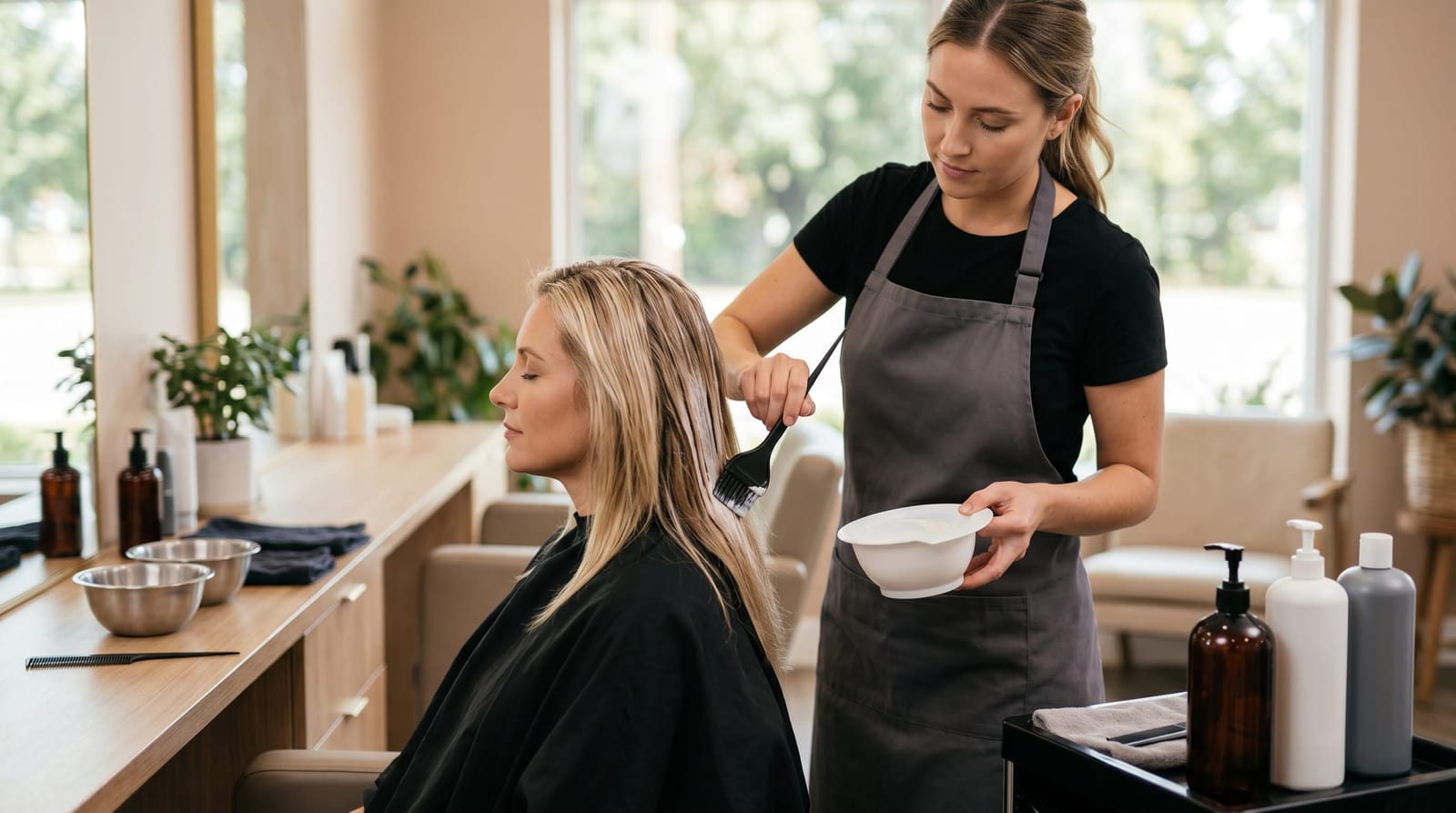
Color-treated hair, especially hair that has been highlighted or bleached, suffers from significant protein loss during the lifting process. Bleach breaks down disulfide bonds within the cortex, which weakens the hair's structural integrity. For this hair type, conditioning for damaged hair must include both protein reinforcement and moisture replenishment. A biweekly deep conditioning treatment, alternating between a protein-based treatment and a moisture-focused mask, works well. Look for treatments containing hydrolyzed keratin, silk amino acids, or wheat protein, which are small enough to penetrate the cortex and help rebuild internal bonds.
Relaxed Hair
Chemically relaxed hair has had its natural curl pattern permanently broken down through an alkaline chemical process. This leaves the hair in a consistently fragile state that requires consistent conditioning for damaged hair protocols to prevent excessive breakage. Relaxed hair is highly susceptible to dryness and hygral fatigue (weakening from repeated swelling and shrinking when wet). Deep conditioning every 7-10 days with a rich, moisturizing treatment is often recommended, supplemented by a protein treatment once a month to maintain tensile strength without over-hardening the hair.
Permed and Texturized Hair
Perm solutions and texturizers also break and reform disulfide bonds, though often in a slightly less aggressive manner than relaxers. The key with conditioning for damaged hair in this category is timing: conditioning too soon after a perm (within 48-72 hours) can disrupt the newly formed bonds before they fully set. After the waiting period, however, regular deep conditioning is essential to restore moisture and elasticity to the reshaped strands.
The Protein vs. Moisture Balance in Damaged Hair Conditioning
One of the most critical, and most misunderstood, aspects of conditioning for damaged hair is maintaining the correct protein-to-moisture ratio. Hair is primarily composed of keratin protein, and when chemical processes strip that protein away, the hair loses strength and elasticity. However, the solution is not simply to load the hair with protein treatments on a continuous basis.
Overusing protein-containing treatments can lead to hair brittleness, a phenomenon sometimes called "protein overload." When the hair becomes too stiff and rigid from excess protein, it actually becomes more prone to breakage: snapping rather than stretching under tension. This is why conditioning protocols for chemically processed hair must balance protein replenishment with adequate moisture delivery. For a deeper understanding of how to diagnose which one your hair needs most right now, exploring protein vs moisture hair treatment options with a professional can be transformative.
Signs Your Damaged Hair Needs More Protein
- Hair feels mushy, gummy, or stretches excessively when wet without returning to shape
- Increased shedding and breakage despite regular moisturizing conditioning for damaged hair routines
- Hair feels limp and lacks body even after styling
- Color fades unusually fast due to high porosity
Signs Your Damaged Hair Needs More Moisture
- Hair feels dry, rough, or straw-like to the touch
- Excessive tangling and difficulty detangling, even when wet
- Hair snaps or breaks without much stretching
- Dull, lackluster appearance that doesn't improve with light conditioners
A professional stylist can perform a simple strand test and porosity assessment to determine where your hair currently sits on the protein-moisture spectrum, then build a conditioning for damaged hair plan accordingly.
Professional vs. At-Home Conditioning for Damaged Hair
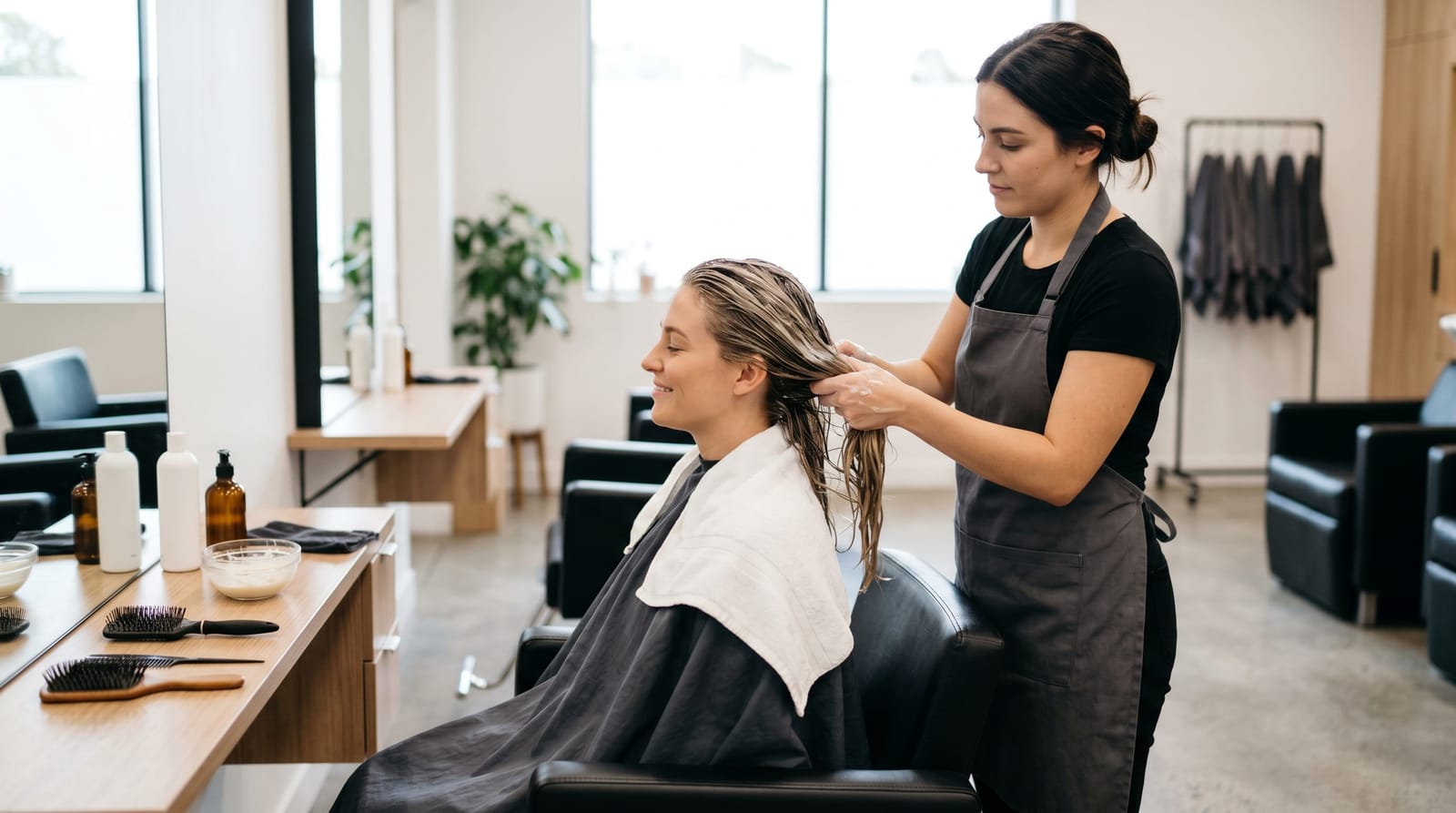
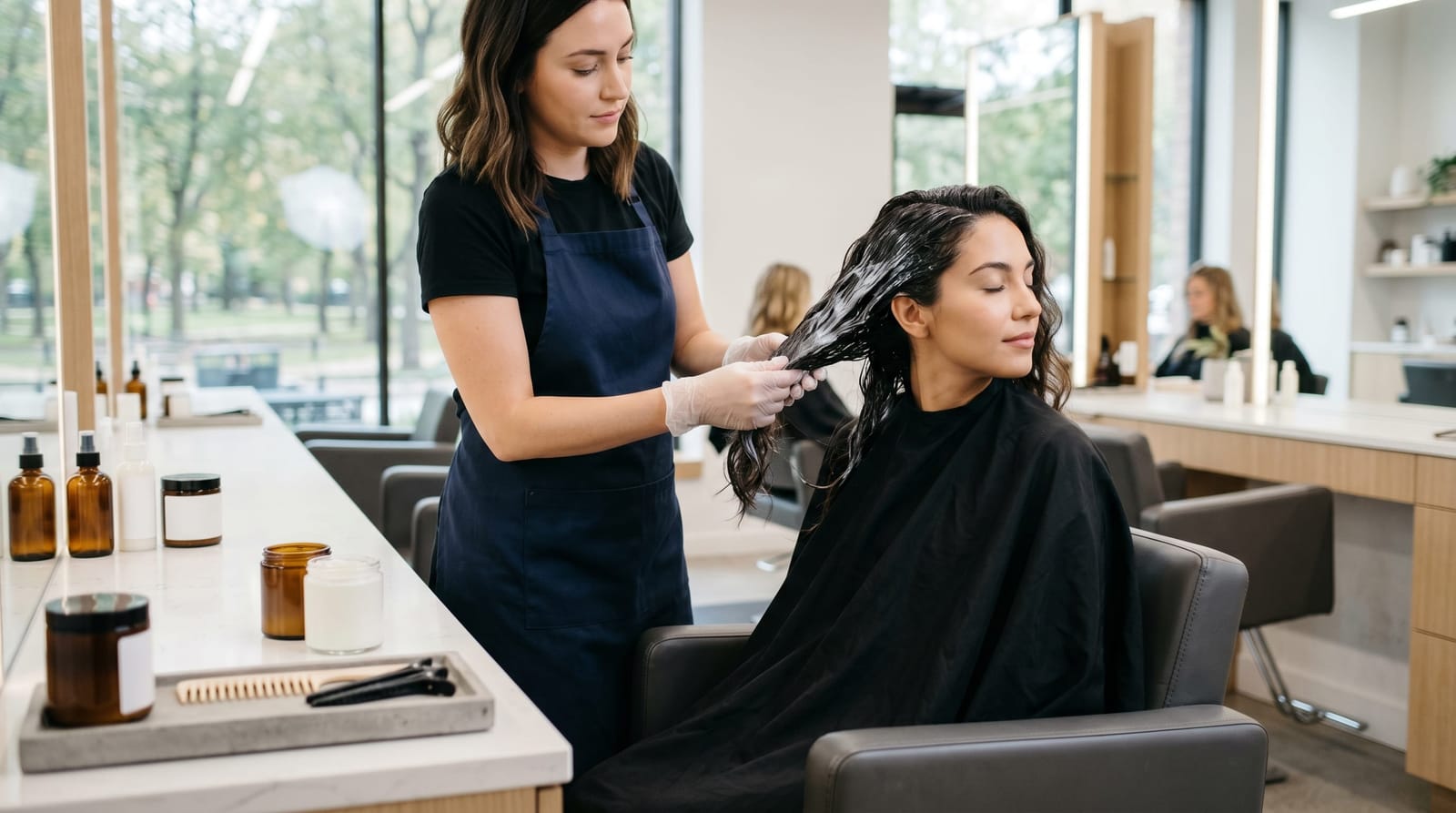
There is a meaningful difference between the conditioning treatments available in a professional salon setting and what can be accomplished at home. Professional-grade deep conditioning for damaged hair formulations are typically more concentrated, use higher-quality active ingredients, and are applied under controlled conditions, including heat from a steamer or hooded dryer, that allow the treatment to penetrate more deeply and work more effectively.
In a salon environment, a stylist can also assess your hair's condition in real time and adjust the treatment protocol: swapping a moisture mask for a protein reconstructor if your hair needs it, or combining modalities such as steam conditioning followed by a sealant treatment for extremely porous or damaged hair. This level of customization is difficult to replicate at home, which is why pairing a professional deep conditioning service with an informed at-home maintenance routine delivers the best long-term results for chemically processed hair.
That said, at-home conditioning for damaged hair has an important role to play between salon visits. Lightweight leave-in conditioners applied after every wash, weekly deep conditioning masks with natural oils such as argan, avocado, or castor oil, and protective styling all contribute to maintaining the moisture-protein balance that salon treatments establish. Hair packs containing natural oils can help seal the cuticle and slow moisture loss between professional treatments.
Timing and Frequency: Building a Conditioning Schedule for Chemically Processed Hair
Creating a sustainable conditioning for damaged hair schedule requires thinking in terms of both short-term recovery and long-term maintenance. In the weeks immediately following a chemical service, particularly bleach, relaxer, or a heavy color correction, the hair is at its most vulnerable. During this acute phase, conditioning for damaged hair should be prioritized at every wash, and a professional treatment within the first two weeks post-service can dramatically reduce the long-term damage footprint.
Understanding the proper conditioning before chemical treatment protocols is just as important: pre-treating hair with a strengthening conditioner can reduce the degree of damage sustained during the chemical service itself, giving you a better starting point for recovery.
A Sample Conditioning Schedule for Chemically Treated Hair
- Weekly: Deep conditioning treatment at home (moisture-focused) after every wash, with a leave-in conditioner applied while hair is still damp
- Biweekly: Alternate moisture deep conditioning with a light protein treatment to maintain structural integrity without risking protein overload
- Monthly: Professional salon deep conditioning treatment with heat activation for maximum penetration; stylist assessment of hair condition
- Every Chemical Service: Pre- and post-treatment conditioning protocol designed around the specific chemical being applied
Consistency is the operative word in conditioning for damaged hair. The hair may not be a living tissue that can "heal" in the biological sense, but strategic and regular conditioning can dramatically improve its appearance, strength, flexibility, and manageability over time by restoring what chemical processes remove.
Ingredients to Look for in Conditioning Treatments for Damaged Hair
Not all conditioning for damaged hair products are created equal. For chemically processed hair specifically, the formulation matters as much as the frequency of use. Here are the categories of ingredients that deliver genuine, measurable results:
Protein Ingredients for Structural Repair
- Hydrolyzed keratin: Closely matches the natural protein structure of human hair; penetrates the cortex to reinforce weakened bonds
- Hydrolyzed wheat protein: Effective for rebuilding hair structure internally and reducing breakage in damaged, over-processed strands
- Hydrolyzed silk amino acids: Smaller molecule size than keratin; excellent for fine or color-treated hair that needs gentle protein reinforcement
Moisture and Humectant Ingredients
- Glycerin and panthenol: Attract water molecules from the environment into the hair shaft, improving flexibility and reducing static
- Aloe vera: Lightweight moisture that also helps balance scalp pH after chemical services
- Natural oils (argan, avocado, coconut): Provide emollient coating that seals the cuticle and slows moisture evaporation between washes
Bond-Building and Repair Technologies
A newer category of conditioning for damaged hair technology involves bond-building chemistry: ingredients that work at the disulfide bond level to actively repair the damage caused by bleach and chemical relaxers. These treatments, often used as add-on services in professional salons, can be incorporated into the conditioning step of any chemical service to dramatically reduce damage accumulation over time.
Related Details to Explore
For clients wanting to go deeper into the science and strategy of conditioning for damaged hair, two closely related topics deserve attention. Understanding the nuances of protein vs moisture hair treatment, including how to assess your hair's current needs at home between salon visits, can help you make smarter product choices day to day. And if you're considering an upcoming chemical service, learning about conditioning before chemical treatment can help you minimize damage before it even begins, giving your hair the strongest possible foundation going into any chemical process.
Conclusion
Conditioning for damaged hair that has been chemically processed isn't a one-size-fits-all endeavor: it requires a thoughtful, customized strategy that accounts for your hair's chemical history, current condition, and ongoing needs. By understanding the protein-moisture balance, timing your treatments correctly, and working with a professional who can assess and adjust your protocol as your hair changes, you can maintain strong, healthy, beautiful hair through and between chemical services. Your chemically processed hair deserves more than a generic conditioner: it deserves a plan. Book a hair health assessment salon appointment today to get a personalized conditioning protocol built around your hair's unique needs.