Deep Conditioner Treatment: Restoration and Repair
When it comes to maintaining truly healthy hair, a professional deep conditioning service is one of the most impactful treatments you can invest in. As part of our broader focus on professional deep conditioning and hair health treatments, this guide dives into exactly what deep conditioner treatments do, how they work, what formulas are used, and why they matter for hair in virtually every condition. Whether your hair has been weakened by color processing, heat styling, or environmental stress, understanding the full scope of restoration and repair treatments helps you make smarter decisions about your hair health. In the sections below, you'll learn about the science behind conditioning, the treatment process, the types of formulas available, and which hair conditions benefit most.
What a Professional Deep Conditioning Service Actually Does
A professional deep conditioning service goes far beyond what an at-home mask can accomplish. In a salon setting, licensed stylists assess your hair's current protein-moisture balance before selecting a targeted formula: a step that makes a significant difference in outcomes. According to hair care research, damaged hair can lose up to 30% of its natural protein structure due to chemical processing alone, and restoring that balance requires more than surface-level hydration.
Professional deep conditioner treatment formulas are designed to penetrate the hair cortex, the inner layer responsible for strength and elasticity, rather than simply coating the outside of the strand. This distinction is critical. Surface conditioners can make hair feel smooth temporarily, but they don't address structural damage. Salon-grade treatments contain ingredients like hydrolyzed keratin, amino acids, and ceramides that actively bond to damaged areas within the hair shaft.
Here's what a professional deep conditioning service does at a structural level:
- Replenishes lost moisture in dehydrated or brittle strands
- Rebuilds protein bonds broken down by heat, chemicals, or mechanical stress
- Seals the cuticle layer to reduce frizz and improve shine
- Restores elasticity so hair can stretch without snapping
- Reduces porosity irregularities that cause uneven color absorption
The result is hair that doesn't just look healthier: it functionally performs better, resists breakage more effectively, and responds more predictably to future styling and chemical services.
The Treatment Process: What to Expect Step by Step
Many clients are surprised by how involved a professional deep conditioning service is compared to what they're used to doing at home. The full process typically takes between 30 and 60 minutes, depending on hair length, density, and the specific formula used. Some intensive treatments require longer processing times to achieve full penetration.
Step 1: Hair Analysis and Consultation
Before any product is applied, a skilled stylist evaluates your hair's porosity, elasticity, and current moisture-protein ratio. This assessment determines whether you need a hydration-focused treatment, a protein-rebuilding treatment, or a balanced combination of both. Skipping this step, which is common with at-home products, often leads to over-conditioning or protein overload, both of which can worsen hair condition.
Step 2: Cleansing and Preparation
Hair is shampooed with a clarifying or gentle cleanser to remove product buildup and open the cuticle slightly, allowing the deep conditioner to penetrate more effectively. Clean hair absorbs treatment ingredients significantly better than hair coated in silicones or styling products.
Step 3: Treatment Application
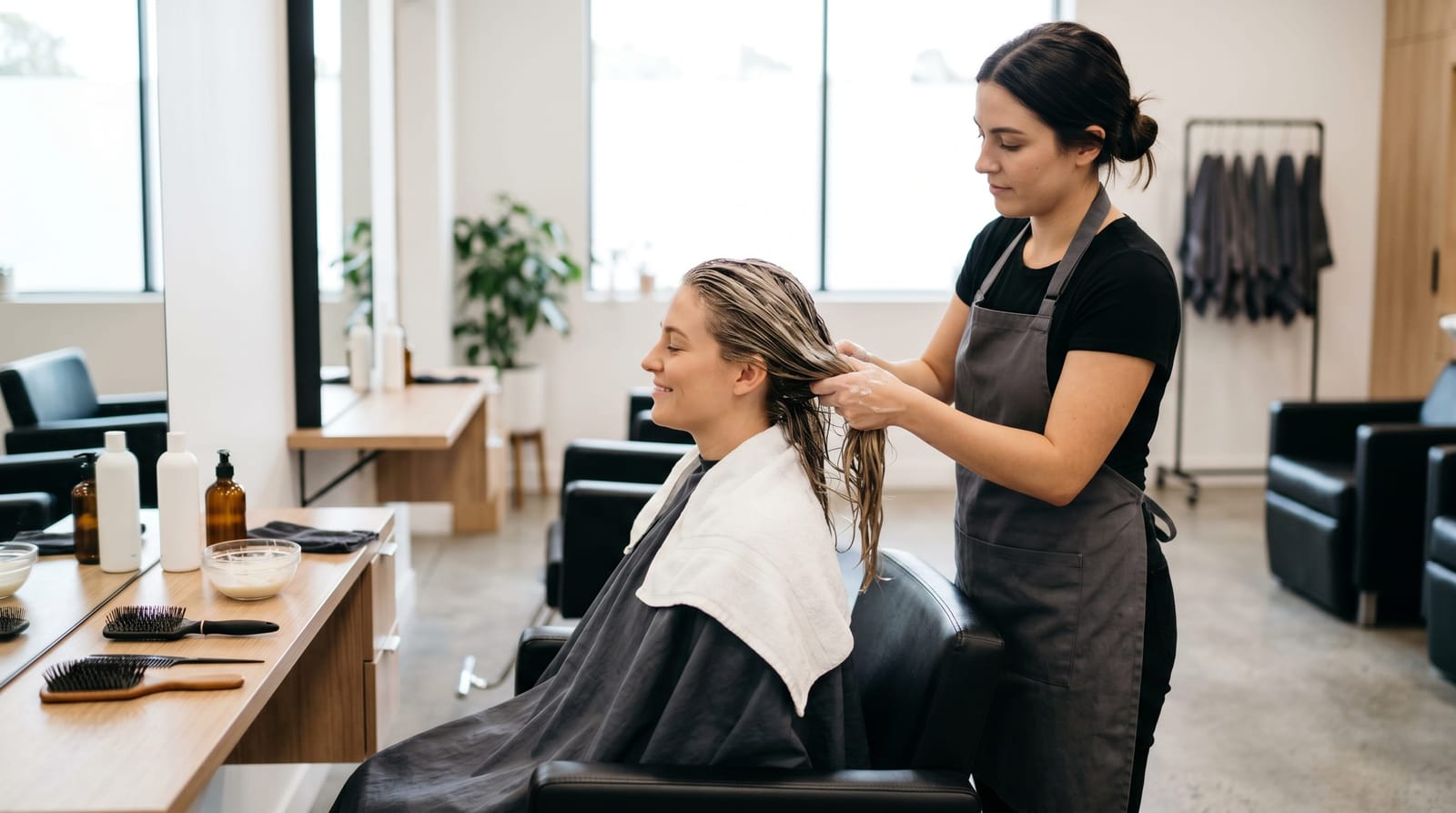
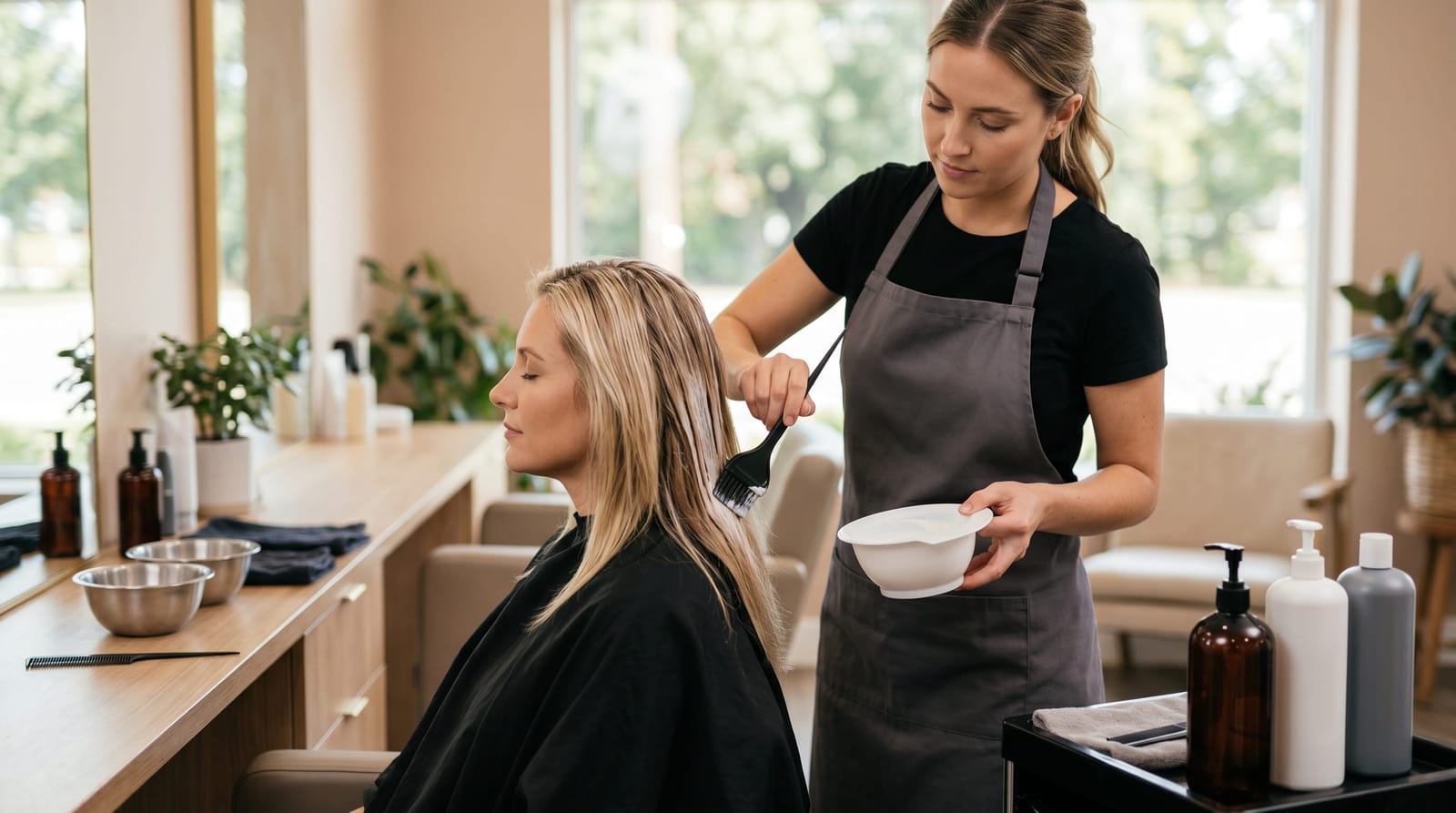
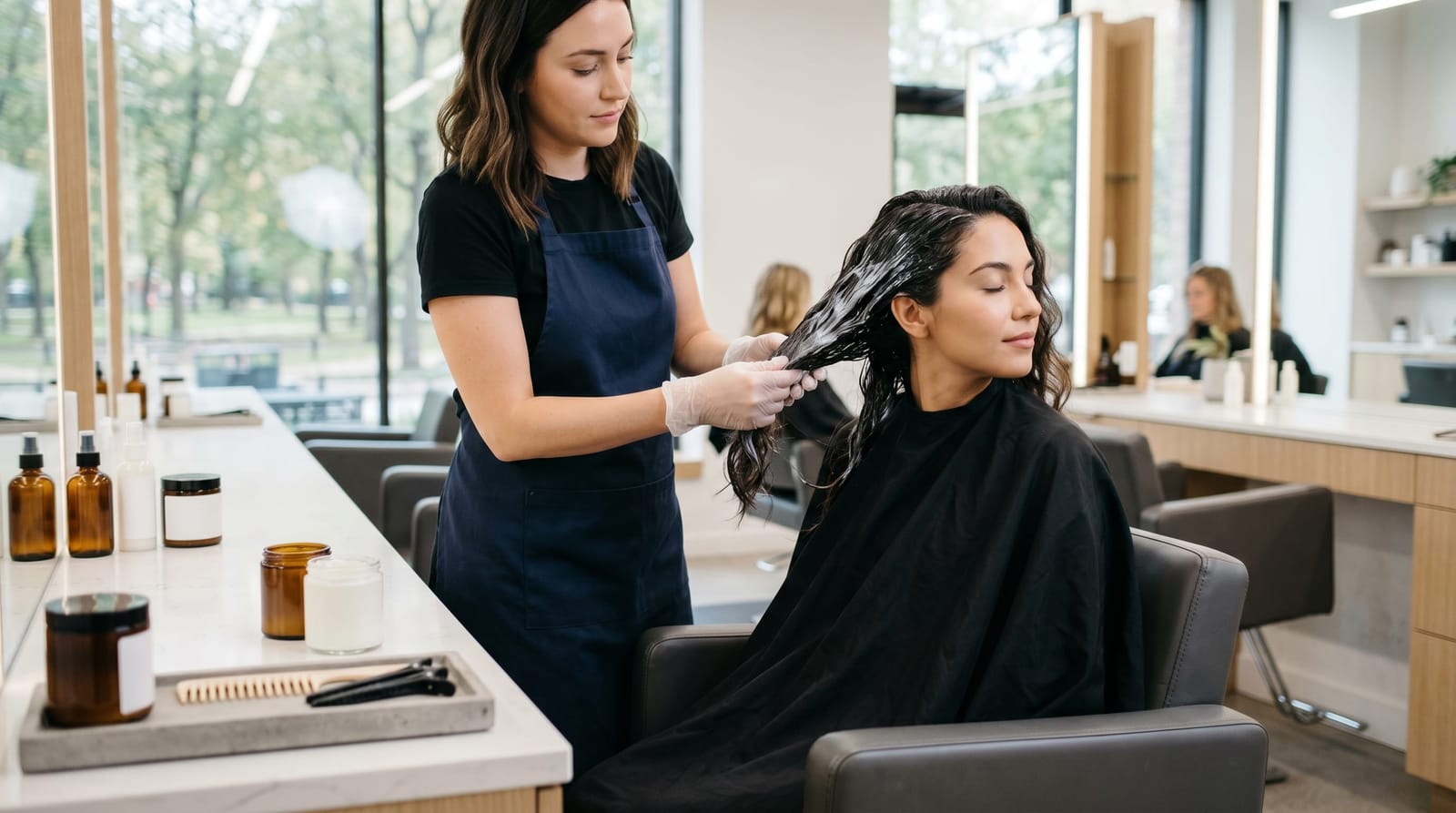
The chosen deep conditioner is applied section by section to ensure full saturation from root to tip. In many professional settings, heat is introduced at this stage: either through a hooded dryer, steamer, or heated cap. Heat causes the hair cuticle to expand, allowing conditioning molecules to travel deeper into the cortex. Studies show that heat-activated treatments can improve ingredient absorption by as much as 40% compared to no-heat application.
Step 4: Processing and Rinse
Processing time varies by formula: typically between 15 and 30 minutes for standard treatments, and up to 45 minutes for intensive repair services. The treatment is then rinsed thoroughly with cool water to seal the cuticle and lock in the conditioning benefits.
Step 5: Finishing and Styling
Post-treatment, stylists often apply a leave-in product or lightweight serum to protect the work that was just done before blow-drying or finishing the style. This final layer helps maintain the cuticle seal and extends the longevity of the treatment results.
Types of Deep Conditioning Formulas Used in Professional Services
Not all deep conditioner treatment options are the same, and a significant advantage of visiting a salon for a professional deep conditioning service is access to a range of specialized formulas. Understanding these categories helps you have a more informed conversation with your stylist.
Moisture-Based Treatments
These formulas focus on restoring water content and flexibility to dry, brittle, or naturally textured hair. Key ingredients include:
- Aloe vera and glycerin for humectant hydration
- Shea butter and mango butter for sealing moisture into the strand
- Hyaluronic acid for deep cellular hydration
Moisture treatments are ideal for hair that feels dry, looks dull, or experiences high frizz in humid conditions.
Protein-Based Treatments
When hair has lost structural integrity, common after bleaching, relaxing, or repeated heat exposure, protein treatments help rebuild the cortex. Common ingredients include:
- Hydrolyzed keratin, which bonds to empty spaces in damaged hair
- Hydrolyzed wheat or silk protein for strengthening fine or fragile strands
- Amino acid complexes that mimic the natural building blocks of hair
Protein treatments reduce breakage, improve tensile strength, and help hair tolerate future chemical services with less damage. Some formulas used in salons report a reduction in breakage of up to 75% after a full course of treatments.
Balanced Protein-Moisture Treatments
Many professional deep conditioner treatment options are engineered to deliver both protein and moisture simultaneously, maintaining the ideal balance that healthy hair naturally has. Services like the Cécred Hydration & Repair Treatment are specifically formulated to repair hair weakened by color, heat, and extensions while maintaining this protein-moisture equilibrium. These balanced formulas are often the best starting point for clients whose hair history is complex or unknown.
Scalp-Focused Conditioning Treatments
Some professional deep conditioning services extend to the scalp, using treatments that soothe irritation, regulate sebum production, and support a healthy follicle environment. A healthy scalp is the foundation of healthy hair growth, and these treatments are increasingly included in comprehensive hair health programs.
Hair Conditions That Benefit Most from Deep Conditioner Treatments
While virtually every hair type benefits from periodic professional deep conditioning service, certain conditions make these treatments not just helpful but essential for preventing further damage or hair loss.
Color-Treated and Bleached Hair
Chemical color services, particularly bleaching, break down up to 15-20% of the hair's disulfide bonds in a single session. Deep conditioner treatments with protein and ceramide support help partially restore these bonds and significantly reduce post-color breakage.
Heat-Damaged Hair
Repeated use of flat irons, curling wands, and blow dryers at high temperatures degrades the hair's natural protein structure over time. Hair that has lost its curl pattern, becomes limp, or refuses to hold style is often experiencing heat damage that responds well to a structured professional deep conditioning service program.
Chemically Relaxed or Permed Hair
Relaxers and perms permanently alter the hair's structural bonds. Ongoing deep conditioner treatment helps maintain the integrity of chemically processed strands between services. For more detail on managing this hair type, our guide on conditioning treatments for chemically processed hair covers the specific protocols stylists recommend.
Natural and Textured Hair
Tightly coiled and kinky hair textures are naturally more prone to dryness because the sebum produced at the scalp has difficulty traveling down the curved hair shaft. Regular moisture-based professional deep conditioning service keeps natural hair supple, reduces shrinkage-related breakage, and supports length retention.
Extension-Stressed Hair
Hair extensions and braids create traction on the scalp and can lead to mechanical breakage and dryness at the point where natural hair meets the extension. Deep conditioning after extension removal is a critical step in restoring health to stressed strands.
How Often Should You Schedule a Professional Deep Conditioning Service?
One of the most common questions clients ask is how frequently they should invest in a professional deep conditioning service. The answer depends on several factors, including hair type, chemical history, and current condition. As a general framework:
- Severely damaged or chemically processed hair: Every 2-4 weeks during a restoration period
- Color-treated or heat-styled hair: Once a month as a maintenance standard
- Healthy hair with occasional stress: Every 4-6 weeks for preventive care
- Natural or textured hair with high dryness: Every 2-3 weeks for moisture retention
These guidelines are starting points, not rigid rules. Your stylist will refine a schedule based on how your hair responds to treatment. For a comprehensive breakdown of treatment timing based on specific hair conditions, our resource on deep conditioning frequency schedule outlines exactly how to build a treatment plan that matches your hair's needs. Additionally, building a long-term hair health strategy, including both in-salon and home maintenance steps, is covered in our guide on at-home hair health maintenance, which pairs directly with in-salon treatments to extend your results between appointments.
Understanding your hair's specific needs before setting a schedule is critical. Our post on hair health assessment and treatment planning walks through how stylists evaluate hair condition and design a personalized treatment roadmap: a valuable first step before committing to any service frequency.
Related Treatment Details Worth Exploring
As part of the broader deep conditioning and hair health topic cluster, several detailed guides expand on the topics introduced in this post. If you're interested in the specifics of how different chemical processes affect conditioning needs, the post on conditioning treatments for chemically processed hair provides targeted protocols for relaxed, color-treated, and permed hair types. For clients building a complete hair wellness routine, the at-home hair health maintenance guide covers the products, techniques, and habits that reinforce the results of your professional deep conditioning service between salon visits.
Final Thoughts: Invest in Restoration Before the Damage Compounds
A professional deep conditioning service is one of the highest-return investments you can make in your hair's long-term health. The combination of expert assessment, salon-grade formulas, and heat-activated application produces results that simply aren't achievable with drugstore products applied at home. Whether you're recovering from color damage, managing a naturally dry texture, or simply maintaining hair that you've worked hard to grow, a targeted deep conditioner treatment program, built around your specific hair type and condition, gives you a clear path to stronger, more resilient hair. Ready to experience the difference? Book a professional deep conditioning service consultation and let a licensed stylist design a restoration plan that works for your hair.