Hair Color for Dark Skin Tones: The Complete Guide for African American and Hispanic Women in the DMV
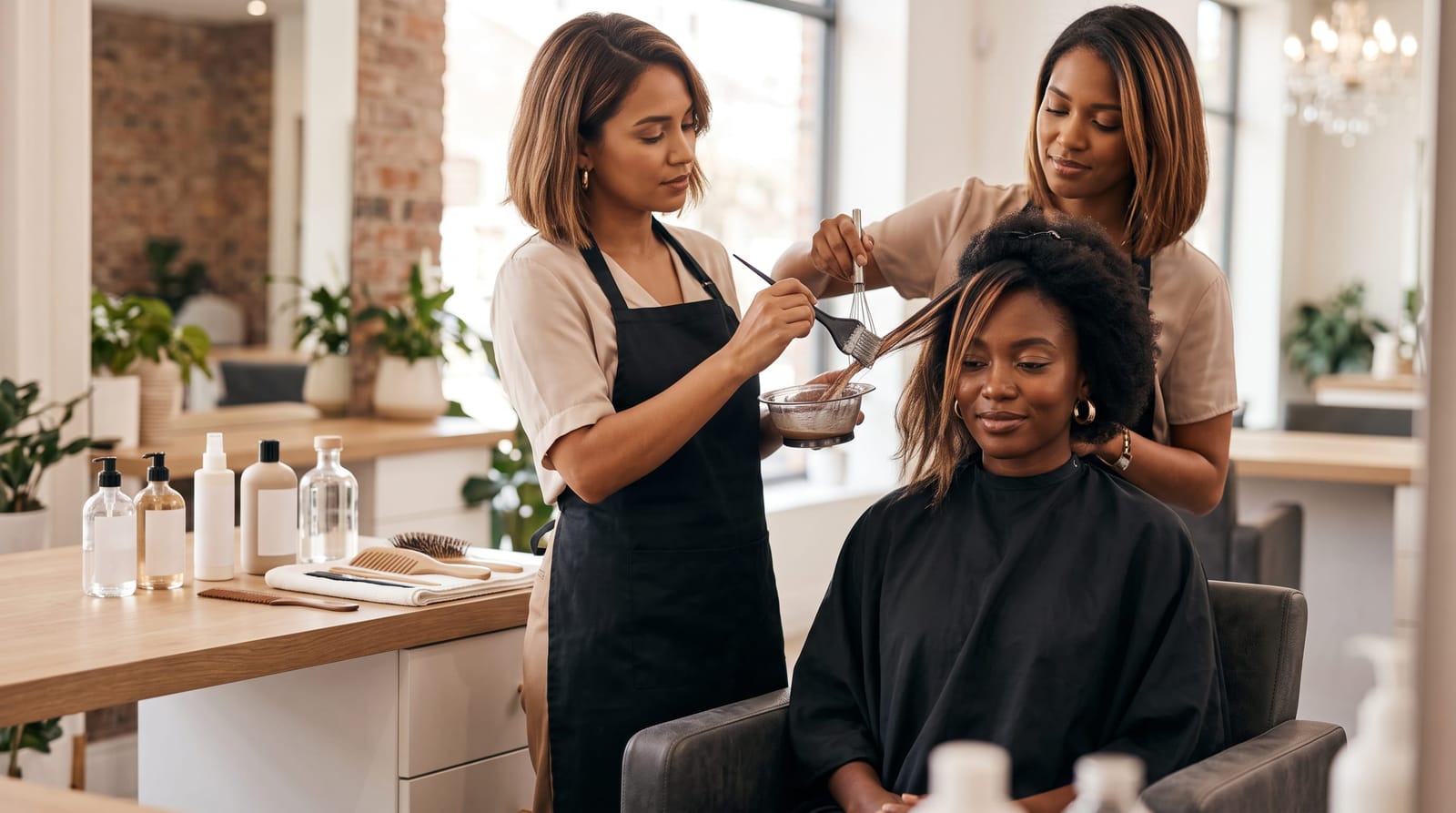
You've probably scrolled through dozens of hair color inspiration photos only to wonder, will that actually work on me? Most color guides are written with lighter complexions in mind, leaving women with dark skin tones to guess at what will translate beautifully onto their own. The result? Color choices that fall flat, undertones that clash, or highlights that read as brassy instead of brilliant.
Here's the truth: hair color for dark skin is not a one-size-fits-all conversation. For African American and Hispanic women, especially those in the DMV area navigating humidity, heat, and the full spectrum of melanin-rich complexions, getting color right requires a deeper level of knowledge, skill, and product customization than most generic guides will ever cover.
This guide changes that. You'll learn how to identify your undertone, which color families genuinely flatter dark complexions, how highlights and full color services differ for textured and chemically treated hair, and what a truly personalized color consultation looks like when done right. Whether you're exploring your first color service or looking to refresh a look that's stopped serving you, this is your starting point.
Why Hair Color for Dark Skin Tones Requires a Different Approach
The hair color industry has historically centered its education, product development, and marketing around lighter skin tones and finer hair textures. That's slowly changing, but the gap in targeted, expert-level guidance for melanin-rich clients still exists, and it shows up in real ways when someone sits down in a salon chair.
Dark skin tones carry warmth, depth, and richness that lighter complexions simply don't. That's not a limitation: it's actually an extraordinary advantage when it comes to color. Deep mahogany skin can make a burgundy red look like a work of art. Golden-brown complexions can carry honey blonde highlights in a way that looks naturally sun-kissed rather than artificial. The key is understanding how color interacts with melanin-rich skin rather than defaulting to rules built for someone else's canvas.
There are also practical hair structure considerations. Many African American and Hispanic clients have naturally textured hair, coils, curls, waves, that may also be chemically processed. Color behaves differently on textured strands than it does on fine, straight hair. Porosity levels vary. Processing times shift. Product formulations matter enormously. A colorist who understands these nuances isn't just applying dye: they're engineering a result that fits your specific hair biology, lifestyle, and aesthetic goals.
According to Mintel's Beauty & Personal Care research, approximately 70% of Black women report that finding hair care products and services that address their specific needs remains a challenge. That statistic reflects something real: there's a genuine gap between what most salons offer and what clients with textured, melanin-rich hair actually need. Closing that gap starts with education, and it continues with skilled, intentional color work.
The Role of Melanin in Color Results
Melanin, the pigment that gives skin and hair its color, exists in two primary forms: eumelanin (responsible for brown and black tones) and pheomelanin (responsible for red and yellow tones). Dark hair is naturally high in eumelanin, which means when you lift color, the underlying warmth revealed is often golden, orange, or red before it reaches a cooler or lighter result. Understanding this pigment structure is essential for predicting how a color service will turn out, and for choosing shades that will look their most vibrant once applied.
Understanding Your Undertone: The Foundation of Every Color Decision
Before you choose a color, you need to understand your undertone. This single factor determines which shades will make your complexion glow and which ones will make it look dull or washed out. Undertones fall into three categories: warm, cool, and neutral, and they exist independently of how light or deep your skin tone is.
Warm Undertones
Warm undertones carry yellow, golden, peachy, or red-orange hues beneath the surface of the skin. If your veins appear greenish, gold jewelry flatters you more than silver, and your skin has a sun-kissed warmth even in winter: you likely have warm undertones. For warm complexions, hair colors in the amber, caramel, copper, honey blonde, and auburn family are genuinely flattering. These shades add depth without fighting your natural warmth. According to research from Keswigs, warm-undertone clients often look their most radiant in caramel and honey blonde, while copper and auburn introduce beautiful contrast without pulling the skin toward ashy or gray.
Cool Undertones
Cool undertones are characterized by hints of blue, pink, or purple beneath the skin. Veins appear more bluish or purple, silver jewelry is more flattering, and the skin has a slightly rosy or blue-toned quality. Cool-undertone clients tend to look stunning in ashy, jewel-toned, and blue-black shades. Ash blonde highlights, when done correctly, can neutralize excess warmth and create a modern, sophisticated look. Burgundy leans toward the cooler side of red and can be incredibly striking on deep cool-toned complexions.
Neutral Undertones
Neutral undertones are the most versatile: neither strongly warm nor strongly cool. If both gold and silver jewelry look equally flattering and your skin has a balanced, even quality, you likely have neutral undertones. This opens up a wider range of color possibilities, from chocolate browns and deep chestnuts to multi-tonal highlights that blend warm and cool together.
A skilled colorist won't guess at your undertone: they'll assess it during a thorough consultation, factoring in your skin tone, existing hair color, hair texture, and lifestyle before making any recommendations.
The Most Flattering Color Families for Dark Skin Tones
Once you understand your undertone, the world of hair color opens up beautifully. Here's a closer look at the color families that consistently deliver stunning results on dark complexions.
Rich Reds: Auburn and Burgundy
Red is one of the most universally flattering color families for dark skin tones, but not all reds are created equal. Auburn and burgundy are the shades that work best because they offer warmth and richness without crossing into a cartoonish or overly artificial territory. According to SoftSheen-Carson's color research, auburn and burgundy are among the most recommended red shades for dark complexions precisely because they honor the depth already present in the hair while adding dimension. On deep skin tones, burgundy in particular takes on a jewel-toned quality that photographs beautifully and reads as sophisticated in person.
Warm Neutrals: Caramel, Honey, and Chocolate
Caramel and honey blonde are perennial favorites, and for good reason. These shades add luminosity to warm and neutral complexions, creating a naturally sun-kissed effect that complements rather than competes with deep skin. Mocha brown and chocolate brown offer a subtler shift: beautiful for clients who want dimension without a dramatic change. These warmer neutrals also tend to be more forgiving on regrowth, making maintenance between salon visits feel less high-pressure.
Cool Tones: Ash Blonde and Blue-Black
For cool-undertone clients, ashy highlights are a sophisticated choice. According to Davines, ash blonde is one of the most popular highlight colors for dark skin because the coolness in the tone neutralizes excess warmth in the complexion. When applied well, ash highlights look modern and editorial, not gray or washed out. Blue-black is another striking option for clients who want bold, glossy depth without dramatically altering their natural color story.
Bold and Fashion-Forward Shades
Jewel tones, deep plums, rich teals, navy-based blacks, can be extraordinary on dark skin when applied with intention. These fashion-forward colors tend to show best as balayage accents or dimensional color rather than all-over applications, giving the hair movement and visual interest without requiring aggressive bleaching on dark natural hair.
Highlights vs. Full Color: Which Service Is Right for You?
One of the most common questions clients ask is whether to go with highlights or a full color service. The honest answer depends on your starting point, your lifestyle, your hair's current condition, and the look you want to achieve. Neither option is universally better: they serve different aesthetic goals and come with different maintenance realities.
What Highlights Do
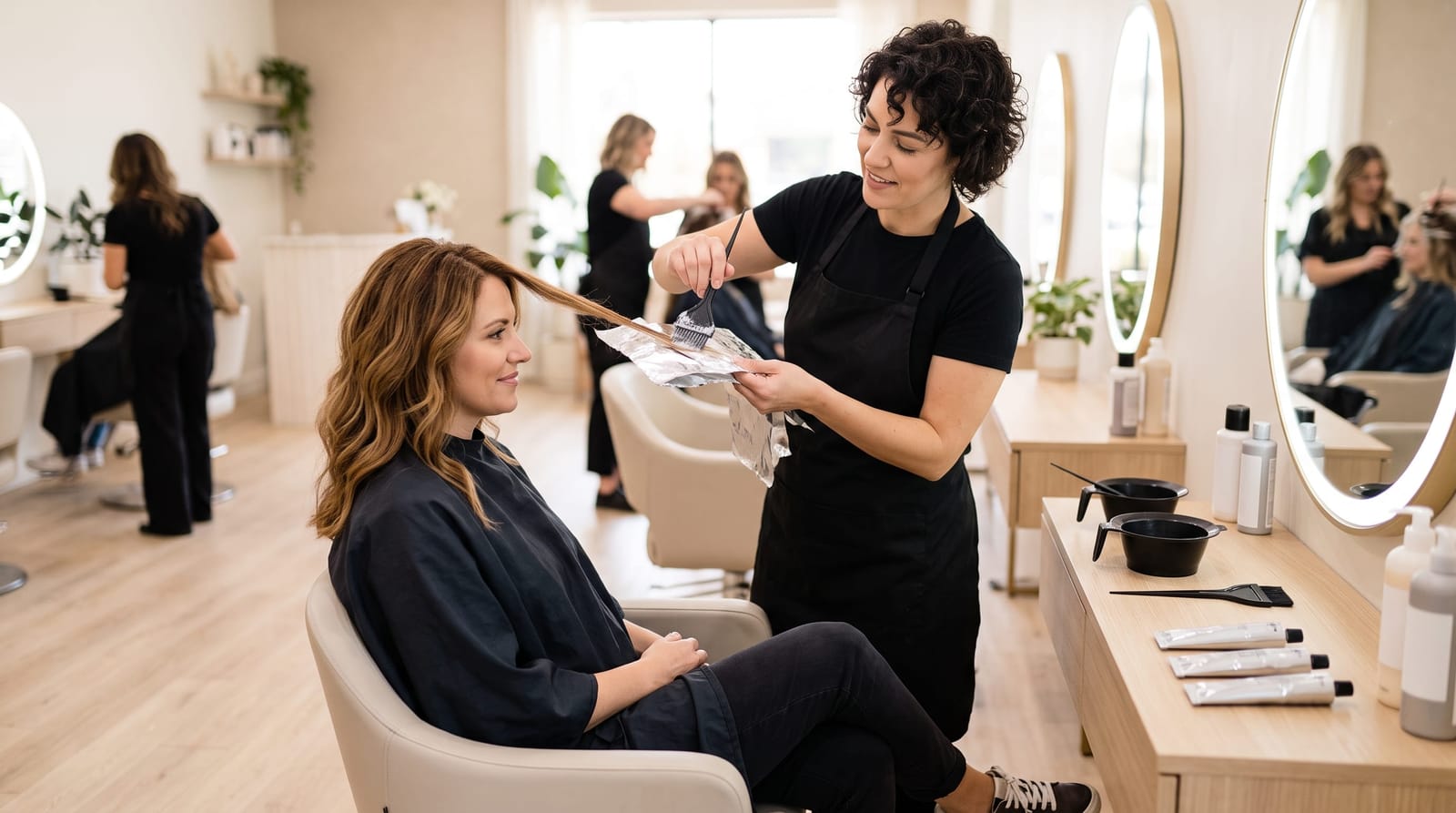
Highlights add dimension by lightening select sections of the hair rather than changing the entire base color. For dark complexions, strategically placed highlights can create the illusion of movement, brightness, and depth simultaneously. Face-framing highlights in caramel or honey can warm up the complexion and draw attention to facial features in a really flattering way. Balayage-style application, where color is hand-painted for a softer, graduated effect: is particularly popular because it grows out gracefully and requires less frequent touch-up appointments.
What Full Color Does
A full color service changes the entire base tone of the hair, either by depositing color (going darker or more vivid) or lifting it (going lighter). For clients who want a dramatic transformation, going from dark brown to burgundy, for example, or refreshing a faded color, full color delivers the most complete result. Root-to-tip color services also tend to create more uniform, polished results for clients who want a clean, consistent look rather than a dimensional or natural effect.
The Safety Factor for Chemically Treated Hair
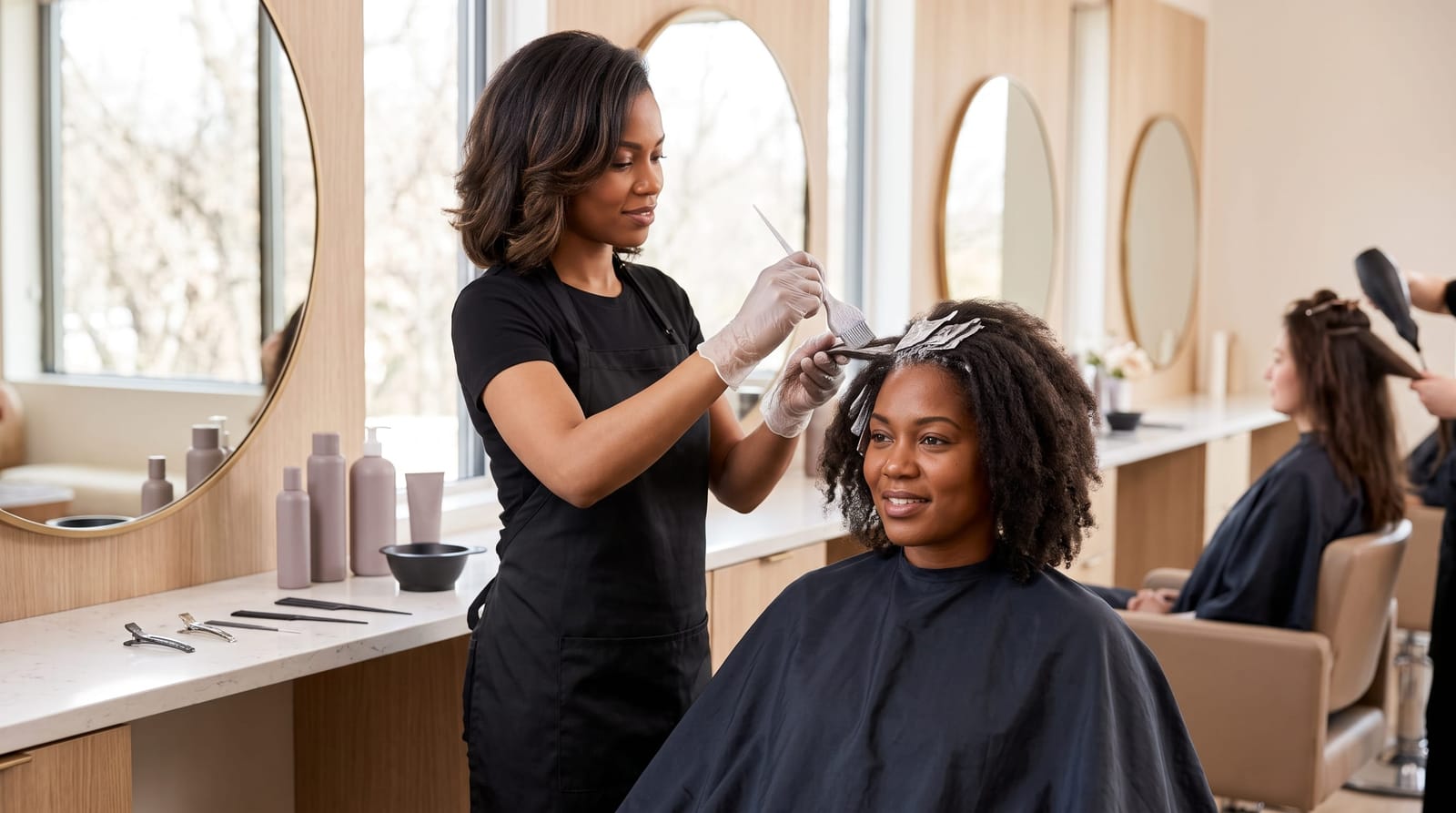
Many African American and Hispanic clients have hair that's been chemically relaxed, texturized, or keratin-treated. Applying color, especially lightening services, on top of chemically processed hair introduces real considerations around hair integrity and processing safety. This is an area where product quality and colorist expertise genuinely matter. Timing, strand testing, and formula selection all play roles in delivering a color result that looks beautiful without compromising the structural integrity of the hair. Our guide on highlights on relaxed hair covers this topic in much greater depth for clients navigating this specific situation.
Color Safety on Textured and Chemically Treated Hair
Color safety is not about fear: it's about informed decision-making. Understanding how color interacts with textured and chemically treated hair empowers you to make choices that serve both your style goals and your hair's long-term health.
Textured hair, whether naturally coily, curly, or wavy, has a unique structural profile. The cuticle layer of textured strands lifts more easily than that of straight hair, which means color can penetrate quickly and unevenly if the formula or processing time isn't carefully managed. High porosity hair (common in hair that's been chemically processed, heat-styled frequently, or naturally dry) absorbs color faster but also releases it faster, which is why color-treated textured hair can fade more quickly than expected without the right maintenance routine in place.
Studies show that African American women are disproportionately exposed to potentially harsh chemical hair products throughout their lifetime, which makes choosing high-quality, professional-grade color formulas even more important. At Kabelly, our colorists use better-quality product lines specifically selected to minimize scalp irritation and hair stress while maximizing color vibrancy and longevity. We don't use the same formula on a relaxed client that we'd use on virgin natural hair: every service is customized.
What a Safe Color Service Looks Like in Practice
- A thorough consultation that includes questions about your chemical history, heat styling habits, and current hair condition
- A strand test when working on chemically processed hair or making a significant color change
- Formula customization based on your hair's current porosity, density, and texture pattern
- Processing time monitoring throughout the service, not a set-and-forget approach
- A finishing treatment to close the cuticle and seal in color after the service
If you've had a difficult color experience elsewhere, whether that's uneven results, unexpected brassiness, or hair that felt compromised after the service, our hair color correction service is designed specifically to address those outcomes and restore both your color and your confidence in the process.
How to Maintain Color-Treated Hair Between Salon Visits
Getting gorgeous color is only half the story. Keeping it looking vibrant, fresh, and healthy between appointments is where a consistent at-home routine makes all the difference, and for textured hair, that routine needs to be intentional.
The First 48 to 72 Hours Matter Most
Color molecules are still settling into the hair shaft in the first 48 to 72 hours after a color service. During this window, avoiding shampoo, excessive heat, and chlorinated water gives the color its best chance to lock in fully. Rinsing with cool water, not hot, also helps keep the cuticle closed and the color sealed.
Shampoo and Conditioning Choices
Color-treated hair needs shampoos that cleanse without stripping. Sulfate-free formulas are gentler on color and on naturally dry textured strands. A color-safe conditioner or deep conditioning treatment used weekly helps replenish moisture that the coloring process draws out. For clients with coily or curly hair, leave-in conditioners and curl creams that don't contain heavy waxes or buildup-causing silicones are ideal companions for color maintenance.
Heat Styling and Color Longevity
Frequent high-heat styling is one of the fastest ways to accelerate color fade. When heat styling is part of your regular routine, whether that's a Dominican blowout, flat iron, or curling wand, using a quality heat protectant is essential, not optional. Reducing the frequency of high-heat styling (or using lower temperature settings where possible) helps preserve both the vibrancy of the color and the overall condition of the hair.
For a complete breakdown of at-home and in-salon care practices tailored to color-treated hair, our guide to color treated hair care walks through exactly what to use, when, and why, from day one after your appointment through your next salon visit.
Scheduling Your Color Services: Timing and Touch-Ups
One of the most frequently overlooked parts of the color conversation is timing. Knowing when to come back in isn't just about aesthetics: it also protects the integrity of your hair by preventing over-processing and making sure your color always looks intentional rather than grown-out.
The right touch-up schedule depends on the type of color service you received, how quickly your hair grows, and how dramatic the contrast is between your natural hair and your color. A full color with significant lift requires more frequent attention than a subtle balayage or a dark-to-dark deposit. On average, highlight clients return every 8 to 12 weeks, though this varies depending on the technique used and the level of grow-out a client is comfortable with.
Waiting too long between color appointments doesn't just affect how the color looks: it can also complicate the re-coloring process. Excessive fading, uneven tones, and multiple layers of grown-out color can require more correction than a timely touch-up would have. Our guide to highlight touch up timing helps DMV clients understand exactly when to schedule their next appointment based on their specific service and hair goals.
The Kabelly Approach: Personalized Color for Melanin-Rich Clients in the DMV
At Kabelly, we've built our color practice around the specific needs of African American and Hispanic women in the DMV, and that means our approach looks different from what you might experience at a general salon.
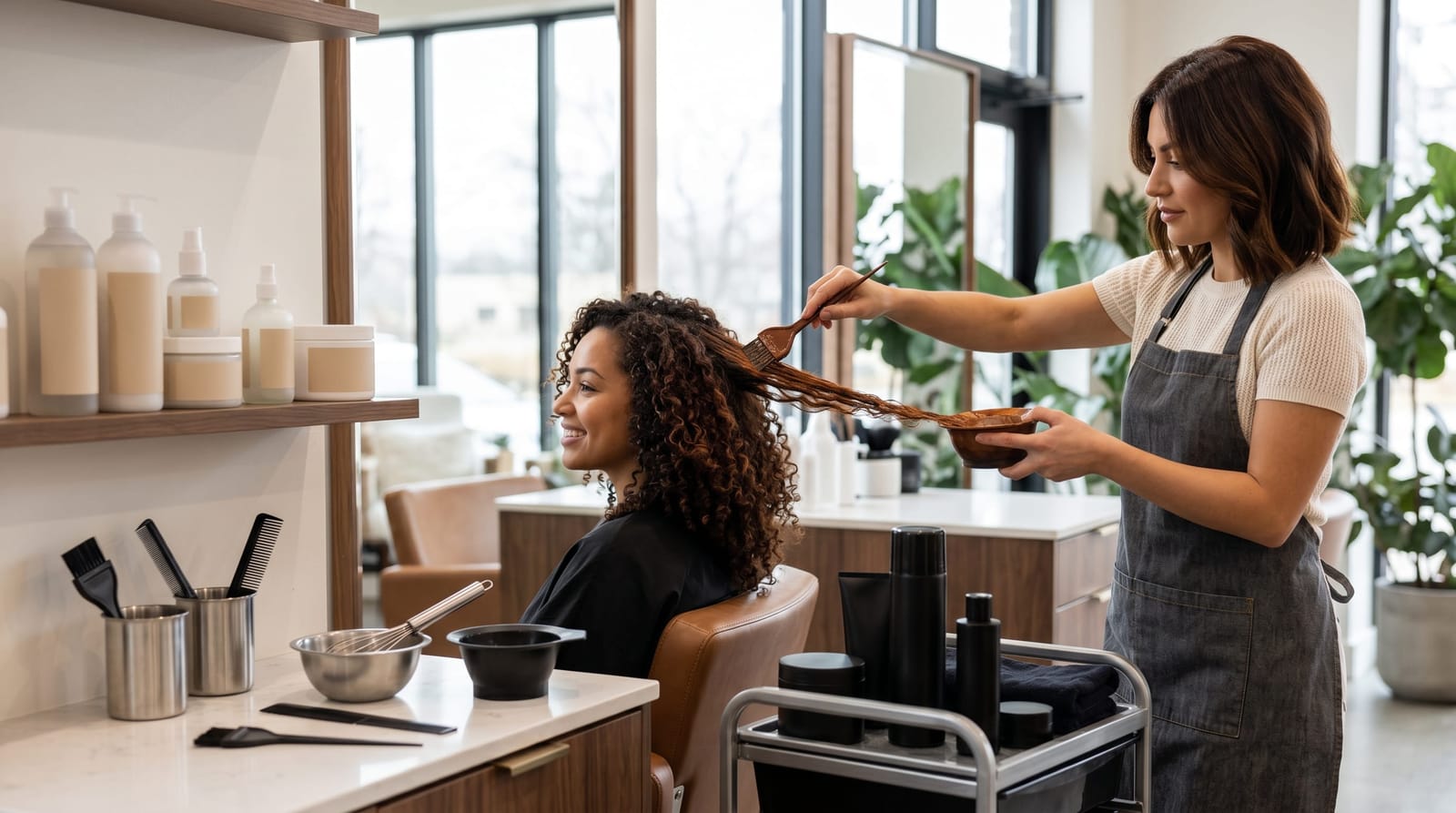
Every color client begins with a detailed consultation. We ask about your chemical history, your texture, your lifestyle, your hair goals, and your maintenance preferences before we ever open a color bottle. We look at your skin's undertone, the depth of your natural hair, and the condition of your strands. From there, we build a color formula that's genuinely customized, not a generic off-the-shelf application.
We also invest in better-quality color products. Not all professional color lines are created equal, and for textured hair that may carry additional chemical history, formula quality directly impacts both the result and the hair's long-term wellbeing. We select products that are rich in conditioning agents, free from unnecessary harsh additives, and formulated to deliver rich, true-to-tone results on deep and dark complexions.
Our colorists understand the technical nuances of working with textured, coily, and relaxed hair alongside the color process, and that expertise shows up in the results. Whether you're coming in for your first highlight appointment or returning for a color refresh, you'll leave with color that was designed for you.
To explore the full range of shades that complement dark and deep complexions, our detailed resource on hair color for black hair breaks down specific shade recommendations, undertone pairings, and styling considerations for melanin-rich clients who want their color to truly shine.
Deep Dive Topics in This Color Education Series
This guide gives you the full picture, but each topic within it deserves its own detailed exploration. Below, you'll find the individual guides that make up this color education series, each written specifically for African American and Hispanic women navigating the color process in the DMV.
- Best Hair Colors for Dark Skin: A deep look at the specific shades, from rich reds to ashy blondes to jewel-toned fashion colors, that complement melanin-rich complexions. Includes undertone-specific recommendations and styling guidance. → Explore hair color for black hair
- Highlights on Relaxed or Chemically Treated Hair: What every client with chemically processed hair needs to know before booking a highlight service: covering safety, formula selection, timing, and what to expect during the appointment. → Read about highlights on relaxed hair
- At-Home and Salon Color Care Routine: A complete maintenance guide for color-treated textured hair, including product recommendations, wash-day routines, heat styling tips, and professional treatment schedules. → Explore color treated hair care
- Highlight Touch-Up Timing: A practical guide for DMV clients on how to know when it's time to come back in: based on your specific color service, growth rate, and lifestyle. → Learn about highlight touch up timing
- Hair Color Correction: What color correction actually involves, who needs it, and how Kabelly's colorists approach fixing color that didn't go as planned, whether from a DIY experience or a service elsewhere. → Understand the hair color correction service
Conclusion: Your Color Journey Starts with the Right Foundation
Hair color for dark skin tones is one of the most beautiful, expressive, and personalized areas of beauty, and it deserves the level of expertise, product quality, and intentional customization that so many salons still aren't providing. Whether you're drawn to rich, dimensional burgundy, the warmth of honey highlights, or the cool sophistication of ashy blondes, there is a version of color that was made for your complexion, your texture, and your life.
The key is partnering with a colorist who understands the full picture, your undertone, your chemical history, your hair's structural needs, and your aesthetic vision, and who has the skills and products to bring it all together beautifully.
At Kabelly Salon, we're proud to be a trusted destination for African American and Hispanic women in the DMV who want color services done with care, expertise, and real attention to who they are. Ready to find your perfect shade? Book your color consultation at Kabelly today, and let's build a look that was designed just for you.