Glue Hair Extensions: Professional Application and Styling
If you've been searching for glue hair extensions near me in the DMV area, you already know how overwhelming the options can be. As part of our Complete Guide to Hair Extensions at Dominican Salon in DMV Area, this deep dive covers everything you need to know about glue extensions, from the science behind the bond to the styling possibilities that make them one of the most popular choices among African American and Hispanic clients across Washington DC, Maryland, and Virginia. Whether you want dramatic length, added volume, or both, professional glue hair extensions deliver results that clip-ins and temporary methods simply cannot match. By the end of this guide, you'll know exactly what to expect, how to care for your investment, and why choosing a skilled Dominican salon makes all the difference.
What Are Glue Hair Extensions and How Do They Work?
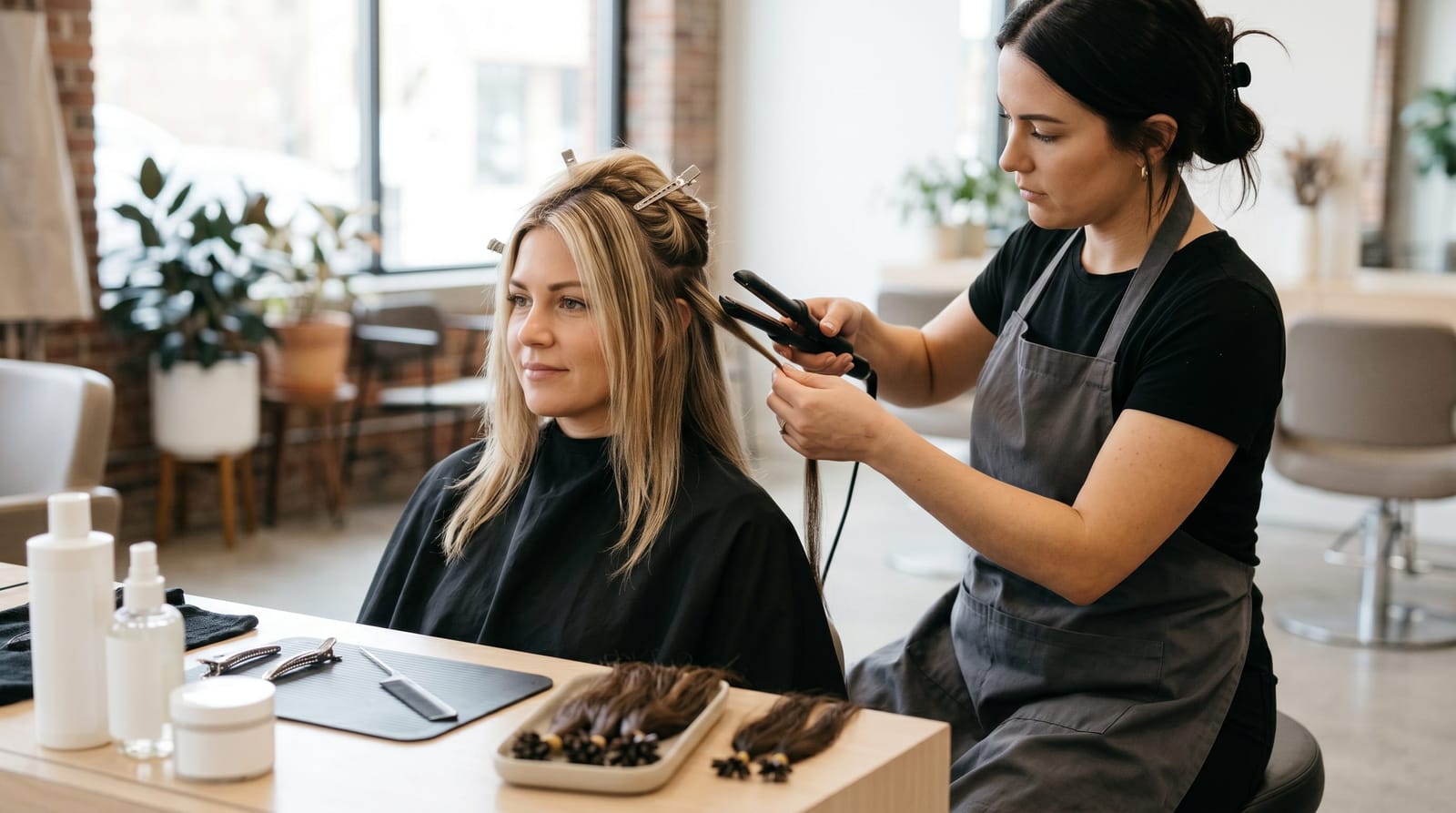
Glue hair extensions, also called fusion or keratin bond extensions, use a heat-activated keratin adhesive to attach individual hair strands or wefts directly to your natural hair. The keratin bond is melted with a specialized fusion tool that reaches temperatures between 320°F and 380°F, fusing the extension strand to a small section of your natural hair about a quarter of an inch from the scalp. The result is a bond roughly the size of a small bead that lies flat and discreet against your head.
There are two primary types of glue hair extensions you'll encounter when looking for glue hair extensions near me in the DMV:
Hot Fusion Extensions
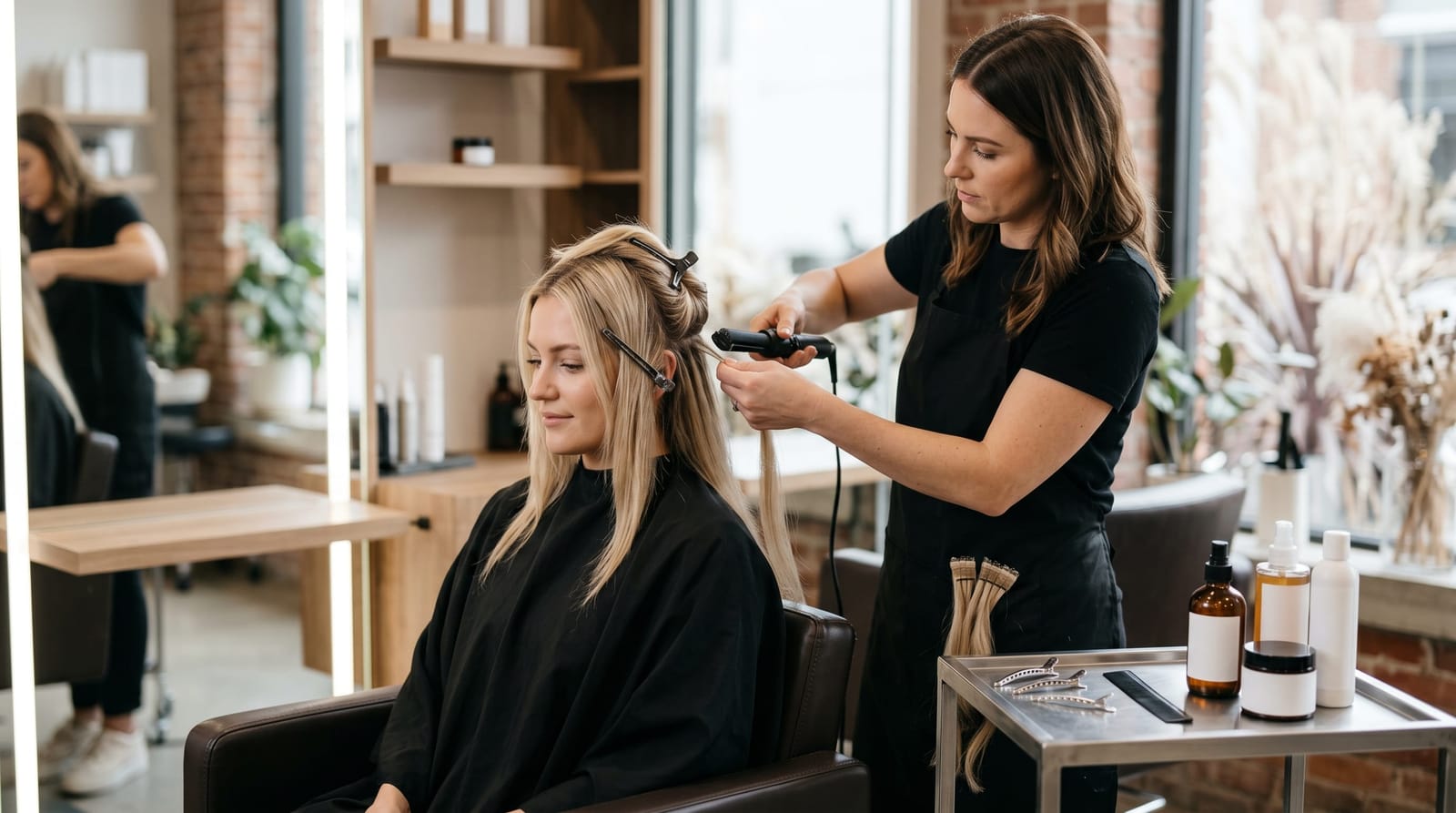
Hot fusion uses a keratin-tipped extension strand that a stylist melts and molds around your natural hair using a fusion wand. This is the most durable form of glue extension and, when applied by a professional Dominican salon stylist, typically lasts between 3 and 6 months with proper aftercare. A full head installation involves between 100 and 150 individual bonds, and the process takes approximately 3 to 5 hours depending on hair density and desired volume.
Cold Fusion (Ultrasonic) Extensions
Cold fusion uses ultrasonic vibration rather than direct heat to activate the adhesive bond. This method is gentler on fine or chemically treated hair and has grown significantly in popularity: industry data suggests cold fusion adoption among professional salons has increased by roughly 35% over the past five years. The bonds are slightly more flexible than hot fusion, making them a strong option for clients with naturally fine or relaxed hair textures.
Both methods use 100% Remy human hair in professional settings, meaning the cuticles are aligned in the same direction to prevent tangling: a non-negotiable quality standard at reputable Dominican salons throughout the DMV.
The Professional Glue Extension Application Process at a Dominican Salon
Understanding the application process helps you set realistic expectations and recognize quality workmanship when you're comparing salons. When you search for glue hair extensions near me, the difference between a $300 installation and an $800 one often comes down to these critical steps.
Step 1: Consultation and Hair Assessment
A thorough consultation is non-negotiable. An experienced stylist will assess your natural hair's porosity, density, and overall health before recommending glue extensions. Clients with more than 30% breakage, active scalp conditions, or hair that has been chemically relaxed within the last two weeks are typically advised to delay installation. During the consultation, your stylist will also color-match extensions to your natural hair: a process Dominican salons excel at given their deep familiarity with the diverse hair textures and tones common across their client base.
Step 2: Preparation and Sectioning
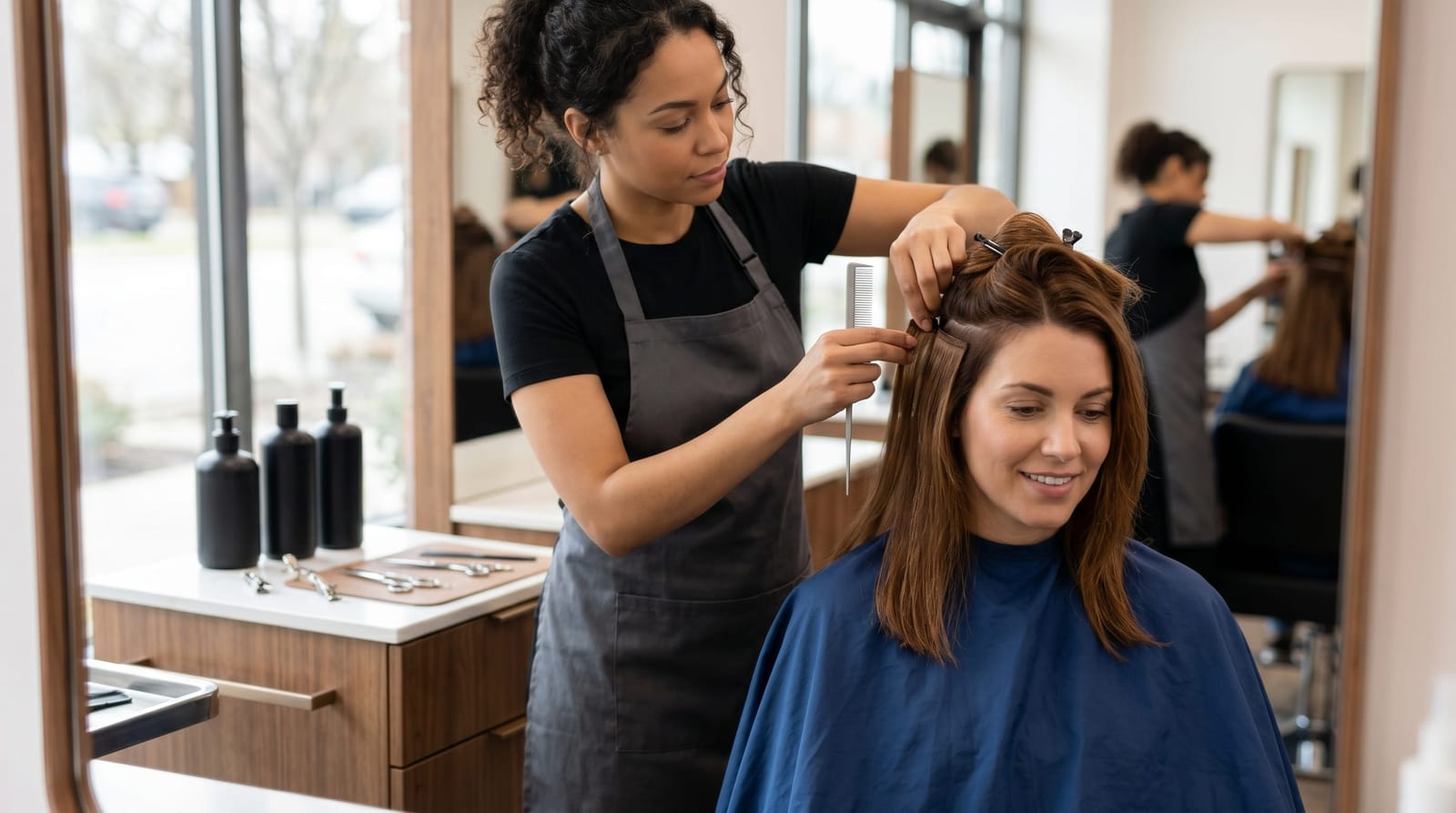
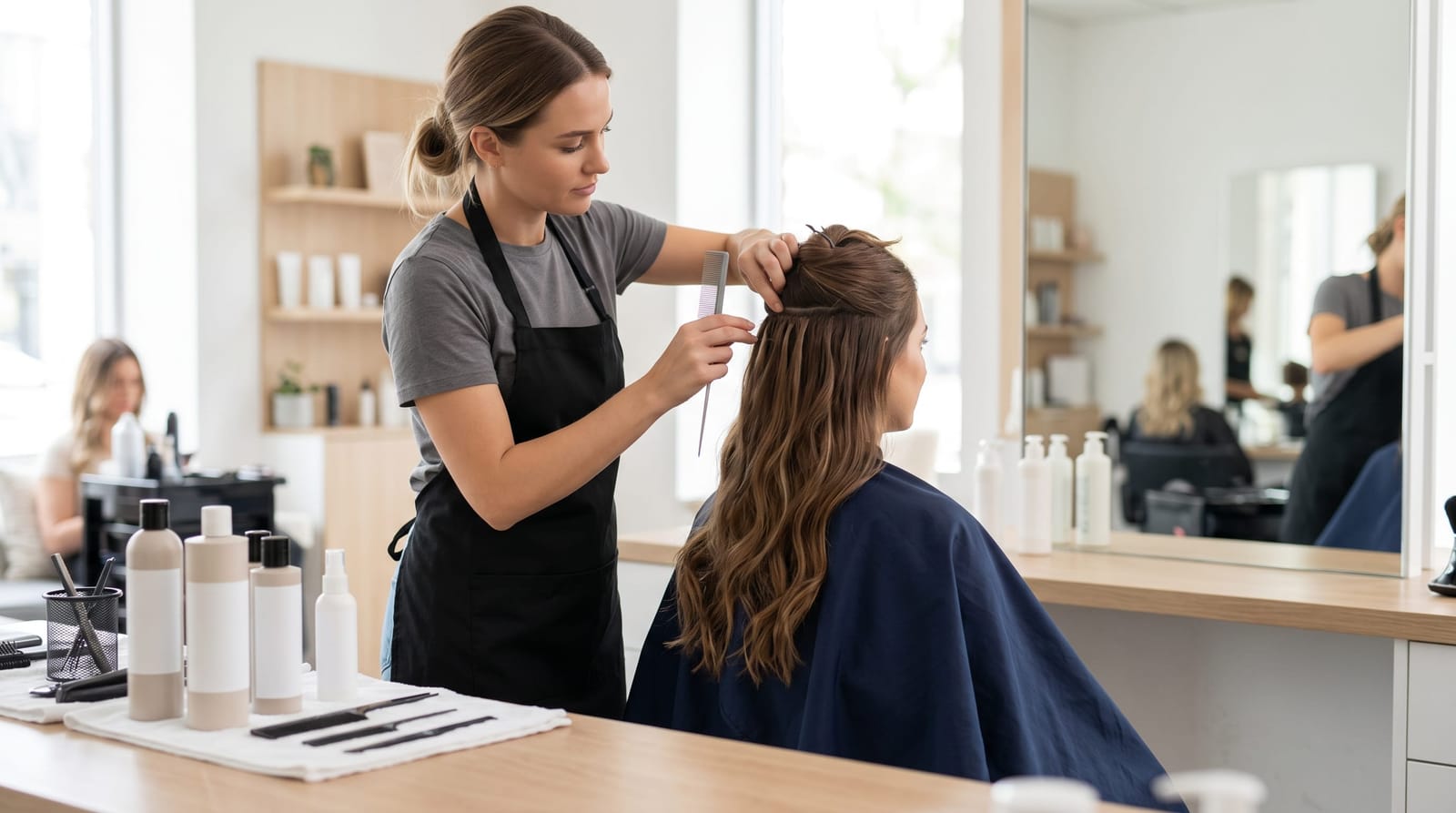
Your hair is washed with a clarifying shampoo (no conditioner, as residue weakens adhesion) and blow-dried completely. The stylist then sections your hair in a precise grid pattern, typically working from the nape upward in rows spaced about half an inch apart. Proper sectioning is what separates a professional application from a DIY disaster: incorrect placement can lead to visible bonds, uneven weight distribution, and damage to your natural hair.
Step 3: Bond Application and Sealing
Working row by row, the stylist takes a small subsection of your natural hair, positions the extension tip, and applies heat to melt and mold the bond. Each bond takes approximately 30 to 45 seconds to set. A skilled Dominican salon stylist can complete 100 bonds in roughly 3 hours, though rushing this step is a red flag. Properly rolled and sealed bonds should feel smooth, not lumpy or asymmetrical.
Step 4: Blending and Initial Styling
Once all bonds are applied, the extensions are cut, layered, and blended with your natural hair to create a seamless look. This blending stage is where Dominican salon expertise truly shines: the precision cutting and styling techniques honed in Dominican salons are widely recognized as some of the best in the beauty industry for achieving a natural, flawless finish.
How Long Do Glue Hair Extensions Last? Setting Realistic Expectations
One of the most common questions clients ask when searching for glue hair extensions near me is how long their investment will hold up. The honest answer depends on several factors, but here are the general benchmarks you can expect from a professional installation:
- Hot fusion extensions: 3 to 6 months with proper care
- Cold fusion extensions: 2 to 4 months
- Maintenance appointments: Recommended every 6 to 8 weeks to move up bonds as your natural hair grows
- Natural hair grows approximately 0.5 inches per month, meaning bonds will shift noticeably after 6 to 8 weeks without a touch-up
For a detailed breakdown of what affects your specific longevity, including your hair type, lifestyle, and product choices, see our guide on glue extensions duration, which covers everything from humidity's effect on keratin bonds to how protective styling can extend your wear time significantly.
Clients who follow their stylist's aftercare instructions closely report getting closer to the 5 to 6 month mark from a single installation, while those who skip recommended maintenance often find bonds slipping within 8 weeks. The difference is almost entirely in aftercare consistency.
Glue Extension Aftercare: Protecting Your Investment
Aftercare is where most clients either maximize or waste their investment in glue hair extensions near me. Dominican salons in the DMV consistently emphasize these non-negotiable aftercare practices:
The First 48 Hours Are Critical
Avoid washing your hair, swimming, or excessive sweating for at least 48 hours post-installation. The keratin bonds need time to fully harden and set. Exposing them to moisture too early is one of the top reasons for premature bond slippage: stylists estimate it accounts for approximately 40% of early bond failures they see in clients who didn't follow this guideline.
Washing and Conditioning Correctly
Use sulfate-free shampoo and apply conditioner from the mid-shaft downward only: never directly on the bonds. Oil-based or silicone-heavy products applied near the roots will break down the keratin adhesive over time. Wash your hair no more than 2 to 3 times per week, and always detangle gently with a wide-tooth comb or loop brush before and after washing.
Heat Styling Boundaries
While glue extensions can be heat styled, always apply a heat protectant and keep temperatures below 350°F directly near the bonds. Exposing bonds repeatedly to high heat softens the keratin adhesive and shortens longevity. Protective styles like braids, twists, and low buns are excellent options for reducing daily heat exposure between styling sessions.
Sleeping Habits
Sleeping with your hair in a loose braid or low ponytail and using a satin or silk pillowcase dramatically reduces friction-related bond damage. Approximately 60% of extension tangling issues reported by clients stem from improper sleeping habits rather than product use.
For a full breakdown of practices that protect both your extensions and your natural hair underneath, our guide on prevent extension damage covers salon-tested strategies that keep your hair healthy through every wear cycle.
Styling Possibilities With Glue Hair Extensions
One of the biggest advantages that draw clients to search for glue hair extensions near me specifically in the glue/fusion category is the remarkable styling versatility they offer compared to other methods. Because each strand is bonded individually, glue extensions move, part, and style almost identically to your natural hair.
Heat Styling
Glue extensions made from 100% Remy human hair can be straightened, curled, and waved just like your natural hair. Dominican salons are particularly skilled at blow-out and silk press styling that blends extensions seamlessly with natural textures: a technique that has made Dominican salons the go-to choice for clients across the DMV who want extensions that don't look like extensions.
Updos and Ponytails
Unlike tape-in extensions, which can be visible in high ponytails or updos, individual fusion bonds are small enough to remain hidden in most updo styles when placed correctly by an experienced stylist. High ponytails, braided updos, and buns are all achievable, provided the bonds were strategically placed during application: another reason professional installation matters enormously.
Color Styling
Glue extensions can be toned or colored after installation, though this should always be done by a professional. Bleaching extensions post-installation is generally discouraged as it can weaken the bond. If you want a specific color, communicate this during your consultation so the stylist can source pre-colored or pre-toned extensions matched to your vision.
For clients interested in exploring how professionals finish and style extensions after installation, our upcoming post on Professional Extension Styling Techniques will cover the specific tools, products, and methods Dominican salon stylists use to achieve red-carpet-worthy results. Similarly, when it's time to take your extensions down, our guide on Safe Hair Extension Removal Process will walk you through the professional removal methods that protect your natural hair from adhesive-related breakage.
How to Choose the Right Glue Extension Salon in the DMV
When evaluating salons as you search for glue hair extensions near me in Washington DC, Maryland, or Virginia, these are the benchmarks that separate a truly professional experience from a regrettable one:
- Portfolio re