Clip-On Hair Extensions: Temporary Volume and Length Solutions
When exploring the full range of hair extension services available at Dominican salons in the DMV area, clip-on extensions stand out as one of the most accessible and versatile options. Unlike permanent methods such as glue hair extensions near me, clip-ins give you the freedom to transform your look on your own schedule: adding dramatic length for a Saturday night out, boosting volume for a professional presentation, or simply experimenting with a new style before committing to something more permanent. For African American and Hispanic clients in particular, clip-ins offer a low-risk entry point into extensions that respects the integrity of natural hair. In this guide, you'll learn how clip-in extensions work, how to apply them like a pro, which styling techniques deliver the most natural results, and how to maintain your investment so it lasts.
What Are Clip-In Hair Extensions and Who Are They For?
Clip-in hair extensions are wefts of hair, either human or high-quality synthetic, attached to small pressure-sensitive clips that snap onto sections of your natural hair. A full set typically includes several wefts in varying widths: one or two wide wefts for the back, medium wefts for the sides, and narrow wefts for the crown and temples. Together they create a seamless, full look that can add anywhere from two to six inches of length and significant volume.
The biggest appeal of clip-ins is their temporary, non-committal nature. You apply them when you want them and remove them when you don't. There's no adhesive, no heat bonding, and no waiting weeks between salon visits. This makes them ideal for:
- Clients who want to experiment with length or color before committing to a permanent method
- Naturalistas who are transitioning and want to blend their texture with added length during the process
- Clients with fine or thinning hair who need a volume boost for special occasions
- Anyone whose lifestyle requires flexibility: wearing extensions some days but not others
Clip-ins work best on hair that has enough density to hide the clips and wefts. Very short hair (under three inches) or extremely fine, fragile hair may struggle to hold the clips securely or conceal the attachment points. A professional stylist at your Dominican salon can assess your hair during a consultation and recommend whether clip-ins are the right starting point or whether a different method would serve you better.
Choosing the Right Clip-In Extensions for Your Hair Type
Not all clip-in extensions are created equal, and choosing the wrong set is the number one reason clients end up with an unnatural-looking result. There are three key factors to match: texture, color, and weight.
Matching Texture
For African American and Hispanic clients, texture matching is critical. If your natural hair is a Type 3 curl or a Type 4 coil, straight clip-ins will never blend convincingly unless you plan to thermally straighten your entire head first, which carries its own risks. Look for extensions that match or closely mimic your natural curl pattern. Many professional brands now offer curly, wavy, and coily clip-in wefts in Remy human hair that can be heat-styled to match your texture precisely. When in doubt, bring your extensions to a stylist who can assess the blend before you walk out the door.
Matching Color
Color matching should be done in natural lighting whenever possible. Hold the weft against your hair at the mid-shaft and ends, not the roots, which are often a different shade. If you can't find an exact match, go slightly lighter rather than darker; darker extensions against lighter hair are far more noticeable. Avoid dyeing or bleaching your clip-in extensions at home to force a match, as this degrades the hair quality and shortens lifespan significantly. A professional color service at your salon is always the safer route if custom blending is needed.
Matching Weight and Density
Extension sets are measured in grams. A 100-120 gram set is appropriate for fine to medium hair seeking a modest boost. A 160-220 gram set delivers dramatic volume and length for thick or coarse hair. Overloading fine hair with a heavy set puts strain on the clips and can cause breakage at the attachment points over time.
Step-by-Step Application for a Natural, Seamless Look
Even the highest-quality extensions look obvious if applied incorrectly. Follow this professional method for results that are genuinely hard to detect.
Prepare Your Natural Hair
Always start with clean, completely dry hair. Extensions applied to damp hair are more prone to slipping and can create moisture buildup that leads to scalp issues. Blow out or air-dry thoroughly. Avoid applying heavy leave-in conditioners or oils before clipping in, as slick hair makes the clips slide. A light-hold setting spray or texturizing product will give the clips something to grip.
Section and Tease the Roots
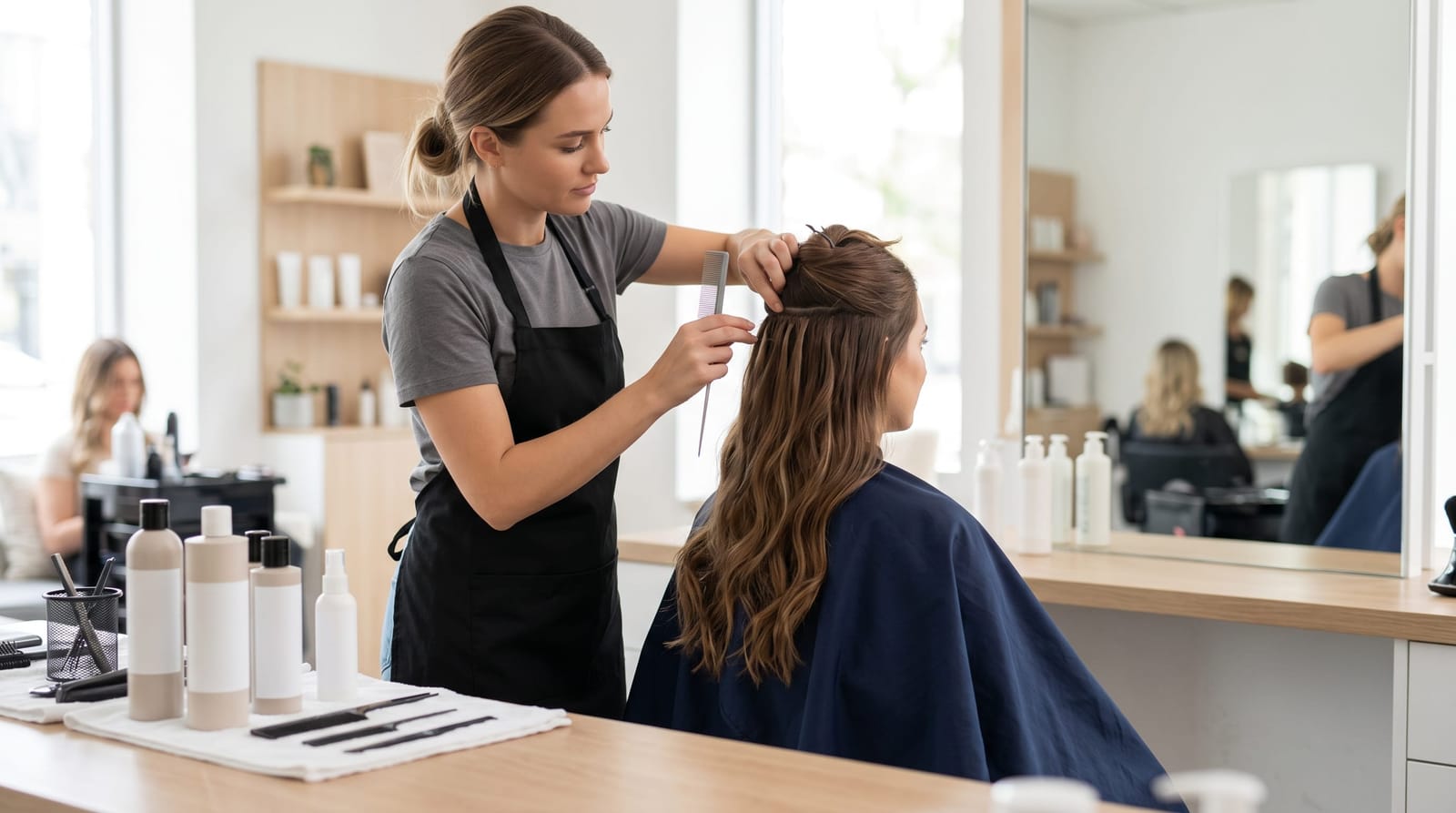
Using a tail comb, create a horizontal parting from ear to ear roughly two inches above the nape of your neck. Clip the top section out of the way. Lightly backcomb (tease) the hair at the root of this section, just two or three passes is enough. This creates a textured base that helps the clips lock in without slipping. Attach your widest weft here, snapping each clip closed from the center outward.
Build Upward in Layers
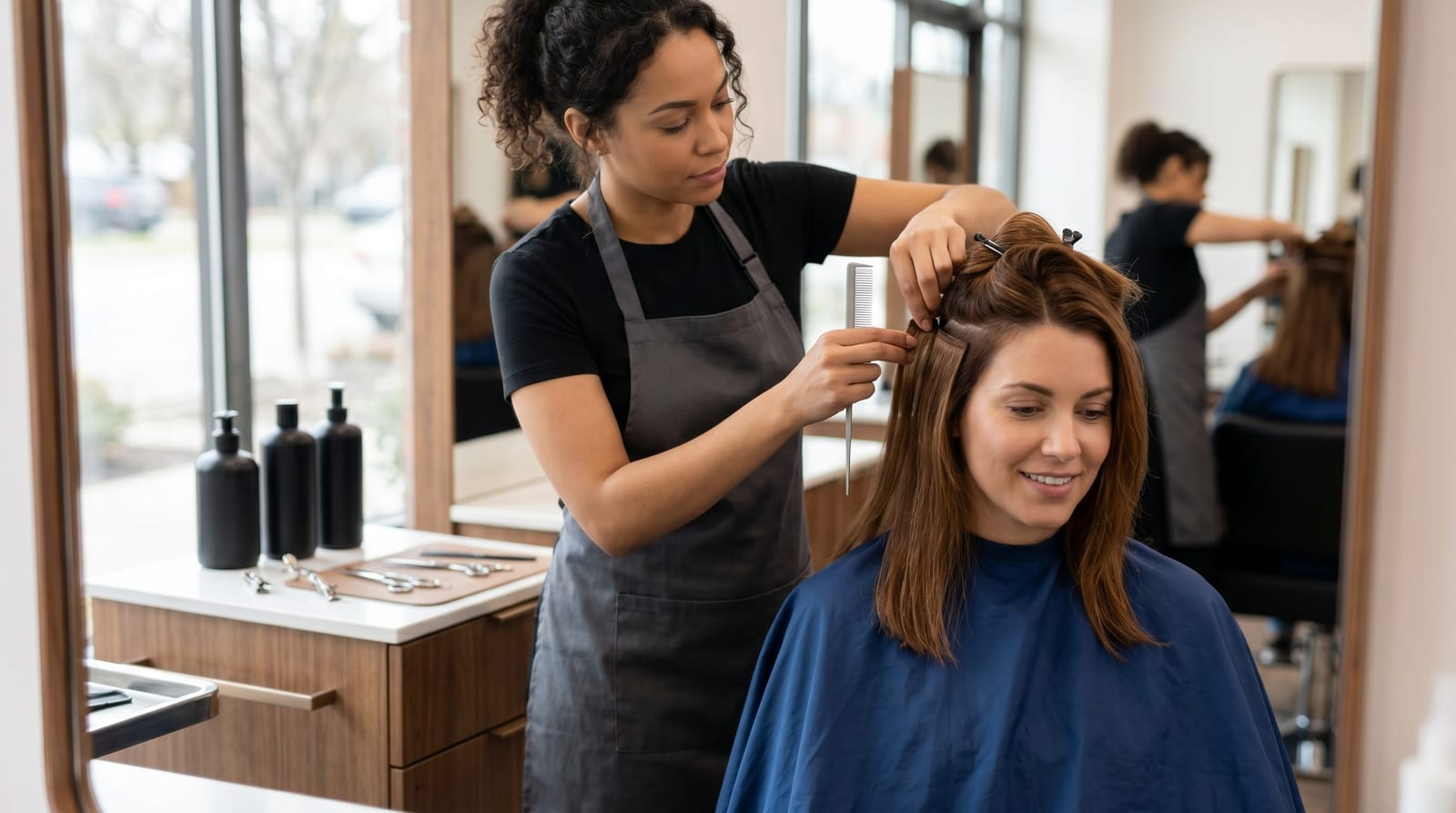
Release another horizontal section about an inch above the first, tease lightly, and attach your second weft. Continue working up the head, placing medium wefts at the sides and smaller wefts near the crown. The narrowest wefts go at the temples where the hair is thinnest: use only one or two clips here and be gentle. Never place a weft at the very top of your head where it could show through the part.
Blend and Finish
Once all wefts are in place, release your natural hair on top to cover the attachment points. Run your fingers through the hair to blend the layers, then comb or brush from the mid-shaft downward. If needed, trim the extensions to match your natural layers: this step alone makes an enormous difference in how realistic the final look appears.
Clip-On Extensions Styling Techniques That Actually Work
Mastering clip on extensions styling opens up a wide range of looks that would be difficult or impossible with your natural hair alone. Here are the techniques that deliver the best results.
Waves and Curls
Loose waves are the most forgiving style for blending extensions with natural hair. A 1.25-inch barrel curling wand creates soft, beachy waves that disguise any slight texture differences between the extensions and your own hair. Always use a heat protectant spray on the extensions before applying any heat, and keep the temperature at or below 350°F for human hair extensions to prevent dryness and shedding. Curl both your natural hair and the extensions in the same direction for a unified result.
Sleek Straight Styles
For a polished, straight look, flat iron the extensions along with your natural hair after application. Start at the nape and work upward, using slow, smooth passes rather than rapid back-and-forth movements. Keep the iron below 380°F and always use heat protectant. Finish with a light shine serum applied to the mid-lengths and ends to unify the sheen between your natural hair and the wefts.
Updos and Half-Up Styles
One of the biggest misconceptions about clip-ins is that you can't wear them in updos. You absolutely can, with the right placement. For a half-up style, position your wefts lower on the head so they fall below the gathered section. For a full updo, focus the extensions at the nape and sides to add volume to the sections that will be twisted or pinned, keeping the crown extensions light so they don't weigh down the style or expose clips.
Protective Styling Considerations
Many clients in the DMV area alternate between clip-ins and protective styles. If you're planning to transition from clip-ins to a braided or twisted protective style within the same week, give your scalp and hair at least one rest day between styles. Constant tension without breaks, even from lightweight clips, can stress the hairline and edges over time.
Maintaining Your Clip-In Extensions for Long-Term Use
With proper care, a quality set of human hair clip-in extensions can last 12 months or longer with regular wear. Neglect them and they'll look dull and matted within weeks.
- Wash sparingly: Clip-ins don't accumulate scalp oils the way attached methods do. Wash the wefts every 10-15 wears or when product buildup is visible. Use a sulfate-free shampoo and cool water, gently working from the top of the weft downward: never scrubbing in circular motions.
- Condition after every wash: Apply a lightweight conditioner from mid-shaft to ends, leave for three to five minutes, and rinse thoroughly. Skip the roots near the clips to avoid weakening the attachment hardware.
- Dry flat: After washing, lay wefts on a clean towel and allow them to air dry completely before storing. Never put damp extensions away.
- Store properly: Keep extensions in a fabric pouch, on an extension hanger, or loosely braided in a silk or satin bag. Stuffing them loosely into a drawer causes tangling and matting.
- Check the clips regularly: Inspect the clip mechanisms monthly for bending or loosening. Most clips can be gently reshaped with your fingers or replaced by a stylist if they stop snapping securely.
One question clients frequently ask is whether they can wear their clip-ins overnight. The answer involves more nuance than a simple yes or no: factors like scalp health, sleep habits, and extension weight all play a role. For a detailed look at that specific situation, see our post on sleeping with clip extensions, which walks through the risks, precautions, and when it's truly not recommended.
When to See a Professional for Your Clip-In Extensions
While clip-ins are designed for at-home use, there are situations where visiting your Dominican salon in the DMV area makes a real difference in your results.
If you're new to extensions and struggling to blend them convincingly, a one-time professional application appointment is worth the investment. A stylist can show you exactly where to place each weft for your specific head shape and hair density, demonstrate the right amount of teasing, and trim the extensions to perfectly match your layers: a customization that most clients can't execute accurately on their own.
Professional styling appointments are also valuable when you want a specific occasion look, a wedding, formal event, or photoshoot, where the stakes are high and precision matters. And if you're ever considering transitioning from clip-ins to a more permanent solution, your stylist can guide you through options like fusion, tape-in, or sew-in methods based on your hair goals and lifestyle. For clients interested in understanding other attachment methods, our guide to professional extension styling techniques covers the full spectrum of options available at Dominican salons in the DMV.
Conclusion
Clip-in hair extensions are one of the smartest, most flexible tools in the modern styling toolkit, but like any tool, the results depend on how you use them. Choosing the right texture and weight, applying the wefts in the correct sections, using heat protection during styling, and maintaining the extensions between wears are what separate a convincing, beautiful result from one that clearly looks added on. Whether you're a first-timer curious about extensions or a seasoned clip-in user looking to refine your technique, the stylists at our Dominican salon in the DMV are here to help you get the most out of every wear. Book a consultation today and let us help you find the perfect extension solution for your hair type, lifestyle, and goals.