Safe Hair Extension Removal Process
When you think about hair extensions, most of the excitement centers around the installation: the added length, the volume, the transformation. But proper removal is just as important as the application itself. In fact, how your extensions come out can make all the difference in the health of your natural hair underneath. As part of our complete guide to hair extensions at our Dominican salon in the DMV area, this post dives deep into the extension removal service process: what it involves, why professional technique matters, and how to care for your hair once the extensions are out. Whether you're between sets or transitioning to a fresh style, understanding removal is a key part of your overall hair care journey.
Why the Extension Removal Service Process Matters More Than You Think
It's easy to assume that taking extensions out is the simple part, after all, they were put in, so removing them should be straightforward, right? Not quite. Each extension type is attached differently, and the removal method must match the installation technique. Attempting to pull, cut, or force extensions out without the proper approach can lead to breakage, thinning, and unnecessary stress on your natural strands.
A professional extension removal service accounts for the bond type, the condition of your natural hair, and the time the extensions have been in. Stylists are trained to work through the removal gently and methodically, protecting your scalp and edges throughout the process. This is especially important for clients who wear extensions regularly, since repeated improper removal can compound damage over time.
Beyond the mechanics of removal, there is also the emotional and practical side to consider. Many clients feel a mix of nervousness and relief when it's time to take their extensions out: nervous about the condition of their natural hair, and relieved to give their scalp a break. A skilled stylist makes that experience calm, informative, and genuinely reassuring. At Ka Belly Salon, the extension removal service is treated with the same level of care and intention as the installation itself.
How Different Extension Types Are Safely Removed
Not all extensions are removed the same way. The technique used during your extension removal service will depend on how your extensions were originally applied. Here is a breakdown of the most common methods and what removal looks like for each.
Tape-In Extension Removal
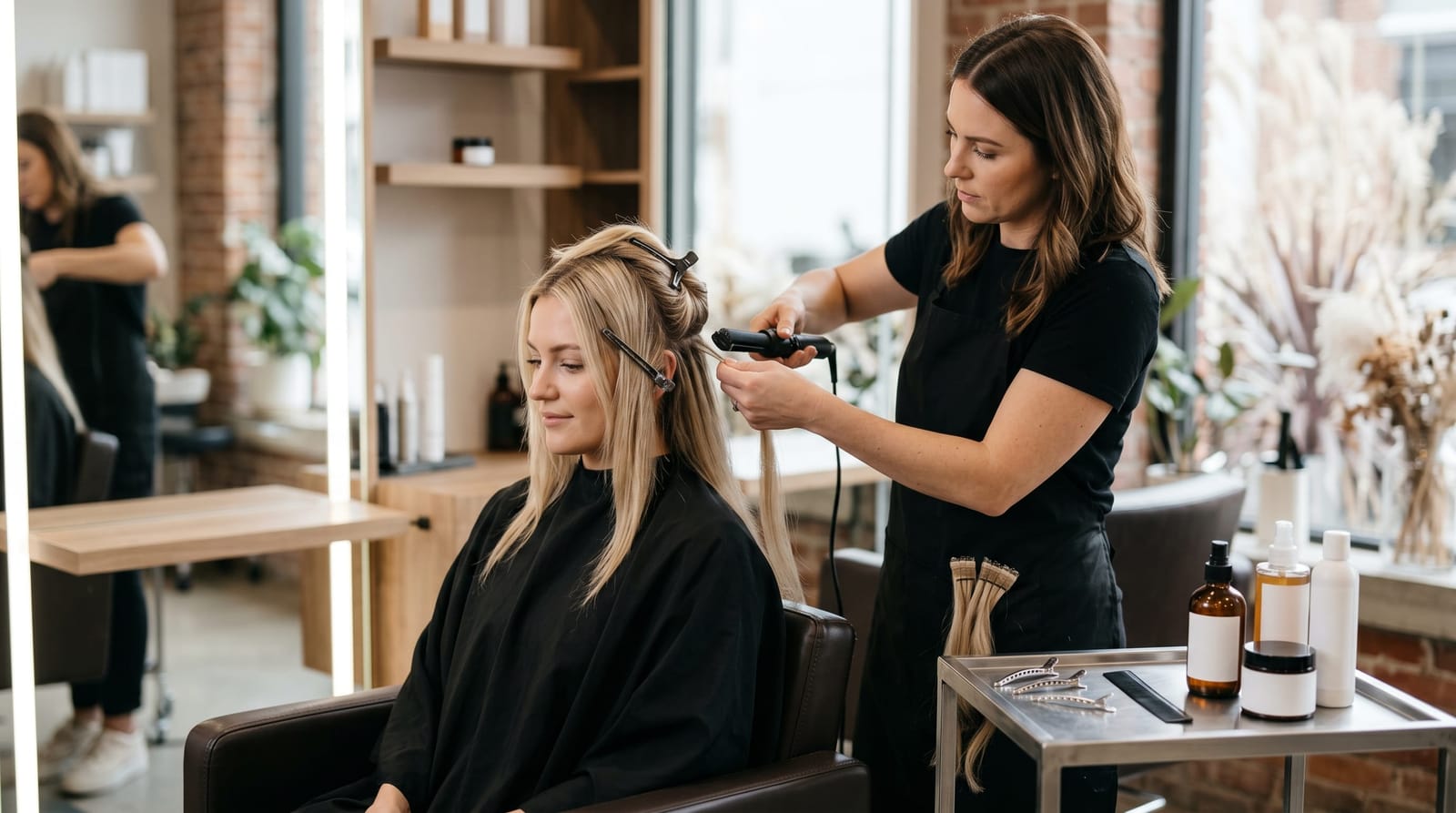
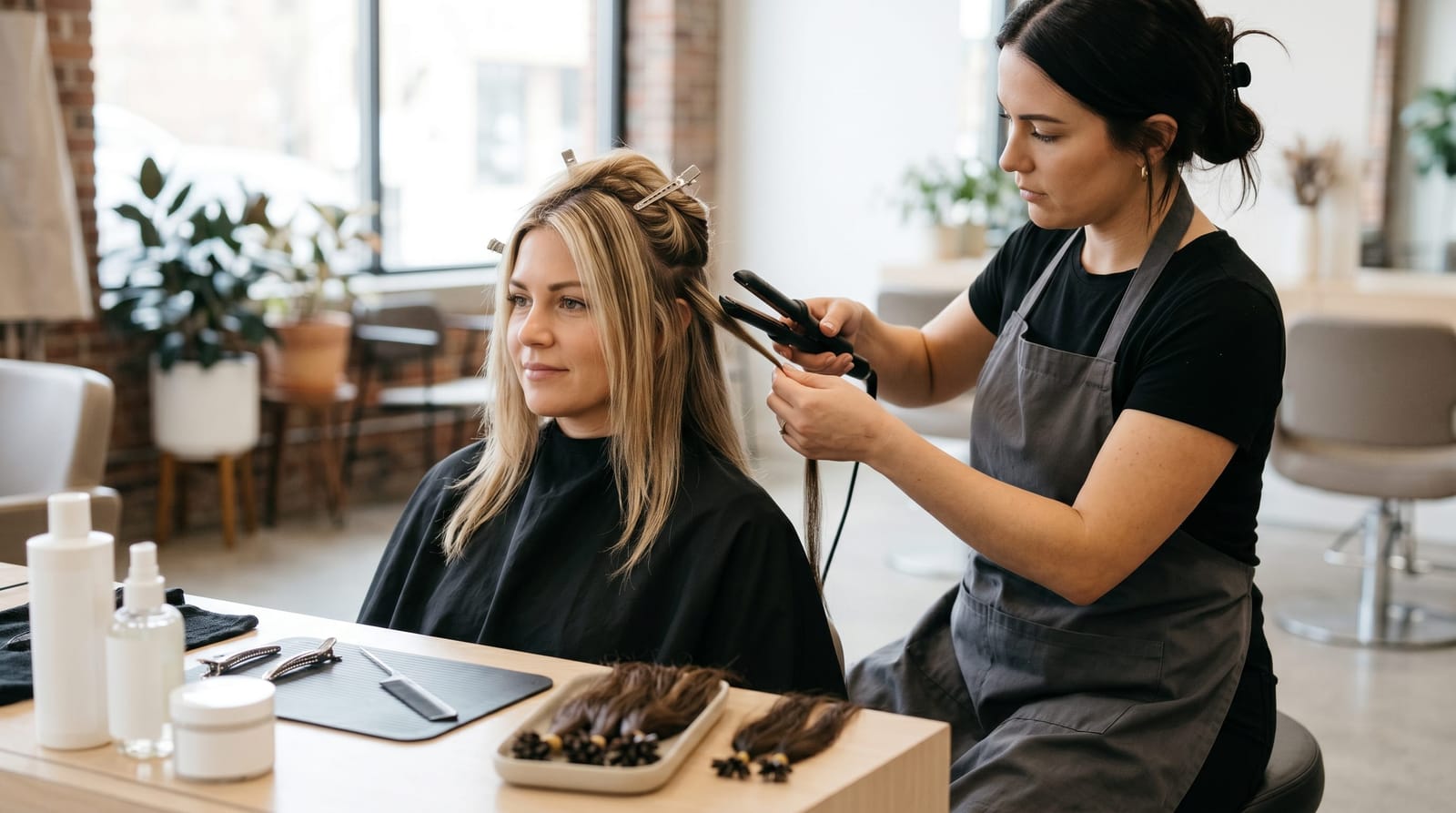
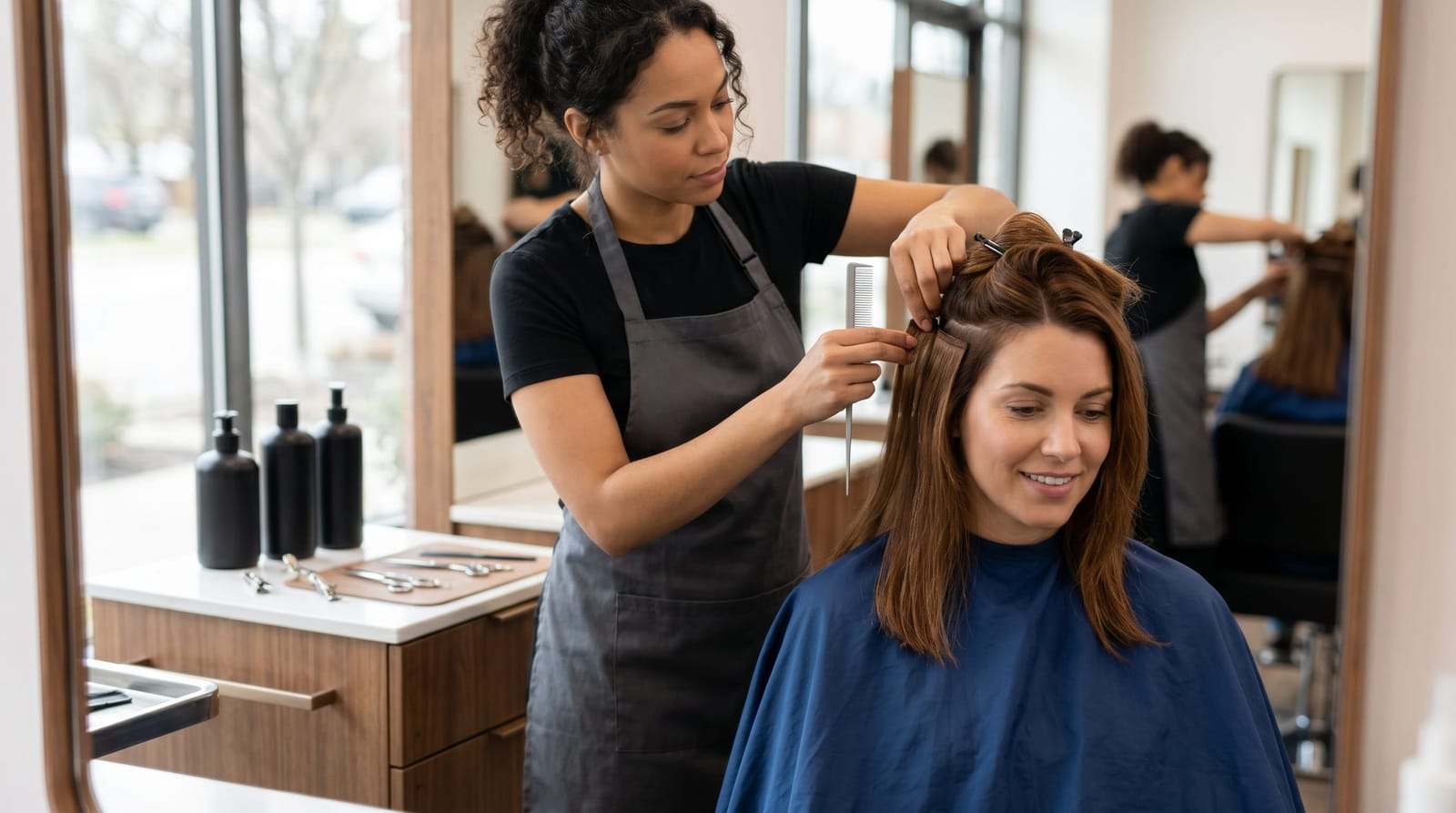
Tape-in extensions are held in place with a thin adhesive bond that sandwiches a small section of natural hair. To remove them safely, a professional applies a bond remover solution: a gentle formula that breaks down the adhesive without stripping the hair. Once the solution has had time to work, the extension tabs slide away cleanly. Any residual adhesive is then carefully combed out before washing. This process is typically efficient and, when done correctly, leaves the natural hair smooth and intact.
Glue-In and Fusion Extension Removal
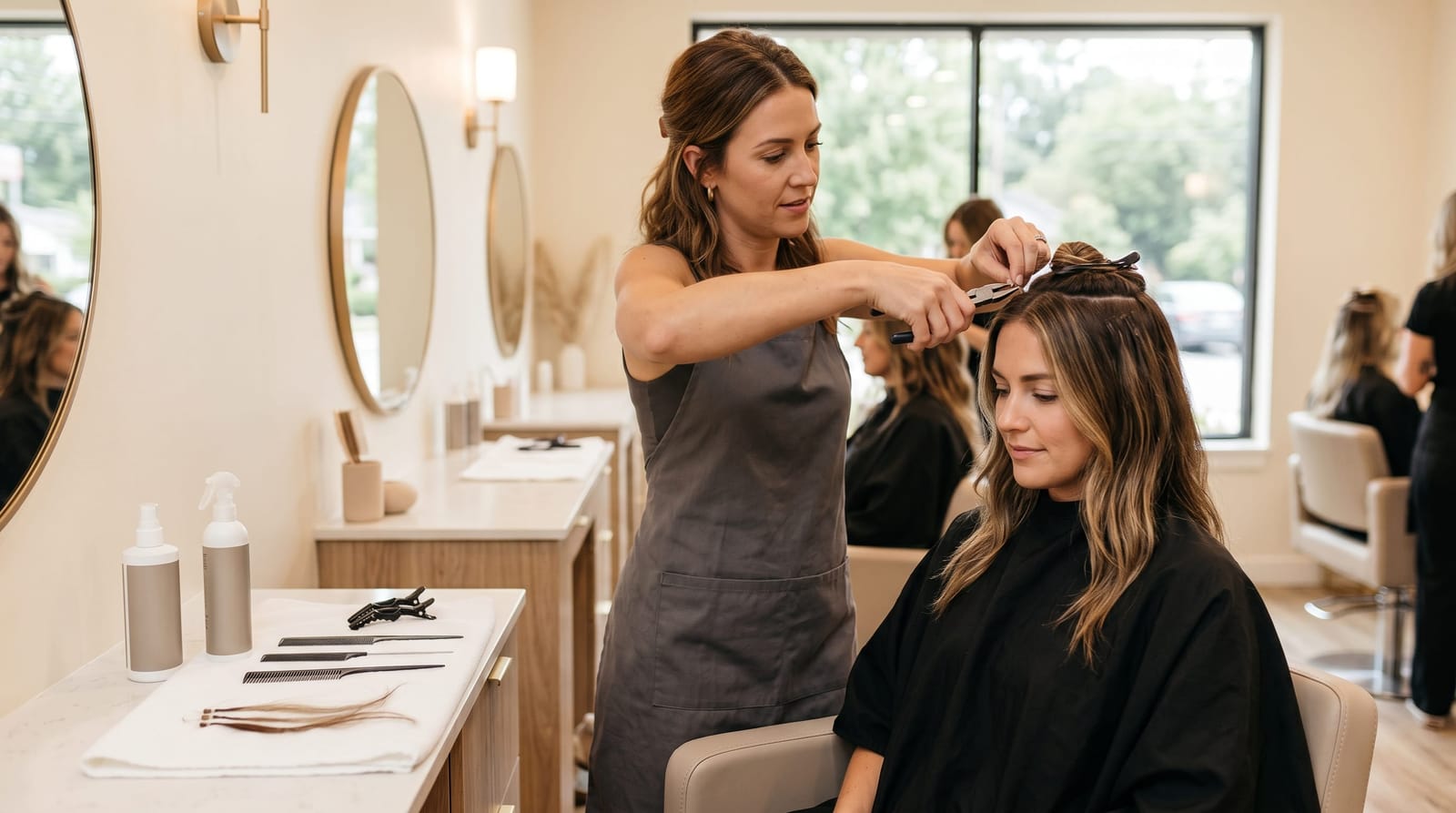
Glue or keratin bond extensions require a slightly more involved approach. A dissolving agent or specialized remover is applied directly to the bond, softening the keratin or glue so that the extension can be gently worked free. This is one area where professional expertise is especially valuable: the bonds sit close to the scalp, and rushing the process can cause unnecessary tension. If you've been wearing glue hair extensions near me and you're ready for removal, booking with a professional stylist ensures the bonds are dissolved properly and your natural hair is fully protected.
Sew-In and Braid-Out Removal
Sew-in extensions involve wefts stitched onto braided sections of natural hair. Removal here is more about careful cutting and detangling than chemical dissolving. The thread is clipped away section by section, and then the braids are gently loosened and detangled. This process can take time, especially if the extensions have been in for several weeks, because natural hair sheds and accumulates within the braid pattern. A thorough, patient detangle session is essential before washing.
Clip-In Extension Removal
Clip-in extensions are the most straightforward to remove since they are designed for daily wear and removal. However, if you have been relying on clip on extensions styling for extended periods without proper breaks, it is worth having a stylist assess your hair at the attachment points to check for any tension or stress before your next set.
Signs You Should Not Remove Extensions at Home
While clip-in extensions can absolutely be managed at home, most other extension types benefit significantly from professional removal. There are also specific situations where attempting a DIY extension removal service is not advisable regardless of the method.
- The bonds feel tight or tender: If you are experiencing scalp discomfort, tightness, or sensitivity around the attachment points, a professional should assess the situation before anything is removed.
- Your hair feels matted or tangled at the roots: This is common when extensions are left in longer than recommended. Attempting to remove them without proper detangling technique can result in significant breakage.
- You notice thinning at the edges or temples: Any signs of tension-related thinning are a signal to get professional guidance immediately. A stylist can remove the extensions in a way that minimizes further stress on vulnerable areas.
- You used keratin or hard bond glue: These adhesives require specific dissolving products and technique. Without the right tools and solutions, at-home removal risks pulling natural strands out with the extension.
- You are unsure what type of adhesive was used: If you had extensions applied elsewhere or are not certain of the bond type, a professional extension removal service is the safest choice.
Understanding what to expect from the experience is also helpful: our post on the professional extension removal process walks through the appointment step by step so you can feel fully prepared before you arrive.
Post-Removal Aftercare for Your Natural Hair
Once your extension removal service is complete, your natural hair deserves some intentional care. Even with gentle, professional removal, your strands and scalp have been carrying extra weight and tension for weeks. The right aftercare makes a noticeable difference in how quickly your hair bounces back.
Deep Conditioning Is Essential
A deep conditioning treatment immediately following removal is one of the best things you can do for your hair. Extensions can leave strands feeling dry and slightly stressed, especially around the attachment points. A rich, nourishing mask replenishes moisture and helps restore softness and elasticity. At Ka Belly Salon, we often recommend pairing extension removal with a conditioning treatment so your hair leaves the salon feeling refreshed rather than depleted.
Gentle Detangling and Scalp Massage
After a thorough wash, take time to work through your hair in small sections with a wide-tooth comb or a detangling brush. Rushing this step is where most post-removal breakage occurs. A light scalp massage during and after washing also encourages circulation, which feels wonderful after weeks of having your hair secured.
Give Your Hair a Rest Period
Before jumping into a new extension set, allow your hair at least one to two weeks to rest. Use this time to wear your natural hair in low-manipulation styles, focus on moisture and protein balance, and let your scalp recover fully. This rest period is not just good for your hair: it also gives you a chance to evaluate the condition of your natural strands and decide on your next style with intention.
Protein and Moisture Balance
Post-removal hair can sometimes feel limp or overly soft, which is a sign of excess moisture and a need for light protein support. A bond-building treatment or a light protein conditioner can help restore structure without making hair feel stiff. Your stylist can assess your hair's needs during the removal appointment and recommend the right aftercare routine for your specific hair type.
What a Professional Extension Removal Service Typically Includes
When you book an extension removal service at a salon like Ka Belly, you are not simply paying to have extensions taken out. A professional service includes a thorough scalp and hair assessment before removal begins, the correct products and tools matched to your extension type, careful removal technique that protects your natural hair at every step, a wash and condition to remove any residual product or buildup, and a post-removal consultation to discuss the condition of your hair and next steps.
Pricing for professional extension removal services typically ranges from around $45 to $150 depending on the extension type, the amount of hair, and the time involved. More complex removals, such as long-worn fusion bonds or heavily tangled sew-ins, may take additional time and care. It is always worth consulting with your stylist beforehand so there are no surprises on the day of your appointment.
For clients who regularly wear extensions and are considering their styling options after removal, exploring extension styles at a Dominican salon can be a wonderful way to plan your next look while giving your natural hair the attention it deserves in between sets.
How Often Should You Have Extensions Removed and Reinstalled?
This is one of the most common questions clients ask, and the honest answer is: it depends on your extension type and the health of your natural hair. General guidelines suggest the following timelines for removal and reapplication:
- Tape-in extensions: Every 6 to 8 weeks for move-up or reapplication
- Sew-in extensions: Every 6 to 8 weeks to prevent matting and scalp buildup
- Glue or keratin fusion bonds: Every 3 to 4 months, with a professional assessment at each removal
- Clip-in extensions: Removed daily; no scheduled professional removal needed unless damage is noticed
Wearing extensions beyond the recommended timeframe does not always mean immediate damage, but it does increase the risk of tangling, matting, and scalp issues that make the extension removal service more complex. Sticking to a regular schedule keeps both your extensions and your natural hair in their best possible condition.
Related Topics Worth Exploring
Safe removal is one piece of a larger extension care picture. If you are looking for more detail on the appointment itself, the post on the professional extension removal process covers what happens from the moment you sit in the chair to when you leave the salon. And if you are thinking ahead to your next set, our guides on different extension types and styling techniques offer everything you need to make an informed, confident decision.
Ready to Schedule Your Extension Removal Service at Ka Belly Salon?
Your natural hair deserves thoughtful, expert care, and that starts with a safe, professional extension removal service. At Ka Belly Salon in the DMV area, our stylists bring the same warmth, skill, and attention to detail to removal appointments as they do to every other service we offer. Whether you are transitioning between styles, giving your hair a rest, or preparing for a fresh set, we are here to make the process smooth, comfortable, and genuinely good for your hair.
Book your extension removal service with us today and experience the difference that professional, hair-healthy care makes from start to finish.