Does a Keratin Treatment Work on Thick, Curly, or Coily Hair Textures?
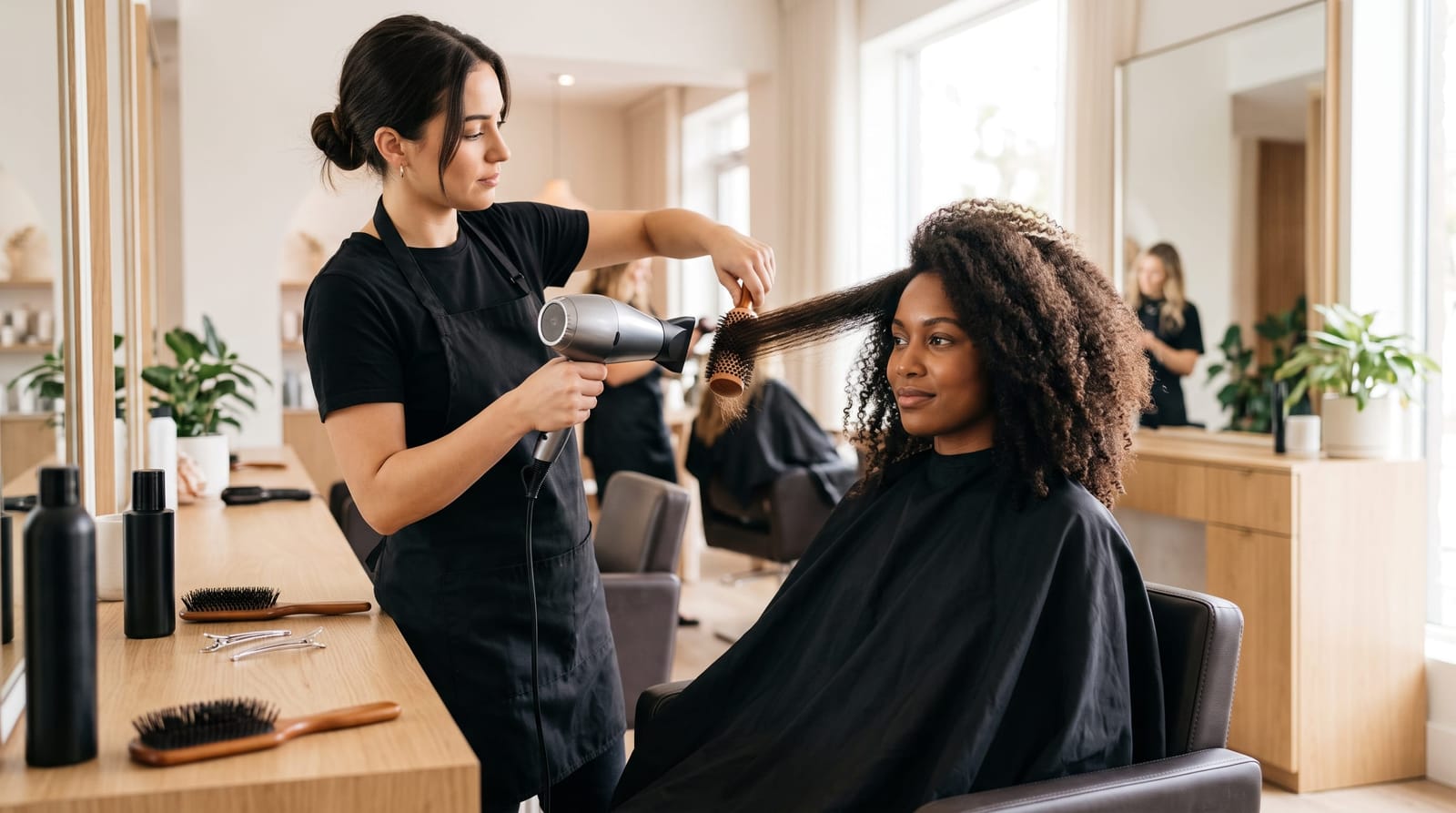
If you have thick, curly, or coily hair, you've probably wondered whether a keratin treatment is actually worth it, or whether it's a service designed for a completely different hair type. It's one of the most common questions we hear at Kabelly, and it's a fair one. When so many keratin treatment photos feature wavy or loosely textured hair, it can feel unclear what the results would actually look like on your texture. Here's an honest, detailed answer based on real experience with the hair types most common among our clients in the DMV area.
How Keratin Treatments Work on Thick, Curly, and Coily Hair
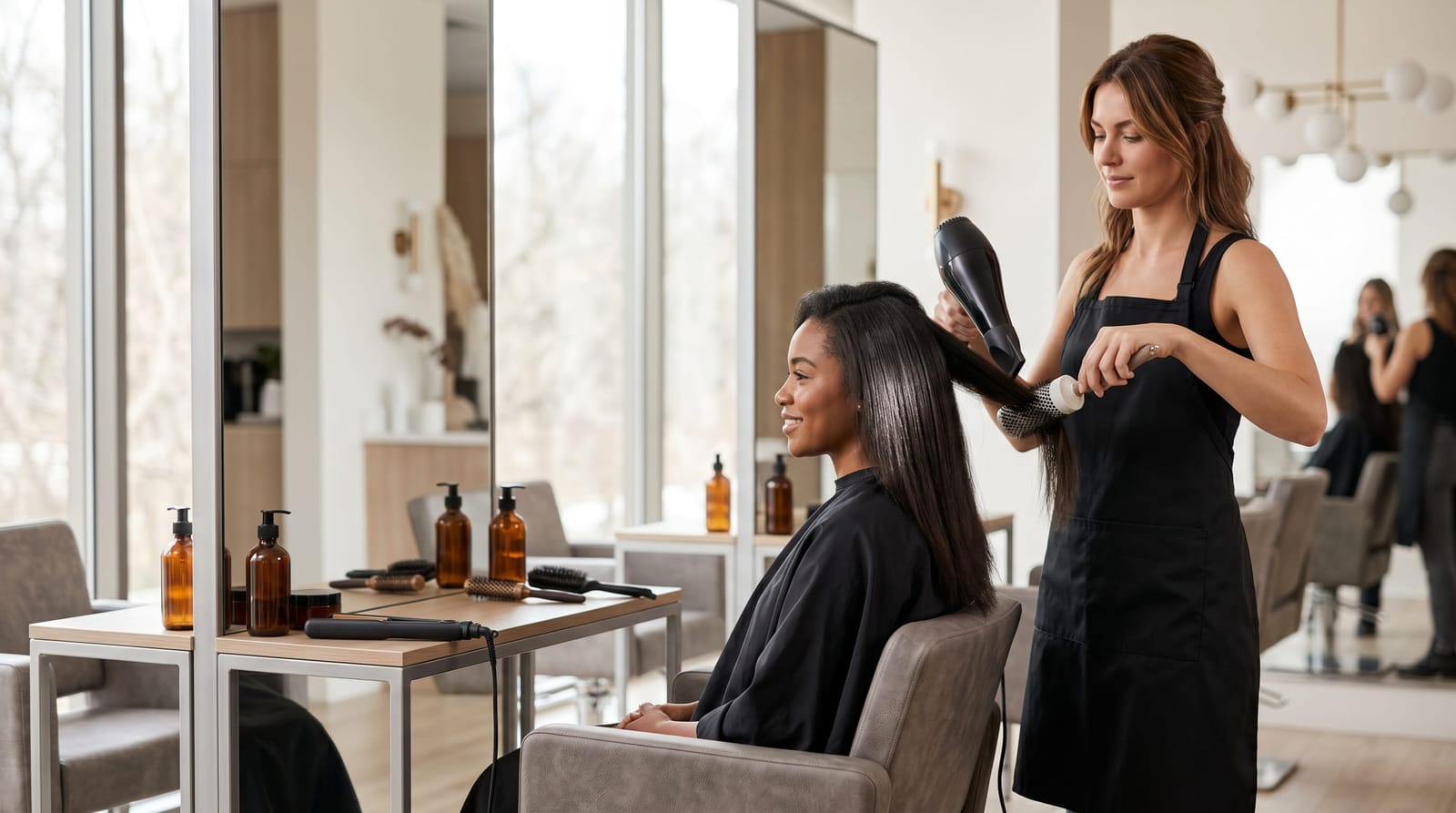
A keratin treatment works by coating each strand with a protein-rich formula that is then sealed in with heat. This process smooths the outer layer of the hair shaft, which is what creates that soft, frizz-free finish. For clients with thick, curly, or coily hair, especially Type 3C through 4C textures, the results are real, but they look different than what you might see on a Type 2B wave.
Rather than eliminating your curl pattern entirely, a keratin treatment on thicker, coilier textures typically delivers a significant reduction in frizz, a looser version of your natural curl or wave, and hair that is dramatically easier to blow out and style. Think of it less as a straightening service and more as a smoothing service that works with your texture rather than against it.
Studies and professional estimates suggest that clients with Type 3 and Type 4 hair see anywhere from 50% to 85% frizz reduction depending on the formula used and the current condition of their hair. That's a meaningful difference, especially during the humid DMV summers when managing thick hair can feel like a full-time job.
What Results Actually Look Like: Realistic Before-and-After Expectations
Setting realistic expectations is everything with this service, and it's something we take seriously at Kabelly. Here's what you can genuinely expect based on different curly and coily starting points:
Type 3A: 3B Curls (Loose to Medium Spirals)
If you start with medium spirals or S-shaped curls, a keratin treatment will likely leave you with a soft, elongated wave pattern. Your hair will be noticeably smoother, shinier, and much easier to dry and style. Blowouts that used to take 45 to 60 minutes may take 20 to 30 minutes post-treatment. Your natural curls, if you air dry, will come back, just more defined and far less frizzy.
Type 3C: 4A Curls (Tight Spirals and Coils)
This is where clients are sometimes surprised, in the best way. Tighter curl patterns do respond well to keratin treatments, though the curl will loosen more noticeably. You may move from a tight coil to a soft, elongated spiral or wave. The texture becomes more pliable, easier to detangle, and significantly more manageable day to day. Many of our clients in this range say the biggest change they notice is in their morning routine: hair that used to require 30 minutes of detangling takes a fraction of the time.
Type 4B: 4C Hair (Tight Coils and Zig-Zag Patterns)
For deeply coily textures, results tend to vary most depending on hair density and porosity. Frizz reduction is still very real, most clients in this range see 50% to 70% improvement, but the natural coil pattern is more likely to remain visible, especially when hair is worn in its natural state. Where clients notice the biggest difference is in blowout results: hair that was previously difficult to smooth becomes much more cooperative with heat, and styles last longer between washes. A consultation before booking is especially helpful here so we can recommend the right formula strength.
Why Hair Thickness Matters: and Why It's Actually an Advantage
Thick hair sometimes gets treated like a problem to solve, but it's really a strong foundation. As stylists often note, thick hair has volume, holds shape well, and gives you a lot of versatility to work with. When it comes to keratin treatments specifically, thickness means the hair has more surface area for the treatment to bond to, which often translates to results that feel especially lush and full after the service.
That said, thick hair also takes longer to process and requires more product coverage to ensure even results throughout. At Kabelly, we account for this during the service, which is part of why a thorough consultation matters before any chemical or smoothing service.
One detail worth knowing: mid-length to longer hair tends to show the most dramatic smoothing results with keratin treatments on thick textures. If your hair is shorter or has a lot of layers, the results are still real: they just show differently. Layers, by the way, are actually a great companion to keratin treatments on thick hair because they help distribute volume and keep the style from feeling heavy as the smoothing effect settles in.
Keratin Treatments and Chemically Treated Hair
Many of our curly and coily clients also have some form of chemical service in their history, whether that's color, highlights, or a relaxer. This is an important factor because the current condition and history of your hair affects how well a keratin treatment performs and which formula is appropriate.
If you have a relaxer, timing and formula selection are especially important. A keratin treatment can be done on relaxed hair, but the two services should be spaced appropriately and matched to your hair's current strength. If you've been considering highlights on relaxed hair, that's another situation where the order of services and the health of your hair play a big role in what's possible: something our stylists can walk you through during a consultation.
Color-treated or highlighted curly hair can absolutely receive a keratin treatment, and many clients find the treatment actually enhances the shine and softness of their color. The key is ensuring your hair is strong enough to handle the heat processing involved.
How Long Results Last and How to Maintain Them
For thick, curly, and coily hair types, keratin treatment results typically last between 3 and 5 months with proper care. A few habits make a real difference in longevity:
- Wait at least 72 hours before washing your hair after the treatment
- Use sulfate-free shampoo and conditioner: sulfates break down the keratin bond faster
- Avoid tying your hair up or using clips for the first three days post-treatment
- Sleep on a satin or silk pillowcase to reduce friction and preserve smoothness
- Schedule a trim every 8 to 12 weeks to keep your ends healthy and your style looking intentional
Clients who follow these steps consistently tend to get closer to the 5-month end of the range, even with thick or coily hair that might seem like it would "fight" the treatment.
Frequently Asked Questions
Will a keratin treatment make my curly hair completely straight?
Not necessarily, and for many curly and coily textures, it won't. A keratin treatment smooths and relaxes your curl pattern rather than eliminating it. Whether you retain curl when air drying depends largely on your natural texture. Type 3 hair often air dries with a soft wave post-treatment, while Type 4 hair may still show curl definition. The most consistent result across all curl types is reduced frizz and significantly easier styling.
How is a keratin treatment different from a relaxer?
A relaxer chemically alters the structure of the hair strand, permanently changing the curl pattern until new growth comes in. A keratin treatment coats the outside of the hair strand with a smoothing protein and is not permanent: it gradually washes out over time. Keratin treatments do not break down the hair's internal bonds the way a relaxer does, which makes them a different category of service with different maintenance needs and expectations.
Can I get a haircut alongside my keratin treatment?
Yes, and for clients with thick, curly hair, getting a trim or a layered cut around the same appointment can actually enhance the results. Layers help distribute volume and make it easier to see the smoothing effect throughout the hair. Many clients find that haircuts for thick curly hair look especially polished and intentional after a keratin treatment, since the hair is easier to control and styles fall more cleanly.
Is a keratin treatment safe for natural hair that has never been chemically processed?
Yes. Keratin treatments are commonly performed on completely natural, unprocessed hair. In fact, virgin natural hair often holds the treatment especially well because the hair cuticle hasn't been altered by previous chemical services. A stylist consultation beforehand is still recommended to assess your hair's porosity and density so the right formula and processing time can be selected.
The Bottom Line
Keratin treatments absolutely work on thick, curly, and coily hair: they just deliver results that look and feel different from what you might see on looser textures. For our clients in the DMV area with Type 3 and Type 4 hair, the real wins are reduced frizz, easier styling, longer-lasting blowouts, and more manageable hair overall. If you're curious whether a keratin treatment is the right fit for your specific texture and lifestyle, a conversation with one of our Kabelly stylists is always the best starting point. We're here to give you honest, personalized guidance, not a one-size-fits-all answer.