Can You Sleep in Clip-On Extensions?

If you've ever fallen asleep wearing your clip-in extensions after a long night out: no judgment here. It happens. But is sleeping with clip extensions something you should actually plan to do, or is it one of those hair habits that quietly causes real damage over time? At Kabelly Dominican Salon in the DMV area, we get this question from clients almost every week. This guide gives you a straight, honest answer: what happens when you sleep in clip-ins, when it's a definite no-go, and exactly what to do if you have no other option.
Sleeping with clip extensions is one of the most common mistakes extension wearers make. According to a 2021 survey by the Professional Beauty Association, nearly 47% of clip-in extension users admitted to occasionally sleeping in their extensions, and the majority reported noticing increased breakage and scalp soreness as a result. Understanding the risks helps you make smarter choices for your hair health.
The Short Answer: Should You Sleep in Clip-In Extensions?
No: sleeping with clip extensions on a regular basis is not recommended. This isn't just salon advice designed to sell you more appointments. It's a matter of protecting both your natural hair and the investment you've made in your extensions. At Kabelly Dominican Salon, our stylists have seen firsthand the damage that routine overnight clip-in wear can cause, and it's almost always preventable.
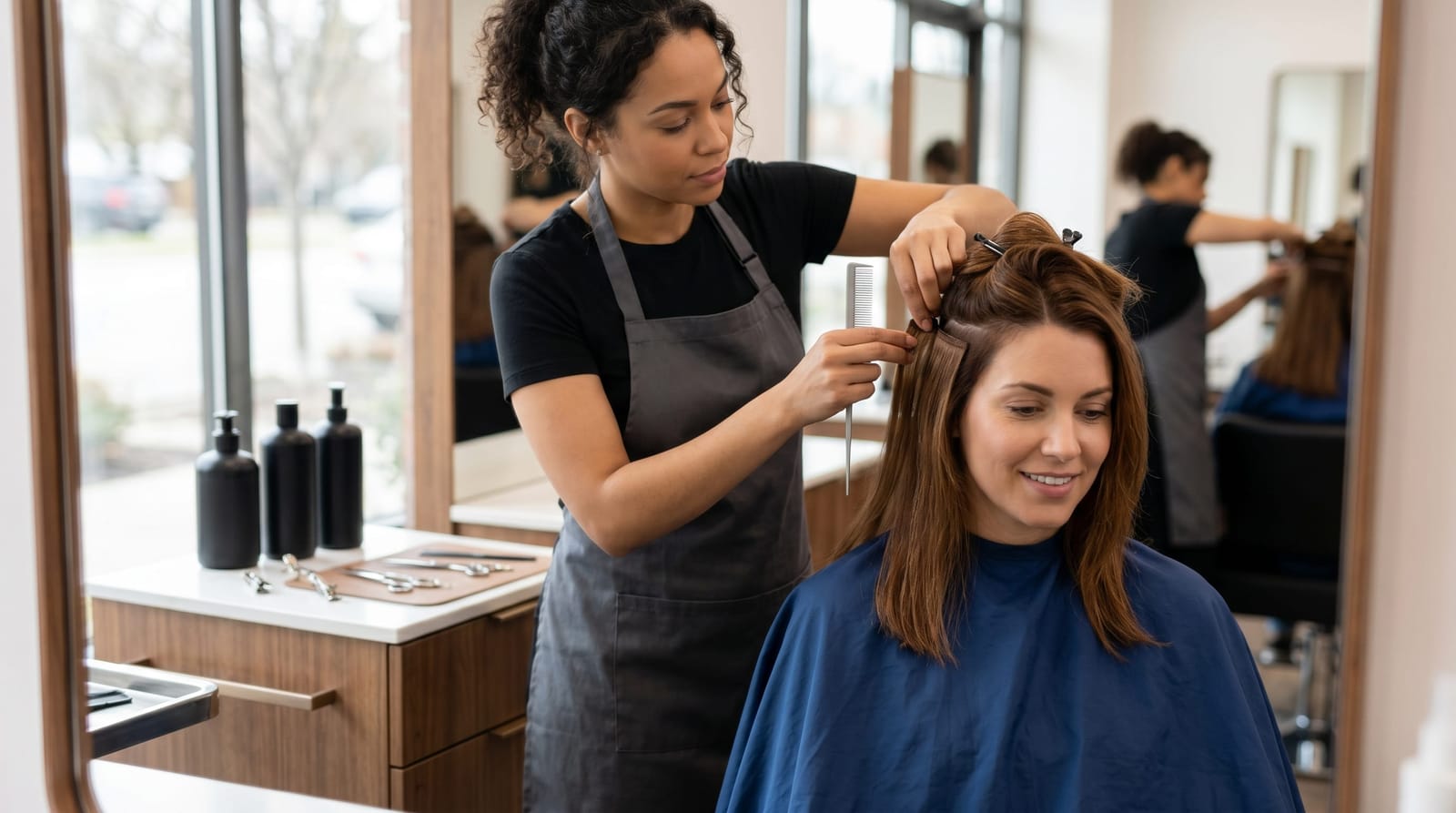
Clip-in extensions use small, toothed combs that attach to sections of your natural hair near the roots. When you sleep on them, several things happen at once, and none of them are good:
- Tension and traction stress: The weight of the extensions pulling on your hair follicles for six to eight hours can contribute to traction alopecia over time. This is especially true along your hairline and crown, where clips are typically placed.
- Tangling and matting: Movement during sleep causes both your natural hair and the extension wefts to tangle together. This leads to knots that are difficult, and sometimes damaging, to remove in the morning.
- Clip damage to the scalp: Metal combs can dig into your scalp as you shift positions throughout the night, causing irritation, soreness, or even small abrasions.
- Extension wear and tear: Friction from your pillow degrades the quality of the extension hair faster. This reduces how long your wefts last before needing replacement, costing you more money over time.
- Disrupted sleep: Many clients who try sleeping with clip extensions report discomfort that interrupts their sleep cycles, which affects overall health and wellness.
For clients who wear clip-ins frequently, whether for special events or everyday styling: removing them before bed is one of the most impactful habits for preserving long-term hair health. It's a simple step that makes a big difference.
How Sleeping With Clip Extensions Damages Your Hair Over Time
Understanding the science behind the damage helps make the case for proper removal habits. Sleeping with clip extensions isn't just uncomfortable: it creates a cycle of stress on your hair that compounds with each night you skip the removal step.
Traction Alopecia: The Silent Risk
Traction alopecia is a form of gradual hair loss caused by repeated or prolonged tension on the hair follicle. A study published in the Journal of the American Academy of Dermatology found that traction alopecia affects an estimated 47% of women who regularly use tight hairstyles or hair attachments. Sleeping with clip extensions places continuous tension on the follicle for hours at a time: making it one of the more significant contributors to this condition among extension wearers.
The risk is highest along the hairline, temples, and nape of the neck. These areas are already more delicate, and they tend to receive the most clip placement during styling. Over weeks and months of sleeping with clip extensions, the cumulative tension can cause miniaturization of the hair follicle, leading to thinner regrowth or, in more severe cases, permanent loss in those areas.
Mechanical Breakage From Friction
Every time you move during sleep, your hair rubs against your pillowcase. Cotton pillowcases, the most common type, have a rough surface texture that catches and snags individual strands. When sleeping with clip extensions, the wefts add bulk and weight to this friction equation. The result is mechanical breakage, particularly at the mid-shaft and ends of both your natural hair and the extension fibers.
Research from the International Journal of Trichology notes that mechanical friction is a leading cause of hair fiber damage in women who wear hair extensions. Switching to a silk or satin surface dramatically reduces this risk, but it doesn't eliminate the tension and traction issues caused by the clips themselves.
Scalp Health and Circulation
Your scalp benefits from movement, massage, and being free from tension during rest periods. When clip mechanisms sit against the scalp all night, they restrict natural circulation in those areas. Poor circulation around the follicle means less delivery of nutrients and oxygen: both of which are essential for healthy hair growth. Clients at Kabelly Dominican Salon who come in with scalp soreness and slow growth often share a common habit: sleeping with clip extensions several nights per week.
Protecting Your Natural Hair While Wearing Clip Extensions
African American and Hispanic hair textures, which make up a significant portion of the clientele at Kabelly Dominican Salon, have unique structural considerations when it comes to wearing clip extensions overnight. Coily, curly, and relaxed hair textures each respond differently to the mechanical stress of sleeping with clip extensions, and it's worth understanding what to watch for.
Coily and tightly textured hair tends to interlock and tangle more easily during sleep, making the matting risk especially high. Relaxed or chemically treated hair is often more fragile at the shaft, making it more vulnerable to breakage from clip pressure and friction. Wavy and looser curl patterns may experience less severe tangling, but are still at risk for the traction and follicle stress associated with sleeping with clip extensions.
Here are the key warning signs that overnight clip-in wear is affecting your natural hair health:
- Soreness or tenderness at the scalp, especially along attachment points
- Increased shedding when removing extensions in the morning
- Noticeable thinning or breakage near your hairline or temples
- Persistent tangles that take more than five minutes to detangle after sleep
- Dryness or brittleness in the sections where clips were attached
- Itching or flaking at the scalp around clip attachment areas
- Red or irritated patches where the metal combs rested against your skin
If you notice any of these signs, it's time to take a break from clip-ins and give your scalp and strands time to recover. The team at Kabelly Dominican Salon offers targeted scalp treatments and deep conditioning services designed to restore moisture, strengthen damaged strands, and promote healthier regrowth before you resume extension wear.
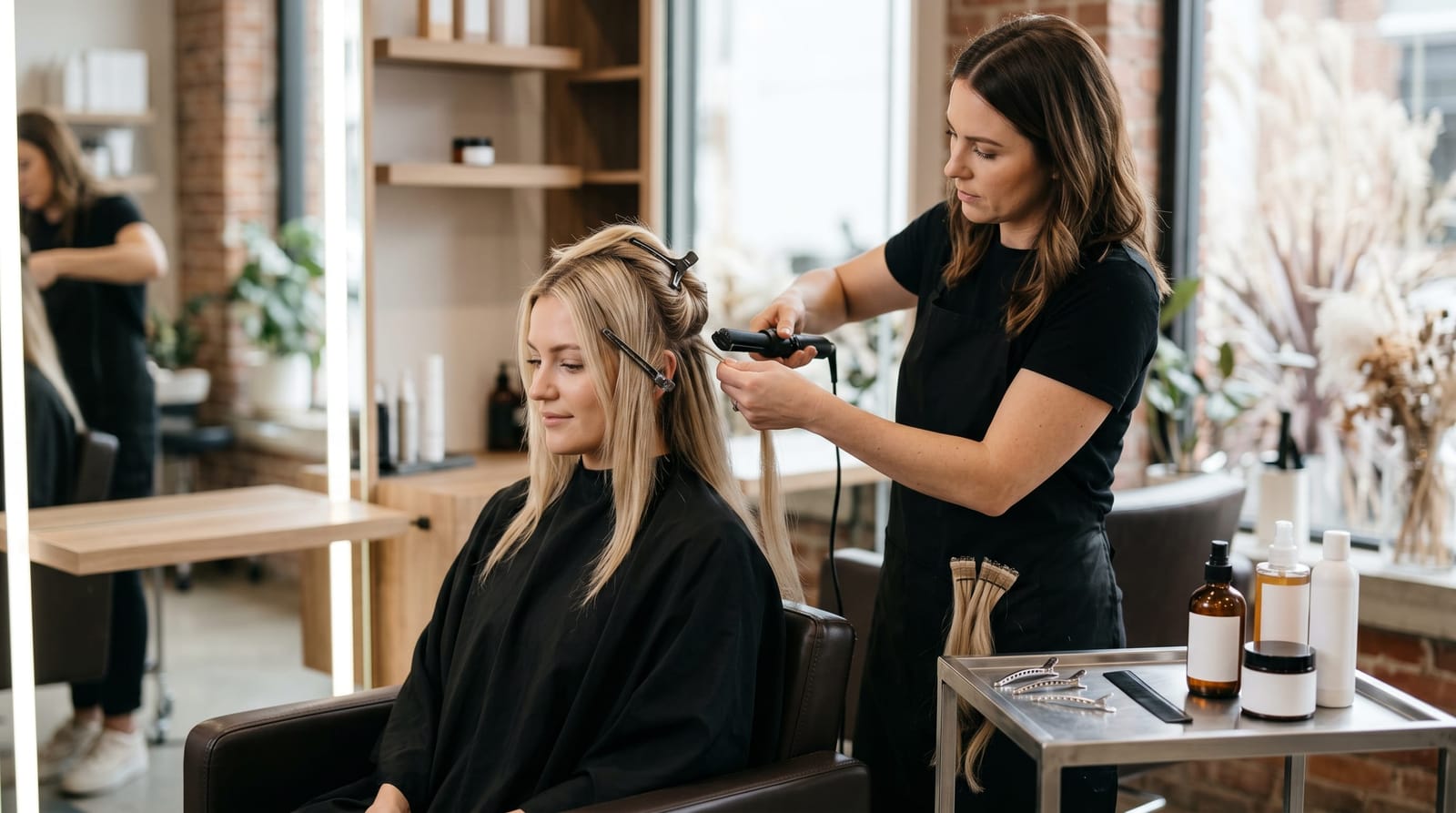
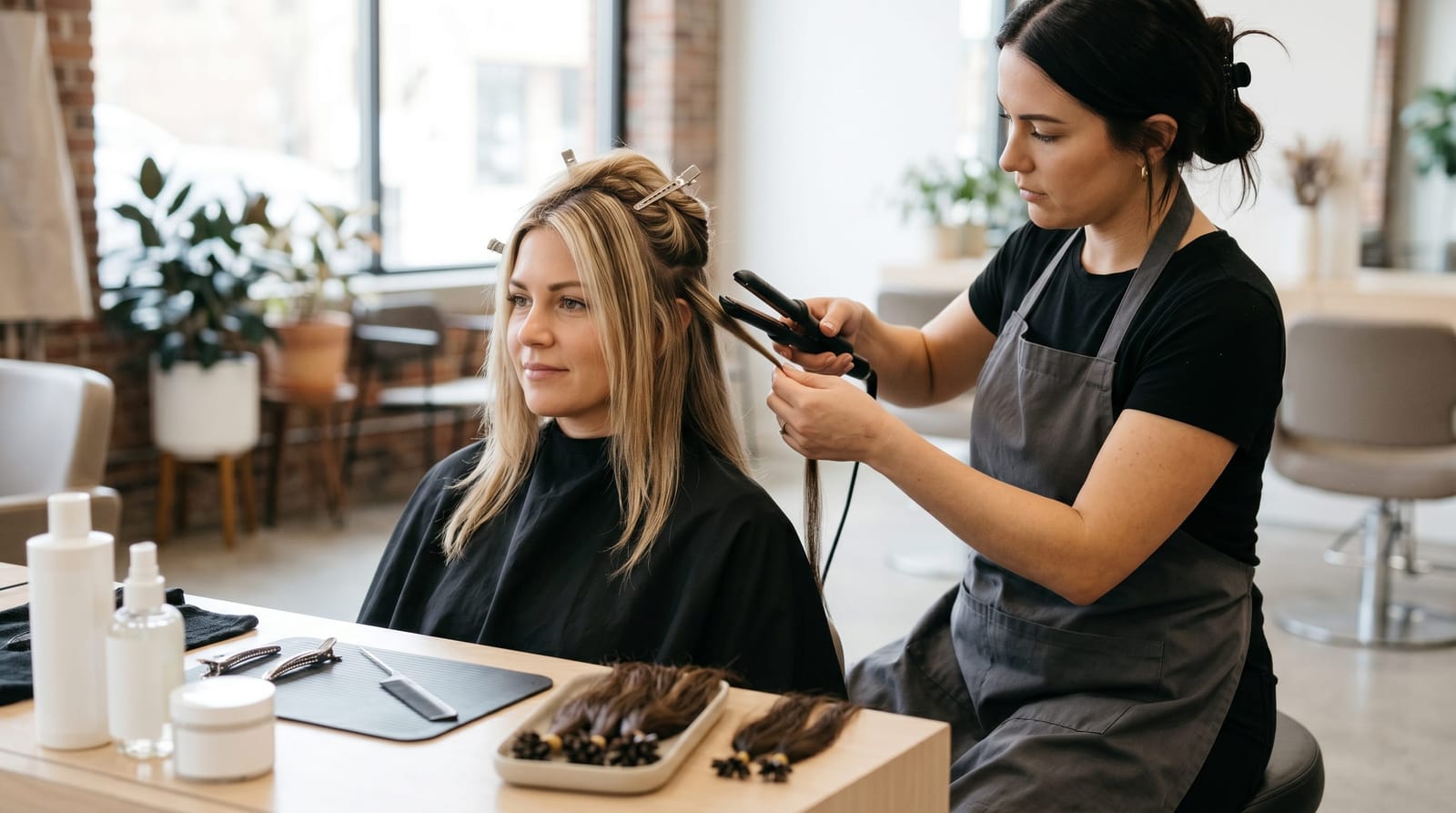
For clients wondering about alternatives that allow for more flexibility, including overnight wear, our guide to hair extension methods covers tape-ins, sew-ins, and micro-links that are designed for longer continuous wear without daily removal.
Daily and Nightly Care Habits for Clip-In Extension Wearers
Beyond the question of sleeping with clip extensions, building a consistent care routine around your clip-ins will extend their lifespan and keep your natural hair in better shape overall. Premium human hair clip-in sets can cost anywhere from $150 to $500 or more: proper care is how you protect that investment. Here's what a healthy clip-in routine looks like:
Before Applying Clip-Ins
- Make sure your natural hair is clean, dry, and fully detangled before applying
- Avoid applying heavy products directly to the areas where clips will attach: buildup weakens grip and causes slipping
- Gently backcomb the roots at attachment points for better hold throughout the day
- Check the condition of your clips before each use: bent or weakened combs should be repaired or replaced
- Rotate your clip placement points regularly to avoid repeated tension on the same follicles
During Wear
- Limit wear to 8-10 hours per day to give your scalp adequate rest between uses
- Avoid applying heat directly to the clip mechanisms: this weakens the metal and the bonding point over time
- Check clips periodically throughout the day to ensure they're not shifting or pulling
- Carry a wide-tooth comb or detangling brush to address any knots before they worsen
- If you feel scalp tenderness during the day, remove the nearest clip and reattach it with less tension
When Removing Clip-Ins at Night
- Remove clips one at a time: open the comb fully before sliding it out and never yank
- Detangle extension wefts before storing them to prevent overnight matting in storage
- Store wefts in a breathable bag or on an extension hanger to maintain shape and prevent tangling
- Follow removal with a moisturizing routine for your natural hair, especially with frequent clip-in use
- Give your scalp a gentle massage after removal to restore circulation to the follicles
- Wash your extension wefts every 15-20 wears, or sooner if product buildup is noticeable
Consistent care is what separates clients who get six months or more out of a single set of clip-ins from those who need to replace them every few weeks. At Kabelly Dominican Salon, our stylists always recommend establishing these habits from day one: small nightly steps make a significant cumulative difference over the life of your extensions.
Better Alternatives to Sleeping With Clip Extensions
If you find yourself frequently wanting to skip the nightly removal step, clip-in extensions may not be the right method for your lifestyle. The good news is that there are several extension types designed specifically for continuous wear: meaning you can sleep in them safely without the risks associated with sleeping with clip extensions.
At Kabelly Dominican Salon, we offer consultations to help clients choose the extension method that fits both their hair type and their daily routine. Here's a quick comparison of the most popular options:
- Tape-in extensions: Applied in thin, flat wefts using a gentle adhesive. They lie flat against the scalp, making them comfortable for overnight wear. Tape-ins typically last 6-8 weeks before a maintenance appointment is needed.
- Sew-in weaves: Extension wefts are sewn onto braided sections of your natural hair. This method is highly durable and designed for continuous wear. With proper care, sew-ins can last 6-8 weeks between salon visits.
- Micro-link extensions: Individual extension strands are attached using tiny metal rings clamped to small sections of natural hair. They move naturally with your hair and are safe for sleeping. Maintenance is recommended every 6-8 weeks as natural hair grows.
- Fusion/keratin bond extensions: Extensions bonded to natural hair using a keratin adhesive. These are among the most seamless options for overnight wear, though they require professional application and removal.
Each of these methods has different price points, maintenance schedules, and suitability depending on your hair texture and density. Booking a consultation at Kabelly Dominican Salon is the best way to get a personalized recommendation: our stylists take the time to assess your natural hair health before recommending any extension method.
Frequently Asked Questions About Sleeping With Clip Extensions
How long can you safely wear clip-in extensions in a row?
Most hair professionals recommend wearing clip-in extensions for no more than 8-10 hours at a time. Extended wear beyond this, especially sleeping with clip extensions, increases the risk of scalp tension, follicle stress, and tangling. Taking overnight breaks allows your scalp to breathe and reduces cumulative strain on your natural hair. The stylists at Kabelly Dominican Salon recommend tracking your daily wear time if you're a frequent clip-in user.
Can sleeping with clip extensions cause hair loss?
Regularly sleeping with clip extensions can contribute to traction alopecia: a form of gradual hair loss caused by repeated tension on the hair follicle. This is most common along the hairline, temples, and nape. One overnight occurrence is unlikely to cause lasting damage, but making it a habit significantly raises the risk. This is especially true for those with finer, more fragile, or chemically treated hair textures.
Does sleeping on a silk pillowcase really make a difference for clip-in extensions?
Yes, it makes a meaningful difference. Silk and satin pillowcases reduce friction between your hair and the pillow surface, which decreases tangling, frizz, and mechanical breakage. When sleeping with clip extensions, the lower-friction surface also reduces how much the extensions shift during the night. This means less pressure on your clips and attachment points. It's a worthwhile investment for any extension wearer, but it doesn't replace proper removal habits.
What extension type is better for overnight wear?
If you prefer a style you can sleep in without daily removal, clip-ins are not the right method for overnight use. Tape-in extensions, sew-in weaves, and micro-link extensions are all designed for longer continuous wear and are much safer for sleeping. Each method has different maintenance requirements and price points. A consultation with a stylist at Kabelly Dominican Salon can help determine which option fits your lifestyle and hair type best.
How do I detangle my hair after sleeping with clip extensions?
Start by removing each clip carefully before attempting to detangle. Apply a detangling spray or lightweight conditioner to any knotted areas. Use a wide-tooth comb or a loop brush and work from the ends upward: never start at the root. If the tangle is severe, apply a generous amount of conditioner and let it sit for several minutes before attempting to comb through. Patience is key. Rushing through post-sleep detangling is one of the leading causes of breakage for clients who have been sleeping with clip extensions.
Expert Advice on Sleeping With Clip Extensions: What Salon Professionals Say
Hair extension specialists consistently agree on one point: the removal habit is non-negotiable for long-term hair health. At Kabelly Dominican Salon, our senior stylists, who collectively bring over 30 years of experience working with extension clients in the DMV area, have observed a clear pattern in consultations. Clients who remove their clip-ins every night and follow a basic nighttime care routine consistently have healthier scalps, stronger natural hair, and extensions that last significantly longer than those who skip the step.
"The number one thing I tell every new clip-in client is that sleeping with clip extensions, even once in a while, adds up faster than you think," says one of our lead extension stylists at Kabelly Dominican Salon. "We see the results in the chair. The clients who are consistent with removal have noticeably better hair retention and extension longevity."
This advice aligns with guidance from the American Academy of Dermatology, which recommends avoiding prolonged tension on the hair follicle as a primary prevention strategy for traction alopecia. For clip-in extension wearers specifically, nightly removal is the simplest and most effective way to implement this recommendation.
Final Takeaways: What You Need to Know About Sleeping With Clip Extensions
The bottom line on sleeping with clip extensions is clear: don't make it a regular habit. The risks, traction alopecia, mechanical breakage, scalp irritation, and shortened extension lifespan, are real and well-documented. None of them are worth the convenience of skipping a five-minute removal routine before bed.
That said, life happens. If you find yourself sleeping with clip extensions on an occasional basis, a loose braid, a silk pillowcase or scarf, and properly secured clips will go a long way toward minimizing the damage. Follow up with a good detangling session in the morning and give your scalp a gentle massage to restore circulation.
If you consistently want the option of sleeping in your extensions, the smarter move is to switch to a method designed for continuous wear. The team at Kabelly Dominican Salon is here to help you find the right fit. Book a personalized consultation at our DMV salon and let our experienced stylists walk you through every available option, because the best extension method is always the one that works for your real life, your hair type, and your daily routine.