Can You Highlight Previously Relaxed Hair?
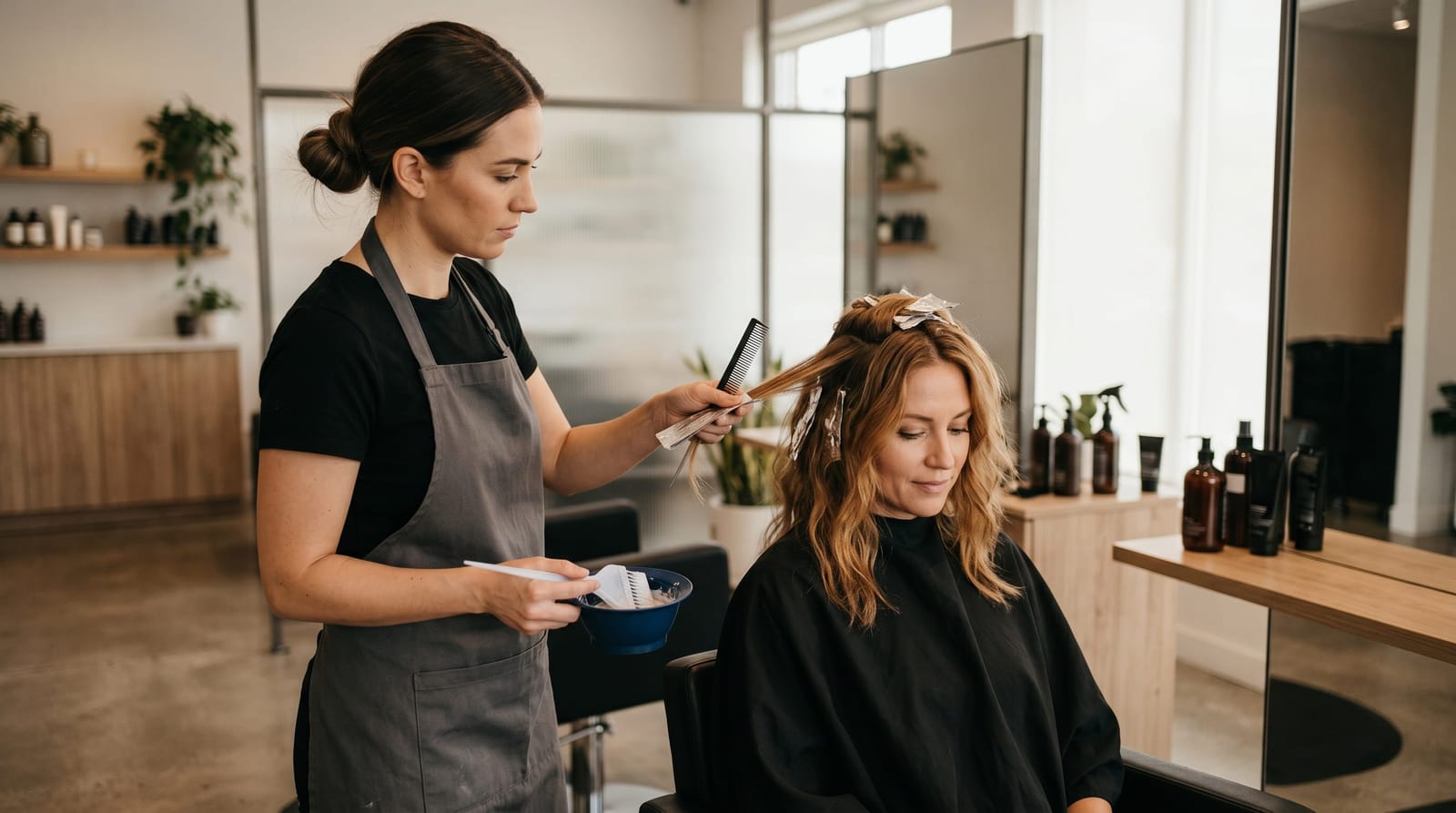
If you've been wondering whether highlights on relaxed hair are safe, and whether they can actually look stunning, the answer is yes, but with important conditions. Chemically relaxed hair has already undergone a significant structural change, and layering another chemical process on top requires careful planning and professional expertise. This post breaks down exactly what you need to know before booking your appointment, from timing and strand testing to the styles that work best for relaxed clients.
Understanding Why Highlights on Relaxed Hair Require Extra Care
Relaxers work by permanently breaking down the protein bonds in your hair to straighten its natural curl pattern. Highlights, whether applied through bleach or a high-lift color formula, also penetrate the hair shaft and alter its structure. When you combine both processes, you are essentially subjecting the same strand of hair to two rounds of chemical processing, which is where the risk of damage begins.
Hair that has been relaxed is more porous than unprocessed hair. That increased porosity means it absorbs color faster and can become over-processed more quickly if the colorist isn't paying close attention. The result can range from excessive dryness and breakage to severe damage that leads to snapping off at the root. This doesn't mean highlights on relaxed hair are off the table: it means the process demands a higher level of professional skill and a thorough assessment before a single foil is placed.
It is also worth noting that highlights on relaxed hair can be absolutely beautiful. Popular options include warm chocolate brown highlights that add dimension and depth, as well as caramel and blonde tones that create a sun-kissed effect against a dark base. When done correctly, highlights can give relaxed hair a fresh, dimensional look while camouflaging gray regrowth and adding visual texture to what can otherwise appear flat.
When Is It Safe to Get Highlights on Relaxed Hair?
Timing is one of the most critical factors when planning highlights on relaxed hair. The general professional guideline is to wait a minimum of two weeks between your relaxer application and any highlighting service. Many experienced colorists prefer to wait four to six weeks to allow the hair's cuticle to settle and regain some stability after the relaxer.
You should never apply highlights immediately before or after a relaxer touch-up. The hair is at its most vulnerable in the days surrounding a relaxer application, and combining both services in the same session, even back to back, dramatically increases the risk of irreversible damage.
Here is a simple timeline to follow:
- 0-2 weeks after relaxer: No highlighting. Allow hair to stabilize.
- 2-4 weeks after relaxer: Possible with caution; only appropriate for very healthy hair and partial highlight applications.
- 4-6 weeks after relaxer: Safer window for highlights, with a professional strand test performed first.
- 6+ weeks after relaxer: Generally the safest timing for highlights on relaxed hair, especially for blondes or high-lift tones.
The ideal scenario is to coordinate your color and relaxer appointments so that highlights on relaxed hair always fall within a safe, planned schedule. Your colorist can help you build a calendar that protects your hair health long-term.
The Professional Assessment: What a Colorist Looks For
Before any highlighting service on relaxed hair, a professional consultation and strand test are non-negotiable steps. A skilled colorist will evaluate several factors to determine whether your hair can safely handle the service.
Porosity Check
High porosity hair absorbs products rapidly and can process color much faster than expected. A colorist will feel the hair and may perform a simple water test to assess how porous the strands are. For highlights on relaxed hair with high porosity, a filler or protein treatment may be recommended before the color appointment.
Strand Elasticity Test
Healthy hair should stretch slightly and return to its original length without snapping. If your relaxed hair breaks immediately when stretched, it is a sign of significant weakness, and highlights should be postponed until a series of strengthening treatments restores elasticity.
Strand Test
A strand test involves applying the highlight formula to a small, hidden section of hair to observe how quickly it processes and how the strand responds. This is the most reliable way to predict how highlights on relaxed hair will behave before committing to a full application. Never skip this step, and never allow a colorist to skip it either.
Previous Chemical History
Your colorist needs to know the full history of your hair: how long ago you were last relaxed, whether you have had color before, whether you use heat regularly, and what products you use at home. This complete picture helps determine the safest approach for your highlights.
Highlight Techniques That Work Best for Relaxed Hair
Not every highlighting technique is equally suitable for relaxed hair. The method chosen can significantly affect how much stress is placed on the hair shaft during the process.
Balayage and partial highlights are often recommended as starting points for highlights on relaxed hair because they concentrate color toward the mid-lengths and ends rather than at the root, where the hair is freshest from the relaxer. This reduces the overlap between the relaxer-processed zone and the highlighted zone.
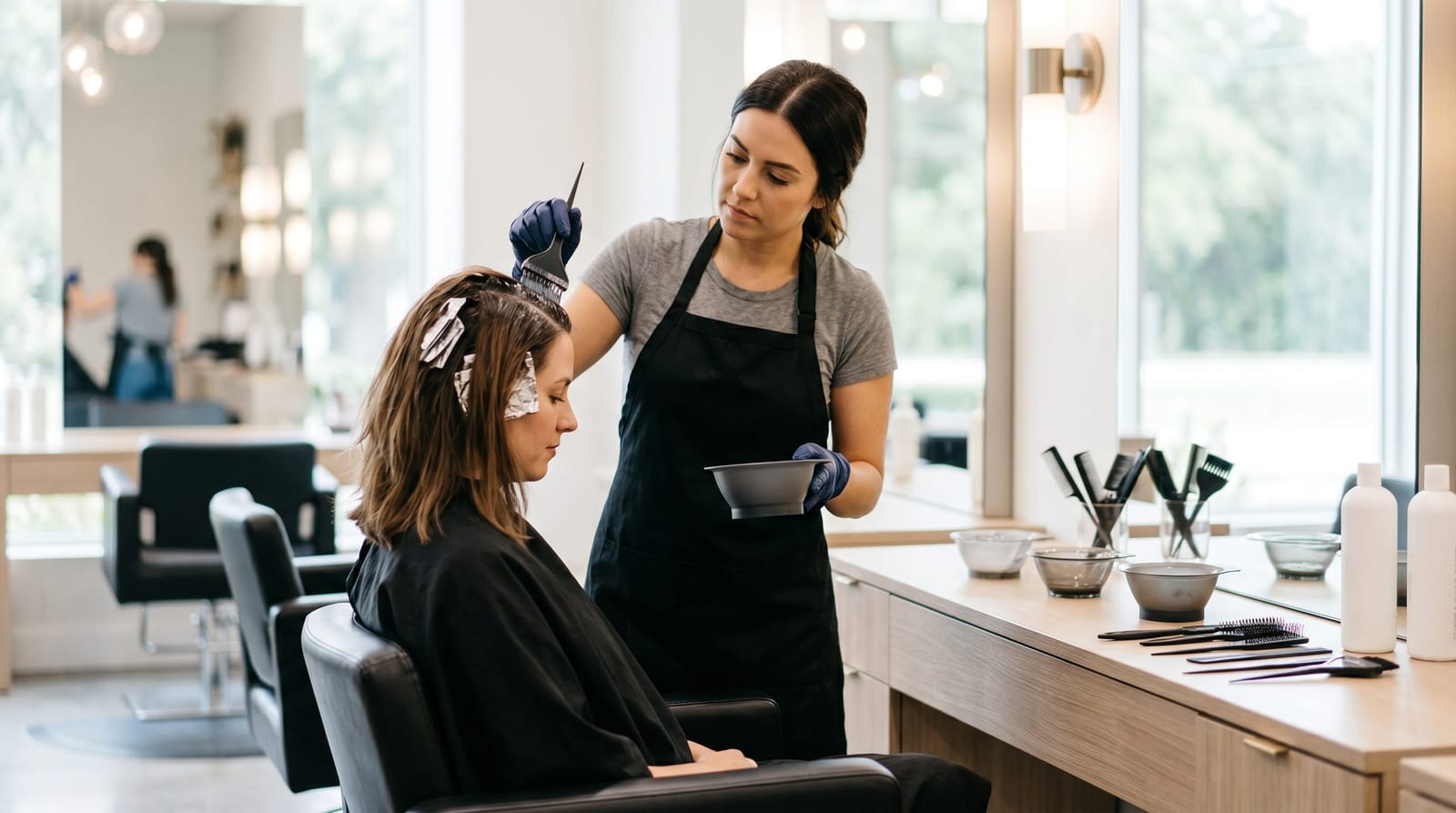
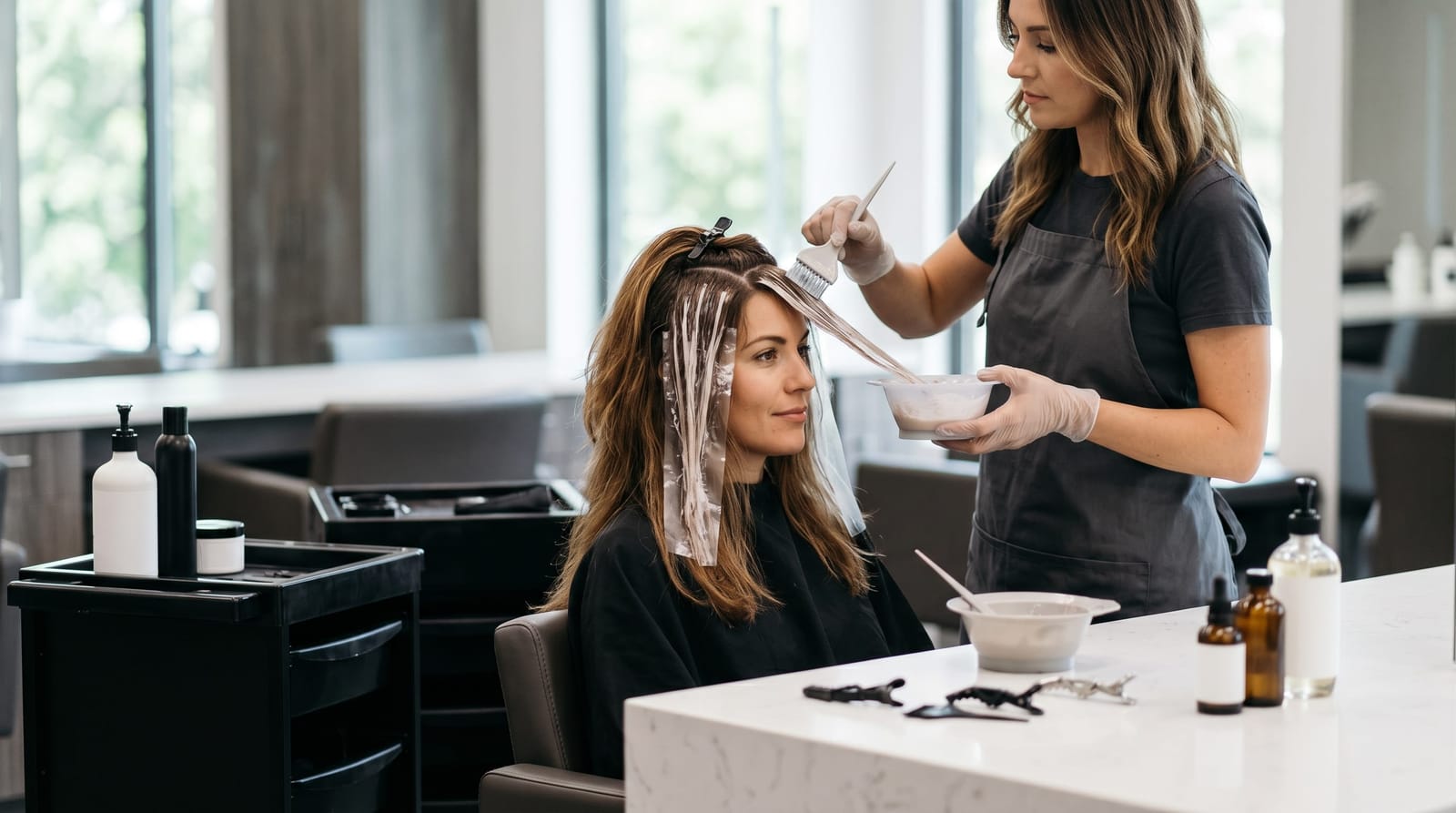
Traditional foil highlights can also be done effectively on relaxed hair, but they require precise placement and careful timing. A colorist experienced in highlights on relaxed hair will monitor processing closely and may use a gentler developer volume, typically 20 volume instead of 30 or 40, to reduce stress on already processed strands.
Toning and gloss services are excellent alternatives or additions for relaxed clients who want dimension without the commitment of bleach. Toners deposit color without lifting, which means they do not penetrate the hair structure the same way bleach does, making them a lower-risk option for maintaining highlights on relaxed hair between appointments.
Staying on top of your highlight maintenance schedule and touch-ups will also help keep your relaxed hair in the best possible condition between full color services.
Protecting and Maintaining Highlighted Relaxed Hair
Once your highlights are applied, ongoing care is essential to keep both the color and the hair itself in good shape. Highlights on relaxed hair create a dual maintenance responsibility: you are preserving both your color and your chemical treatment.
- Use a sulfate-free, color-safe shampoo to prevent premature color fading and dryness.
- Deep condition weekly with a protein and moisture-balancing treatment to rebuild and hydrate chemically processed strands.
- Limit heat styling as much as possible, or always use a quality heat protectant. Heat accelerates color fading and increases breakage risk in already-processed hair.
- Protect hair at night with a satin or silk bonnet or pillowcase to reduce friction and preserve moisture.
- Schedule regular trims to remove split ends before they travel up the shaft and cause more damage.
- Space out your chemical services with adequate time between relaxer touch-ups and highlight appointments.
Frequently Asked Questions About Highlights on Relaxed Hair
How long should I wait to get highlights after a relaxer?
Most professional colorists recommend waiting at least four to six weeks after a relaxer before applying highlights on relaxed hair. This allows the hair cuticle to stabilize and reduces the risk of over-processing and breakage. A strand test should always be performed regardless of how long you have waited.
Can I go blonde with highlights on relaxed hair?
Blonde highlights on relaxed hair are possible but require significant caution. Achieving blonde tones typically requires bleach, which is the most intensive highlighting process. For relaxed hair, a colorist may recommend a gradual approach over multiple sessions rather than going blonde in one appointment to protect the integrity of the hair.
Will highlights on relaxed hair cause breakage?
Highlights on relaxed hair carry a higher risk of breakage than highlights on unprocessed hair, but that risk can be managed significantly with proper timing, professional application, and a consistent strengthening hair care routine. The key is ensuring your hair passes a strand test and elasticity check before any highlighting service begins.
What color looks best as highlights on relaxed hair?
Warm tones tend to look especially beautiful as highlights on relaxed hair. Chocolate brown, caramel, honey, and auburn highlights add rich dimension to dark bases without requiring aggressive lightening. These shades also help disguise gray growth beautifully. Cooler blonde tones are also popular but typically require more processing and additional care.
The Bottom Line on Highlights on Relaxed Hair
Highlights on relaxed hair are absolutely achievable, and when done by a skilled colorist who understands double-processed hair, the results can be stunning. The keys are proper timing, a thorough professional assessment, the right technique, and a committed at-home care routine. If you're in the DMV area and ready to explore what highlights can do for your relaxed hair, consulting with a professional colorist who specializes in chemically treated hair is your most important first step toward a safe, beautiful transformation.