Can You Get Hair Extensions on Short or Damaged Hair?
One of the most common questions clients bring to the consultation chair at Ka Belly Salon is a simple one: Can I even get extensions with my hair? Whether your hair is fine, short, or has been through a rough season of color, heat, or breakage, you deserve a real answer, not a generic "it depends." This post walks through what actually determines extension candidacy, why conditioning for damaged hair matters so much before any extension service, and how the right professional approach makes all the difference.
1. Understand What "Damaged" Actually Means for Extension Purposes
Before assuming your hair disqualifies you from extensions, it helps to understand what stylists are actually evaluating. Hair that feels rough, looks dull, or breaks easily is giving you signals, but those signals don't automatically mean extensions are off the table. They mean your hair needs a stronger foundation before adding weight and tension.
According to hair care research, damaged hair has lost critical structural components, particularly moisture and protein, that keep strands strong and flexible. Studies suggest that hair can lose up to 30% of its protein content after repeated chemical or heat processing, which is why strands begin to feel brittle or snap more easily. Extensions placed on hair in this weakened state are more likely to cause additional stress on the scalp and root area.
At Ka Belly Salon, the consultation process looks at several factors:
- Overall strand strength and elasticity
- Scalp health and root density
- Existing breakage patterns and length
- Recent chemical services (color, relaxers, keratin treatments)
- Current hair care habits and product use
This holistic view helps determine not just if extensions are possible, but which method will work with your hair, not against it. If you've ever wondered about chemical hair damage signs, it's worth reading up on what to watch for before scheduling any extension service.
2. Best Practices for Conditioning for Damaged Hair Before Extensions
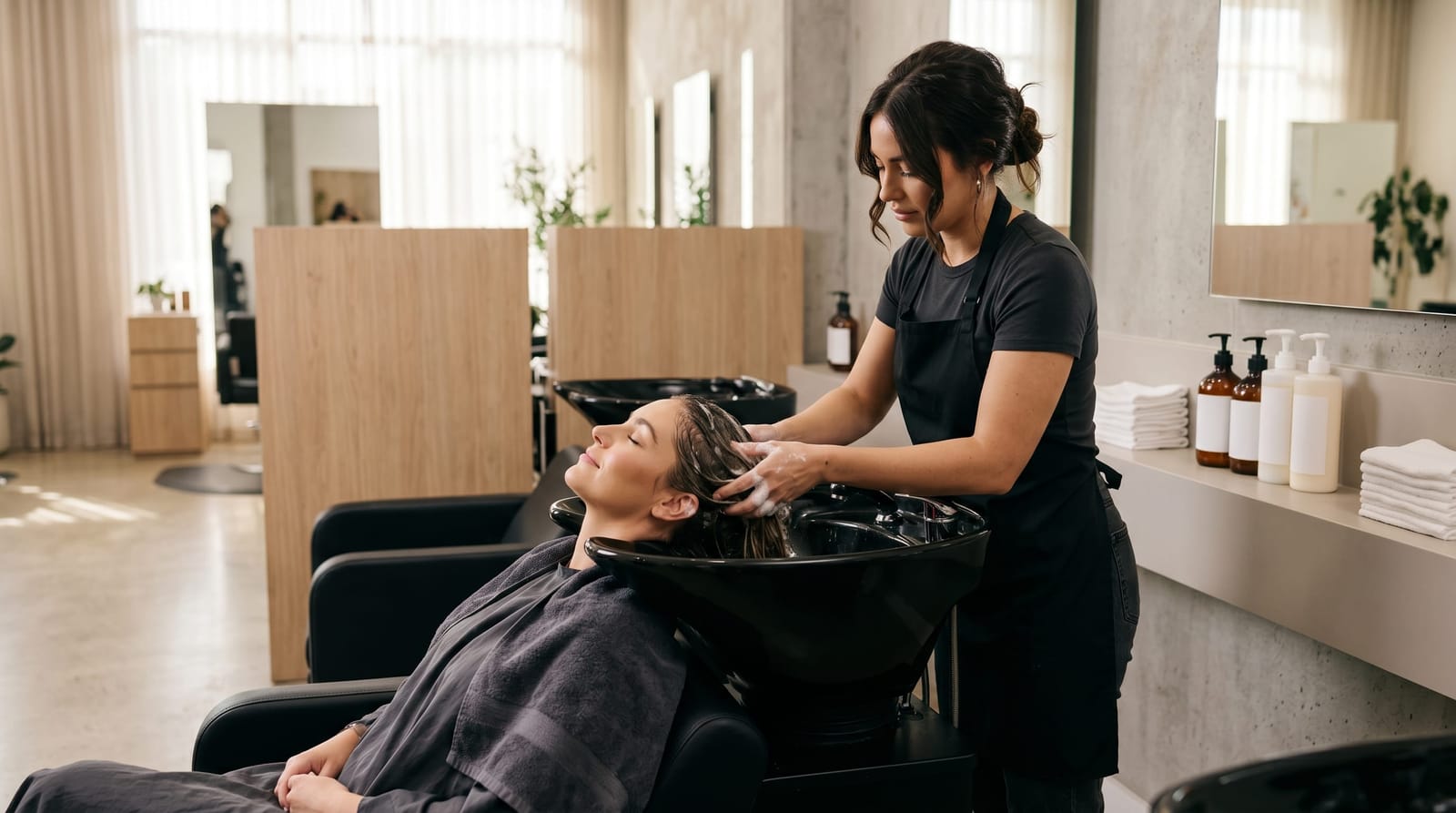
This is where the real preparation begins. If your hair is on the weaker end of the spectrum, conditioning for damaged hair isn't optional: it's the step that determines how well your extensions perform and how your natural hair holds up underneath them.
Here's what a pre-extension conditioning routine should look like:
- Start with a clarifying wash. Product buildup can block conditioners from penetrating the hair shaft. A gentle clarifying shampoo clears the slate before any treatment.
- Use a protein-rich deep conditioner. Protein treatments help rebuild the internal structure of damaged strands. Look for products that contain keratin, hydrolyzed silk, or amino acids. Research from L'Oréal Paris indicates that deep conditioning treatments penetrate the hair cortex, helping restore lost lipids and moisture that everyday conditioners can't reach.
- Follow with a moisturizing mask. Protein and moisture work together. After a protein treatment, a hydrating mask balances the hair so it doesn't become stiff or brittle.
- Apply heat protection consistently. If you're using heat during styling in the weeks leading up to your extension appointment, heat protectant is non-negotiable. Heat without protection accelerates the damage cycle.
- Repeat this routine at least 2-4 weeks before your appointment. One deep conditioning session won't fully prepare compromised hair. Building a short-term routine gives your strands time to recover meaningful strength before extensions are applied.
At Ka Belly Salon, clients are often guided on exactly which products to use in that pre-appointment window based on their specific hair type and history, because generic advice only goes so far.
3. Short Hair and Extensions: What's Actually Possible
Short hair is its own consideration. The question isn't just whether extensions can attach: it's whether they'll look natural, feel comfortable, and blend seamlessly with your existing length.
Generally speaking, hair that is at least 3-4 inches long has enough length to anchor most extension methods properly. Hair shorter than that may require a specific method or may benefit from a few months of growth first. However, "short" is relative, and fine hair that's 5 or 6 inches may actually be more limiting than thicker hair at the same length, because density and weight distribution matter just as much as inches.
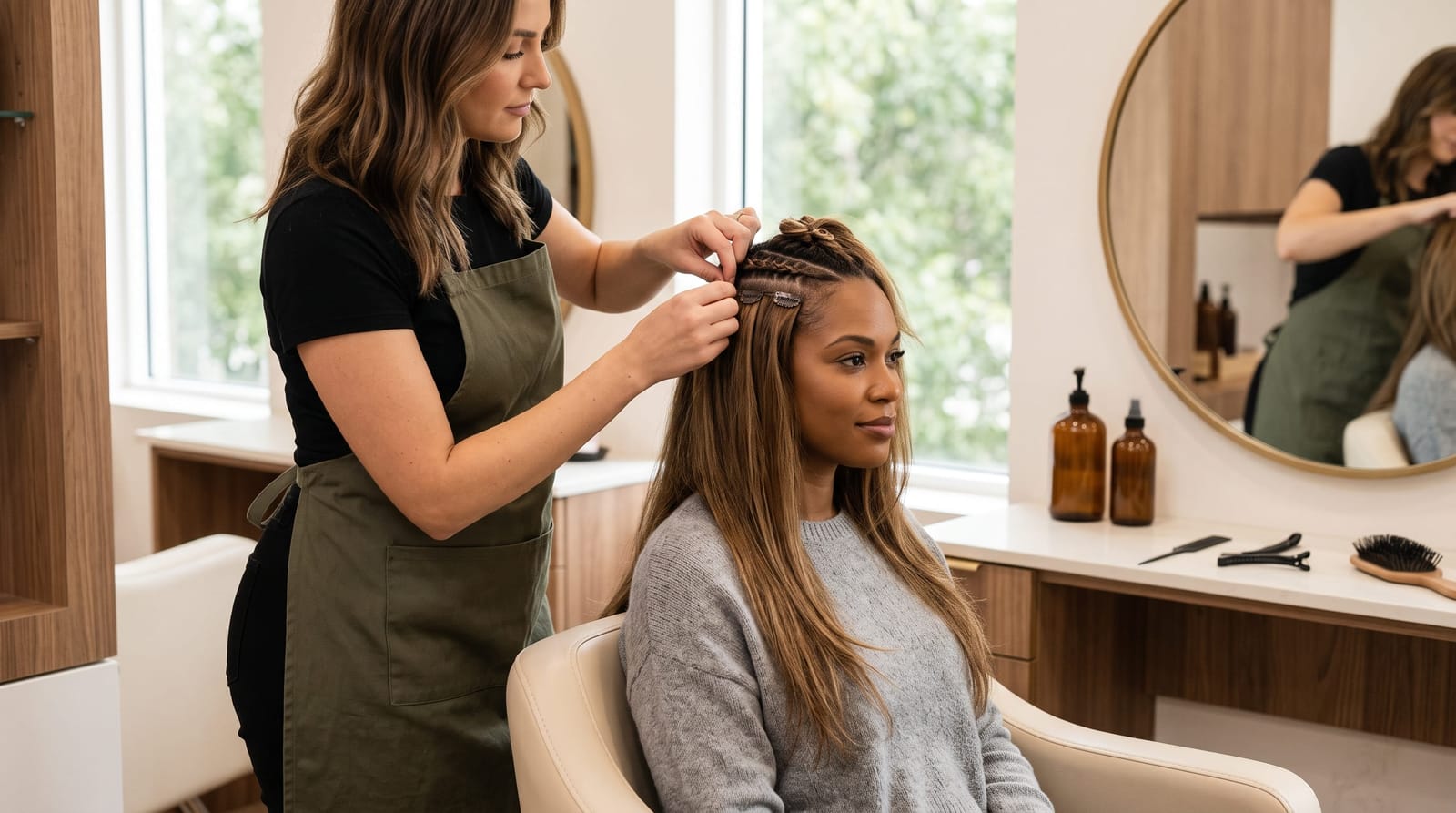
For clients with short or fine hair, tape-in extensions or micro-link (micro-bead) extensions are often gentler options. They distribute weight more evenly and don't require braiding or the level of tension that traditional sew-in methods involve. Clip-ins are also a flexible, no-commitment starting point for clients who want to experiment with length without a longer commitment.
The most important thing to know: there is no single "right" extension for short hair. The best method is the one that matches your hair density, lifestyle, and long-term goals, which is exactly why a professional consultation matters more than any general recommendation found online.
4. How Ka Belly Salon's Consultation Approach Works
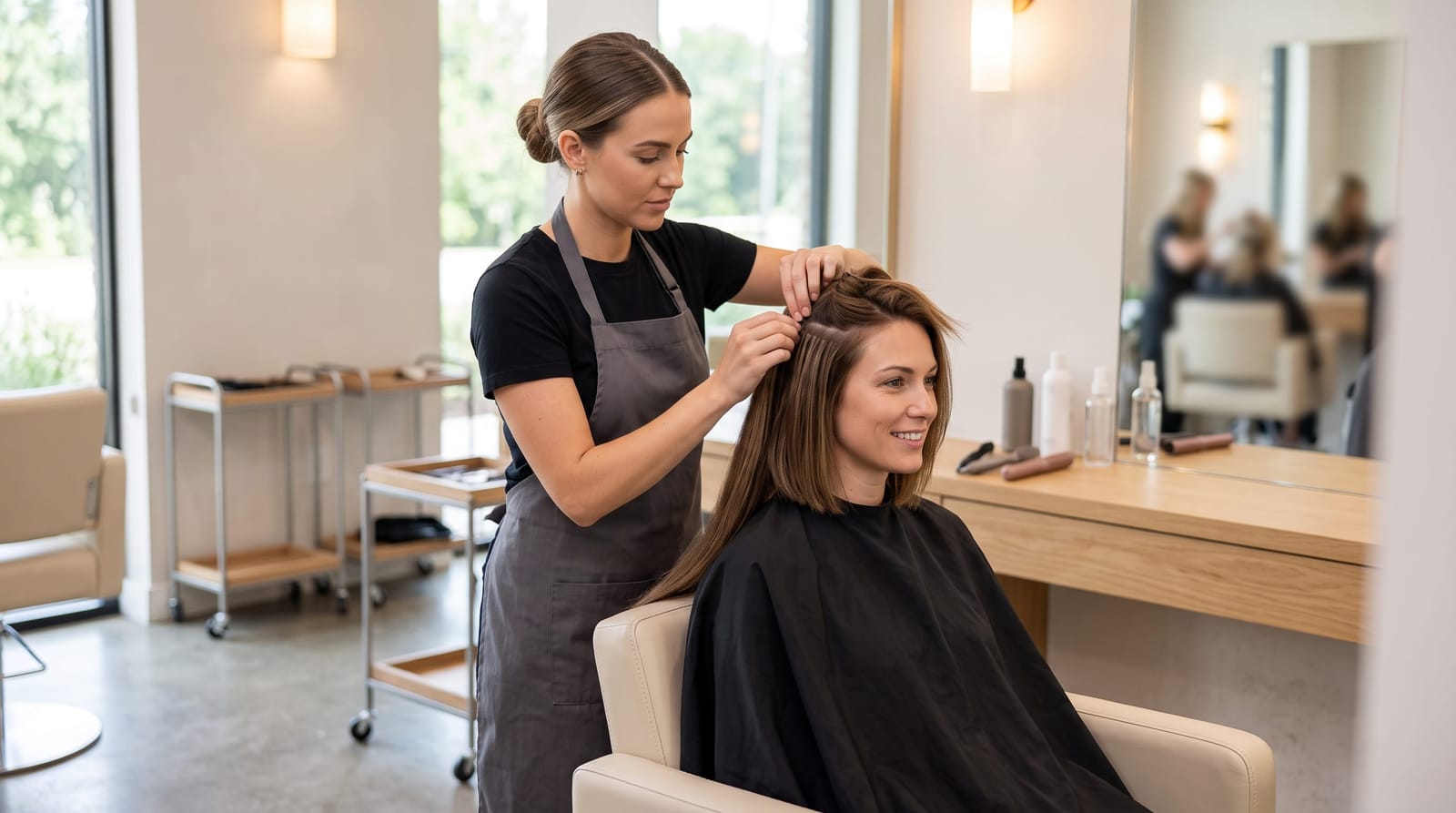
Ka Belly Salon's extension consultations aren't a quick five-minute conversation. They're a real assessment: a moment where your stylist looks at your hair with fresh eyes, asks about your history, and maps out a plan that actually fits your hair.
Here's what clients can expect during a consultation:
- A hands-on evaluation of strand strength, scalp condition, and existing density
- A conversation about recent services and daily hair habits
- An honest discussion about what's realistic in terms of length, volume, and method
- A recommendation for pre-extension conditioning for damaged hair if needed, including product suggestions
- A review of maintenance expectations so there are no surprises after installation
The goal isn't to push clients toward an extension service regardless of readiness. It's to make sure that when extensions go in, they're set up to look beautiful and feel comfortable, and that the natural hair underneath comes out just as healthy as it went in. Knowing the hair needs deep conditioning signs to watch for is part of staying ahead of the process, both before and after your service.
5. Setting Realistic Expectations Without Limiting Possibilities
Here's the truth: not every hair situation is extension-ready on day one, and that's perfectly okay. Some clients benefit from a 4-6 week strengthening period before their installation appointment. Others are ready to go with just a few targeted conditioning sessions. A small percentage may need to wait a bit longer if their hair is in a particularly fragile state.
None of this means extensions aren't in your future. It means the timeline is being built around your hair, not a one-size-fits-all schedule. Research consistently shows that conditioning for damaged hair over time (rather than in a single session) produces stronger, more lasting results. That same principle applies here: a well-prepared foundation makes for a better extension experience, fuller blending, and less risk of stress on your roots.
Ka Belly Salon serves clients across the DMV area who come in at all stages: freshly grown-out pixie cuts, post-color recovery, transitioning from relaxed to natural, and everything in between. The diversity of those starting points is exactly why individualized consultation matters more than any blanket answer.
Frequently Asked Questions
How short is too short for hair extensions?
Most extension methods work best with at least 3-4 inches of natural hair. Hair shorter than that may not provide enough length for a secure attachment or a natural-looking blend. During a consultation, your stylist can assess your specific length and density and recommend the most suitable approach, or suggest a timeline if more growth would benefit the final result.
How long should I condition my damaged hair before getting extensions?
Ideally, a dedicated conditioning routine for damaged hair should begin at least 2-4 weeks before your extension appointment. This window allows protein and moisture treatments to meaningfully strengthen the hair rather than simply masking surface texture. Your stylist can give you a more specific timeline based on the current condition of your hair during a consultation.
Will extensions make my damaged hair worse?
Extensions applied to hair that hasn't been properly prepared, or installed using a method that's too heavy for your hair's density, can contribute to additional stress on the scalp and roots. However, extensions installed on well-conditioned, appropriately prepped hair using the right method for your hair type are generally well-tolerated. Professional assessment and proper aftercare make a significant difference in how your natural hair responds.
What's the difference between a protein treatment and a deep conditioner for pre-extension prep?
Protein treatments work to rebuild the internal structure of damaged strands, helping restore strength and resilience. Deep conditioners focus on restoring moisture and softness. For pre-extension preparation, most hair professionals recommend using both, a protein treatment followed by a moisturizing deep conditioner, to create a balanced, strong foundation. Using one without the other can leave hair feeling either too rigid or too soft.
The Bottom Line
Short hair, fine hair, and previously damaged hair can all be starting points for a beautiful extension experience, as long as the preparation is right and the method matches the hair. Conditioning for damaged hair isn't just a preliminary step; it's the foundation that determines how your extensions look, how long they last, and how your natural hair feels when they come out. At Ka Belly Salon, every extension journey starts with an honest, personalized consultation that keeps your hair health at the center of every decision. If you're curious about where your hair stands, that conversation is the best place to start.