Blow Out for Braids: The Complete Guide to Professional Post-Braid Hair Care in the DMV
Taking down a long-term braided style is one of the most satisfying moments in any protective style journey, but it can also be one of the most overwhelming. After weeks (sometimes months) of your hair tucked away, the process of removing braids reveals strands that are matted, dry, and carrying weeks' worth of shed hair that never had a chance to fall naturally. Without the right care at this exact moment, the hair that your protective style was supposed to strengthen can end up more fragile than when you started.
This is precisely where a professional blow out after braid removal becomes so important, and so different from any other blowout you've ever had. At Kabelly Salon in the DMV, the blow out for braids is a specialized service built specifically for this transition. It's not just about styling. It's about carefully restoring your hair's moisture, structure, and resilience after it's been protected and compressed for weeks on end.
Whether you've been wearing box braids, knotless braids, Senegalese twists, or another protective style, this guide covers everything you need to know: what a post-braid blow out actually involves, why it's different from a standard blowout, how the professional detangling and conditioning process works, and how to choose the right approach for your specific hair type and style history. By the time you finish reading, you'll understand exactly what your hair needs, and why trusting a professional makes all the difference in the DMV.
What Is a Blow Out After Braid Removal: and Why Is It Its Own Service?
The phrase "blow out after braid removal" might sound like a simple two-step process: take the braids out, then blow it out. But anyone who has removed a long-term protective style knows that what's waiting underneath is far more complex than freshly washed, loose hair.
A blow out for braids is a complete post-protective-style restoration service. It begins before a single hair dryer is ever turned on. The process involves careful detangling of compacted shed hair, a multi-step cleansing routine to remove product buildup, deep conditioning to replenish lost moisture, and then the blow out itself: performed with specific techniques designed to gently stretch and smooth hair that has been compressed and coiled tightly for weeks.
This is fundamentally different from a standard Dominican blow out. A typical blowout client arrives with hair that's been washed at home, is relatively loose, and simply needs smoothing and styling. Post-braid hair arrives in a completely different condition. Research from haircare experts consistently shows that hair in protective styles can accumulate significant amounts of shed strands: the average person loses between 50 and 100 hairs per day, and in braided styles, those hairs have nowhere to go. They collect at the roots and throughout the braid, which means post-braid detangling is a skilled, methodical process, not a quick comb-through.
The blow out after braid removal at Kabelly Salon in the DMV is designed around this reality. Every step, from the detangling technique to the conditioning products chosen, is selected based on the specific state of your hair coming out of its protective style. That level of personalization is what separates this service from anything you'd find at a general styling salon.
The Science Behind Why Hair Needs Special Care After Braids
Understanding why post-braid hair behaves the way it does helps explain why a specialized blow out after braid removal is so valuable, and why rushing the process can lead to unnecessary breakage.
When your hair is in a braided protective style, it's held in a fixed position for an extended period of time. Natural oils from the scalp have limited ability to travel down the hair shaft as they normally would on loose hair. Extensions, if used, can create additional tension at the root. And the hair shaft itself adapts to being compressed and coiled, which means it needs time and care to re-acclimate to being free.
The Shed Hair Factor
One of the most important things to understand about post-braid hair is the shed hair accumulation. On average, people shed approximately 50 to 100 strands of hair daily. Over a six-to-eight-week braid period, that equates to roughly 2,100 to 5,600 shed hairs that never had the opportunity to detach and fall naturally. Instead, they remain intertwined with your natural hair and the extension fibers throughout the braid. Removing those shed hairs without snapping healthy strands requires patience, the right tools, and professional experience.
Moisture Loss Over Time
Hair in braids also tends to lose moisture over time, especially at the ends. Because the ends are often folded or tucked into the braid, they may receive little conditioning attention during the weeks of wear. Studies on hair porosity and moisture retention show that hair left without active conditioning for extended periods can experience increased brittleness and reduced elasticity: both of which increase the risk of breakage during detangling and styling if the hair isn't properly rehydrated before any manipulation begins.
Product Buildup at the Scalp
Over weeks of wearing a protective style, the scalp continues to produce sebum and shed dead skin cells. When clients use styling products, oils, or edge controls during the braid period, all of that builds up at the root. This buildup can block the scalp and weigh down the hair shaft, which is why a thorough double cleansing with a clarifying shampoo is always part of a proper blow out for braids service.
What Braid Styles and Hair Types Benefit Most From a Professional Blow Out
Not every client who removes braids has the same starting point. The specific style you wore, how long you wore it, and your natural hair type all influence exactly what your post-braid blow out needs to look like.
Braid Styles That Call for Professional Post-Braid Care
While almost any long-term protective style benefits from professional post-braid care, some styles are particularly associated with significant detangling and conditioning needs:
- Box braids (with extensions): One of the most popular protective styles in the DMV, box braids are typically kept in for six to eight weeks or longer. The added extension hair increases the volume of material that needs to be carefully separated from the natural hair during removal.
- Knotless braids: Knotless braids are gentler at the root than traditional box braids, but they still accumulate shed hair and require careful detangling. Many clients find the removal process for knotless braids to be surprisingly time-intensive.
- Senegalese twists: Because of the wrapping technique used in this style, shed hair can become tightly intertwined. A professional blow out after braid removal is especially helpful following Senegalese twists.
- Feed-in braids and cornrows: Flat braids sit close to the scalp and can accumulate more product buildup at the root. The blow out process following these styles focuses heavily on thorough cleansing before conditioning and drying.
- Micro braids: Micro braids, due to their small size, create the most intricate detangling situations. Professional post-braid blow out services for micro braid clients require significant time and technique.
Hair Types That Benefit Most
In the DMV, the protective style community spans a wide range of natural hair textures, from wavy Type 2 hair to tightly coiled Type 4 hair. Generally speaking, the more texture and coil in the hair, the more important professional post-braid blow out care becomes. Tightly coiled hair textures (Type 3C through Type 4C) tend to shrink significantly when dry, which means shed hairs become more densely packed during a protective style. These textures also tend to have lower natural moisture retention, making deep conditioning before the blow out absolutely essential.
That said, clients with looser curl patterns who wear braids with extension hair for extended periods will still benefit from professional post-braid care, particularly for the detangling and scalp cleansing components of the service.
The Step-by-Step Blow Out for Braids Process at Kabelly Salon
The blow out after braid removal at Kabelly is a multi-phase process, and every phase serves a specific purpose. Here's what a professional post-braid blow out actually looks like from start to finish.
Phase 1: Initial Assessment and Braid Removal Support
Before any washing or detangling begins, a professional stylist assesses the condition of the hair. How long were the braids worn? What type of extension hair was used? Is there visible scalp buildup? Are the ends particularly dry? These questions shape the entire service. Some clients arrive having already removed their braids at home; others arrive needing assistance with removal. Kabelly's post-braid service accommodates both starting points.
Phase 2: Pre-Detangling With a Conditioning Agent
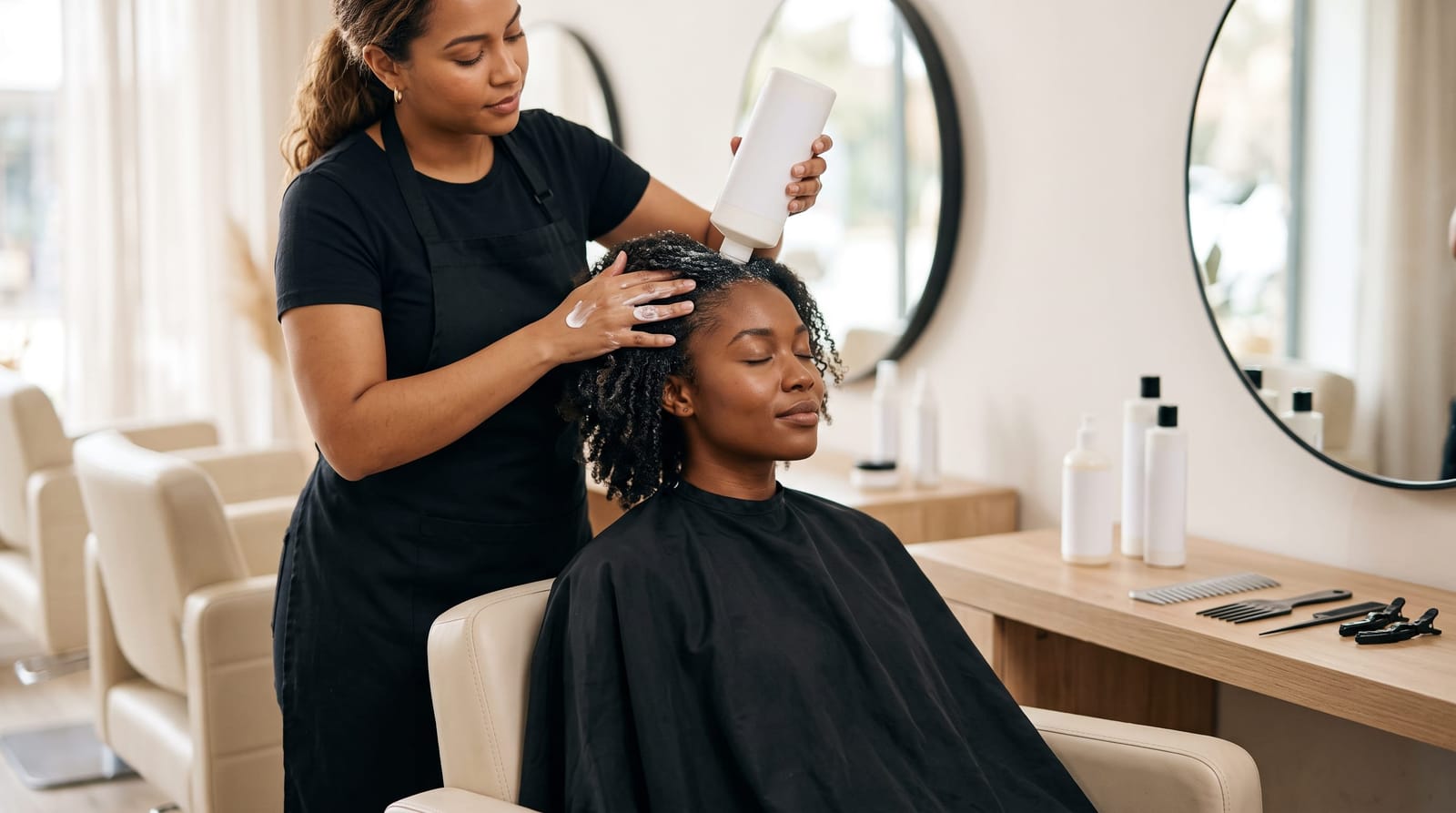
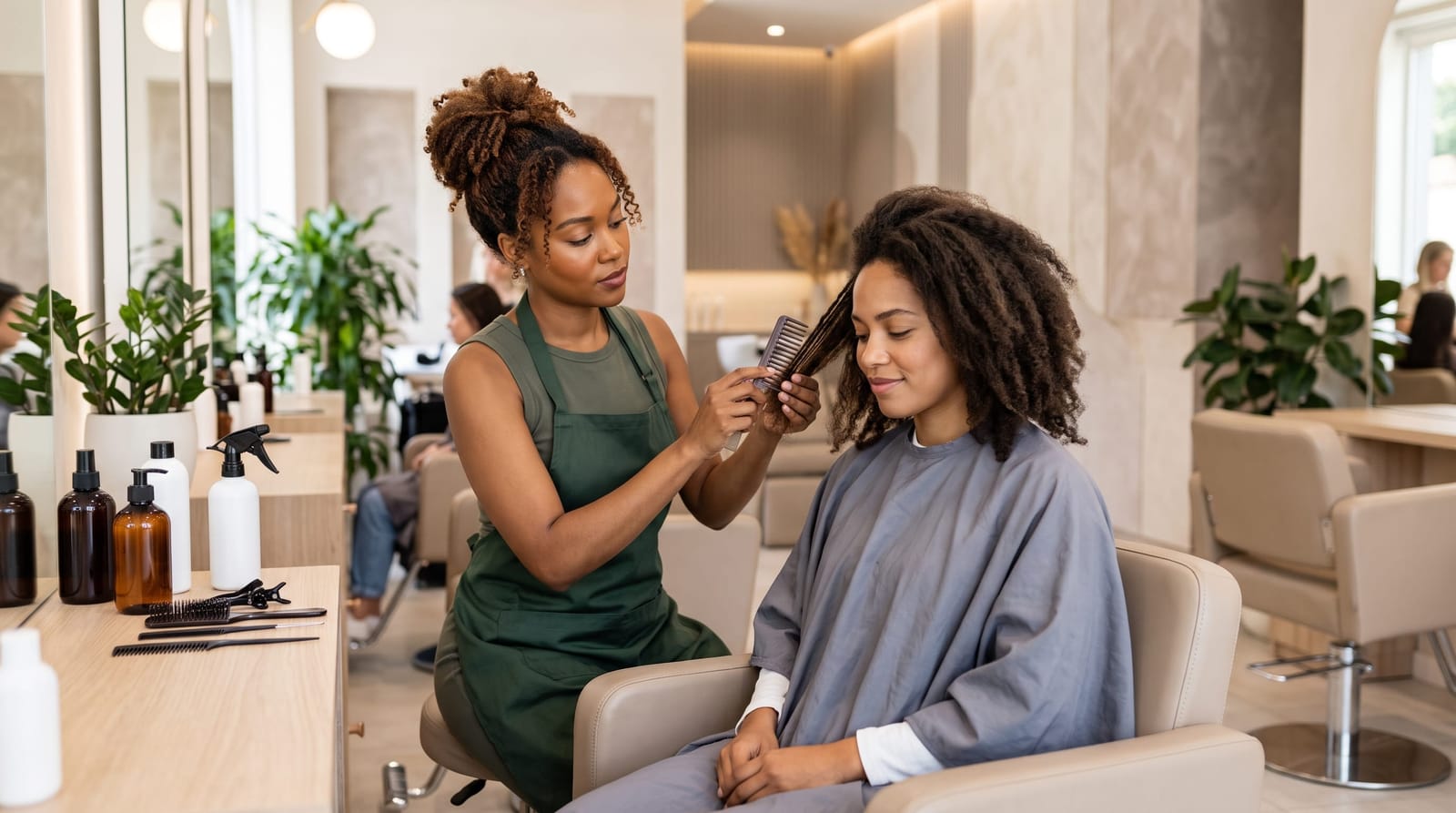
Before any shampooing takes place, a conditioning or detangling product is applied to the hair to begin softening the shed hair and loosening any knots. This pre-detangle step is critical. Attempting to detangle dry hair that has been in a protective style for weeks without any product is one of the most common causes of preventable breakage. A professional stylist works through the hair section by section, using the right tools and technique to free shed strands without disturbing healthy hair.
Phase 3: Double Clarifying Shampoo
Hair coming out of a braided protective style almost always requires two rounds of clarifying shampoo. The first wash removes the bulk of surface-level buildup: product residue, oils, and environmental debris. The second wash gets deeper, leaving the scalp and hair clean and ready to fully absorb conditioning treatments. This is a consistent recommendation from professional haircare experts and beauty researchers: one shampoo is rarely sufficient for post-braid cleansing.
Phase 4: Deep Conditioning Treatment
This is the most transformative step of the blow out for braids process, and it's the step that most separates a professional post-braid blow out from anything done at home. A rich, professional-grade deep conditioning treatment is applied to the hair, focusing on the mid-lengths and ends where moisture loss is most significant. Heat is often applied during this step, either through a hooded dryer or steamer, to help the conditioning treatment fully penetrate the hair shaft. Most professional deep conditioning treatments used in post-braid services are left on for 20 to 30 minutes to allow maximum absorption.
Phase 5: The Blow Out
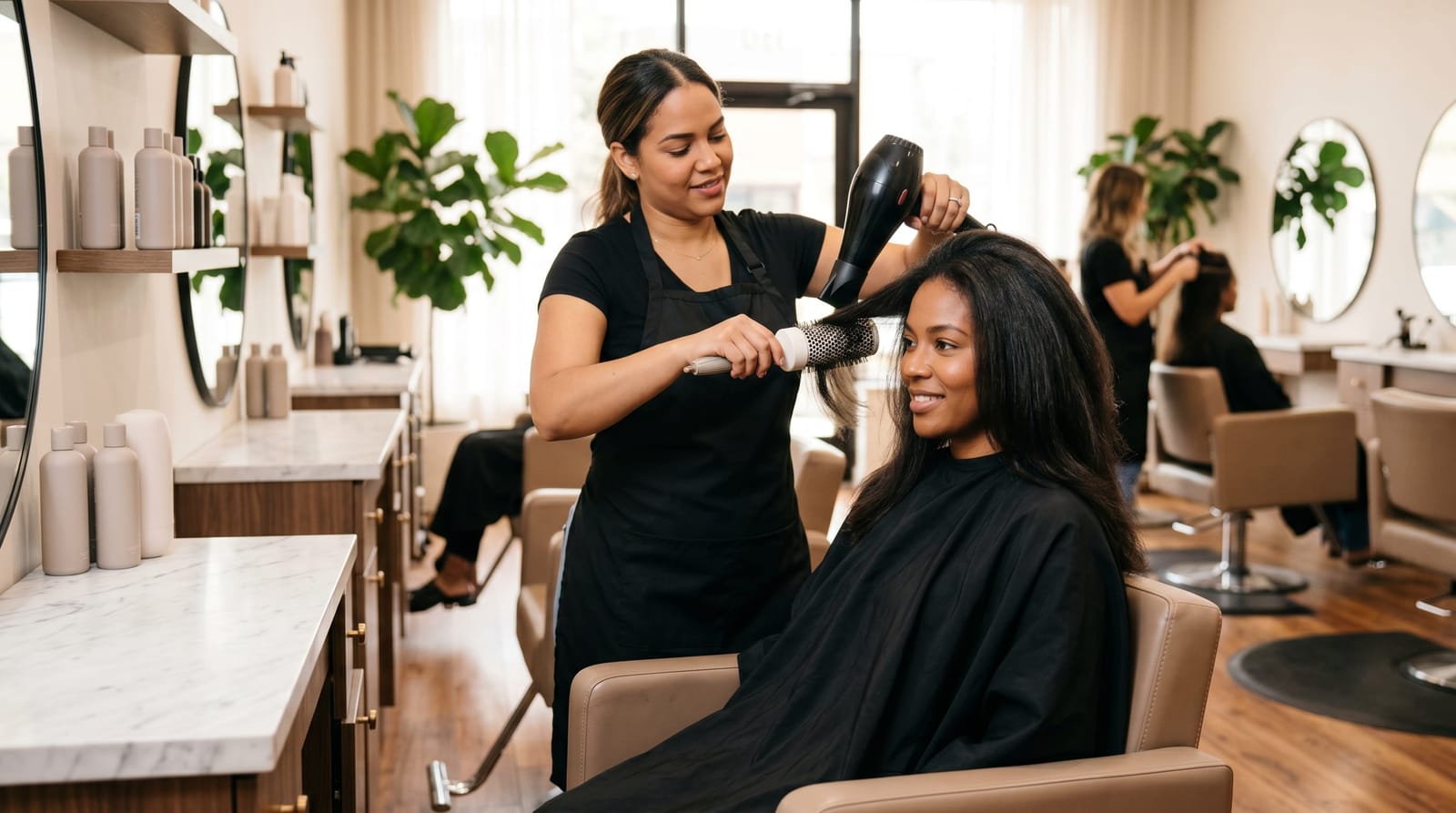
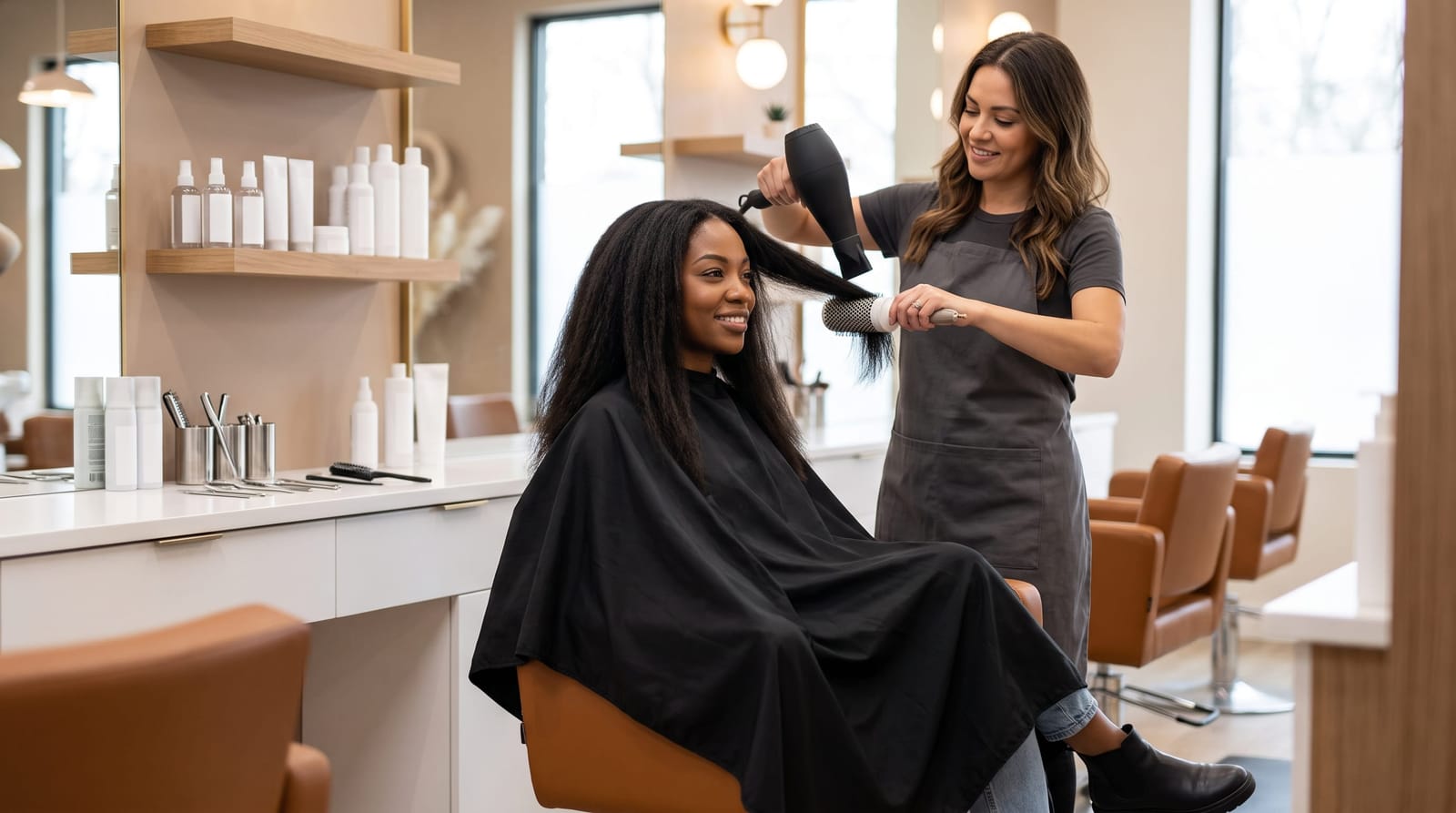
Once the hair has been cleansed and conditioned, the blow out itself begins. Post-braid blow out technique differs from a standard blowout in several important ways. The hair is worked in small, deliberate sections rather than large sections. Tension is applied gradually and gently: the goal is stretching the hair, not forcing it. The stylist monitors the hair's response throughout, adjusting heat and pressure as needed based on how the hair is behaving. The result is hair that is smooth, stretched, and beautifully full, without the unnecessary stress that comes from rushing a blow out on hair that has just come out of a protective style.
How a Post-Braid Blow Out Differs From a Standard Dominican Blow Out
Kabelly Salon is well known in the DMV for its Dominican blow out services: a technique rooted in a deep tradition of professional blowouts using round brushes, tension drying, and skilled sectioning to create smooth, bouncy, full-bodied results. But the blow out after braid removal is a distinct service, even within that tradition.
The key differences come down to starting conditions and priorities:
- Starting condition of the hair: A standard Dominican blow out client typically arrives with hair that has been washed at home and is in a relatively manageable state. Post-braid blow out clients arrive with hair in a significantly more complex condition that requires additional preparation steps before styling begins.
- Time investment: A blow out for braids service takes longer. The detangling, double shampooing, and deep conditioning phases add meaningful time to the service, and that time is necessary, not optional.
- Conditioning focus: While conditioning is always part of quality blowout care, it takes center stage in the post-braid blow out. The deep conditioning step is longer, more intensive, and more product-rich than what's needed for a standard blow out.
- Technique during the blow out: Post-braid hair requires a more cautious, section-by-section approach during the actual drying and styling phase. The hair has been under tension for weeks and needs to be worked with more care as it's being stretched and smoothed.
Both services reflect the same commitment to professional quality and beautiful results: they're simply calibrated for different starting points. To learn more about how Dominican blow out natural hair techniques are adapted for clients coming out of protective styles, Kabelly's stylists bring the same foundational expertise to both services.
Deep Conditioning After Braids: The Step That Changes Everything
If there's one thing that hair care professionals and clients alike agree on after years of protective styling experience, it's this: deep conditioning is the most important step in any post-braid care routine. Skipping it, or substituting a regular conditioner and calling it equivalent, is one of the most common reasons clients experience dryness, frizz, or increased breakage in the weeks following braid removal.
Deep conditioning after a protective style serves several purposes simultaneously. It restores moisture to hair that has been relatively sealed away from humidity, conditioning products, and natural scalp oil distribution for weeks. It also improves elasticity, the hair's ability to stretch without snapping, which directly reduces breakage risk during and after the blow out. And it smooths the hair's surface, which makes the blow out itself go more smoothly and produce a more polished, lasting result.
Professional deep conditioning treatments used at salons like Kabelly are formulated differently than at-home conditioners. They typically contain higher concentrations of proteins, humectants, and emollients, and they're designed to work with heat activation to penetrate more deeply into the hair shaft. According to hair science research, the combination of heat and a quality deep conditioning treatment can measurably improve hair's tensile strength and moisture content: both of which matter significantly for hair coming out of a protective style.
Understanding the hair needs deep conditioning signs that appear after braid removal is an important part of advocating for your hair's health at every stage of the process.
Protecting Your Hair During Braid Takedown: Preventing Breakage Before It Starts
One of the aspects of post-braid hair care that deserves its own conversation is the takedown process itself. Many clients experience unnecessary breakage not because of anything that happens during the blow out, but because of how the braids were removed in the first place.
Rushing through braid removal, especially when extension hair is involved, is a major risk factor for breakage. Extension hair can become intertwined with natural shed strands over weeks of wear, and if the two aren't carefully separated during removal, healthy natural hair can be pulled and snapped in the process.
Professional guidance consistently recommends working through braids from the ends up, using the fingers rather than a comb during initial separation, and applying a slippery product or light oil to the hair before beginning removal. Taking a protective style out in sections, and giving yourself or your stylist adequate time, makes a significant difference in how much hair is retained versus lost during the takedown.
For those who want to understand every element of the process, the prevent extension damage guide covers the most important steps for protecting your natural hair both during and after braid removal.
What to Do With Your Hair After the Blow Out: Styling Options and Next Steps
One of the most exciting parts of the post-braid blow out experience is seeing the full result of weeks of protective styling: a head of refreshed, stretched, beautifully conditioned hair that's ready for whatever comes next. And the styling options at this point are genuinely wonderful.
Many clients choose to enjoy the length and volume of their freshly blown-out hair for a period of time after braid removal. The blow out itself creates a beautiful baseline that can be worn as-is, wrapped for a silk press effect, or styled with additional techniques to create waves, curls, or volume. This is often a moment when clients discover just how much their hair has grown during their protective style period, and a fresh blow out is one of the best ways to showcase that length.
Other clients use the post-braid blow out as a launching point into a new style entirely. Because the hair has been fully cleansed, deeply conditioned, and carefully detangled, it's in an ideal state to receive a new service, whether that's a trim to refresh the ends, a color service, or a new protective style.
For a full overview of the options available after your blow out, the blow out styling options guide explores the range of directions Kabelly clients can take their hair after a professional post-braid blow out.
Deep Dive Topics: Everything You Need to Know About Post-Braid Hair Care
This pillar guide gives you a comprehensive foundation for understanding the blow out after braid removal, but there's so much more to explore within this topic. Kabelly's complete post-braid hair care resource library covers every angle of the protective style transition experience, from the first steps after braid removal to the styling choices that come next.
Explore the Full Post-Braid Hair Care Series
- Dominican Blow Out Techniques for Protective Style Transitions: Learn how Dominican blow out traditions are uniquely adapted for clients coming out of braids, twists, and other protective styles. This deep dive covers the specific techniques that make Dominican blow out natural hair services so effective for post-braid hair care.
- A Step-by-Step Guide to Post-Braid Hair Care: From the moment the last braid comes out to the final step of your blow out, this comprehensive walkthrough covers everything in detail. It's your complete reference for the blow out for braids process from beginning to end.
- How to Prevent Breakage and Shedding During Braid Removal: The braid takedown is where many clients inadvertently cause the most damage. This guide breaks down the exact techniques and precautions that prevent extension damage and protect your natural hair during the removal process.
- What Hairstyle to Get After Removing Braids: Not sure where to take your hair after your protective style? This guide explores the full range of blow out styling options available at Kabelly, from sleek and smooth finishes to voluminous natural textures.
- Deep Conditioning After Braids: Why It's the Most Important Step: This dedicated deep dive explores the science and practice behind moisture restoration after a protective style. Understand the specific hair needs deep conditioning signs that tell you your hair is ready for a more intensive treatment approach.
Why Choose Kabelly Salon for Your Blow Out After Braid Removal in the DMV
The DMV is home to one of the most vibrant and diverse protective styling communities in the country. Box braids, knotless braids, Senegalese twists, and a wide variety of other braided styles are a central part of the hair culture here, and that means the demand for skilled, knowledgeable post-braid care is equally significant.
Kabelly Salon has built a reputation in the DMV specifically for understanding the unique needs of clients transitioning out of protective styles. The stylists at Kabelly are experienced not only in the technical aspects of the blow out for braids service, the detangling, the deep conditioning, the sectioning and styling techniques, but also in the softer side of the experience: the patience, the communication, and the personalized approach that makes post-braid care feel like genuine self-care rather than a stressful process.
Every blow out after braid removal at Kabelly begins with a conversation. Your stylist wants to know how long you wore your protective style, what your hair felt like during the wear period, what your scalp health has been like, and what you're hoping for as an outcome. That information shapes every decision made throughout the service, from the conditioning products chosen to the blow out technique used.
For clients in Washington D.C., Maryland, and Northern Virginia, Kabelly Salon offers a blow out after braid removal experience that prioritizes both the health and the beauty of your hair, because those two things are never in conflict when you have the right professionals in your corner.
Conclusion: Your Hair Deserves the Right Care After Every Protective Style
Your protective style served its purpose: it gave your hair time to rest, grow, and be cared for in a low-manipulation environment. Now it's time to give back to your hair with the thoughtful, professional post-braid care it genuinely needs.
A blow out after braid removal isn't just a styling appointment. It's a complete restoration experience that addresses the real, specific needs of hair coming out of weeks of protective wear: the shed hair, the moisture deficit, the scalp buildup, and the delicate balance between gentle handling and beautiful results. When done right by experienced professionals, it's also one of the most satisfying hair appointments you can have. Seeing your freshly conditioned, beautifully blown-out hair after weeks in a protective style is a genuinely joyful moment.
At Kabelly Salon in the DMV, the blow out for braids service was designed with exactly that experience in mind, for clients who love protective styling, who care about their hair health, and who deserve a professional post-braid experience as elevated as the rest of their beauty routine. Book your blow out after braid removal at Kabelly Salon today and experience the difference that professional post-braid care makes.