Why Does My Blow Out Frizz Up So Fast? Causes and Fixes
A blowout that looks smooth when you leave the salon can turn fluffy after a humid commute, a workout, or one night’s sleep. The usual reasons are moisture exposure, insufficient conditioning, product overloading, friction, or hair that was not fully dry before finishing.
The best fix depends on when the frizz appears. Puffiness outdoors points toward humidity. Roughness from the start suggests a prep or drying issue. Frizz concentrated around the edges after sleeping points toward friction or wrapping technique. Adding more oil or heat does not solve every version of the problem.
What causes a blowout to lose its smoothness?
Humidity and sweat change the temporary style
A blowout temporarily changes how your hair sits. Moisture from humid air, sweat, rain, or shower steam can disrupt that shape, allowing waves, curls, and coils to return. During humid weather in Clinton and the surrounding DMV, even a short trip outdoors can affect the finish.
An anti-humidity styling product may help limit frizz, but it cannot make hair waterproof. Use products according to their directions, since some belong on damp hair before drying rather than over a finished blowout.
Keep hair protected from shower spray and rain. After exercise, let the scalp dry before wrapping your hair. Our tips for working out after a blowout cover ways to manage sweat without making repeated heat touch-ups your default.
Hair needs conditioning, not just a shiny finish
If your lengths feel rough, tangle easily, or look fuzzy before you go outside, conditioning deserves attention. Conditioner helps reduce friction and makes strands easier to detangle and align during styling. A finishing serum adds slip or shine, but it does not replace that preparation.
Match conditioning to how your hair behaves. Fine hair that falls flat easily may need a lighter formula concentrated through the lengths and ends. Coarser or more weathered lengths may benefit from a richer conditioner that is rinsed thoroughly.
More product is not automatically better. The goal is hair that feels supple and detangles easily, without a heavy coating.
Product buildup can complicate the finish
Buildup is not the same as frizz. However, repeatedly layering dry shampoo, oil, serum, and edge products can leave hair dull, sticky, or weighed down while the original frizz remains.
Notice the difference between roughness and residue. Hair that feels coated rather than dry is unlikely to benefit from another rich finishing product. At the next wash, cleanse thoroughly with a shampoo appropriate for your hair and color care needs, and rinse carefully.
Between washes, use a finishing product only where it is needed. A small amount on fuzzy ends is a different decision from coating the roots and lengths every morning.
Wrapping can create friction, bends, or flattened volume
If your blowout looks good at bedtime but rough around the hairline in the morning, look at how it is protected overnight. Twisting hair tightly, dragging a brush through tangled ends, or securing it with tight elastics can disturb the shape.
Choose protection that suits the finish. A gentle wrap can support a straighter style, while a roomy satin bonnet may better accommodate curls and volume. Keep hair dry before covering it, and avoid pulling the edges tight.
For more detail on matching your nighttime routine to your style, see how to sleep after a blowout.
Better preparation matters more than extra heat
Hair can look finished on the surface while remaining damp underneath, especially at the roots or in dense sections. That leftover moisture can change the style as it continues drying.
For at-home styling, preparation and controlled drying work together:
- Blot rather than rub. Gently squeeze out excess water instead of roughing up the lengths with a towel.
- Keep product layers purposeful. Follow a heat protectant’s application directions and avoid stacking several rich styling products.
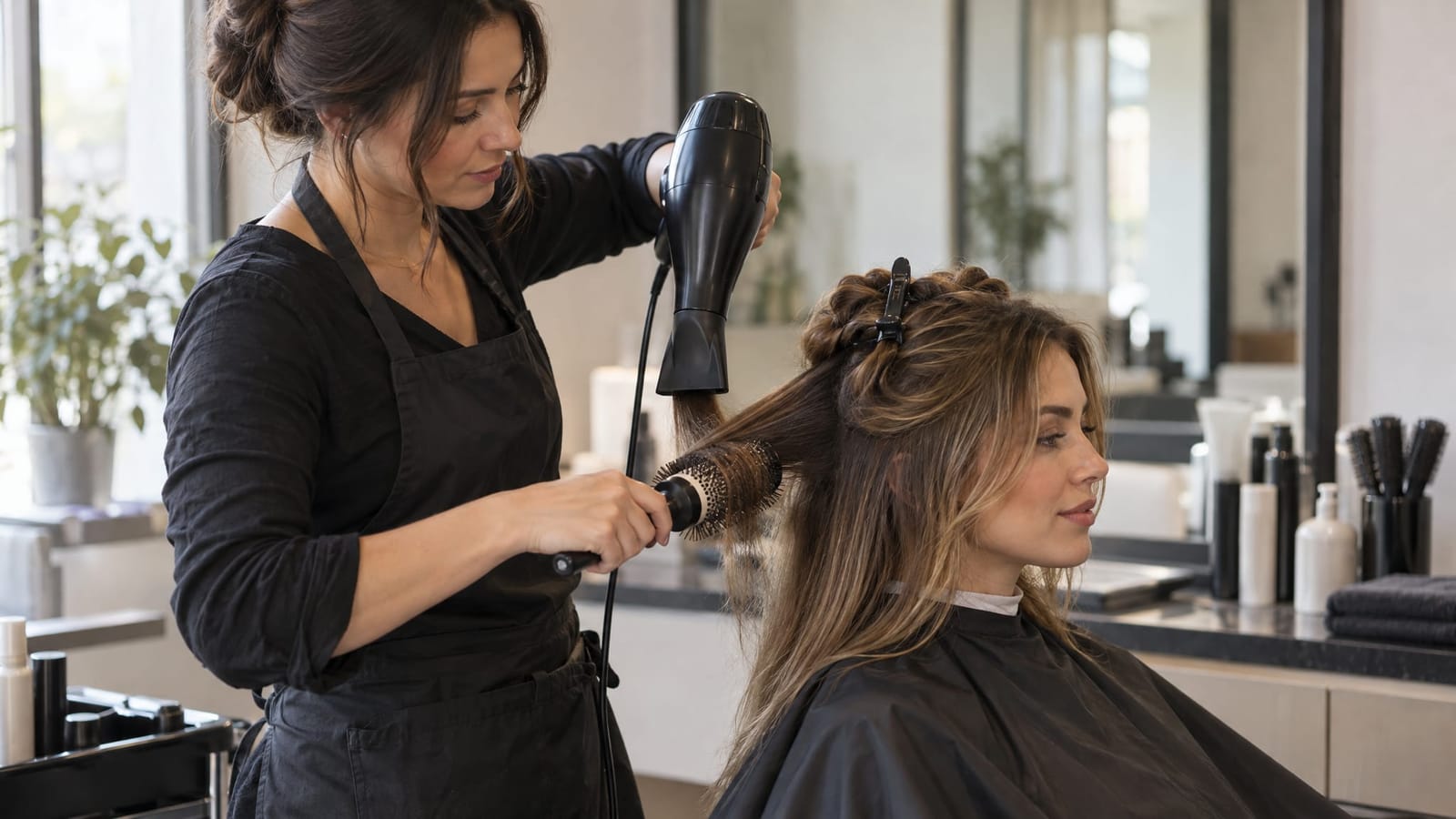
- Work in manageable sections. Sections that are too large make it harder to dry the interior evenly.
- Direct airflow along the hair. Aim from roots toward ends rather than blowing strands in different directions.
- Finish drying, then stop. Check roots and underneath sections instead of repeatedly heating already-dry ends.
At Kabelly Dominican Salon in Clinton, we offer Wash & Blowout, Luxury Blow Dry, and Wash & Set, with styling tailored to you. Our attention to detail and quality products supports that personalized approach. Knowing whether frizz begins immediately, outdoors, or overnight helps focus the styling conversation on the right preparation and finish.
What to do when your blowout is already frizzy
Start with the smallest adjustment that addresses the problem:
- A few surface flyaways: Smooth a small amount of a suitable finishing product over the affected area rather than brushing through the whole style.
- Puffiness after sweating: Let the scalp and roots dry before covering or restyling them. More heat while you are still sweating is unlikely to preserve the finish.
- Rough ends with coated roots: Skip another all-over product application. Keep any touch-up targeted to the ends.
- Widespread texture returning: Consider a loose updo or wear the returning texture until your next wash, rather than chasing every section with repeated heat.
A small amount of movement or texture does not mean the style needs a complete reset.
Frequently asked questions
Does frizz mean my hair is damaged?
No. Humidity, friction, and natural texture can all create frizz. Frizz alone is not a reliable way to judge hair condition, and a smooth finish does not prove that hair is free from damage.
Will oil make my blowout humidity-proof?
No. Oil can add shine and help smooth some flyaways, but it does not provide complete protection from moisture. Adding more can weigh the style down without stopping texture from returning.
Does a cool shot seal the hair against humidity?
A cool shot helps hair cool in its finished shape. It does not create a permanent seal or make a blowout resistant to every change in weather. Complete drying and appropriate preparation still matter.
Match the fix to the cause
For your next blowout, notice where frizz starts, how your hair feels, and what happened just before the finish changed. Those details are more useful than adding another product at random. The aim is a manageable routine that supports your chosen style without endless touch-ups.